Understanding Modern Residential Shingle Styles
Selecting the right exterior materials is one of the most critical decisions you will make for your home. Asphalt shingles remain North America’s most popular roofing choice due to their balanced mix of structural resilience, architectural versatility, and weather performance. To see why they lead the market, explore why asphalt shingles rule the roost a comprehensive guide for an in-depth breakdown.
Modern shingles rely on an engineered fiberglass mat core coated with weathering-grade asphalt and surfaced with ceramic-coated mineral granules. In laminated dimensional products, manufacturers bond two or more distinct layers together. This multi-layered construction produces rich shadow lines that replicate the visual depth of natural slate or cedar shakes without the heavy weight or extensive upkeep of untreated wood.
When reviewing asphalt shingle options, you will find three primary categories:
| Shingle Category | Physical Construction | Typical Wind Resistance | Impact Rating Capability | Aesthetic Profile |
|---|---|---|---|---|
| Standard Three-Tab | Single flat fiberglass layer with three cutouts | 60–70 mph | Standard (Class 1) | Uniform, repetitive grid |
| Dimensional / Architectural | Dual-layer laminated base with bonded dragon teeth | 110–130 mph | Up to Class 3 or Class 4 | Textured shadow lines, dimensional look |
| Premium / Luxury Architectural | Triple-layer laminated or heavyweight polymer-modified mat | 130+ mph | Class 4 (Highest) | Hand-split wood shake or carved slate profile |
Comparing Three-Tab vs Architectural Roof Shingles
The structural difference between single-layer three-tab and laminated dimensional shingles directly influences how your roof performs during extreme Midwest storm cycles. Standard three-tab shingles feature a single continuous sheet with individual cutouts creating tabs. While three tab shingles are the classic choice for basic outbuildings or utilitarian structures, their lightweight single-layer design makes them more prone to tab blow-offs when severe wind gusts catch the exposed edges.
Laminated architectural products eliminate these cutout slots altogether. By laminating an underlayment strip to a notched overlay tooth layer, manufacturers create an interwoven matrix with up to 35% greater tear strength than the basic industry baseline (ASTM D3462). Furthermore, products like Malarkey Legacy feature up to 50% more laminate bond area than standard options, keeping the shingle fused under uplift pressure. This enhanced thickness and multi-layer structural density translate into extended lifespans, greater storm resilience, and elevated curb appeal.
Heavyweight and Luxury Dimensional Shingle Varieties
Homeowners seeking a distinctive exterior profile often select luxury dimensional varieties. Heavyweight shingles utilize thicker mats, custom contour cuts, and complex color pigmentation to mimic deep-cut cedar shakes and historical masonry. Understanding the composition of modern materials helps determine whether your existing roof system requires targeted maintenance or if an upgrade to composite shingles makes sense.
For example, PABCO Roofing Products architectural shingles showcase how heavyweight lamination provides both structural protection and refined aesthetics. Their Premier line provides a 15-year non-prorated baseline, while the Prestige collection delivers Class 4 impact resistance combined with a 20-year non-prorated warranty window. These thicker profiles create dramatic curb appeal and superior fire resistance for custom residences in communities like Crystal Lake and Barrington Hills.
Performance Benefits of Architectural Roof Shingles
A high-performance roof is a complete engineered system built to defend against severe freeze-thaw cycles, driving rain, and intense summer heat. Premium dimensional shingles undergo strict laboratory testing to ensure long-term resilience:
- Tear Strength (ASTM D3462): Verifies that shingles resist fasteners pulling through during heavy winds.
- Wind Uplift (ASTM D7158 Class H): Certifies resistance against wind speeds up to 130 mph when fastened with proper nailing patterns.
- Fire Resistance (UL 790 / ASTM E108 Class A): Provides the highest level of protection against external fire spread and airborne embers.
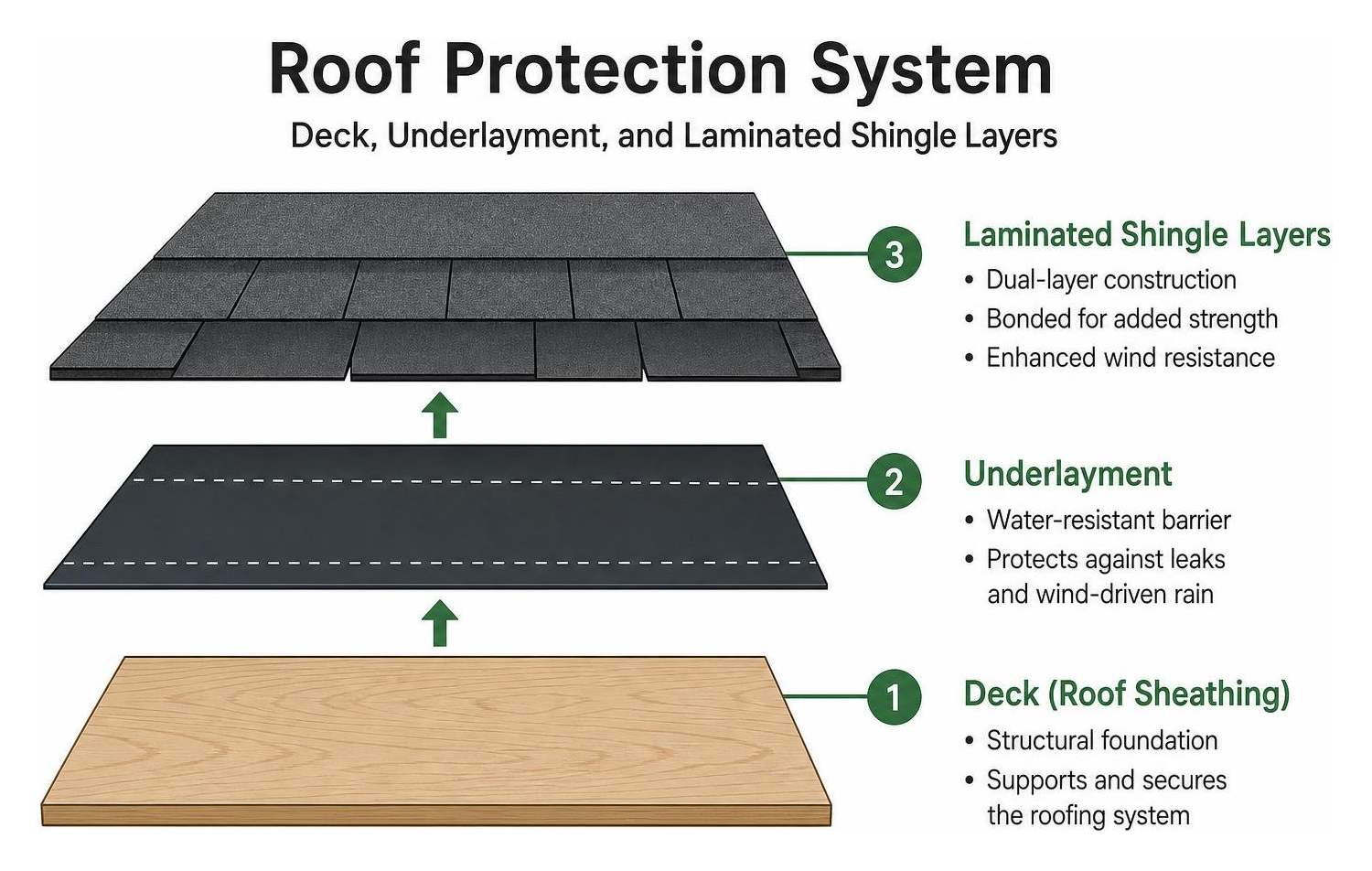
Performance also depends heavily on the supporting roof components. In Northern Illinois, preventing ice dams requires an ice and water shield along eaves and valleys to stop water backup during heavy snow accumulation. At the same time, proper attic ventilation—such as installing ridge ventilation—regulates temperature and moisture levels, preventing shingle blistering and premature aging.
How Polymer Modification Strengthens Architectural Roof Shingles
Standard oxidized asphalt can become brittle in freezing temperatures and soften under blistering summer heat. To overcome this limitation, manufacturers utilize Styrene-Butadiene-Styrene (SBS) polymer modification. Blending rubberized SBS polymers with asphalt creates a rubberized matrix that expands and contracts naturally across changing seasons.
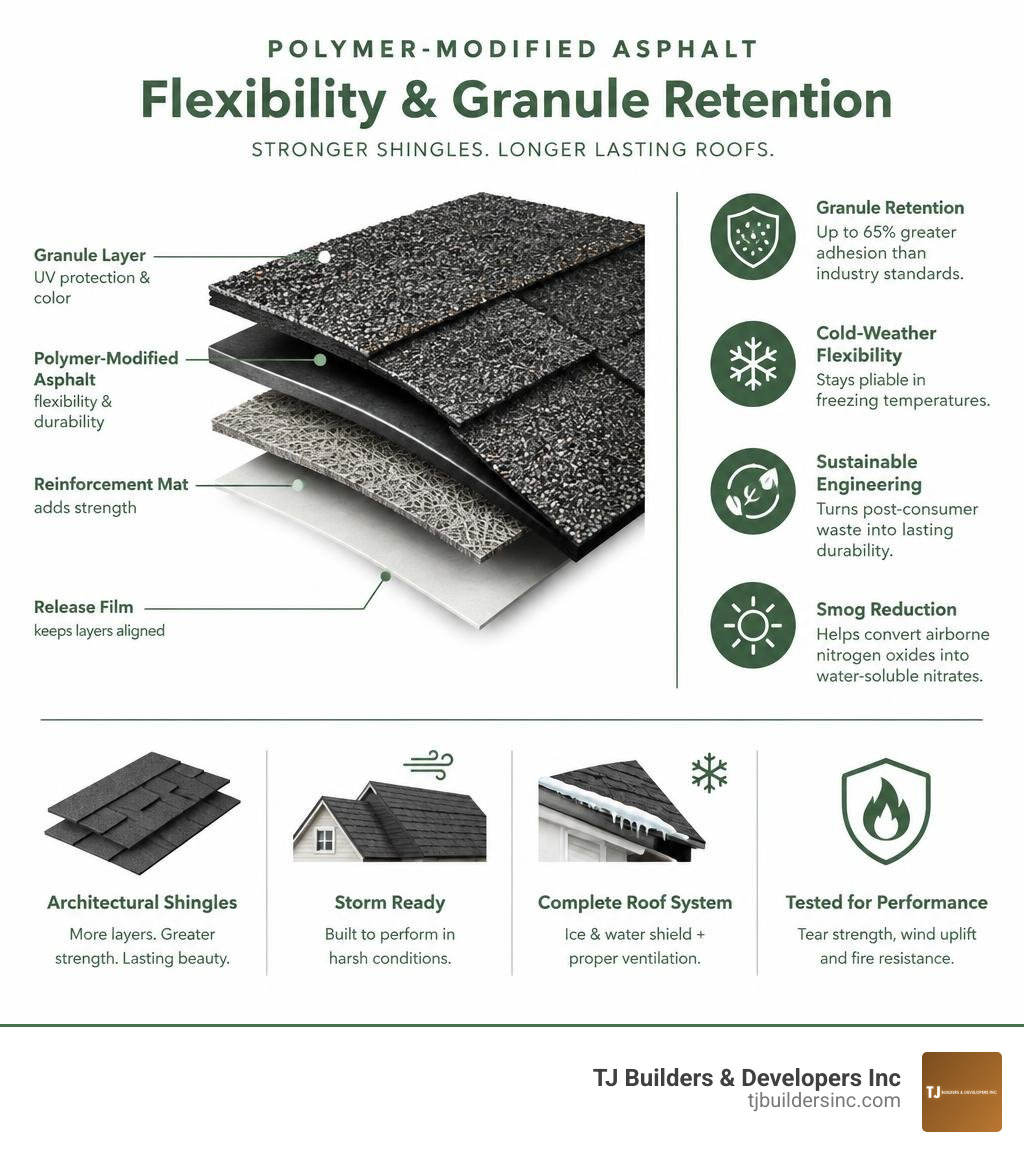
SBS modification provides significant performance advantages:
- Granule Retention: Polymer-modified shingles achieve up to 65% greater granule adhesion compared to industry standards, keeping the protective mineral barrier intact against ultraviolet degradation.
- Cold-Weather Flexibility: Shingles remain pliable during freezing temperatures, preventing cracking during seasonal temperature swings.
- Sustainable Engineering: Modern manufacturing integrates upcycled polymers into the asphalt matrix. For instance, each average-sized roof (30 roofing squares) installed with Malarkey Vista shingles upcycles approximately 5 rubber tires and 3,200 plastic bags, turning post-consumer waste into lasting durability. Homeowners looking to minimize environmental impact can explore eco friendly roofing solutions that support sustainable building practices.
- Smog Reduction: Certain advanced shingles feature photocatalytic granules that convert airborne nitrogen oxides into water-soluble nitrates when activated by sunlight. An average 30-square roof with these granules provides the smog-fighting equivalent of planting two trees.
Impact Resistance and Storm Ratings for Severe Weather
Midwestern storm seasons bring damaging hail that can fracture the internal fiberglass mats of standard shingles, leading to hidden leaks. Shingle impact resistance is evaluated using the UL 2218 standard, which drops solid steel balls of varying diameters from heights up to 20 feet onto the shingle surface:
- Class 1 & 2: Basic resistance against small hailstones.
- Class 3: Withstands drops from a 1.75-inch steel ball, providing solid defense in moderate storm regions.
- Class 4: The highest residential rating, withstanding the direct impact of a 2-inch steel ball dropped from 20 feet without cracking the back of the fiberglass mat.
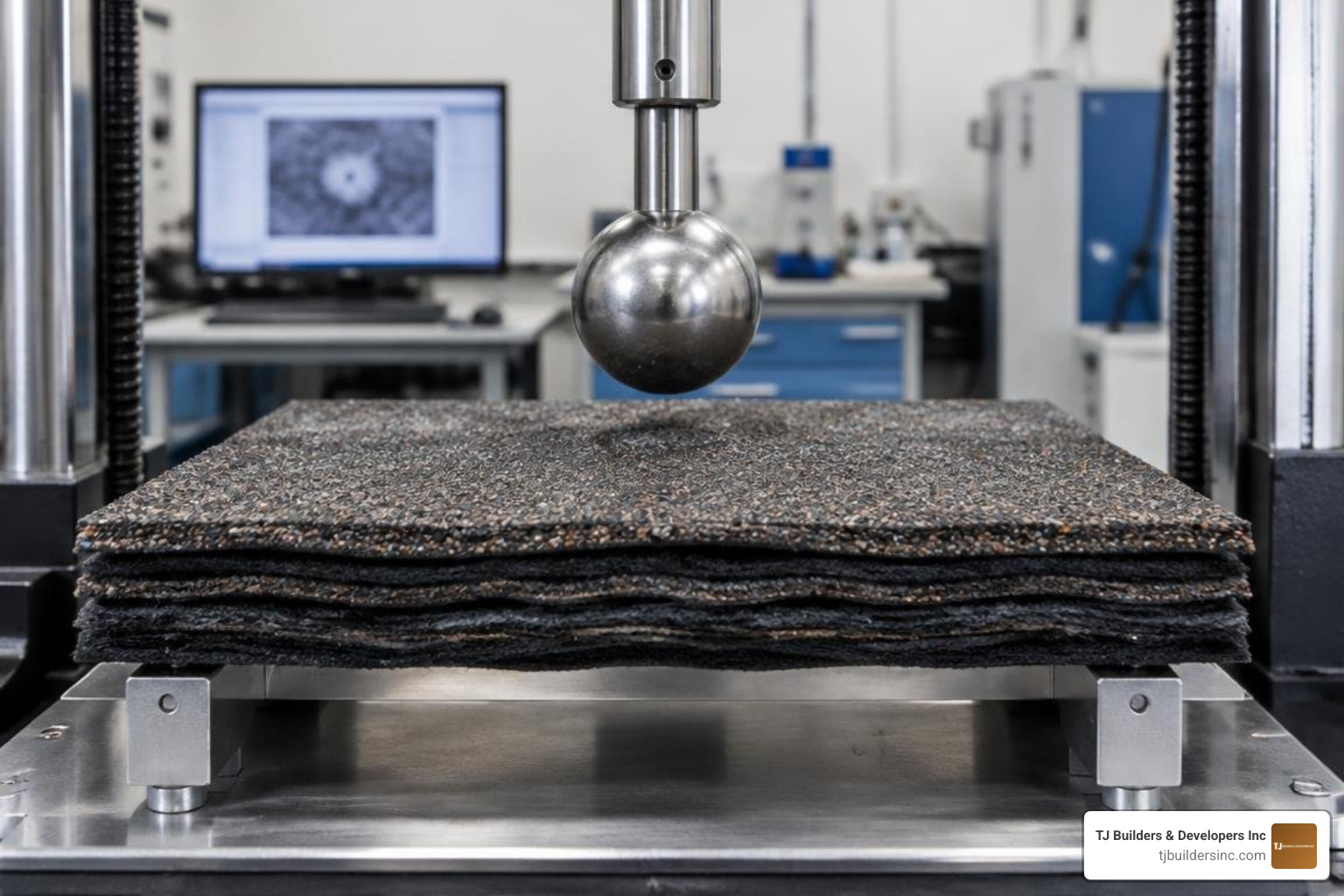
Investing in Class 4 impact-resistant shingles provides essential protection during severe storms. If you suspect recent weather caused shingle bruising or granule dislodgement, our guide on identifying hail damage on your shingles outlines what signs to look for before water penetrates your roof deck. Additionally, many insurance carriers recognize certified Class 4 roofing materials as a factor that may support premium policy benefits for homeowners.
Need Help With Your Home?
TJ Builders & Developers handles roofing, siding, gutters, windows, home additions, and fire damage restoration for homes and businesses in Lakewood, Crystal Lake, Schaumburg, and nearby McHenry County towns.
- Free, no-obligation estimates
- Licensed & insured
- 20+ years of local experience
Long-Term Protection: Warranties, Algae Defense, and Sustainability
A high-performance roof must maintain both its structural integrity and its appearance over decades of exposure. One common issue in humid Midwestern summers is the growth of Gloeocapsa magma, an airborne blue-green algae that leaves unsightly black streaks across roof slopes.
Leading manufacturers incorporate copper-infused granules directly into the mineral cap sheet to maintain consistent curb appeal. For example, GAF Timberline Ultra HD Shingles with StainGuard Plus utilize time-release copper ions that activate with rain moisture to prevent algae growth. Similarly, Malarkey Legacy Architectural Shingles with Scotchgard Protector leverage 3M copper granule distribution to guarantee long-term streak-free clarity. For distinct architectural tones, options like Heritage Rustic Hickory Architectural Shingles provide deep shadow lines and robust granule layers across every 32.8 sq. ft. bundle.
When evaluating warranty packages, the distinction between non-prorated and prorated coverage is critical:
- Non-Prorated Coverage: During this initial protection window (often 10 to 20 years, depending on manufacturer tier), the manufacturer covers 100% of the replacement materials and reasonable labor costs if a manufacturing defect occurs.
- Prorated Coverage: Once the initial window passes, the warranty payout depreciates annually, providing only a fractional credit toward replacement materials while excluding removal and installation labor.
Before starting any replacement project, ensure your contractor complies with municipal building codes, such as the Village of Lakewood guidelines for roof replacement. Working with a team offering expert roof replacement in Lakewood ensures that underlayments, fasteners, and flashing assemblies meet strict local code requirements.
Installation Standards and Roof Maintenance Best Practices
Even the highest-grade architectural shingles will fail prematurely if fastened incorrectly or installed over an unventilated deck. Professional installation requires precise fastener placement, proper exposure alignment, and balanced intake-and-exhaust attic ventilation.
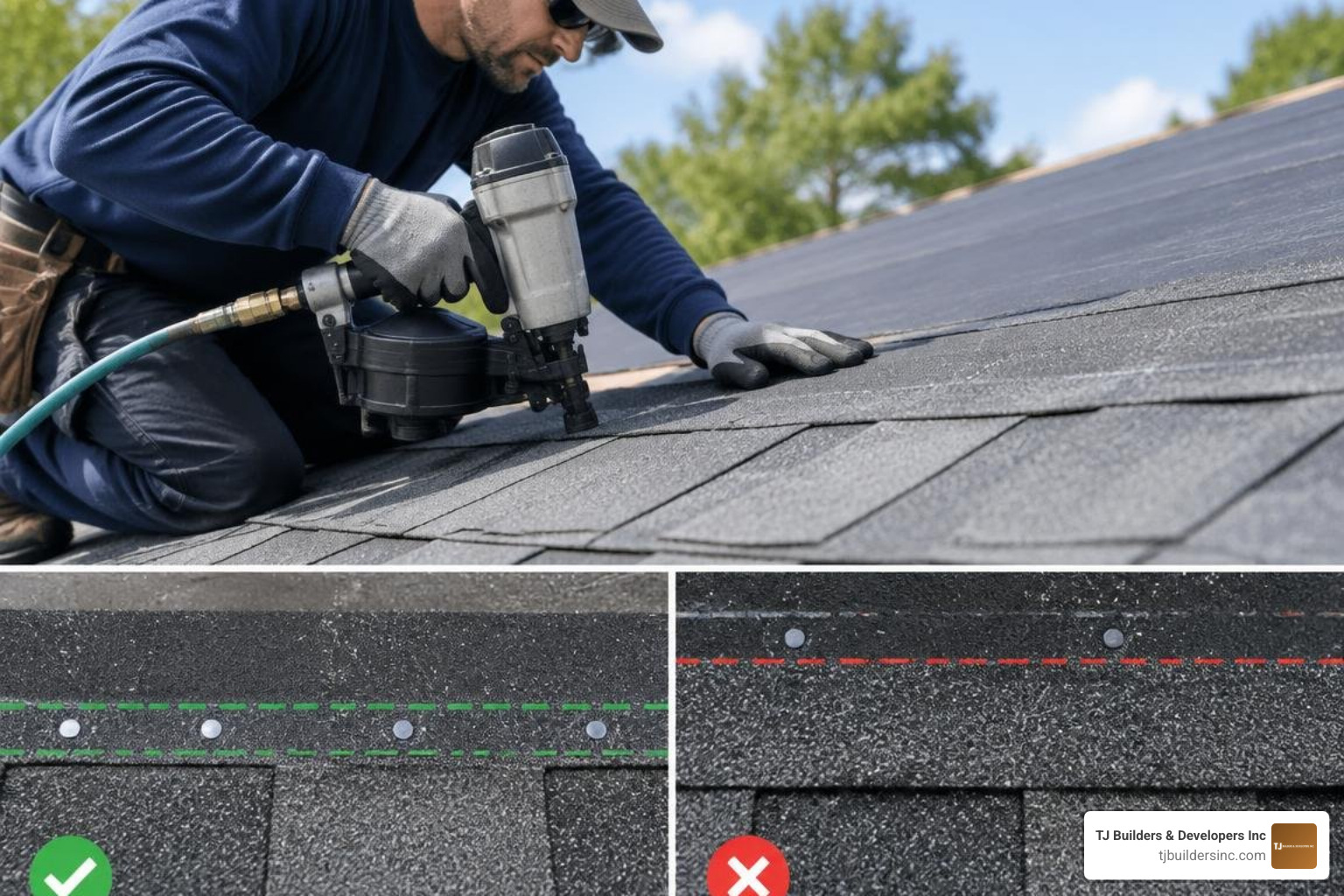
Manufacturers design architectural shingles with dedicated nailing zones. Advanced shingles feature expanded nailing strips—up to twice the width of standard nailing bands—ensuring roofers penetrate both the shingle face and the underlying laminate backer with every fastener. In wind-prone regions like Schaumburg, Huntley, and McHenry, using a 6-nail fastening pattern instead of the standard 4-nail pattern upgrades wind warranty coverage from 110 mph up to 130 mph.
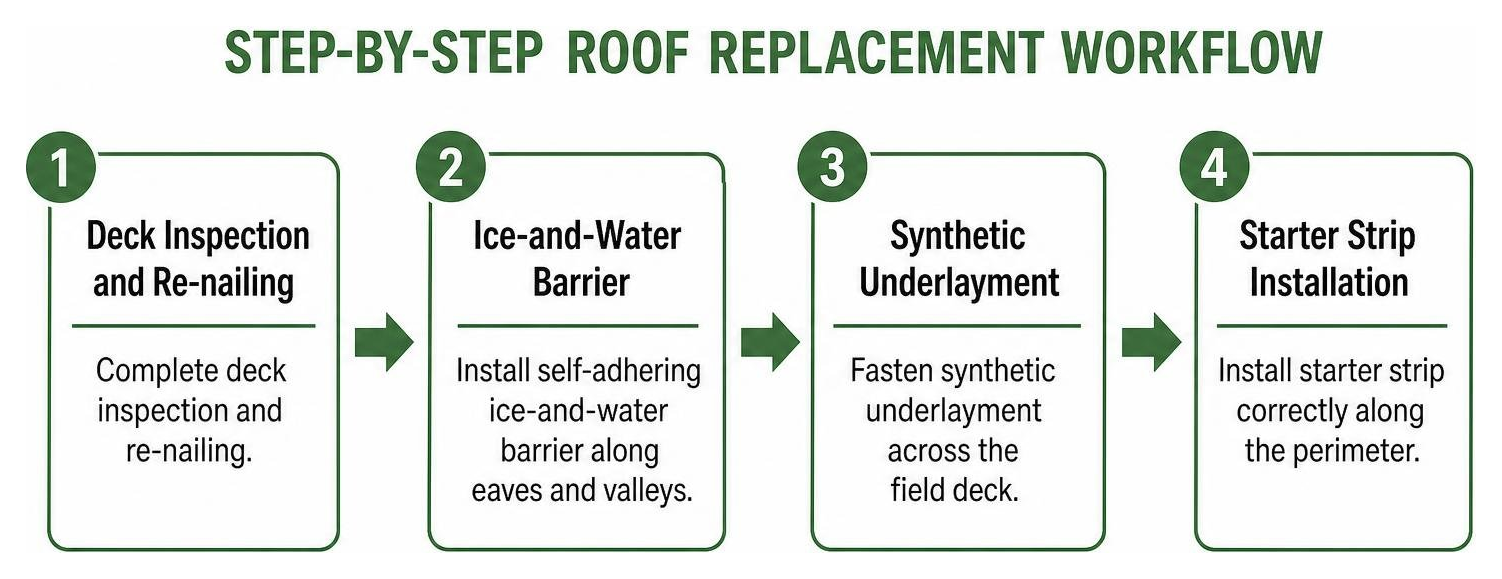
Proper installation requires a systematic workflow:
- Complete deck inspection and re-nailing.
- Installation of self-adhering ice-and-water barrier along eaves and valleys.
- Fastening of synthetic underlayment across the field deck.
- Correct starter strip installation along the perimeter.
- Shingle fastening with hot-dipped galvanized nails within the designated nail zone.
- Ridge cap shingle installation along all hips and ridges.
Reviewing our roof installation and replacement guide provides an end-to-end look at these critical steps. Once installed, schedule routine maintenance and check how often to inspect your roof to identify broken seals, clearing gutter debris, and inspecting flashing around chimneys and skylights before winter weather arrives.
Need Help With Your Home?
TJ Builders & Developers handles roofing, siding, gutters, windows, home additions, and fire damage restoration for homes and businesses in Lakewood, Crystal Lake, Schaumburg, and nearby McHenry County towns.
- Free, no-obligation estimates
- Licensed & insured
- 20+ years of local experience
Frequently Asked Questions About Residential Roofing
What is the difference between Class A fire rating and Class 4 impact rating?
A Class A fire rating measures external fire spread under ASTM E108 / UL 790 testing, verifying that the roofing material prevents airborne burning embers from igniting the structural roof deck below. A Class 4 impact rating evaluates mechanical impact resistance under UL 2218, certifying that the shingle withstands direct strikes from two-inch steel balls without cracking the interior fiberglass mat. Class A protects against fire hazards, while Class 4 protects against severe hail storms.
How do algae-resistant granules prevent roof discoloration?
Algae-resistant granules incorporate copper compounds directly into the ceramic-coated mineral layer. When rainwater coats the roof surface, minute concentrations of copper ions are released evenly across the slope. These ions create an inhospitable environment for Gloeocapsa magma algae spores, preventing the development of unsightly dark stains without harming gutters or surrounding landscaping.
What does non-prorated warranty coverage mean for homeowners?
Non-prorated warranty coverage represents the initial term of a manufacturer’s warranty during which any verified material defect is resolved with 100% financial protection for both replacement shingles and the required installation labor. Unlike prorated coverage—which steadily reduces the payout value as the roof ages—non-prorated protection provides full replacement value during the initial 10 to 20 years of roof ownership.
Conclusion
Choosing the right roofing system protects your family, safeguards your interior living space, and enhances your property’s value. Architectural shingles deliver the dimensional beauty, heavy tear strength, and hail protection needed to withstand Northern Illinois weather year after year.
At TJ Builders & Developers Inc, we bring professional craftsmanship, durable building materials, and complete project oversight to every residential exterior remodel. Whether your home needs a complete tear-off, emergency storm restoration, or updated gutters and siding, our dedicated exterior crews in Lakewood, Crystal Lake, and surrounding suburbs are here to help. Explore our expert residential roofing services to get started with an experienced local contractor committed to protecting your home.