What Are 3 Tab Roof Shingles — and Are They Right for Your Home?
3 tab roof shingles are one of the most widely used roofing materials in North America, covering homes for nearly a century. Here’s a quick summary of what you need to know:
- What they are: Single-layer asphalt shingles with three evenly cut tabs along the bottom edge, creating the look of three separate shingles
- How long they last: 20 to 30 years with proper installation and maintenance
- Key strength: UL Class A fire rating, wind resistance up to 60 mph (warranted), and lab-tested up to 150 mph
- Best for: Budget-conscious homeowners who want reliable, proven protection
- Still available: Yes — major manufacturers like GAF, Owens Corning, CertainTeed, IKO, and Atlas still produce them
- Typical cost: Sold in bundles of 3 per square (100 sq ft), with 79 pieces per square
Asphalt shingles make up roughly 80% of residential roofs across North America — and 3-tab shingles played a major role in building that legacy, dating back to their first release in 1935.
I’m Thomas Pruszynski from TJ Builders & Developers Inc., and over more than 20 years of residential exterior work — including countless 3 tab roof shingle installations across Northern Illinois — I’ve seen what makes these shingles a dependable choice for homeowners. In this guide, I’ll walk you through everything you need to know to make a confident roofing decision.
Easy 3 tab roof shingles word list:
Understanding the Design and Specifications of 3 Tab Roof Shingles
When we talk about 3 tab roof shingles, we are talking about the “OG” of the asphalt world. While modern architectural shingles have become very popular lately, the 3-tab style remains a staple because of its clean, symmetrical look and proven track record.
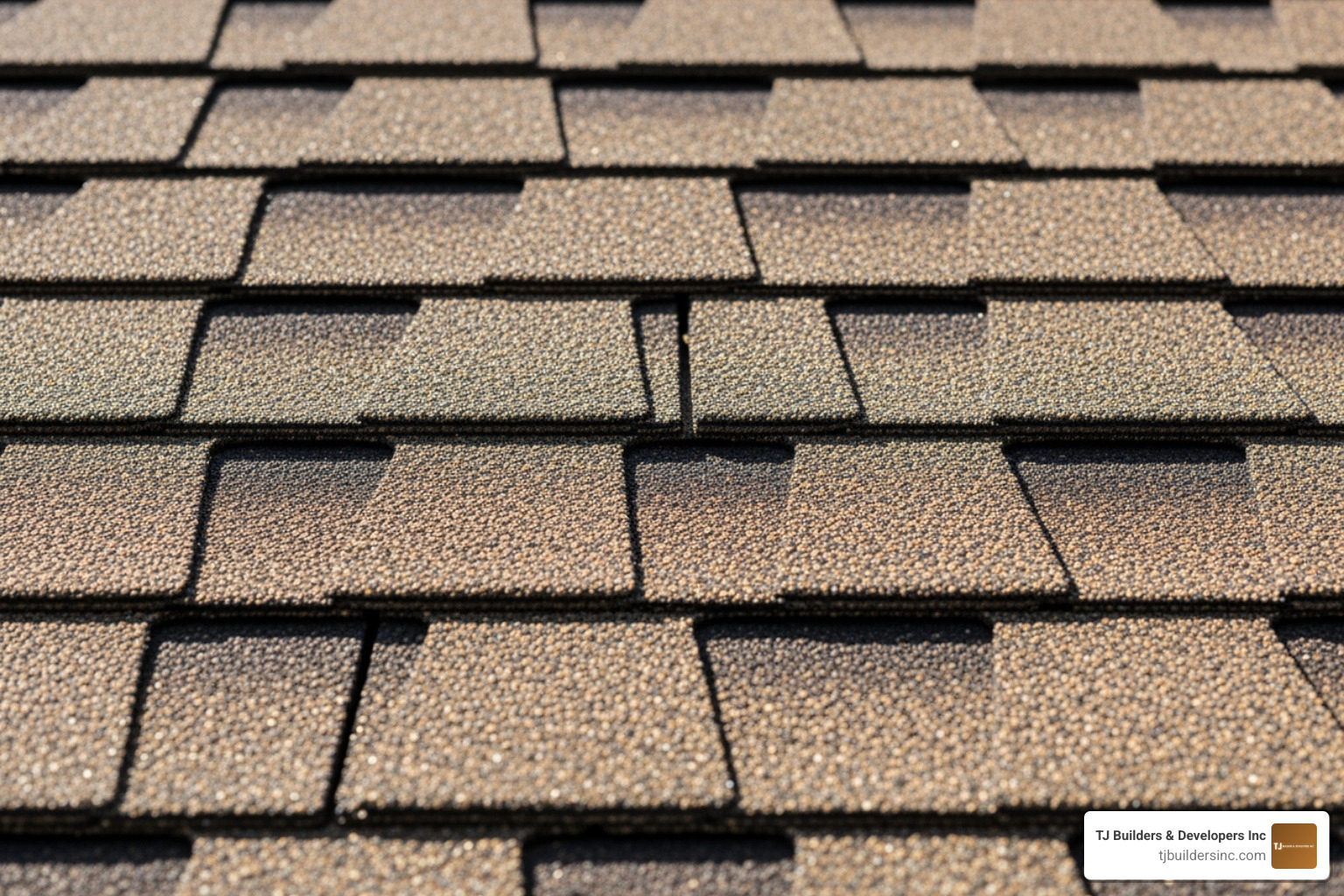
These shingles are designed as a single-layer product. Unlike laminated shingles that have multiple layers bonded together, a 3-tab shingle is a single flat strip. This makes them lighter and gives the roof a very sleek, two-dimensional appearance. If you are looking for a roof that doesn’t distract from the architecture of your home but provides a neat, organized finish, this is your candidate. You can explore more about these and other Asphalt Shingle Options to see how they stack up.
What are 3 tab roof shingles?
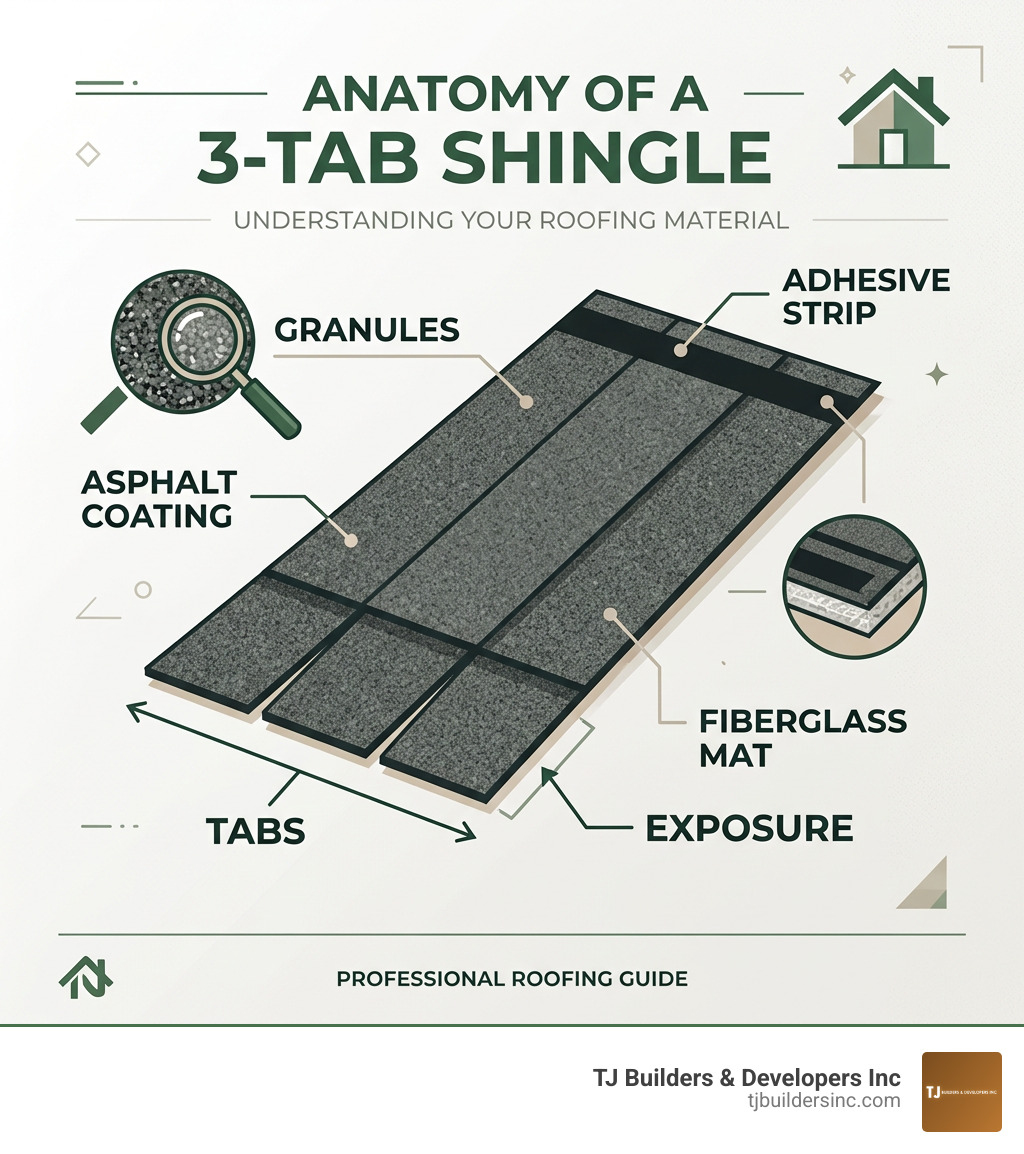
At their core, 3 tab roof shingles are a type of strip shingle. They are manufactured as a long rectangular strip of asphalt-saturated fiberglass. The “3-tab” name comes from the two vertical notches cut into the bottom half of the shingle. When these are installed, those notches create the illusion that you’ve installed three separate, smaller shingles.
They are often referred to as composition roofing because they aren’t just one material; they are a sandwich of fiberglass, asphalt (bitumen), and ceramic-coated granules. Manufacturers like GAF have spent decades refining this composition to ensure that even though the shingle is thin, it is incredibly tough.
Material Composition and Dimensions
Standard 3 tab roof shingles usually come in dimensions of 12″ x 36″ (English size) or slightly larger metric sizes (roughly 13.25″ x 39.375″). Here in the Chicago suburbs, we typically work with the standard English sizes that offer a 5-inch exposure. That “exposure” is the part of the shingle you actually see once the next row is layered on top.
The weight is also a key factor. Because they are a single layer, they are much lighter than architectural shingles. This makes them an excellent choice for older homes in areas like Crystal Lake or Palatine where the roof structure might not be designed to hold the heavy load of premium designer shingles. During a professional Asphalt Roof Installation, this lighter weight also allows for faster staging and installation.
Need Help With Your Home?
TJ Builders & Developers handles roofing, siding, gutters, windows, home additions, and fire damage restoration for homes and businesses in Lakewood, Crystal Lake, Schaumburg, and nearby McHenry County towns.
- Free, no-obligation estimates
- Licensed & insured
- 20+ years of local experience
Performance Standards: Wind, Fire, and Durability
Don’t let the “basic” label fool you—these shingles are built to withstand the volatile weather we get in Northern Illinois. From the humid summers in Schaumburg to the biting winds in Bartlett, 3 tab roof shingles are tested against rigorous industry standards.
One of the most important ratings to look for is the UL Class A fire rating. This is the highest fire resistance rating a roof can achieve, meaning the shingles can withstand severe exposure to fire originating from outside the building. When we install these systems, we ensure they meet these safety benchmarks to protect your family.
Wind Resistance and Weather Protection
Wind is a major concern for homeowners in the Midwest. Most 3 tab roof shingles come with a 60 mph wind warranty. However, high-quality products like the Marquis WeatherMax® line are actually tested in laboratory settings to withstand much higher speeds—up to 150 mph under specific conditions.
To achieve this level of protection, manufacturers use specialized adhesives like DuraGrip. This is a factory-applied sealant that bonds the shingles together once the sun warms them up. For homeowners looking for the ultimate guide on how these systems hold up, our Roof Installation & Replacement Complete Guide breaks down the science of wind uplift and how we prevent it.
Long-Term Durability Factors
One common myth is that 3-tab shingles will turn green or black with mold in just a few years. While algae can be a problem in damp climates, many modern 3-tab options feature StainGuard technology. This involves copper-containing granules that are fired onto the shingle surface using a ceramic firing process. This helps prevent the growth of blue-green algae, keeping your roof looking new for longer.
If you are considering Reroofing, it is worth looking at products with these advanced coatings. They help maintain the color retention of the shingle, so the “Charcoal” or “Weathered Wood” color you pick today still looks great ten years from now.
The Installation Process for a Long-Lasting Roof
Proper installation is the difference between a roof that lasts 25 years and one that leaks after the first major storm. At TJ Builders & Developers Inc., we follow a strict protocol to ensure every layer of the system works together.
The process starts with a clean deck. We remove the old materials and inspect the wood for any rot. Then, we install a leak barrier (especially in valleys and around chimneys) and a high-quality roof deck protection. These are the “unsung heroes” that sit under your 3 tab roof shingles and keep the water out.
Best Practices for Installing 3 tab roof shingles
Precision is key with 3-tab shingles. Because they are uniform, any mistake in the “run” (the horizontal line) will be immediately visible from the street. We use chalk lines to ensure every row is perfectly straight.
- Starter Shingles: We always use a dedicated starter strip. This provides the first line of defense against wind uplift at the eaves.
- Nailing Pattern: A standard 4-nail pattern is used for most homes. However, in high-wind areas or on steep slopes, we move to a 6-nail pattern to provide extra “bite.”
- Staggered Layout: We never line up the tabs vertically from one row to the next. They must be staggered to ensure water is shed effectively down the roof.
For more technical details, you can refer to the Royal Sovereign Installation Instructions which we often use as a baseline for our high standards in Roofing.
Finishing Touches: Hips and Ridges
A roof isn’t finished until the “caps” are on. For 3-tab roofs, we often use matching ridge cap shingles that are designed to fold over the peak of the roof. This provides a finished look and seals the highest point of the home against rain.
We also pay close attention to attic ventilation. A roof that can’t “breathe” will cook the shingles from the inside out, leading to premature granule loss. By installing ridge vents and ensuring proper intake at the soffits, we help regulate the temperature of your roof deck. If you ever notice shingles curling at the edges, it might be a sign you need a Roof Repair focused on ventilation.
Need Help With Your Home?
TJ Builders & Developers handles roofing, siding, gutters, windows, home additions, and fire damage restoration for homes and businesses in Lakewood, Crystal Lake, Schaumburg, and nearby McHenry County towns.
- Free, no-obligation estimates
- Licensed & insured
- 20+ years of local experience
Maintenance and Lifespan of 3-Tab Shingle Systems
How long will your roof last? In the Lakewood and Crystal Lake area, a well-maintained 3 tab roof shingle system can realistically last between 20 and 30 years. However, this isn’t a “set it and forget it” product.
| Feature | 3-Tab Shingles |
|---|---|
| Expected Lifespan | 20–30 Years |
| Annual Maintenance | Gutter cleaning, debris removal |
| Wind Warranty | 60 mph (standard) |
| Fire Rating | Class A |
| Best For | Value and traditional aesthetics |
Maximizing the Life of 3 tab roof shingles
To get the full 30 years out of your roof, you need to be proactive. In our local Illinois climate, ice dams are a major threat. When snow melts and refreezes at the gutters, it can back up under the shingles. Ensuring your attic is properly insulated and ventilated is the best way to prevent this.
We also recommend:
- Gutter Cleaning: Clogged gutters cause water to back up under the eave shingles.
- Debris Removal: Leaves and branches trapped in valleys hold moisture against the shingles, which can lead to rot.
- Granule Monitoring: If you start seeing a lot of “sand” in your downspouts, it’s a sign the shingles are reaching the end of their life.
If you stay on top of these small tasks, your Roofing system will protect your home for decades.
Frequently Asked Questions about 3-Tab Roofing
Are 3-tab shingles still manufactured and available?
Absolutely. While many contractors push the more expensive architectural shingles, 3-tab shingles remain in high demand for their affordability and classic look. Major brands like GAF (with their Royal Sovereign® line) and Owens Corning continue to produce them in a variety of colors like Autumn Brown, Charcoal, and Weathered Wood.
How do 3-tab shingles perform compared to architectural shingles?
Architectural shingles are thicker and generally have higher wind ratings (often up to 130 mph). However, 3 tab roof shingles are much more cost-effective. If you live in an area with moderate weather and are looking for a reliable roof that fits a tighter budget, 3-tab shingles are an excellent choice. They offer the same Class A fire protection and water-shedding capabilities as their thicker cousins.
Are 3-tab shingles suitable for all climates?
They are suitable for most residential applications, but they perform best in climates where extreme wind (over 60-70 mph) is not a daily occurrence. In Northern Illinois, they are a very common and appropriate choice. However, if your home is in a particularly exposed area with no windbreaks, we might discuss upgraded options to ensure your long-term peace of mind.
Conclusion
Choosing the right roof is about balancing performance, aesthetics, and budget. For many homeowners in Lakewood, Crystal Lake, and the surrounding Chicago suburbs, 3 tab roof shingles offer the perfect middle ground. They provide a clean, traditional look with the durability needed to handle our Midwestern seasons.
At TJ Builders & Developers Inc., we believe in doing the job right the first time. Whether you are in Schaumburg, Bartlett, or Mount Prospect, we bring professional workmanship and a commitment to long-term property protection to every project. If you’re ready to discuss a new roof or just have questions about your current one, we’re here to help.
Ready to protect your home with a classic? Explore our Roofing services today and let’s build something that lasts.