Why Regular Roof Inspections Are Your Home’s Best Defense
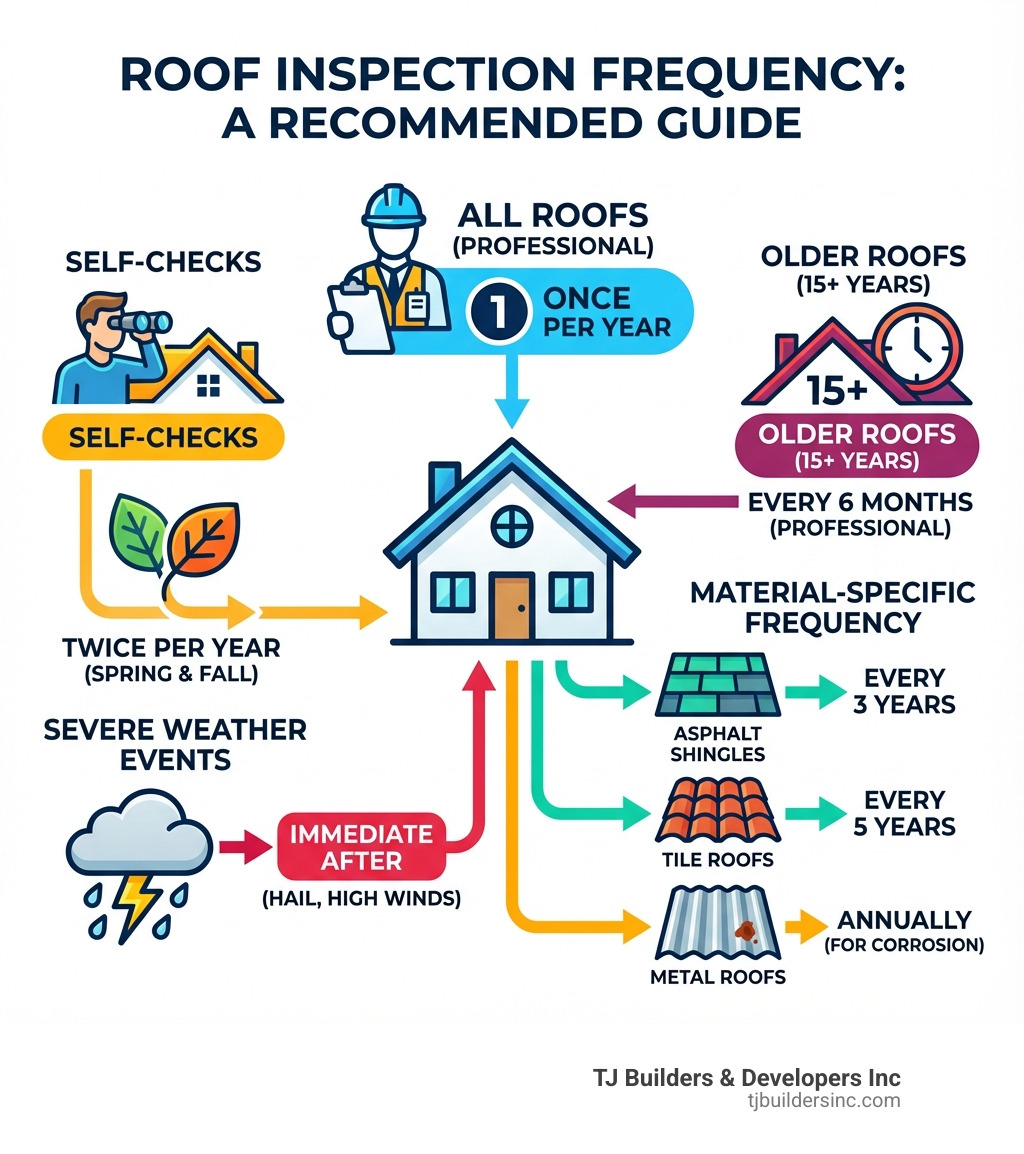
How often should you inspect your roof? Here’s what roofing experts recommend:
- Professional inspections: Once per year minimum
- Self-checks: Twice per year (spring and fall)
- After severe weather: Within 48 hours of hail, high winds, or heavy storms
- Older roofs (15+ years): Every 6 months professionally
- New roofs (under 5 years): Annual professional inspection is sufficient
Your roof is one of the most important—and most expensive—parts of your home. It protects everything underneath from rain, wind, snow, and sun. But here’s the problem: most homeowners don’t think about their roof until something goes wrong.
By then, it’s often too late. A small leak that could have been fixed for a few hundred dollars can turn into thousands in structural damage, mold remediation, and interior repairs.
The good news? Regular inspections catch these problems early. According to the National Roofing Contractors Association, approximately 30% of insurance claims are due to leaking roofs and water intrusion. Even more surprising: more than 85% of homes are sold with some form of roof damage or leaks that could have been prevented.
Think of roof inspections like going to the dentist. You don’t wait until your tooth hurts to get a checkup. The same logic applies to your roof. Regular inspections give you peace of mind and protect your investment.
The right inspection schedule depends on several factors: your roof’s age, the materials it’s made from, your local climate, and whether you’ve recently experienced severe weather. Understanding these factors helps you create a proactive maintenance plan that extends your roof’s life and saves you money in the long run.
Need Help With Your Home?
TJ Builders & Developers handles roofing, siding, gutters, windows, home additions, and fire damage restoration for homes and businesses in Lakewood, Crystal Lake, Schaumburg, and nearby McHenry County towns.
- Free, no-obligation estimates
- Licensed & insured
- 20+ years of local experience
How Often Should You Inspect Your Roof? A Guide to Frequency
Determining how often should you inspect your roof isn’t a one-size-fits-all answer, but there are clear guidelines we recommend for homeowners in Lakewood, Crystal Lake, Schaumburg, and the wider Chicago suburbs. Most roofing professionals agree that a proactive approach is key. As a general rule, we advise homeowners to get their roof professionally inspected at least once a year. This regular check-up helps us catch potential issues before they become costly emergencies.
Beyond professional assessments, we encourage homeowners to perform their own visual self-checks at least twice a year. The National Roofing Contractors Association also recommends a self-check at least twice a year in addition to professional inspections. These milder seasons, typically spring and fall, are ideal for a quick glance to spot obvious problems.
The importance of these routine checks cannot be overstated. As the Society Insurance blog aptly puts it, “Roof inspections should be routinely conducted at least twice per year, typically during milder seasons of the year such as spring and fall.” This consistent vigilance is your first line of defense against the elements.
How do different roofing materials affect inspection frequency?
The type of material covering your home significantly influences how often should you inspect your roof. Different materials have varying lifespans and unique vulnerabilities, meaning their inspection needs will differ.
- Asphalt and Composite Shingles: These are some of the most common roofing materials in our area. While durable, they are susceptible to damage from harsh weather and UV exposure over time. An asphalt or composite shingle roof typically needs professional inspection about every three years. However, given the freeze-thaw cycles and severe weather we experience in Illinois, we often recommend annual professional checks, especially as the roof ages. Their lifespan usually ranges from 20 to 30 years, with some lasting up to 40-50 years with proper care.
- Wood Shingles (Shakes): Known for their rustic aesthetic, wood shingles require professional inspection approximately every three years. They are prone to moisture absorption, which can lead to rot, mold, and splitting, particularly with our region’s fluctuating temperatures and humidity. With proper maintenance, a wood shingle roof can last around 30 years.
- Tile Roofs (Clay, Concrete, Slate): These materials are renowned for their longevity, often lasting 40 to 60 years, with slate and concrete tiles potentially exceeding 100 years. Because of their durability, tile roofs can often go up to five years between professional inspections. However, individual tiles can crack or shift, leading to leaks, so regular visual checks remain important.
- Metal Roofs: Metal roofs are increasingly popular for their durability and lifespan, which can extend up to 50 years, and even 100 years for copper. While highly resilient, metal roofs should still be inspected annually. We look for issues like loose panels, corroded seams, and damage from hail or falling debris, all of which can compromise their integrity.
Regardless of the material, even the most robust roofs benefit from consistent attention. The goal is to match your inspection frequency to your roof’s specific needs, ensuring its longevity and performance.
What other factors influence inspection frequency?
Beyond roofing materials, several other critical factors dictate how often should you inspect your roof. These elements combine to create a unique risk profile for every home in the Chicago suburbs.
- Roof Age: This is arguably one of the most significant factors. A newer roof (under five years old) might only need an annual professional inspection if there are no signs of trouble. However, “Roofs nearing the end of their lifespan (typically 20-30 years) may need more frequent inspections,” sometimes as often as every six months. Older roofs are naturally more susceptible to wear and tear, and minor issues can escalate quickly.
- Climate Impact: Our Illinois climate, characterized by distinct seasons and often severe weather, plays a huge role.
- Freeze-Thaw Cycles: The repeated freezing and thawing of water, a common occurrence in our region, puts immense stress on roofing materials. Water expands by 9% when it freezes, which can lead to cracks, lifted shingles, and compromised seals. This phenomenon can affect all roofing types, from asphalt shingles that curl and lose granules to metal roofs that corrode at seams, or wood shakes that absorb moisture.
- Heavy Rain: Prolonged or intense rainfall can expose weaknesses, leading to leaks, especially if flashing is compromised or gutters are clogged.
- High Winds: Strong winds, a frequent companion to Illinois storms, can lift, tear, or even entirely remove shingles. They can also cause debris to impact the roof, leading to punctures or cracks.
- Snowfall: Heavy snow loads can stress the roof structure and, as it melts and refreezes, contribute to ice dam formation, which can force water under shingles and into your home.
- Overhanging Trees: While beautiful, trees close to your home can be a roof’s worst enemy. Falling branches can cause direct impact damage, and leaves and debris can accumulate in valleys and gutters, leading to moisture retention, granule loss, and even vegetation growth that can penetrate the roof surface. If you have large trees near your home in Lakewood or Crystal Lake, we recommend more frequent checks.
- Previous Damage: If your roof has sustained damage in the past, even if repaired, it’s wise to increase inspection frequency. Repaired areas, while sound, can sometimes be more vulnerable to future issues.
Considering these factors allows us to tailor an inspection schedule that provides optimal protection for your home.
When is the best time of year for an inspection?
For homeowners in the Chicago suburbs, timing your roof inspections is crucial. We generally recommend scheduling professional roof inspections twice a year, specifically in the spring and fall. These milder seasons offer the best conditions for a thorough assessment and strategic preparation.
- Spring Inspections: After the long, harsh Illinois winter, a spring inspection is vital. It allows us to assess any damage caused by snow, ice, freeze-thaw cycles, and winter storms. We look for missing or cracked shingles, compromised flashing, and any signs of water intrusion that might have occurred during the colder months. Catching these “smaller issues” in the spring can prevent them from escalating with summer rains.
- Fall Inspections: A fall inspection is all about pre-winter preparation. This is arguably “the most vital time of year for roof inspections” as it allows us to address any repairs or maintenance needs before winter sets in. Frigid temperatures can compromise the success of new roof installations and repairs, as materials may not seal properly, and working conditions become treacherous. By inspecting in the fall, we can ensure your roof is sealed, secure, and ready to withstand the coming snow, ice, and freezing temperatures, protecting your home throughout the winter.
Additionally, regardless of the season, any significant weather event—such as a major hailstorm, strong winds, or exceptionally heavy snowfall—should always trigger an immediate, post-event inspection. We’ll discuss this more below.
Need Help With Your Home?
TJ Builders & Developers handles roofing, siding, gutters, windows, home additions, and fire damage restoration for homes and businesses in Lakewood, Crystal Lake, Schaumburg, and nearby McHenry County towns.
- Free, no-obligation estimates
- Licensed & insured
- 20+ years of local experience
Warning Signs: When Your Roof Needs an Immediate Inspection
While routine inspections are essential, sometimes your roof sends out an SOS that demands immediate attention. Knowing these warning signs can help you prevent a small problem from spiraling into a major headache for your home in Schaumburg or any Chicago suburb.
Severe Weather Events
Our Illinois weather can be unpredictable, and certain events should always prompt an inspection, even if you just had one.
- Hail Damage: Hailstorms can cause significant, often unseen, damage to shingles, leading to granule loss, cracks, or bruising that compromises the shingle’s integrity.
- Wind Damage: High winds can lift, tear, or completely remove shingles, especially around edges and ridges. You might also notice loose or damaged flashing after a windy day.
- Heavy Snowfall & Ice Dams: While beautiful, heavy snow can put immense stress on your roof structure. As it melts and refreezes, it can lead to ice dams, which force water under shingles and into your home.
- Active Leaks: This is the most urgent sign. If you notice water actively dripping or pooling inside your home, don’t wait. An immediate inspection is necessary to pinpoint the source and prevent further damage.
The National Roof Certification and Inspection Association (NRCIA) states that the number one cause of roof issues is inadequate or deferred roof maintenance. The longer it takes you to notice a problem, the more you will pay to fix it. If you suspect damage or notice any of the signs below, contact us for immediate assistance. For more information on roof repair services, please visit our dedicated page: More info about roof repair services.
Exterior Signs of Damage
These are the clues your roof gives you from the outside. A quick visual check from the ground (or safely from a ladder) can reveal many of these.
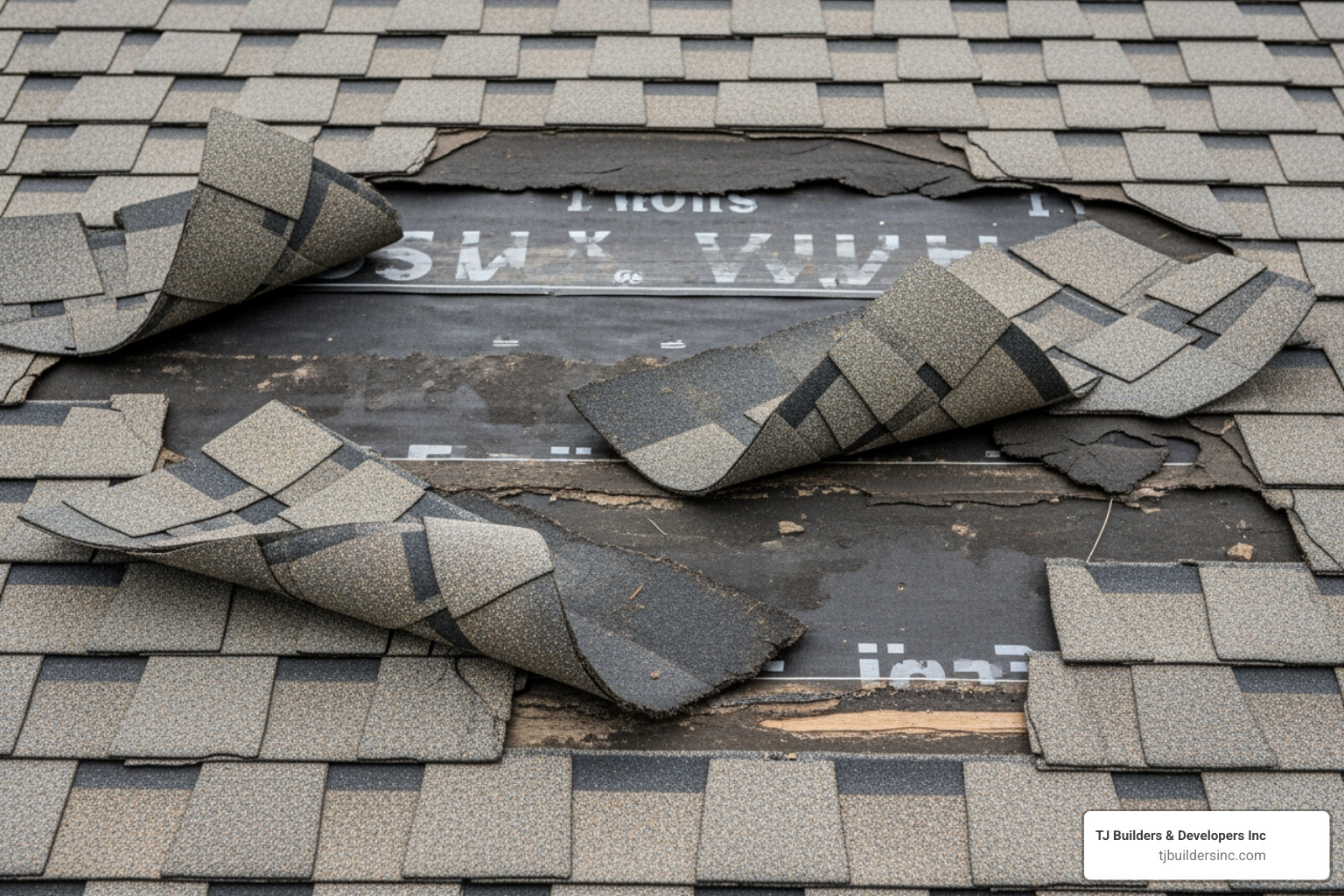
- Missing Shingles: This is an obvious one. If you see bald spots or shingles on your lawn, your roof needs attention.
- Curling or Buckling Shingles: Shingles that are curling at the edges, lifting, or buckling in the middle are signs of aging, moisture absorption, or improper installation.
- Cracked Shingles: Cracks can allow water to penetrate the protective layers of your roof.
- Granule Loss in Gutters: Asphalt shingles lose granules over time, but excessive amounts in your gutters or downspouts indicate significant wear and tear.
- Damaged Flashing: Flashing around chimneys, vents, skylights, and in valleys is crucial for waterproofing. If it’s bent, rusted, loose, or missing, it’s an open invitation for leaks.
- Sagging Roof Deck: A visible sag or dip in your roofline indicates potential structural issues that require immediate professional assessment.
- Moss or Algae Growth: While some moss might seem harmless, extensive growth can trap moisture, deteriorate roofing materials, and indicate underlying issues.
- Discolored Streaks: Dark, discolored streaks are often signs of algae, mold, or mildew, which can degrade your shingles over time.
Interior Signs of Damage
Sometimes, your roof problems manifest inside your home, often in the attic or on ceilings and walls.
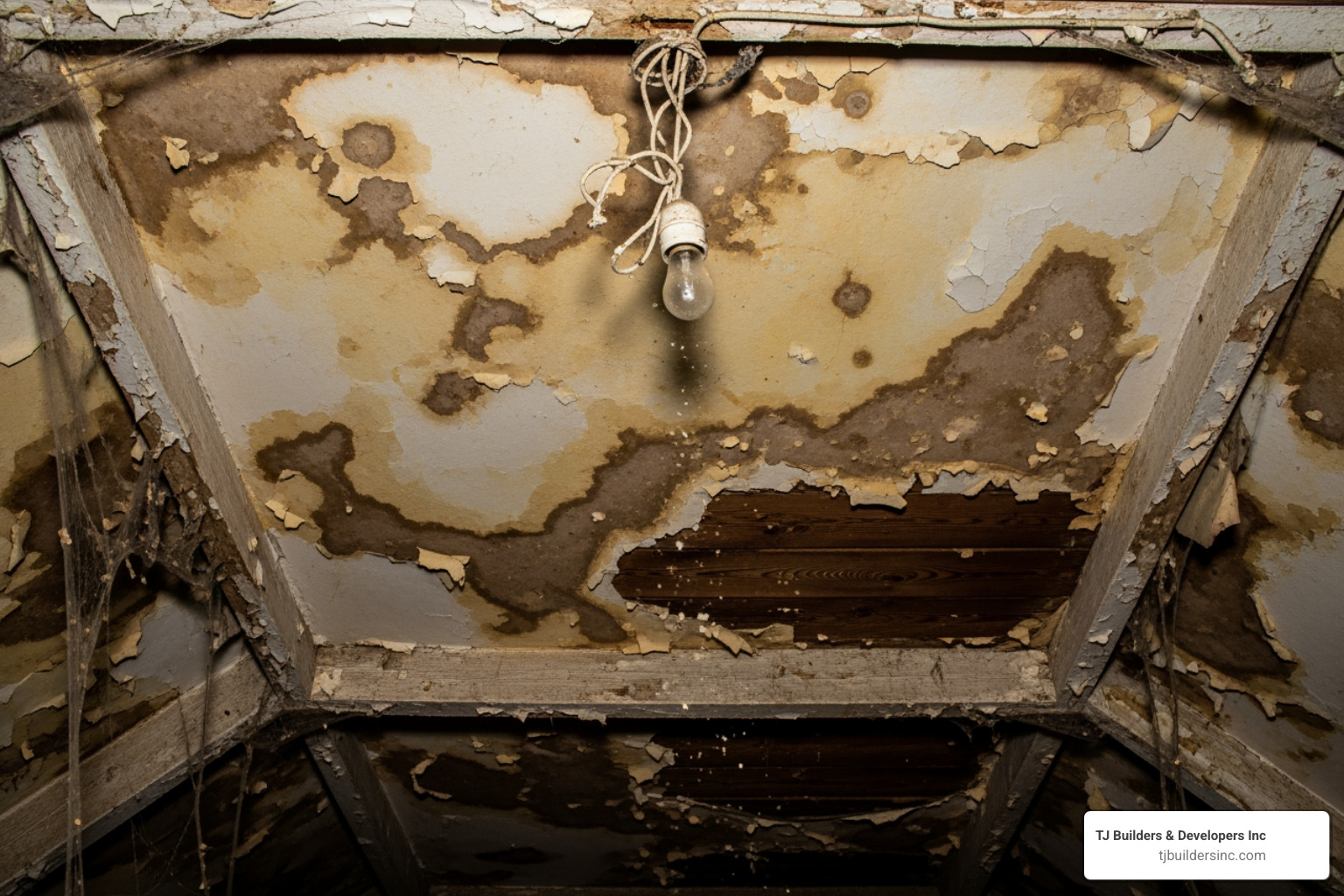
- Ceiling Spots or Water Stains: These are classic indicators of a roof leak. Even a small, discolored spot on your ceiling or walls suggests water is getting through.
- Wall Discoloration: Similar to ceiling spots, streaks or discoloration on interior walls can point to water intrusion.
- Mold or Mildew Smell in Attic: A musty odor in your attic or upper floors suggests moisture buildup, which can lead to mold growth and significant health hazards.
- Peeling Paint: Peeling paint on interior walls or ceilings, particularly in upper rooms, can be caused by moisture seeping in from the roof.
- Visible Daylight Through Roof Boards: If you can see daylight peeking through your attic roof boards, that’s a clear sign of gaps or holes that need immediate repair.
DIY vs. Professional Inspections: What’s the Difference?
When it comes to roof inspections, many homeowners wonder if they can simply do it themselves. While some homeowner checks are beneficial, there’s a significant difference between a DIY visual inspection and a comprehensive professional assessment. We believe in empowering homeowners with knowledge, but also emphasizing safety and expertise.
Can homeowners perform their own roof inspections?
Yes, homeowners can and should perform their own regular visual inspections. These self-checks are crucial for catching obvious issues between professional visits. However, prioritize safety. The National Roofing Contractors Association (NRCA) “does not encourage homeowners to go up on the roof due to unstable footing on sloped roofs and the high risk of falling.” We echo this sentiment. The Occupational Safety and Health Administration (OSHA) has strict guidelines for the protection of roofing workers, and homeowners typically lack the training and equipment to safely steer a roof.
Here’s what you can do safely:
- Ground-Level Checks: Walk around your home, looking for missing shingles, debris, or granules in your gutters. Use binoculars to get a closer look at the roof surface for curling, buckling, or cracked shingles.
- Gutter Inspection: After a storm, check your gutters for excessive shingle granules, which indicate wear. Also, ensure they are free of leaves and debris to allow for proper drainage. For more information on maintaining your gutters, visit our page on More info about gutters installation and replacement.
- Attic Inspection: Safely enter your attic (if accessible) and look for signs of water stains, mold, or visible daylight coming through the roof boards. Also, check for proper ventilation.
These DIY checks are excellent for early detection, but they are not a substitute for a professional inspection.
What are the key components of a professional roof inspection?
A professional roof inspection is a thorough, multi-point assessment performed by trained and certified experts. It goes far beyond what a homeowner can safely or effectively observe. Our professionals at TJ Builders & Developers Inc. are equipped to identify subtle issues that an untrained eye might miss.
Here’s a comparison of what a DIY check might cover versus a professional inspection:
| Feature | DIY Check (Safe for Homeowners) | Professional Inspection (Comprehensive) -|
| Structural inspection | No | Yes (checks for sagging, uneven planes, and structural integrity) -|
| Material inspection | Limited (visible cracks, missing shingles) | Yes (examines shingle condition, granule loss, blistering, curling, and material-specific issues like rust on metal or cracks in tile) -|
| Interior inspection | Yes (attic for leaks, stains, mold) | Yes (comprehensive check of attic, insulation, ventilation, and signs of moisture) -|
| Workmanship assessment| No | Yes (evaluates installation quality, nail patterns, and adherence to building codes) -|
| Flashing | Limited (visible damage from ground) | Yes (detailed check of all flashing around chimneys, vents, skylights, and valleys for proper sealing and condition) -|
| Soffit and fascia | Limited (visible rot or damage) | Yes (inspects for rot, damage, and proper attachment) -|
| Ventilation | Limited (can check if vents are blocked) | Yes (assesses the entire ventilation system for proper airflow, which is critical for roof longevity and energy efficiency) -|