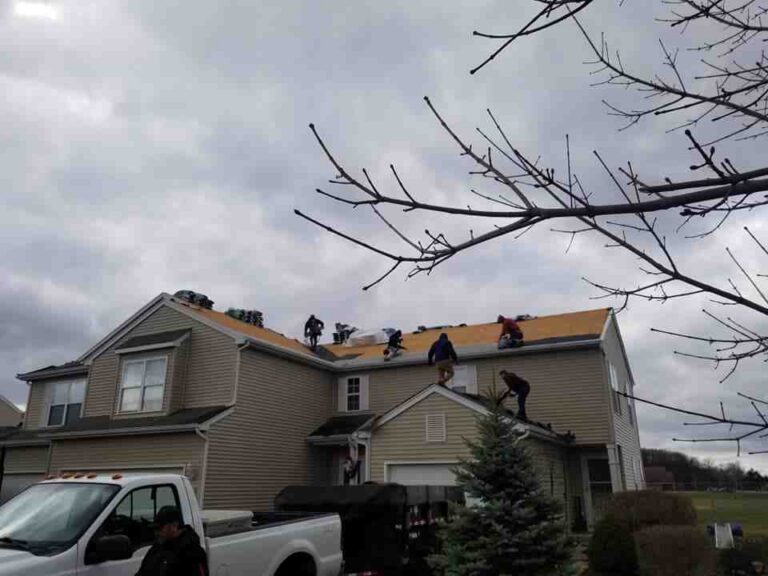
Why All Roof Repairs Start With Early Detection
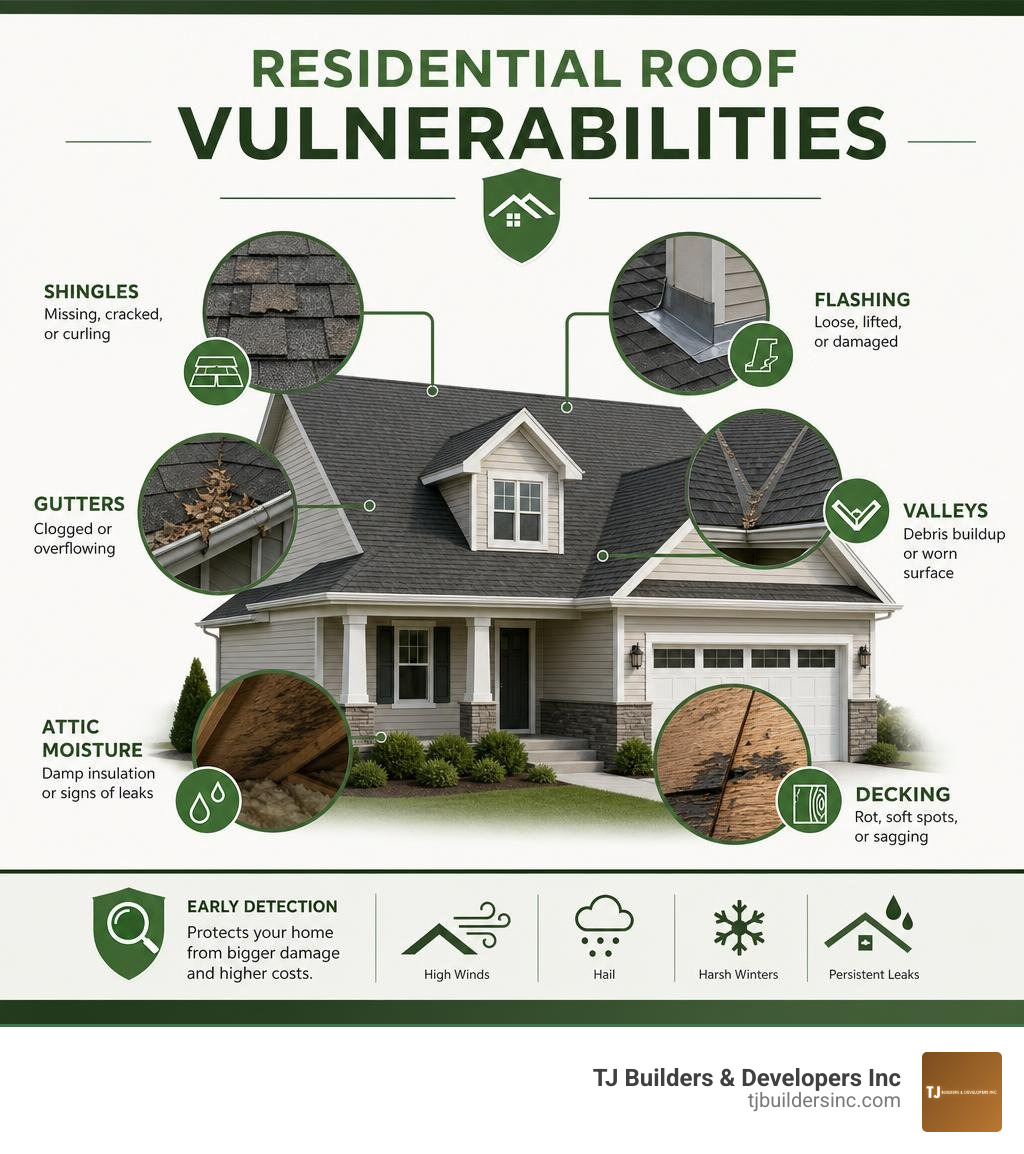
All roof repairs begin with finding the real source of damage, not just covering a visible leak. Check for missing, cracked, or curling shingles; loose flashing; ceiling stains; damp attic insulation; sagging roof areas; and clogged gutters. Then arrange a professional inspection, especially after hail, high winds, or a harsh Northern Illinois winter.
Small repairs often protect the roof deck, framing, insulation, and interior finishes from far more expensive water damage. A few damaged shingles or failed flashing may be repairable, while widespread wear, repeated leaks, or rotted decking can point to replacement instead.
I am Thomas Pruszynski, owner of TJ Builders & Developers Inc. For more than 20 years, our team has helped homeowners protect and restore their properties with quality exterior work, including all roof repairs that address both visible damage and the building materials beneath it.
Quick all roof repairs terms:
Identifying Common Roofing Damage and Warning Signs
Early Warning Signs That Demand All Roof Repairs Immediately
Roofs rarely fail without sending early warning signals. Recognizing minor degradation early makes the difference between an isolated repair and widespread interior restoration. One of the most common early alerts is shingle curling, clawing, or cupping. As asphalt shingles age, volatile oils evaporate, causing edges to curl upward or centers to buckle under extreme sun exposure.

Granule loss is another telltale sign. Shingle granules shield underlying asphalt from harsh ultraviolet radiation. If you notice bare patches on shingles or mineral sediment collecting in gutter troughs, the protective shield is actively deteriorating.
Water rarely enters a home in a straight downward line. When exterior moisture breaches the surface, timely emergency roof repair leak detection is vital to trace leaks back through rafters and insulation to their actual entry points. Inside the home, subtle warning signs include:
- Dark ceiling discoloration or peeling paint around upper-floor crown molding
- Musty odors emanating from attic crawlspaces
- Damp, compressed attic insulation that has lost its thermal R-value
- Dried, cracked perimeter sealant around roof penetrations, skylights, and vents
Addressing these indicators at the first sign of trouble keeps repair scopes contained and shields your home from escalating structural compromises.
Framework Rot and Structural Decking Issues
A roofing system is much more than its top layer of shingles or metal panels; it relies on solid decking, underlayment, and framing timbers underneath. When continuous moisture penetrates past the outer skin, wood sheathing and structural trusses absorb that water.
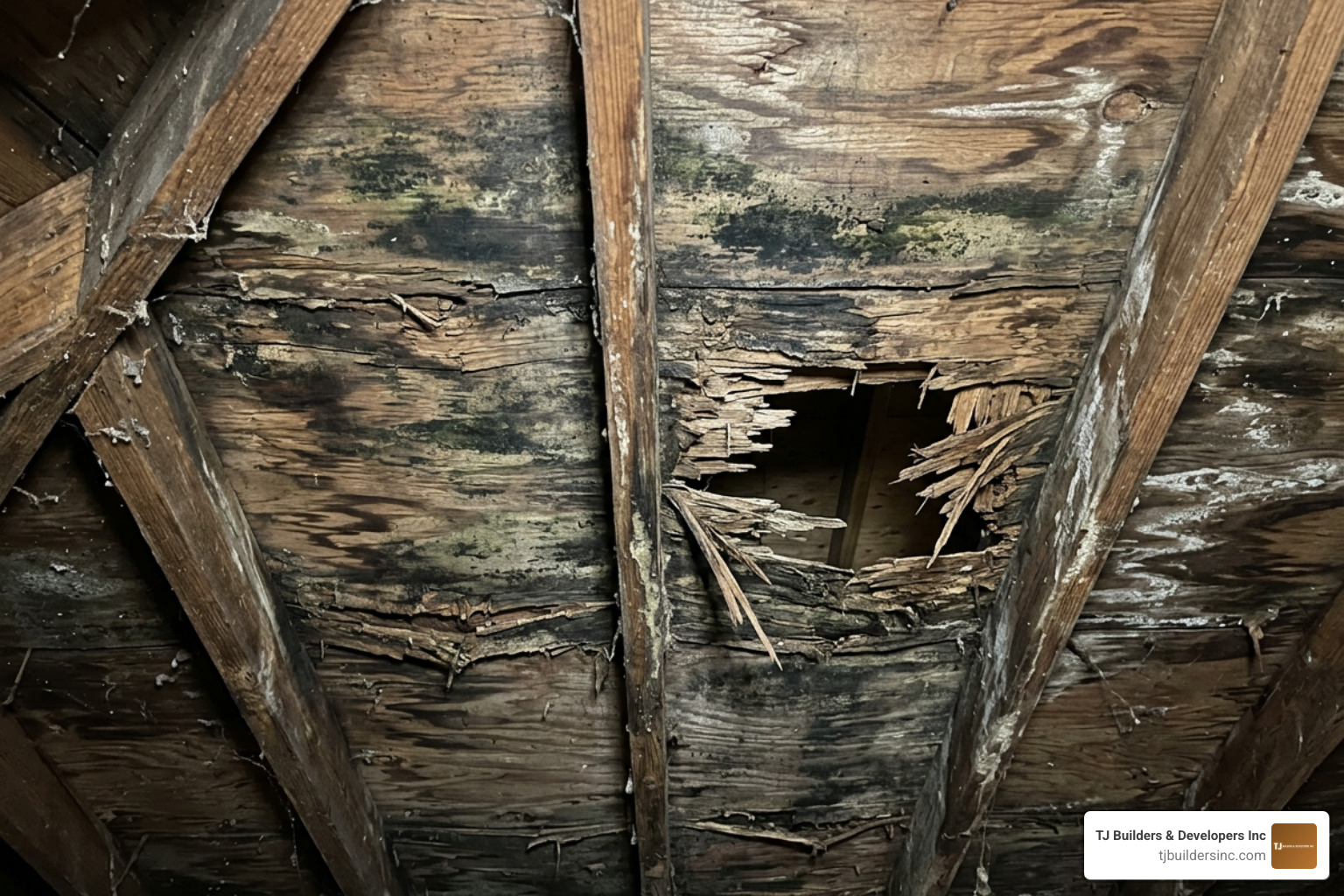
Pine wood used for framing trusses typically exhibits a service lifespan of roughly 65 years when covered and protected from water exposure. However, prolonged leaks drastically truncate this timeline. Moisture trapped against rafters breeds wood-decay fungi, compromising structural integrity.
Understanding how to fix roof leaks with these 5 easy changes helps homeowners identify vulnerable areas like chimney shoulders and pipe flashings before rot develops. Left unresolved, rotten decking begins to sag between rafters, creating visible dips across the roofline. Thermal expansion and contraction further exacerbate the issue: as materials expand in summer heat and contract during freezing winter temperatures, loose fastenings pull away from rotted wood, causing deep framing movement.
Need Help With Your Home?
TJ Builders & Developers handles roofing, siding, gutters, windows, home additions, and fire damage restoration for homes and businesses in Lakewood, Crystal Lake, Schaumburg, and nearby McHenry County towns.
- Free, no-obligation estimates
- Licensed & insured
- 20+ years of local experience
Understanding the Core Process for All Roof Repairs
Multi-Point Assessment and Diagnostics
A systematic repair begins with complete diagnostics rather than quick surface patching. Applying liquid sealants over an unverified leak often traps moisture beneath the surface, driving rot into sound framing timbers.
Following a step-by-step guide to roof inspection guarantees every critical vulnerability is cataloged. During a professional assessment, technicians evaluate:
- Attic and Decking Health: Inspecting the underside of roof sheathing for dark staining, rusted nail shanks, and insulation moisture.
- Drainage Geometry and Runoff Flow: Verifying that roof valleys, crickets, and transitions allow water to drain freely without ponding.
- Penetrations and Roof Terminations: Checking chimney flashings, plumbing boots, ridge vents, and skylight curbs.
- Fastener Integrity: Identifying nail pops, wind-lifted tabs, and loose perimeter edges.
Securing a professional roof inspection provides homeowners with an unbiased condition report, giving clarity on whether damage is isolated or systemic across the roof structure.
Execution and Flashing Waterproofing
Proper roof repair requires careful staging and tear-back to expose the underlying decking. Surface caulking is only temporary; long-lasting waterproofing requires mechanical fastening and layered integration.
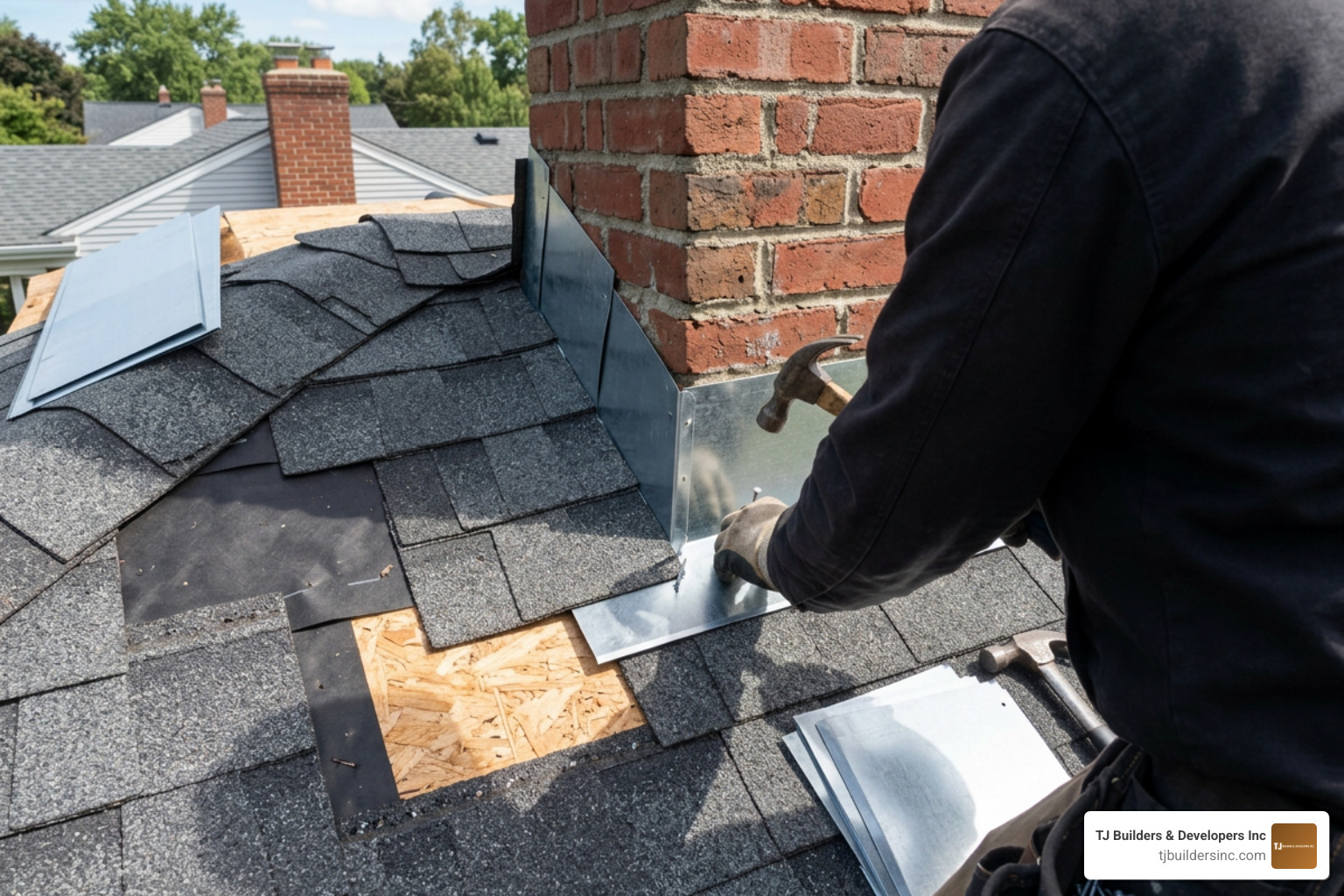
Flashing lines the most vulnerable intersections of a structure—valleys, side walls, chimneys, and roof penetrations. Metal step flashing must be woven shingle-by-shingle with overlapping underlayment so gravity carries water down the slope without bypassing metal lips. In roof valleys where high volumes of water converge, damaged valley metal must be replaced and protected with self-adhering ice-and-water membranes.
Understanding how to fix roof leakage waterproofing issues for lasting results centers on restoring proper overlaps between underlayment, starter strips, and finish shingles. Once the structural repair and waterproofing layers are integrated, certified crews complete the project with a thorough magnetic sweep of the grounds to remove stray fasteners and discarded metal fragments.
Material-Specific Restoration: From Asphalt Shingles to Metal and Flat Roofs
Material Requirements in All Roof Repairs
Different roofing materials have distinct physical properties, expansion rates, and repair requirements. Matching materials accurately is critical to maintaining weather resistance and roof aesthetics.
Asphalt-fiberglass shingles cover approximately 4 out of 5 residential roofs in the United States and carry an average life expectancy of about 20 years according to the National Association of Home Builders (NAHB). Exploring asphalt shingle options ensures replacement tabs match the weight, exposure, and color of existing materials during localized repairs.
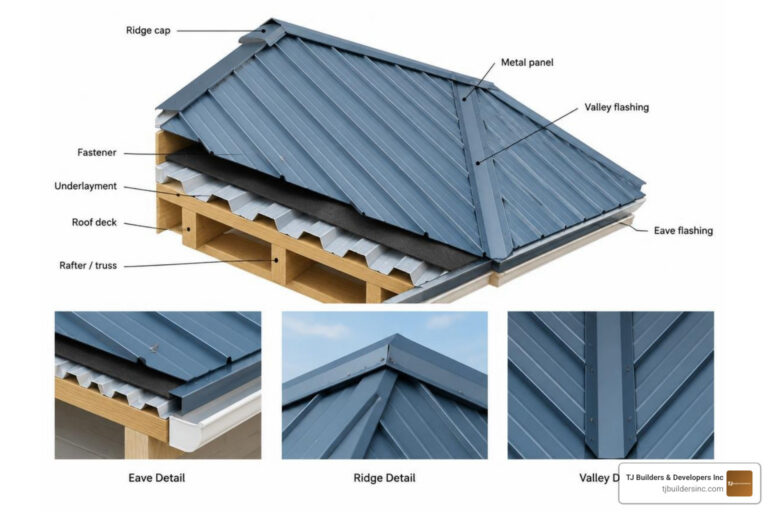
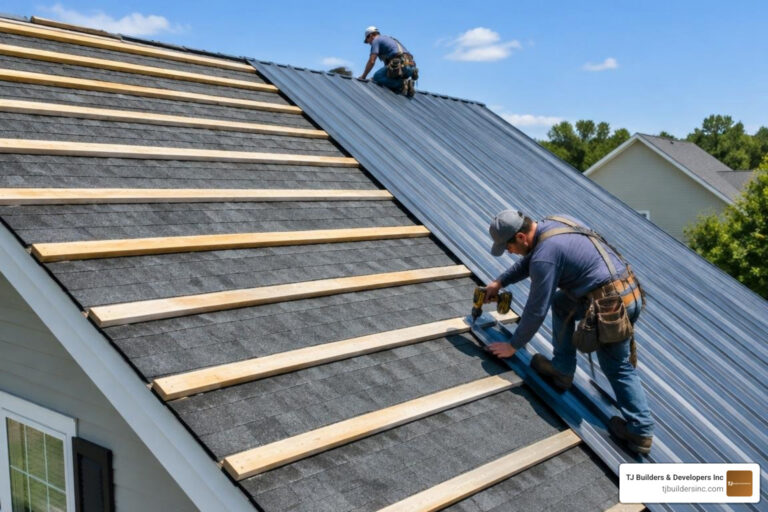
For architectural metal systems, repair strategies focus on movement and seal integrity. Metal panels expand and contract significantly throughout changing seasons. Professional work involves replacing compromised neoprene washers, tightening loose fasteners, resealing standing seams, and deploying simple fixes for metal roof holes and punctures using compatible gauge-matched metal patches to prevent galvanic corrosion.
Tile roofs (clay or concrete) require specialized bedding and pointing—the mortar-like compound securing ridge and hip caps. When bedding weathers, tiles loosen and allow wind-driven rain to reach the underlayment. Cedar wood shakes require individual replacement of warped, split, or decayed shakes while preserving the felt interlayment beneath.
Flat Roof and Membrane Maintenance
Flat and low-slope roofing surfaces present unique water management challenges because they lack steep gravity-assisted drainage. Low-slope structures rely on continuous, watertight membranes to keep interior spaces dry.
Utilizing commercial flat roofing solutions ensures single-ply membranes like EPDM (rubber), TPO (thermoplastic polyolefin), or modified bitumen are properly restored. Common flat roof issues include:
- Open or delaminated field seams caused by thermal expansion
- Water pooling in low spots due to insufficient structural slope
- Perimeter flashing detachment along parapet walls
- Punctures from mechanical service crews or wind-blown debris
While some explore liquid rubber waterproofing seal the deal on your next diy project, permanent low-slope repairs require heat-welded or chemically adhered membrane patches over dry, uncompromised insulation board.
Roof Repair vs. Full Replacement: Making the Right Investment
Lifespan Benchmarks and Cost Thresholds
Homeowners frequently ask whether repairing an existing roof is economically sensible or if replacement is the better choice. Evaluating the age and overall condition of the system provides the answer.
Standard shingled roofs generally last 15 to 30 years, depending on climate, ventilation, and maintenance. If an asphalt roof is under 10 to 12 years old and damage is isolated to a specific sector (such as a fallen tree limb or localized flashing leak), an isolated repair is the practical approach.
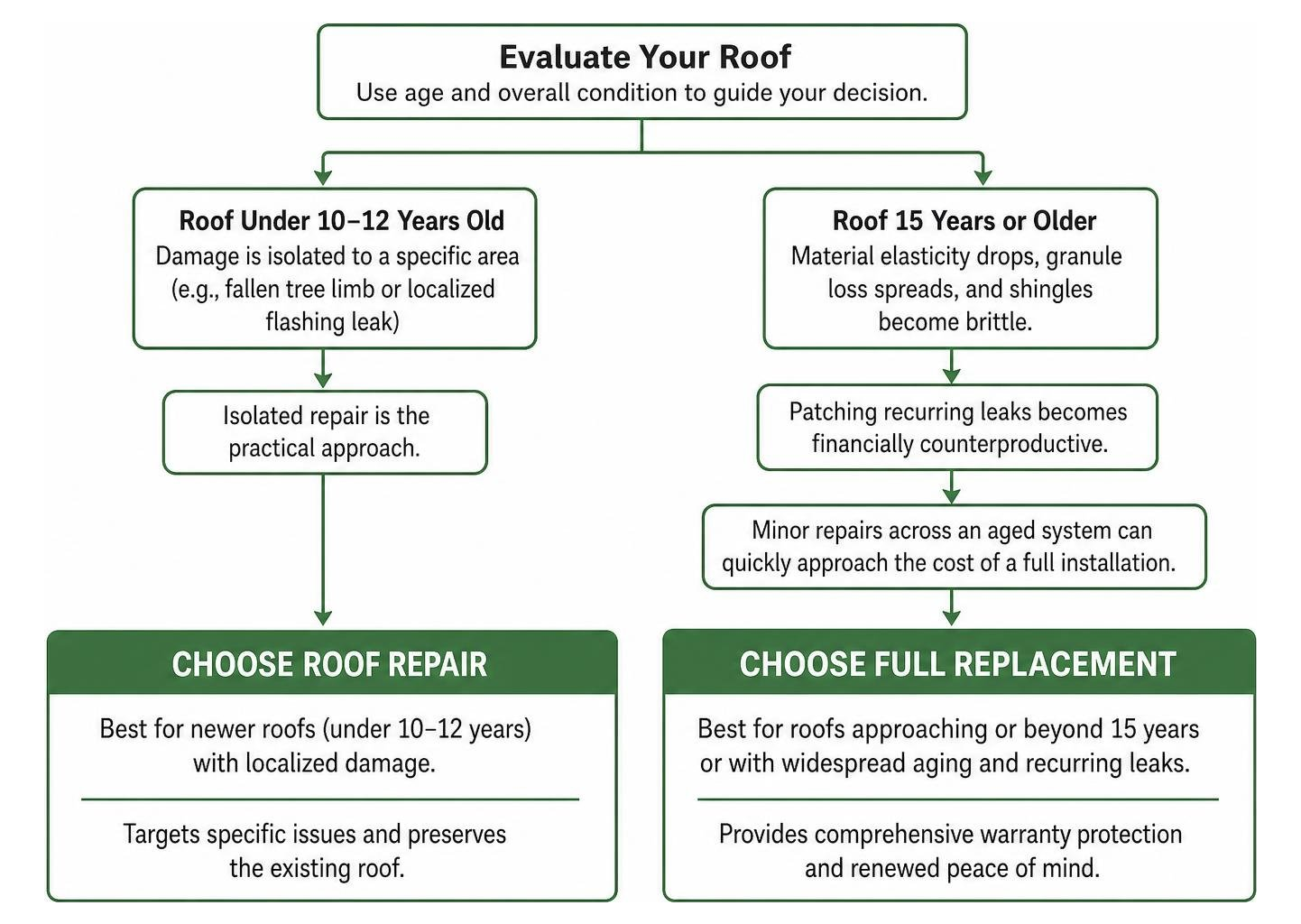
However, when a roof approaches or surpasses 15 years, material elasticity drops, granule loss spreads, and shingles become brittle. In these situations, continually patching recurring leaks becomes financially counterproductive. Examining the price of a dry ceiling and other roof repair costs shows that minor repairs across an aged system can quickly approach the cost of a full installation. When brittle shingles break during repair attempts, investing in expert roof replacement services in lakewood protect your home provides comprehensive warranty protection and renewed peace of mind.
Storm Impact and Insurance Claims
Severe weather systems can suddenly compromise roofing systems through wind uplift, driving rain, and hail impact.
Hail damage is especially deceptive; impact strikes compress the fiberglass mat within shingles, dislodging protective granules and leaving bruises that leak months after the storm passes. Coordinating storm hail damage restoration promptly helps prevent water from entering your home during subsequent rainstorms.
When navigating insurance claims, documentation is key. Standard homeowners insurance policies typically cover sudden, accidental damage from wind and hail perils while excluding gradual wear, aging, or deferred maintenance. In real estate transactions, a professional roof certification can be issued. These condition assessments generally remain valid for one to two years (and up to five years), certifying to lenders and insurers that the roof is structurally sound and free of active defects.
Need Help With Your Home?
TJ Builders & Developers handles roofing, siding, gutters, windows, home additions, and fire damage restoration for homes and businesses in Lakewood, Crystal Lake, Schaumburg, and nearby McHenry County towns.
- Free, no-obligation estimates
- Licensed & insured
- 20+ years of local experience
How to Hire Reliable Roofing Contractors and Prevent Future Issues
Vetting Contractors and Evaluating Quotes
A high-quality roof repair relies on the skill and standards of the technicians executing the work. Selecting a qualified contractor protects your home from substandard workmanship and recurring water leaks.
When vetting local contractors in Northern Illinois communities such as Lakewood, Crystal Lake, Algonquin, Woodstock, or Schaumburg, make sure they carry:
- Valid state roofing licenses and local municipal registrations
- Comprehensive general liability insurance and workers’ compensation coverage
- Manufacturer certifications, such as those held by GAF Roofing Contractors
- Itemized written estimates detailing scope of work, materials, flashing methods, and cleanup procedures
Knowing how to pick the best local roofing companies for your home protects you from transient storm chasers who offer superficial fixes before leaving town.
Preventative Maintenance and Seasonal Care
Proactive preventative maintenance is the most effective way to extend your roof’s service life and avoid surprise leaks. In our Northern Illinois climate, seasonal temperature shifts place substantial stress on exterior building components.
Winter weather conditions, including sub-zero freeze-thaw cycles, can lead to severe ice damming along roof eaves. Understanding professional ice dam removal practices helps protect eaves from heavy ice accumulations that force water upward beneath shingle courses. Pair winter protection with balanced attic ventilation; learning the complete guide to roof ventilation benefits ensures continuous airflow between soffit intakes and ridge exhausts, keeping attic temperatures stable and preventing moisture buildup.
Maintaining clean drainage channels is equally critical. Installing gutter guard leaf protection keeps downspouts flowing freely, preventing gutter backups that rot fascia boards and compromise perimeter roof edges.
Frequently Asked Questions About Roof Maintenance and Repairs
How much do typical roof repairs cost?
The national average cost of roof repair across all roof types typically ranges between $200 and $1,400.
Minor repairs—such as replacing a few damaged shingles, sealing a small pipe boot leak, or securing loose step flashing—generally cost between $200 and $650. Major roof repairs involving extensive decking rot, valley rebuilding, ice dam water remediation, or structural framing reinforcement typically range from $550 to $3,000, with extensive structural work reaching $5,000 or more.
Key factors influencing repair costs include roof pitch, architectural complexity (dormers, valleys, skylights), roofing materials, and accessibility. Emergency repairs or work performed under freezing, snowy conditions can carry an additional 20% to 50% surcharge due to specialized safety requirements.
How often should a residential roof be inspected?
Industry groups, including the Colorado Roofing Association, recommend having a roof professionally inspected twice a year: once in the spring to identify winter freeze-thaw damage, and once in the fall to prepare the roof for upcoming snow and ice.
Additional inspections should be scheduled following major storm events involving high winds or hail. Regular checkups allow minor shingle cracks and weathered sealants to be resolved before moisture reaches structural wood sheathing.
What happens if roof leak repairs are delayed?
Postponing roof repairs allows moisture to spread through the building envelope. Water entering small shingle voids soaks into plywood decking, triggering dry rot and compromising structural strength.
Trapped moisture degrades attic insulation R-value, increasing household heating and cooling costs, while creating an environment for mold and mildew growth inside wall cavities. Over time, ignored leaks can cause ceiling drywall to collapse, damage electrical wiring, and lead to structural framing repairs that cost significantly more than an initial shingle or flashing service.
Conclusion
Your roof is your home’s first line of defense against seasonal weather, heavy precipitation, and intense temperature swings. Proactive maintenance, timely diagnostics, and quality repairs preserve the structural integrity of your property while preventing costly water damage to interior living spaces.
At TJ Builders & Developers Inc, we provide reliable, high-standard exterior restoration and roof repair services throughout Lakewood, IL, and surrounding Northern Illinois communities. Whether your property needs seasonal maintenance, storm restoration, or complete structural waterproofing, our team delivers craftsmanship built to protect your home for decades to come.