Choose a Metal Roof Installer Who Can Protect Your Home for Decades
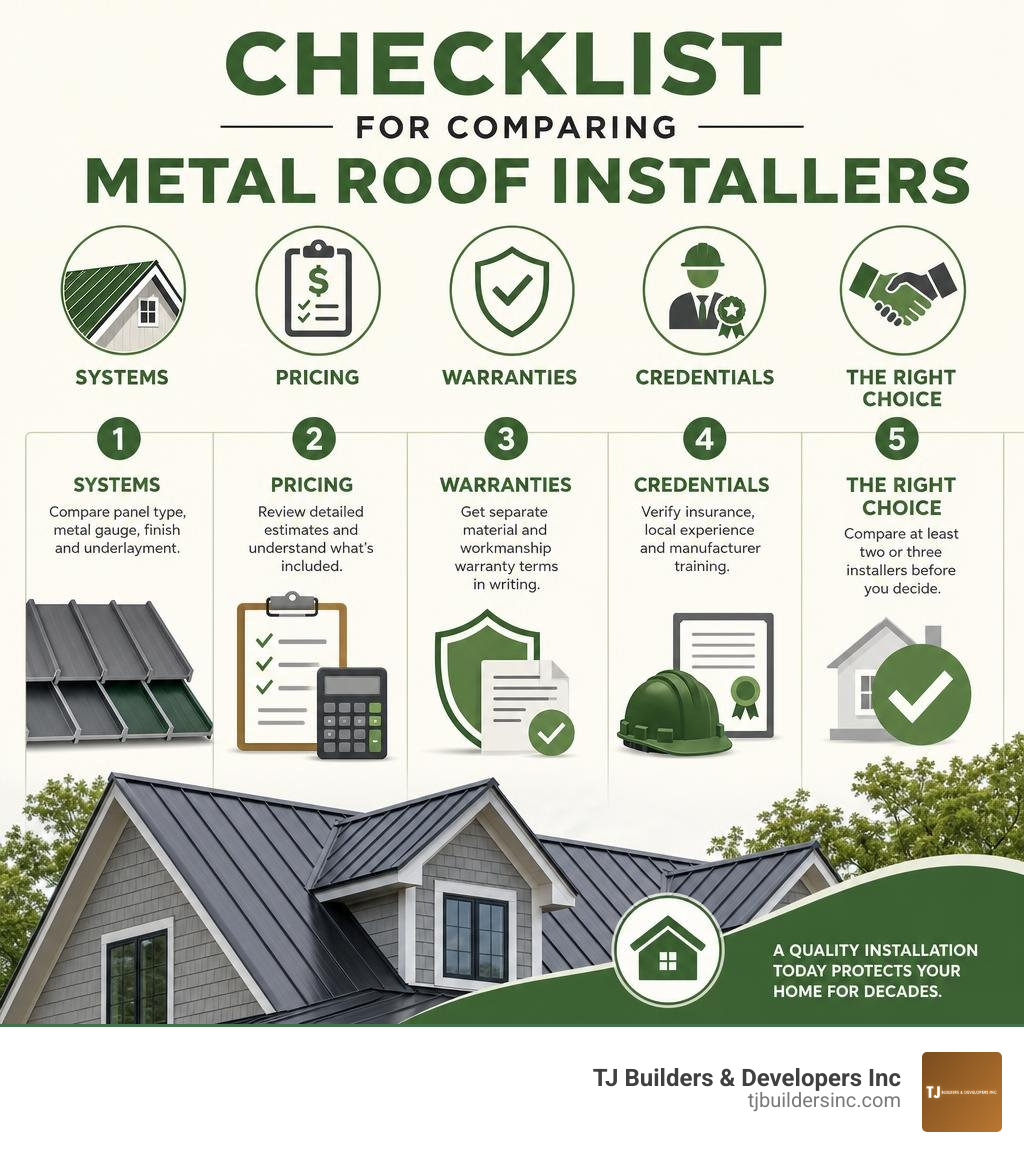
The best metal roof installation companies provide a detailed written estimate, prove they are insured and properly qualified, explain the roofing system they recommend, and stand behind both materials and labor. Before you hire, compare at least two or three contractors and ask each one for:
- The exact panel type, metal gauge, finish, and underlayment.
- A plan for flashing around chimneys, vents, valleys, and walls.
- Proof of liability insurance, local experience, and manufacturer training.
- Separate material and workmanship warranty terms in writing.
- A clear answer on whether your roof needs a full tear-off or may qualify for an overlay.
A metal roof is a major investment, but a professionally installed system can last 40 to 70 years or more. Standing seam roofs often offer the strongest long-term weather protection, while exposed-fastener panels provide rugged utility and metal shingles can better match a traditional home style. The right choice depends on your roof’s slope, architectural design, local weather, and curb-appeal goals.
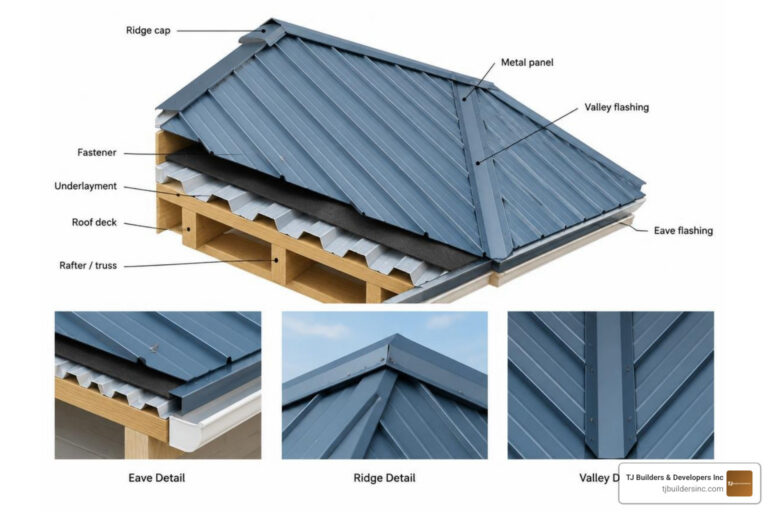
Installation quality matters as much as the panels themselves. Most metal roof repairs trace back to details such as loose fasteners, failed pipe boots, poor flashing, or seams that were not installed correctly. A qualified contractor should inspect the decking, plan for metal expansion and drainage, and use custom flashing where your roof changes direction or meets a wall.
I am Thomas Pruszynski, owner of TJ Builders & Developers Inc, and my team has spent more than 20 years helping Northern Illinois homeowners protect and improve their properties through quality exterior construction and restoration work. This guide will help you compare metal roof installation companies, understand your options, and make a confident decision for your home.
Discover more about metal roof installation companies:
Comparing Metal Roofing Profiles and Systems
Choosing the right profile is one of the most critical decisions you will make when planning a metal roofing upgrade. Metal roofs are not one-size-fits-all products; each profile delivers distinct architectural lines, installation methods, and performance characteristics tailored to specific roof pitches and regional weather demands.
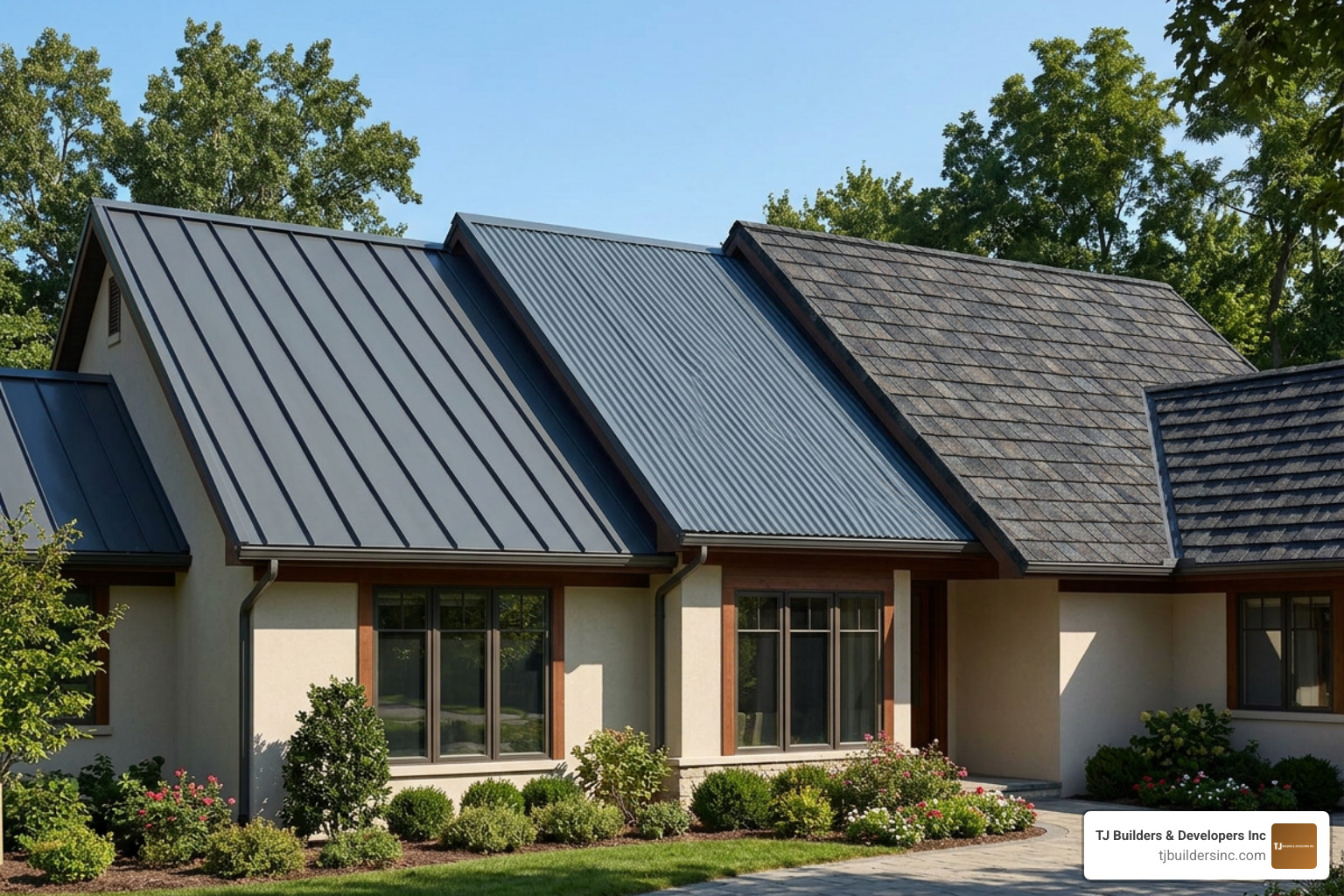
| Feature / System | Standing Seam | Exposed Fastener (Through-Fastened) | Metal Shingles / Tiles |
|---|---|---|---|
| Fastener Style | Concealed clips and hidden screws | Exposed screws with neoprene washers | Concealed interlocking fasteners |
| Expected Lifespan | 50 to 70+ years | 30 to 45 years | 40 to 60 years |
| Thermal Movement | Expands/contracts freely on clips | Rigidly pinned; stresses washer seals | Accommodates movement within modular joints |
| Fastener Maintenance | Virtually zero fastener upkeep | Washer inspection/replacement every 10–15 yrs | Low fastener maintenance |
| Aesthetic Profile | Clean, modern vertical ribs | Classic agricultural/industrial rib | Traditional slate, shake, or dimensional shingle |
| Ideal Architectural Style | Modern, Farmhouse, Contemporary, Craftsman | Outbuildings, Cabins, Budget-conscious homes | Historic, Colonial, Mediterranean, Traditional |
Standing Seam vs. Exposed Fastener vs. Metal Shingles
A high-quality standing seam metal roof installation represents the gold standard in residential metal roofing. In this design, vertical legs rise above the flat panel surface with interlocking seams that snap together or are mechanically seamed on-site. Because the fasteners are concealed beneath the raised seams using sliding or fixed clips, the metal panels expand and contract freely along the roof deck as exterior temperatures rise and fall throughout the seasons. This design protects the fasteners from rain, snow, UV rays, and physical weathering.
Exposed-fastener systems—often utilizing through-fastened panels or classic corrugated roof sheeting—involve driving screws straight through the face of the metal into the structural framing or wood roof deck. Each screw relies on an integrated EPDM rubber or neoprene washer to seal the penetration. Over years of severe freeze-thaw cycles and intense summer sun, those exposed rubber washers can degrade, dry out, or loosen under repeated thermal movement. While exposed fastener profiles provide dependable service for simpler structures or detached garages, they require scheduled maintenance intervals to inspect, re-torque, or replace failing washers.
Metal shingles and stone-coated steel modular panels offer a hybrid alternative for homeowners who desire the strength of metal without departing from traditional neighborhood aesthetics. These systems interlock seamlessly to mimic cedar shakes, architectural slate, or dimensional asphalt shingles while providing enhanced structural protection against severe midwestern weather events.
Structural Performance: Wind, Hail, and Acoustics
When installed according to strict manufacturer engineering specifications, metal roofing provides industry-leading defense against extreme environmental forces:
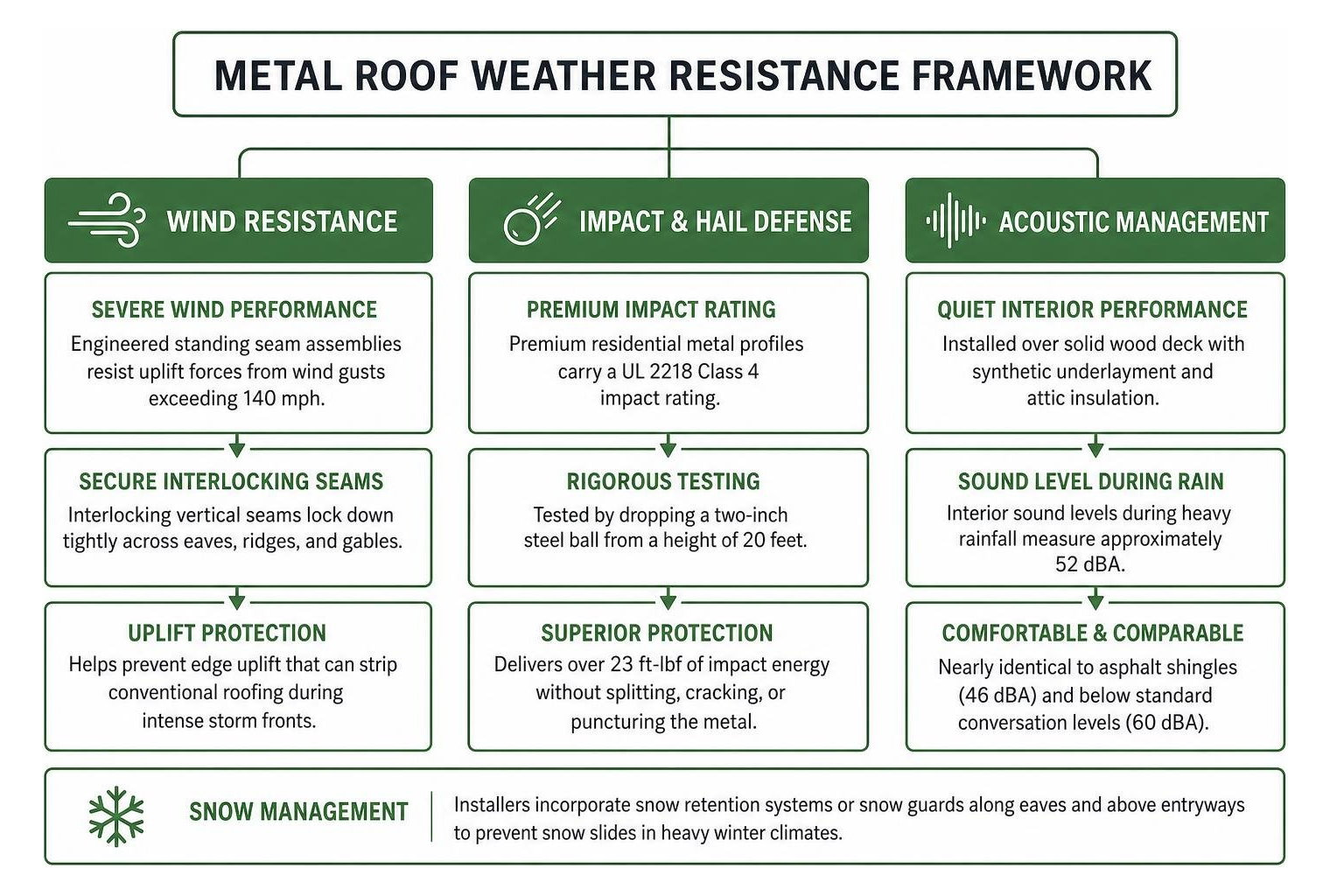
- Severe Wind Resistance: Engineered standing seam assemblies resist uplift forces generated by wind gusts exceeding 140 mph. The interlocking vertical seams lock down tightly across eaves, ridges, and gables, preventing the edge uplift that frequently strips conventional roofing systems during intense storm fronts.
- Impact and Hail Defense: Premium residential metal profiles carry a UL 2218 Class 4 impact rating. This rigorous laboratory certification involves dropping a two-inch steel ball from a height of 20 feet onto the panel surface, delivering over 23 ft-lbf of impact energy without splitting, cracking, or puncturing the metal substrate.
- Acoustic Management: A common myth suggests that metal roofs sound deafening during rainstorms. When installed over a solid wood roof deck equipped with high-temperature synthetic underlayment and standard attic insulation, interior sound levels during heavy rainfall measure approximately 52 dBA. This level is nearly identical to asphalt shingles (46 dBA) and comfortably below standard residential conversation levels (60 dBA).
- Snow Management: In colder climates subject to heavy winter precipitation, professional metal installers incorporate dedicated snow retention systems or snow guards along eaves and above entryways to prevent accumulated snow sheets from sliding unpredictably.
Need Help With Your Home?
TJ Builders & Developers handles roofing, siding, gutters, windows, home additions, and fire damage restoration for homes and businesses in Lakewood, Crystal Lake, Schaumburg, and nearby McHenry County towns.
- Free, no-obligation estimates
- Licensed & insured
- 20+ years of local experience
Cost Breakdown and Value: Metal Roofs vs. Asphalt
Upgrading to a metal roof involves a substantial commitment to your home’s exterior envelope, where the extended service lifecycle dramatically impacts long-term structural value. Where traditional materials require complete replacement every 15 to 25 years, a precision-engineered metal assembly is built to last half a century or longer.

Homeowners reviewing regional cost data quickly discover that evaluating a roof based purely on initial scope parameters ignores essential lifetime performance metrics. Comparing upfront requirements against long-term longevity shows that precision metal systems deliver unmatched durability over decades of service.
Pricing Variables and Square Footage Costs
Across the residential exterior remodeling industry, project estimates for professional metal roof installations vary widely depending on the chosen system, architectural complexity, and gauge thickness.
Key factors influencing project scope and specifications include:
- System Selection and Profile: Concealed-fastener standing seam systems require specialized roll-forming, custom clip anchoring, and intricate hand-folded flashing details. Exposed-fastener installations utilize surface-anchored profiles suited for specific structural applications.
- Material Composition and Gauge: Thicker 24-gauge and 26-gauge structural steel panels provide maximum rigidity and oil-canning resistance compared to lighter 29-gauge agricultural sheets. Aluminum options provide exceptional corrosion resistance near moisture, while architectural copper or zinc represent luxury investments.
- Roof Geometry and Pitch: Steep roof pitches, multi-tiered hips, valleys, dormers, and masonry transitions require extensive on-site sheet metal fabrication and safety rigging, which increases direct labor requirements compared to simple low-slope gable roofs.
- Comparison to Alternatives: When evaluating metal against traditional asphalt shingle options, asphalt typically requires full replacement multiple times over the operational lifespan of a single standing seam installation.
Tear-Off vs. Overlay Installations
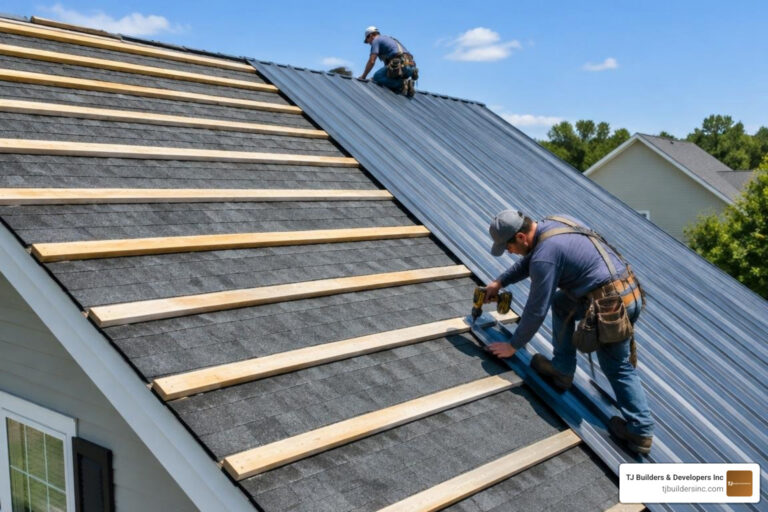
A major structural question during project planning is whether to perform a complete tear-off of the existing roof or install a metal roof overlay directly on top.
While an overlay can reduce initial labor time and prevent landfill waste, our professional installation standard strongly favors a full tear-off for residential homes. Removing old shingles allows our technicians to inspect the structural decking, reinforce compromised rafter ties, install premium self-adhering high-temperature underlayment, and ensure a completely flat, level substrate for precise panel alignment.
Why Proper Installation Matters: Preventing Leaks and Securing Warranties
A metal panel is completely impermeable to water, yet roofs can still leak if the installation details are executed poorly. Forensic roofing repair data shows that 84% of metal roof service calls stem directly from faulty workmanship and improper installation, while only 16% result from genuine acts of nature. Metal roofs do not fail in the broad center of the panel; they fail where details are rushed.
Common Causes of Metal Roof Leaks
Water management on a metal roof depends on mechanical shedding and gravity, not tubes of caulking. Understanding where leaks originate helps homeowners evaluate contractor execution during the installation process:
- Degraded and Incompatible Pipe Boots: Standard single-piece plastic pipe boots dry out, crack, and fail within 5 to 10 years. Professional installations employ heavy-duty metal-base flashings with high-grade EPDM or silicone collars designed to match the panel’s lifespan.
- Improper Fastener Seating: In through-fastened assemblies, over-tightening screws crushes the rubber washer and forces it outward, while under-tightening leaves gaps where driving rain can penetrate. Screws driven at an angle prevent the washer from seating flush against the panel.
- Flashing Transitions and Reglets: Chimneys and dormer sidewalls require two-piece counter-flashing cut directly into mortar joints (reglet cuts) or integrated beneath siding. Surface-caulked sheet metal transitions quickly split as the building settles and metal expands.
- Missing Kick-Out Flashing: Where a roof eave meets an exterior wall, kick-out flashings must divert heavy gutter-bound runoff away from the wall cavity. Omitting this detail allows water to channel behind the siding, causing rot and interior drywall damage.
- Valley Details and Sealant Reliance: Valleys handle concentrated volumes of high-velocity water. Open, hemmed valley panels allow debris and ice to flush clean without catching, whereas caulked overlapping joints trap moisture and split over time.
Material vs. Workmanship Warranties
When investing in a metal roof, you receive two distinct layers of warranty protection:
- Manufacturer Material & Paint Warranties: Major metal fabricators offer warranties ranging from 30 to 50 years covering the steel substrate against corrosion, perforation, and finish degradation. Industry-standard Kynar 500 / PVDF resin-based coatings protect against chalking, fading, and peeling under intense ultraviolet exposure.
- Contractor Workmanship Warranties: The manufacturer’s warranty does not cover water leaks caused by improper screw placement, un-hemmed valley pans, or poor chimney flashings. A reputable installer provides a dedicated workmanship guarantee covering installation labor, ensuring complete accountability if a transition detail ever requires adjustment.
Need Help With Your Home?
TJ Builders & Developers handles roofing, siding, gutters, windows, home additions, and fire damage restoration for homes and businesses in Lakewood, Crystal Lake, Schaumburg, and nearby McHenry County towns.
- Free, no-obligation estimates
- Licensed & insured
- 20+ years of local experience
How to Vet and Select Metal Roof Installation Companies
Because metal roofing requires distinct metalworking skills, custom brake-forming machinery, and specialized sheet metal training, hiring general laborers who primarily nail shingles often results in costly installation errors. You need a dedicated, experienced team equipped with metal-specific tooling.
Essential Certifications for Metal Roof Installation Companies
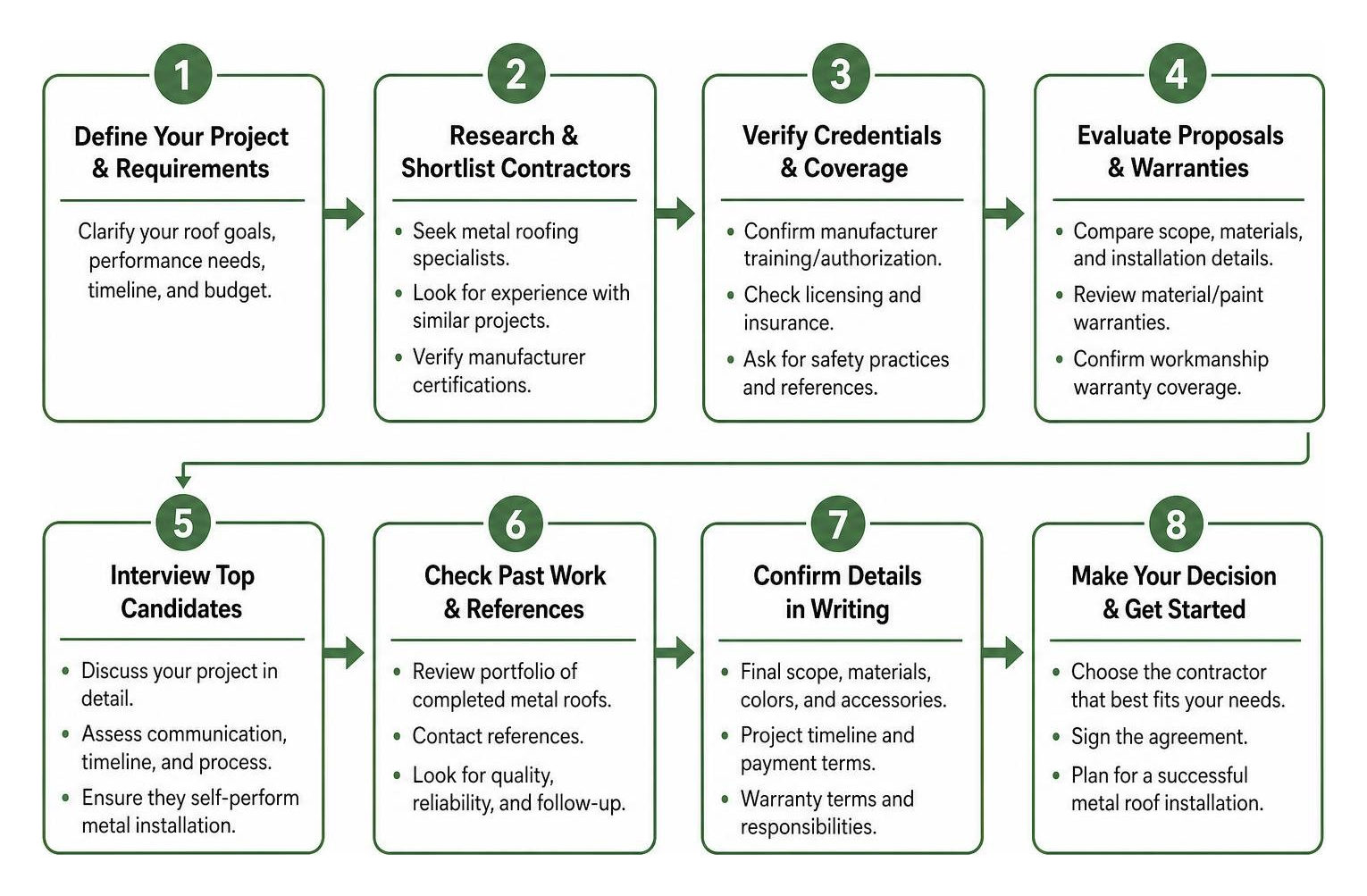
When screening prospective contractors, verify that they meet rigorous industry benchmarks:
- Manufacturer Certifications: Confirm that the installer is trained and authorized by recognized architectural metal manufacturers. Factory-certified installers understand exact clip spacing, thermal expansion tolerances, and approved seam profiles required to keep full material warranties valid.
- State Licensing and Comprehensive Insurance: Ensure your contractor carries full, active general liability insurance and worker’s compensation coverage. Never hire an uninsured crew to work on steep residential structures.
- Specialized Exterior Portfolio: Review recent local installations completed by residential metal roofing contractors to assess panel straightness, custom flashing integration, and clean site management.
Questions to Ask Metal Roof Installation Companies Before Signing
Before executing a contract, interview your prospective contractor with these direct technical questions:
- Are your installation crews internal, factory-trained craftsmen, or do you subcontract the sheet metal work to third parties?
- Will you provide a fully itemized, fixed-price quote specifying panel profile, metal gauge, underlayment brand, and flashing details?
- How do you handle thermal expansion and contraction across long standing seam panel runs?
- Do you use custom brake-formed flashings fabricated to the exact roof geometry, or do you rely on pre-formed stock pieces?
- What is your structured milestone payment schedule, and do we conduct a final walkthrough together before releasing final payment?
- How do you protect landscaping and collect stray metal shavings or dropped screws from the property?
When you are ready to explore your options with established metal roofing contractors, a transparent contractor will readily supply detailed answers, material cut sheets, and clear warranty terms in writing.
Navigating HOA, Permits, and Historic District Approvals
Many planned communities and historic districts maintain architectural guidelines regulating exterior colors, materials, and roof profiles. Securing swift approval requires submitting a complete, professional design packet before scheduling construction:
- Submittal Documentation: Provide your Architectural Review Board (ARB) or historic preservation committee with physical metal color swatches, panel cross-section cut sheets, and photo mockups illustrating how the profile complements your home’s exterior siding, masonry, and windows.
- Finish and Gloss Selection: HOAs rarely approve high-gloss, reflective mill finishes. Select low-gloss, matte architectural coatings such as deep bronze, slate gray, charcoal, or forest green that blend harmoniously with surrounding neighborhood aesthetics.
- Municipal Permitting: Ensure your contractor manages all local building permit applications and schedules required municipal framing, underlayment, and final inspections to maintain compliance with regional residential building codes.
Frequently Asked Questions About Metal Roofing
Are metal roofs noisier than asphalt shingles during heavy rain?
No. In modern residential construction, metal roof panels are installed over a solid plywood or OSB roof deck covered with high-temperature synthetic underlayment. Combined with the dead air space of your attic and standard attic insulation, this solid assembly absorbs sound vibrations. Rain noise measures approximately 52 dBA inside the living space—well within the range of normal indoor background noise and barely distinguishable from standard asphalt shingles.
Can a metal roof lower my summer energy bills?
Yes. Metal roofs engineered with reflective, cool-roof pigments reflect solar radiant heat back into the atmosphere rather than absorbing it into the attic structure. This solar reflectance keeps roof surface temperatures up to 50°F cooler during peak summer heat waves, lowering household air conditioning demands and reducing cooling costs by 10% to 25%.
How long will a professionally installed metal roof last?
A professionally installed standing seam metal roof routinely delivers an operational lifespan of 40 to 70+ years. Because high-grade steel, aluminum, and copper do not rot, curl, crack, or split over decades of sun, wind, and severe freeze-thaw cycles, a properly maintained metal roof is often the last roof you will ever need to install on your home.
Conclusion
Upgrading to a residential metal roof is one of the most reliable investments you can make to safeguard your home against severe storms, cut summer energy cooling demands, and elevate your property’s architectural appeal. Achieving those benefits, however, requires pairing top-tier architectural panels with skilled, detail-oriented craftsmen who refuse to cut corners on flashings, underlayment, or expansion engineering.
At TJ Builders & Developers Inc, we bring over two decades of dedicated exterior craftsmanship to residential roofing, window installation, siding, gutters, and home additions throughout Northern Illinois. Whether your home is in the Village of Lakewood, Crystal Lake, Lake in the Hills, Algonquin, Huntley, Woodstock, Cary, McHenry, Schaumburg, or Barrington, our experienced team provides precision-engineered exterior installations built to protect your property for generations.
To plan your upcoming exterior renovation or explore your roofing options in detail, consult our comprehensive roof installation and replacement guide and schedule an in-depth on-site property evaluation with our team today.