What Does Hail Damage Roof Replacement Actually Cost in 2026?
Hail damage roof replacement cost typically falls between $7,000 and $35,000 for most homeowners in 2026, depending on roof size, material, and damage severity.
Here’s a fast breakdown:
| Scope of Work | Typical Cost Range |
|---|---|
| Minor hail repairs (spot fixes) | $350 – $1,500 |
| Moderate repairs (partial re-roof) | $1,200 – $6,500 |
| Full asphalt shingle replacement | $7,000 – $20,000 |
| Full metal roof replacement | $18,000 – $40,000 |
| Full tile roof replacement | $14,000 – $30,000 |
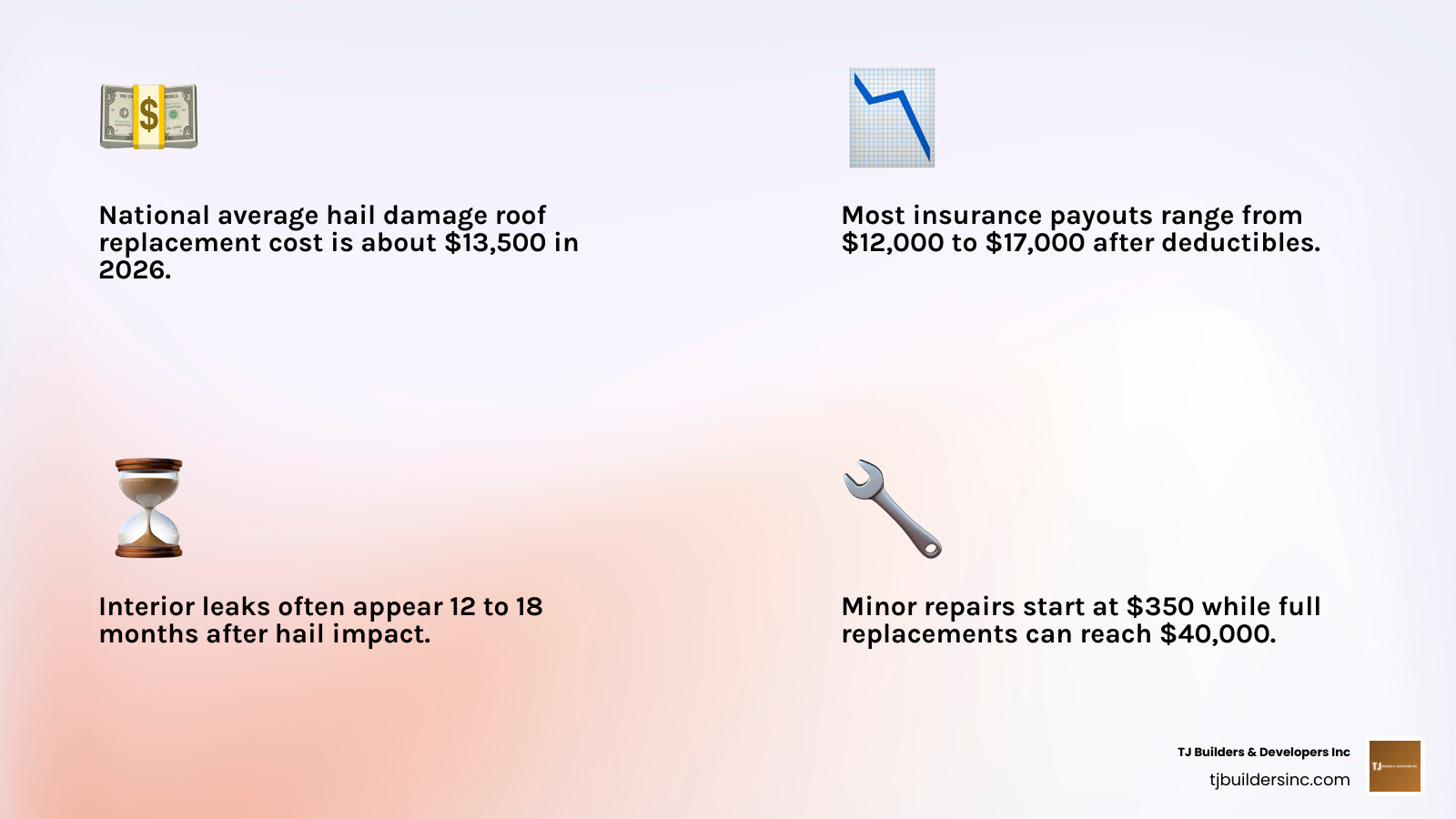
| National average (all materials) | ~$13,500 |
Most insurance claims pay out between $12,000 and $17,000, with deductibles running $1,000 to $2,500 out of pocket.
A hailstorm can look harmless from the ground. Maybe a few dents on the gutters, some scattered granules in the downspout. But what’s happening on the surface of your shingles — bruising, cracked tabs, compressed granule layers — can quietly shave years off your roof’s lifespan. In many cases, the first interior leak doesn’t show up for 12 to 18 months after the storm that caused it.
That gap between impact and visible damage is exactly why so many homeowners either overpay for unnecessary replacements or underspend on repairs that don’t hold. Knowing what drives the cost — and when insurance should be covering it — makes a real difference.
I’m Thomas Pruszynski from TJ Builders & Developers, and after more than 20 years of handling storm damage restoration and roof replacements across Northern Illinois, I’ve helped hundreds of homeowners understand the real hail damage roof replacement cost — and how to navigate it without leaving money on the table. In the sections below, we’ll walk through how to assess your damage, what to expect from insurance, and how to make the smartest call for your home and budget.
Hail damage roof replacement cost terms at a glance:
Evaluating the Severity: Repair vs. Hail Damage Roof Replacement Cost
Determining whether your roof requires minor repairs or a complete overhaul is the critical first step after a major weather event. In Northern Illinois, we experience highly unpredictable storm seasons. A localized hailstorm in Crystal Lake or McHenry might pelt one neighborhood with golf-ball-sized ice while leaving another completely untouched.
When hail strikes, the size of the stone dictates the type of damage:
- Under 1 inch: Rarely causes functional damage to newer asphalt roofs, though older, brittle shingles may lose granules.
- 1 inch to 1.25 inches: This is the typical threshold where insurance companies recognize functional damage on standard architectural shingles. You will often see circular bruising and fractured fiberglass mats.
- 1.5 inches and larger: This size causes consistent, severe damage across almost all standard roofing materials, including wood shakes and metal panels.
To understand the scope of the project, we look for key physical indicators. Granule loss is the most common symptom. When hail strikes an asphalt shingle, it knocks away the protective mineral granules, exposing the dark asphalt layer underneath to the sun’s harsh UV rays. Over time, this exposure causes the shingle to dry out, crack, and leak.
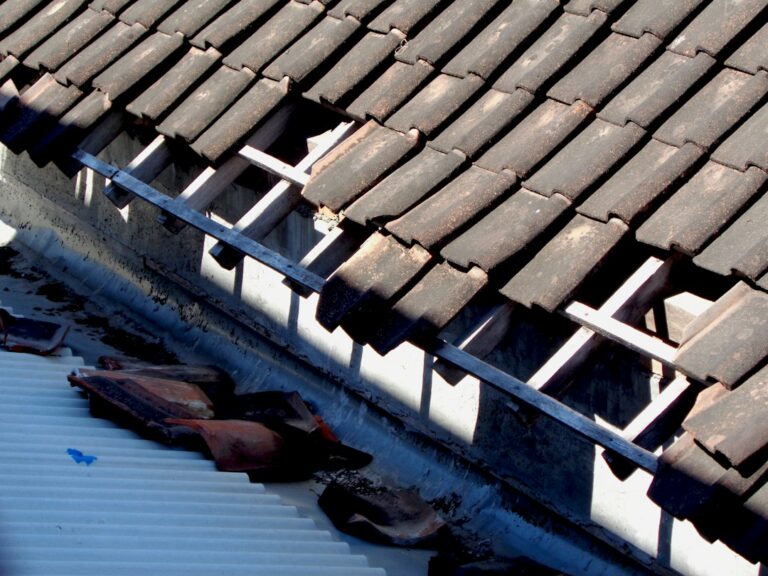
Other clear signs include soft spots or “bruises” on the shingles, which feel like the soft spot on an apple when pressed. Cracked or missing shingle tabs, dented metal flashing, and broken clay or slate tiles are also clear indicators of impact. For a complete breakdown of how to spot these issues yourself, you can read our resource on identifying hail damage.
If you are trying to gauge the financial impact of these issues before speaking to an adjuster, you can consult this resource on How Much Does Hail Damage Roof Repair Cost? (2026) | Modernize to see how various types of physical damage translate to real-world estimates.
When Minor Repairs Aren’t Enough
Many homeowners hope that a few spot repairs will solve their storm issues. While replacing a handful of shingles is a viable option for minor cosmetic damage, patchwork has severe limitations.
First, when a roof is hit by a widespread hailstorm, the damage is rarely isolated to one small area. Patching 15 different spots across a roof creates a patchwork quilt of mismatched shingles. Because shingles fade over time due to sun exposure, new shingles will rarely match your existing roof, hurting your home’s curb appeal.
Second, patchwork does not address the underlying structural integrity of the roof. If the hail was large enough to bruise shingles across the entire surface, the overall water-shedding system has been compromised. Water intrusion can slowly find its way through micro-cracks, leading to rotted roof decking.
During a full tear-off, we discover hidden decking rot in roughly 15% to 20% of projects. If you ignore widespread bruising and opt for a cheap patch, you risk structural decay that will cost far more to fix down the road. You can learn more about how small leaks escalate by reading about roof repair costs.
As a general rule of thumb used by major insurance carriers, if functional hail damage affects more than 25% to 30% of a roof slope, a full replacement is recommended rather than individual repairs.
Calculating the Hail Damage Roof Replacement Cost by Material
The material you choose for your replacement is the single largest variable affecting your total out-of-pocket or insurance-funded cost. Below, we compare the primary residential roofing materials used throughout our Northern Illinois service areas, including Schaumburg, Algonquin, and Woodstock.
Asphalt Shingles
Standard 3-tab and architectural asphalt shingles remain the most popular choice for homeowners due to their balance of performance and value. Architectural shingles offer excellent wind resistance (up to 110–130 mph) and handle moderate hail well. They typically cost between $4.50 and $7.00 per square foot installed. For a deeper dive into what to expect when replacing this material, check out our guide on asphalt shingle replacement cost.
Metal Panels
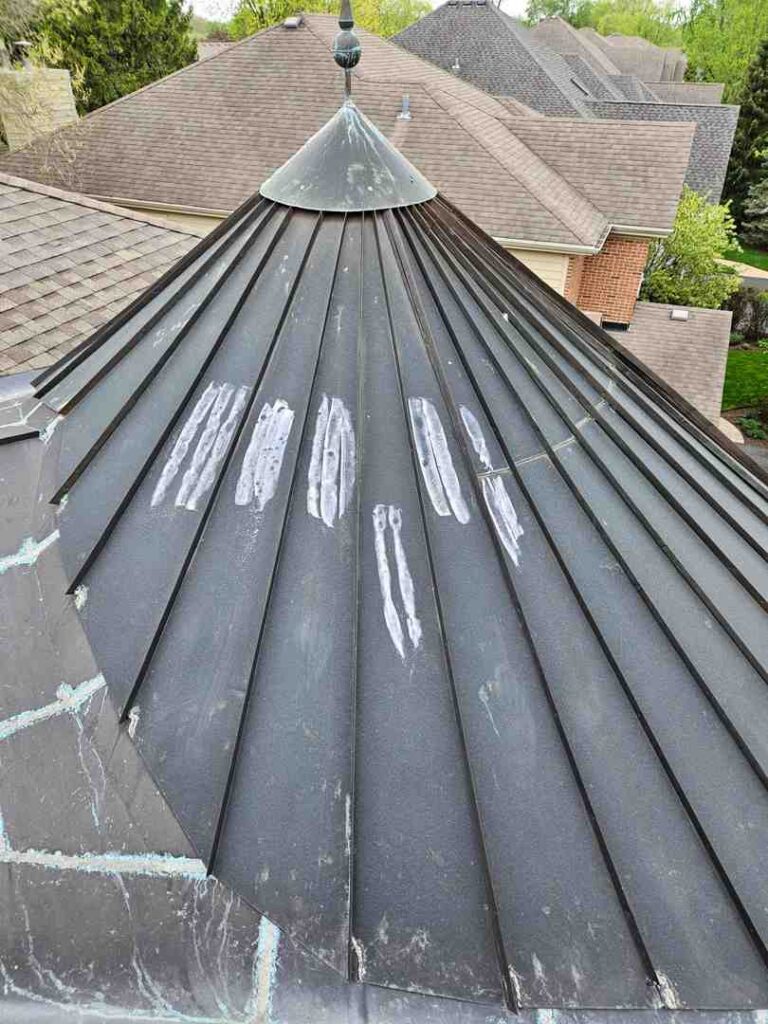
Metal roofing is incredibly durable and holds up exceptionally well against wind and hail. While large hail can leave cosmetic dents on metal panels, it rarely punctures the material or causes leaks. However, the upfront cost is significantly higher, often running $18,000 to $40,000 depending on whether you choose exposed fastener panels or standing seam systems.
Clay, Concrete, and Slate
These premium materials are chosen for their historic aesthetic and century-long lifespans. However, they are highly susceptible to cracking under heavy hail impact. Replacing a slate or tile roof is a highly specialized craft, with costs often exceeding $30,000 to $50,000.
| Roofing Material | Average Lifespan (Years) | Estimated Cost per Sq. Ft. (Installed) | Typical Total Cost (2,500 Sq. Ft. Roof) | Hail Resistance Rating |
|---|---|---|---|---|
| 3-Tab Asphalt | 15 – 20 | $3.50 – $5.50 | $8,750 – $13,750 | Low |
| Architectural Asphalt | 25 – 30 | $4.50 – $7.00 | $11,250 – $17,500 | Moderate |
| Class 4 Impact-Resistant | 30 – 40 | $6.00 – $8.50 | $15,000 – $21,250 | High |
| Standing Seam Metal | 50+ | $9.50 – $16.00 | $23,750 – $40,000 | Very High (Dents, but rarely leaks) |
| Clay / Concrete Tile | 50 – 100 | $10.00 – $18.00 | $25,000 – $45,000 | Moderate (Can crack under large hail) |
| Natural Slate | 75 – 100+ | $15.00 – $30.00 | $37,500 – $75,000 | Moderate (Brittle under direct impact) |
For regional context on material and labor pricing in our local area, you can review the Roofing Cost Guide — Crystal Lake & McHenry County, IL to see how local factors influence these ranges. Additionally, if you are looking for general contractor standards and local estimates, the Cost Roofing: Roofing Contractor | Roof Repair platform offers excellent reference pricing.
Need Help With Your Home?
TJ Builders & Developers handles roofing, siding, gutters, windows, home additions, and fire damage restoration for homes and businesses in Lakewood, Crystal Lake, Schaumburg, and nearby McHenry County towns.
- Free, no-obligation estimates
- Licensed & insured
- 20+ years of local experience
Navigating the Insurance Claims Process for Hail Damage
Filing a roof claim can feel overwhelming, but understanding the steps makes the process straightforward. When a severe storm passes through areas like Lake in the Hills or Algonquin, insurance companies expect a influx of claims.

To ensure your claim is treated fairly and fully covered, follow this step-by-step approach:
- Document the Date and Time: Note the exact date the hailstorm occurred. Insurance companies require this to match weather data reports.
- Take Preliminary Photos: From the safety of the ground, take photos of any obvious damage, such as dented gutters, damaged window screens, or shingles lying in your yard.
- Schedule a Professional Inspection: Before filing a claim, have a trusted local roofing contractor perform a thorough inspection. We climb onto your roof to document the subtle damage that adjusters look for, providing you with a detailed report.
- File the Claim: Contact your insurance carrier and provide them with the storm date and your contractor’s inspection report.
- Meet the Adjuster: Your insurance company will send an adjuster to verify the damage. It is highly beneficial to have your roofing contractor present during this meeting to ensure all damaged areas — including flashing, vents, and valleys — are pointed out and documented.
To avoid common pitfalls and ensure you receive the full payout you are entitled to, read our comprehensive guide on navigating hail damage insurance claims.
Understanding RCV vs. ACV Coverage
When reviewing your homeowners insurance policy, the most important detail to identify is whether you have Replacement Cost Value (RCV) or Actual Cash Value (ACV) coverage. This distinction can result in a difference of thousands of dollars out of pocket.
- Replacement Cost Value (RCV): An RCV policy covers the actual cost to repair or replace your roof at today’s market prices. Under this coverage, the insurance company typically pays your claim in two checks. The first check is for the ACV of the roof (the value of the roof minus its age and wear). Once the work begins and your contractor submits proof of completion, the insurance company releases the remaining balance (known as recoverable depreciation) to cover the full invoice. Your only out-of-pocket expense is your deductible.
- Actual Cash Value (ACV): An ACV policy only pays for what your roof is worth today, factoring in its age and depreciation. If you have a 15-year-old roof that is destroyed by hail, the insurance company will deduct 15 years of wear and tear from your payout. For example, on a $15,000 roof replacement, an ACV policy might only pay out $6,000, leaving you to cover the remaining $9,000 out of pocket.
It is common for insurance companies to automatically transition older roofs from RCV to ACV coverage upon policy renewal. Always review your policy annually so you are not caught off guard after a storm.
How Deductibles Impact Your Total Hail Damage Roof Replacement Cost
Your deductible is the portion of the repair or replacement cost that you must pay before your insurance coverage kicks in. For standard property claims, this is usually a flat fee, such as $1,000 or $2,500.
However, many modern policies in hail-prone states feature a separate wind and hail deductible. Instead of a flat fee, this deductible is calculated as a percentage of your home’s total insured value — usually 1%, 2%, or even 5%.
If your home is insured for $350,000 and you have a 2% wind/hail deductible, you must pay $7,000 out of pocket before your insurance company pays a dime. If a full roof replacement costs $15,000, your insurance company will only write a check for $8,000.
Note: It is illegal in Illinois for a contractor to offer to “wave” or “absorb” your deductible. Be wary of any storm-chasing contractor who claims they can get you a free roof by hiding your deductible in their invoice. This constitutes insurance fraud.
Upgrading to Class 4 Impact-Resistant Shingles
If you are already replacing your roof due to hail damage, upgrading to Class 4 impact-resistant (IR) shingles is one of the smartest long-term investments you can make.
Class 4 shingles are subjected to rigorous testing where a 2-inch steel ball is dropped twice from a height of 20 feet onto the same spot. To achieve a Class 4 rating, the shingle must show no signs of cracking, tearing, or splitting on either the front or back surface.
According to data from the Institute for Business & Home Safety (IBHS), upgrading to Class 4 shingles reduces hail claim frequency by approximately 50% in high-impact zones.
While upgrading to Class 4 shingles typically adds $3,000 to $6,000 to the cost of a standard roof replacement, many insurance carriers offer premium discounts of 15% to 30% for homes with Class 4 roofs. Over several years, these premium savings can completely offset the cost of the upgrade, while protecting your home from future storms. For a closer look at the financial variables of these materials, see the Hail Damage Roof Repair Cost Factors analysis.
Need Help With Your Home?
TJ Builders & Developers handles roofing, siding, gutters, windows, home additions, and fire damage restoration for homes and businesses in Lakewood, Crystal Lake, Schaumburg, and nearby McHenry County towns.
- Free, no-obligation estimates
- Licensed & insured
- 20+ years of local experience
Frequently Asked Questions About Hail-Damaged Roofs
How much hail damage warrants a full roof replacement?
A full replacement is typically warranted when the physical integrity of the shingles has been compromised on a widespread scale. Insurance adjusters generally look for a specific number of “bruises” or impact marks within a 10-foot by 10-foot area (known as a “square”) on each slope of the roof. If there are 8 to 10 verified hail hits per square, or if the overall damage exceeds 30% of the roof’s total surface area, a full replacement is recommended to prevent future leaks and rot.
For local examples of storm damage severity and how municipal standards handle replacements, you can read about the impact of Storm Damage in Lake In The Hills, IL | IHC and Storm Damage Algonquin IL – Elite Home Restoration Inc .
Will my homeowners insurance premium increase if I file a hail claim?
Generally, insurance companies cannot single out an individual homeowner and raise their premiums solely because they filed a comprehensive claim for weather damage. Hail damage is considered an “Act of God” event, meaning it was entirely out of your control.
However, after a major storm hits a region like Schaumburg or Cary, insurance companies often raise premiums for the entire zip code to offset their collective losses. If everyone’s rates are going up anyway, it is in your best interest to file a claim and get your roof replaced rather than paying for future leaks out of pocket. For more context on Cary-specific roofing standards, you can view the Cary, NC Roof Replacement Guide .
How long do I have to file a hail damage claim after a storm?
Most homeowners insurance policies require you to file a claim within one year (12 months) of the storm event, though some policies allow up to two years. Because hail damage is often invisible from the ground and can take over a year to cause active interior leaks, it is critical to have your roof inspected by a professional immediately after any major storm. Waiting until you see water stains on your ceiling may push you past your policy’s filing deadline, leaving you responsible for the entire replacement cost.
Conclusion
A hailstorm can be stressful, but managing your hail damage roof replacement cost doesn’t have to be. By understanding the signs of damage, knowing the differences in your insurance policy, and working with a reputable, local contractor, you can protect your home’s value and ensure your family stays dry for decades to come.
At TJ Builders & Developers, we pride ourselves on providing exceptional, professional workmanship across the Village of Lakewood, Crystal Lake, Schaumburg, and surrounding Northern Illinois suburbs. We don’t cut corners, and we don’t use high-pressure sales tactics. We simply deliver reliable, durable roofing systems designed to withstand whatever the Midwestern elements throw our way.
If a recent storm has you worried about the state of your roof, don’t wait for the first leak to appear. Schedule a professional hail damage roof inspection with our experienced team today, and let us help you restore your home with confidence.