Why Every Homeowner Needs to Know About Hail Damage
Hail damage roof repairs cost American homeowners an average of $1 billion annually, with some storms causing over $1 billion in damage from a single event. If you’re wondering whether your roof has hail damage, here’s what to look for:
Quick Checklist: Signs Your Roof May Have Hail Damage
- Dented gutters, downspouts, or AC units – Collateral damage indicates hail hit your roof too
- Granules collecting in gutters – Looks like coarse sand or asphalt particles
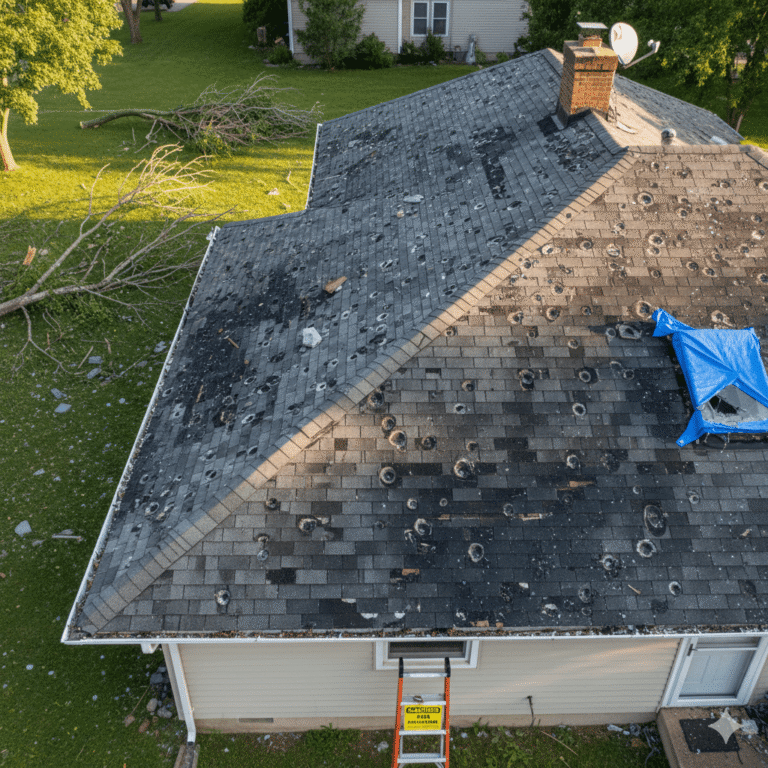
- Random dents or bruises on shingles – Not in straight lines (which would indicate other damage)
- Cracked, missing, or discolored shingles – Especially on the side facing the storm
- Dents on roof vents or metal flashing – Visible even from the ground with binoculars
Hailstorms are surprisingly common, with approximately 3,000 hailstorms occurring annually across the United States. In 2022 alone, there were over 4,400 severe hail reports, resulting in billions of dollars in property damage. For homeowners in hail-prone regions, roofs often need replacement every 7 to 10 years instead of the typical 20-year lifespan.
The challenge? Hail damage isn’t always obvious. Unlike a missing shingle or a visible hole, hail impacts can create subtle damage that shortens your roof’s lifespan and leads to leaks months or even years later. Even worse, homeowners often have just one year to file an insurance claim after a hailstorm.
This guide will help you safely inspect your property for hail damage, understand what you’re looking at, and take the right steps to protect your home and your investment. Safety first: Never climb onto your roof yourself—most hail damage can be spotted from the ground, and professional inspectors have the training and equipment to do it safely.
The Science of Hail: Understanding the Threat
Hail isn’t just frozen rain; it’s a fascinating and powerful meteorological phenomenon. Understanding how hailstorms form and the characteristics of hail can help us appreciate the force they exert on our homes.
Hailstorms are typically a byproduct of severe thunderstorms, specifically those with strong updrafts. According to National Geographic, hail forms when drops of water freeze together in the cold upper regions of these storm clouds. As frozen droplets begin to fall, they’re repeatedly lifted back up by powerful updrafts. Each time a growing hailstone is lifted, it combines with additional super-cooled water droplets, adding layers of ice. This cycle continues until the hailstone becomes too heavy for the updraft to support, at which point it falls from the sky. The larger the hailstone, the stronger the updraft that was needed to suspend it. You can learn more about How hail is formed.
The size and speed of hailstones are critical factors in the damage they inflict. Hailstones can range from tiny pellets just 5 millimeters in diameter to massive ice balls 15 centimeters across. A dime-sized hailstone might fall at around 20 miles per hour, but a three-inch, baseball-sized hailstone can reach speeds between 80 and 110 mph. While most hail falls at speeds between 25-40 miles per hour, very large hailstones (exceeding four inches in diameter) can exceed 100 mph. It’s no wonder they can pack such a punch!
In the United States, hailstorms are a concern across many states, but certain regions are particularly prone. The Great Plains states, often referred to as “Hail Alley,” experience frequent hail activity. This region stretches from south Texas northward to Minnesota, and from Colorado eastward to Illinois. This means homeowners in our service areas of Lakewood, Crystal Lake, Schaumburg, and the broader Chicago suburbs are definitely in a hail-prone zone. While there isn’t a single “hail season,” severe thunderstorms, which produce hail, are most common during the warmer months, typically from spring through late summer. For more information on hail-prone areas, you can visit Hail Alley.
How to Spot Hail Damage from the Ground
After a hailstorm, your first instinct might be to climb onto your roof to check for damage. Please, don’t! Safety is paramount. Walking on a wet or damaged roof is incredibly dangerous. Plus, professional roofers have the training and safety equipment to perform a thorough inspection. The good news is that many signs of hail damage roof issues can be identified safely from the ground. A ground-level inspection is crucial because it allows you to spot collateral damage that often indicates potential roof damage.

Check for Collateral Damage
Hail rarely damages just your roof. It typically affects other exterior components of your home first, and these can be excellent indicators of potential roof problems.
- Gutters and Downspouts: Look for dents, dings, or spatter marks (where hail has knocked off oxidation or dirt) on metal gutters and downspouts. Also, check inside your gutters for an accumulation of asphalt granules. A large amount of these sandpaper-like particles is a strong sign that your asphalt shingles have been impacted by hail. If you suspect damage to your gutters, we can help with repairs or replacement. Learn More info about gutter installation.
- Siding Damage: Examine your home’s siding for cracks, chips, or dents. Vinyl siding can crack or shatter, while wood siding might show chips or impact marks. Even brick can show signs of impact with spatter marks. If you notice significant siding damage, your roof likely took a hit too. We also offer More info about siding replacement.
- Window Screens and Sills: Check window screens for tears or holes, and look for dents or chips on window sills, especially if they are made of wood or aluminum.
- AC Units, Mailboxes, and Decks: Don’t forget to inspect outdoor appliances like air conditioning units, as their metal fins are highly susceptible to denting. Mailboxes, outdoor furniture, and wooden decks can also show signs of impact. Any dings or spatter marks on these items indicate that hail was present and likely struck your roof.
- Cars: Even your vehicles can provide clues. If your car, parked outside during the storm, has dents or dings, it’s a clear sign that the hail was large and forceful enough to damage your roof.
Inspecting Your Roof from a Safe Distance
Once you’ve checked for collateral damage, it’s time to inspect your roof from the ground. A good pair of binoculars will be your best friend here.
- Using Binoculars: From various angles around your home, use binoculars to get a closer look at your roof’s surface. Pay attention to areas that seem to have a different texture or color.
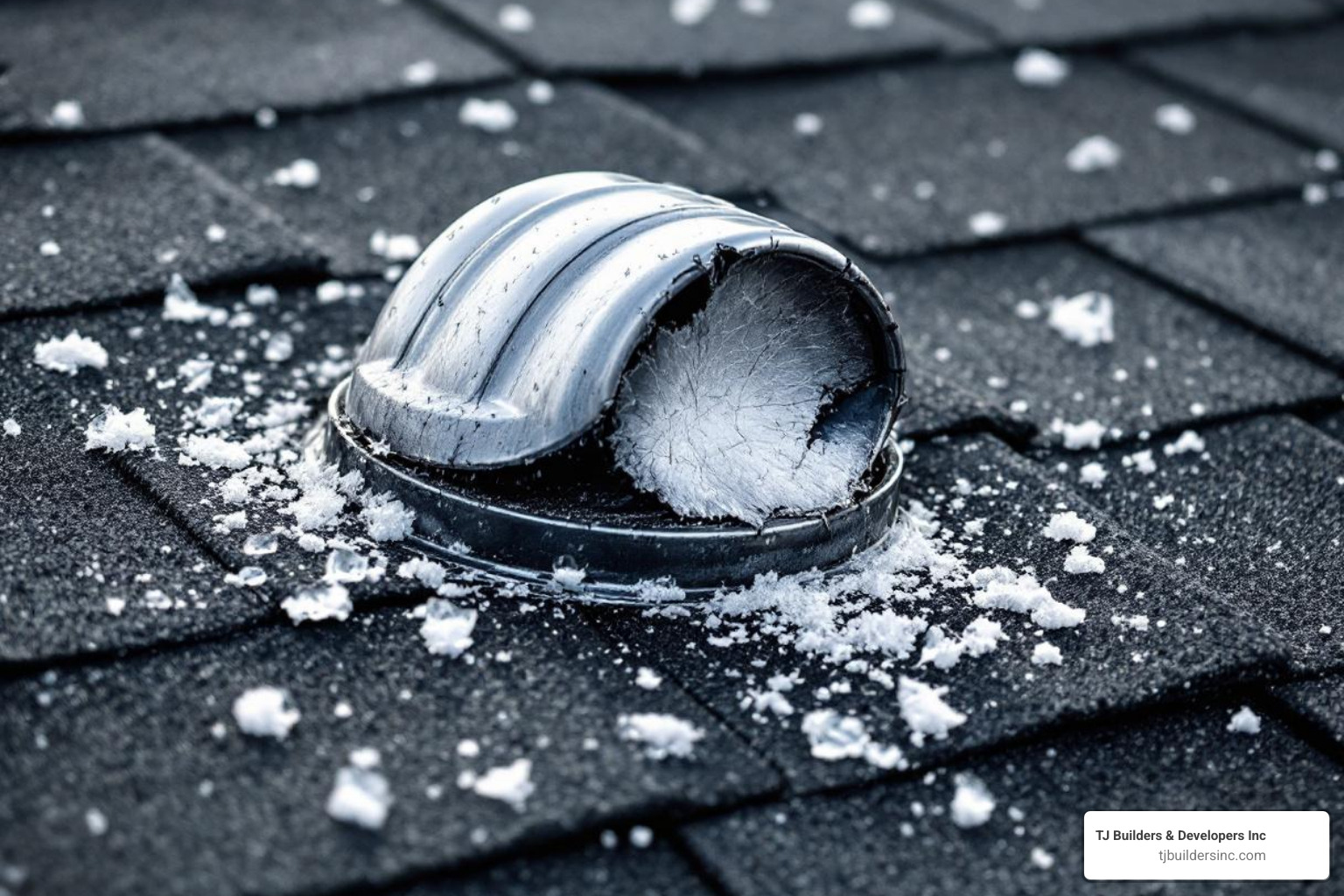
- Dents on Vents and Flashing: Look for dents, dings, or impact marks on metal roof vents, skylight frames, and chimney flashing. These metal components are often easier to see damage on than shingles themselves.
- Shingle Discoloration: Hail impacts can remove the protective granules from asphalt shingles, exposing the darker asphalt beneath. This can create circular or irregular dark spots, making the roof appear discolored or “bruised.”
- Missing or Cracked Shingles: While less common for hail alone, severe impacts, especially combined with strong winds, can crack or even dislodge shingles. Look for any areas where shingles appear lifted, broken, or completely missing.
Need Help With Your Home?
TJ Builders & Developers handles roofing, siding, gutters, windows, home additions, and fire damage restoration for homes and businesses in Lakewood, Crystal Lake, Schaumburg, and nearby McHenry County towns.
- Free, no-obligation estimates
- Licensed & insured
- 20+ years of local experience
Identifying Hail Damage on Different Roofing Materials
The way hail damage manifests varies significantly depending on your roof’s material. What looks like damage on one type of roof might be normal wear and tear on another, or vice versa.
Hail Damage on Asphalt Shingles
Asphalt shingles are the most common roofing material in our service areas, making them a frequent target for hail.
- Bruising and Dents: Hail impacts create soft spots or depressions, often called “bruises,” on asphalt shingles. These might not immediately puncture the shingle but can weaken its matting and cause future issues. You can usually feel a bruise on real hail impacts.
- Random Pattern: Unlike mechanical damage (which might be in a line), hail damage will appear in a random pattern across the roof slope, reflecting the unpredictable nature of a hailstorm.
- Granule Loss: This is one of the most common and critical signs. Hail impacts dislodge the protective ceramic granules embedded in the asphalt. These granules protect the asphalt from harmful UV rays. When they’re gone, the exposed asphalt ages rapidly, becoming brittle and susceptible to cracking. You’ll often find these granules accumulating in your gutters.
- Exposed Asphalt: Where granules have been knocked off, the underlying asphalt layer becomes visible. These dark spots are highly vulnerable to accelerated weathering.
- Cracks and Tears: While less common from hail alone, severe impacts can cause cracks or tears in the shingle, compromising its integrity.
- Weakened Self-Seal Strip: The adhesive strip that seals shingles together can be weakened or fractured by hail, making them more susceptible to wind uplift.
Hail Damage on Wood and Slate/Tile Roofs
These materials react differently to hail due to their inherent rigidity.
- Wood Shakes/Shingles: Hail can cause splintering, deep cracks along the grain, or even completely split wood shakes. You might also find missing or dislodged sections.
- Slate or Tile Roofs: These brittle materials can chip, crack, or shatter upon impact. Severe hailstorms can leave these roofs looking like they’ve been hit with a hammer, with many chipped, cracked, or even fallen tiles. Exposed underlayment or decking would be a clear sign of severe damage.
Hail Damage on Metal Roofs
Metal roofs offer excellent durability, but even they are not impervious to hail.
- Dents and Dings: The most obvious sign of hail damage on a metal roof is denting. These can range from small pockmarks to significant indentations, depending on the hail size and material gauge.
- Scratches: If hailstones have sharp edges or are combined with debris, they can scratch the protective coating or paint on metal panels.
- Punctures from Large Hail: While rare, extremely large hailstones can potentially puncture thinner gauge metal roofs.
- Compromised Seams or Fasteners: Impacts near seams or fasteners can loosen them, potentially leading to leaks.
Understanding the Severity and Consequences of a Hail Damage Roof
Not all hail damage is created equal, and understanding the distinction between functional and cosmetic damage is crucial, especially when dealing with insurance. Ignoring even seemingly minor hail damage roof issues can lead to significant long-term problems for your home in Lakewood, Crystal Lake, Schaumburg, or the Chicago suburbs.
Functional vs. Cosmetic Damage Explained
This distinction is often a point of contention between homeowners, roofers, and insurance companies.
- Functional Damage: This is the serious stuff. Functional damage is defined as damage that diminishes the roof’s ability to shed water and/or reduces its expected long-term service life. This includes impacts that cause granule loss exposing the asphalt mat, bruising that weakens the shingle’s core, cracks, tears, or punctures. If your roof can no longer protect your home from the elements or its lifespan has been significantly shortened, it’s functional damage.
- Cosmetic Damage: Cosmetic damage, on the other hand, does not meet the definition of functional damage. It primarily affects the appearance of the roof without compromising its water-shedding capabilities or significantly reducing its lifespan. Examples include minor localized granule loss that doesn’t expose the asphalt, or small dents in metal vents and downspouts that don’t affect their function. While an expensive copper roof with visible dents might be considered cosmetic, it could still result in a financial loss due to reduced property value, which some insurance policies might cover. However, coverage for cosmetic damage is not guaranteed and depends heavily on your specific policy and state laws.
The Long-Term Risks of Ignoring a Hail Damage Roof
Even if hail damage doesn’t cause an immediate leak, ignoring it is a recipe for disaster. The subtle weaknesses created by hail impacts worsen over time, especially with exposure to UV light, extreme temperatures, and further weather events.
- Roof Leaks: This is the most common and immediate long-term consequence. Bruised or granule-deficient shingles become brittle and crack, allowing water to penetrate. Weakened seals can also lead to leaks.
- Attic and Ceiling Damage: Once water breaches the roof, it can saturate insulation, stain ceilings, and damage attic components like plywood and rafters.
- Mold and Mildew: Persistent moisture from leaks creates a perfect breeding ground for mold and mildew in your attic and walls. This can lead to unpleasant odors, structural rot, and serious health issues for your family.
- Electrical Issues: Water leaks can come into contact with electrical wiring, leading to shorts, power outages, and even fire hazards.
- Wood Rot: Prolonged exposure to moisture will cause wooden structural components of your roof and attic to rot, compromising the structural integrity of your home.
- Reduced Roof Lifespan: Even if leaks don’t immediately appear, hail damage accelerates the aging process of your roof, drastically shortening its expected lifespan. What might have been a 20-year roof could fail in 7-10 years.
Impact on Roof Lifespan in Hail-Prone Areas
For homeowners in hail-prone regions like Lakewood, Crystal Lake, Schaumburg, and the Chicago suburbs, the impact of hail on roof lifespan is a significant concern. While the average lifespan of some roofs is 20 years, insurance industry data indicates that roofs in severe hail-prone areas often must be replaced every 7 to 10 years. This stark difference highlights the importance of regular inspections and proactive measures. If your roof is nearing this age in a hail-prone area, it might be time to consider More info about reroofing services.
The Aftermath: Navigating Repairs and Insurance
Finding your roof has hail damage can be stressful, but having a clear plan of action can make the process much smoother. From immediate steps to dealing with insurance, we’re here to guide you.
Immediate Steps After a Hailstorm
If a hailstorm has just passed over your home, taking these steps right away can protect your property and help with any future insurance claims:
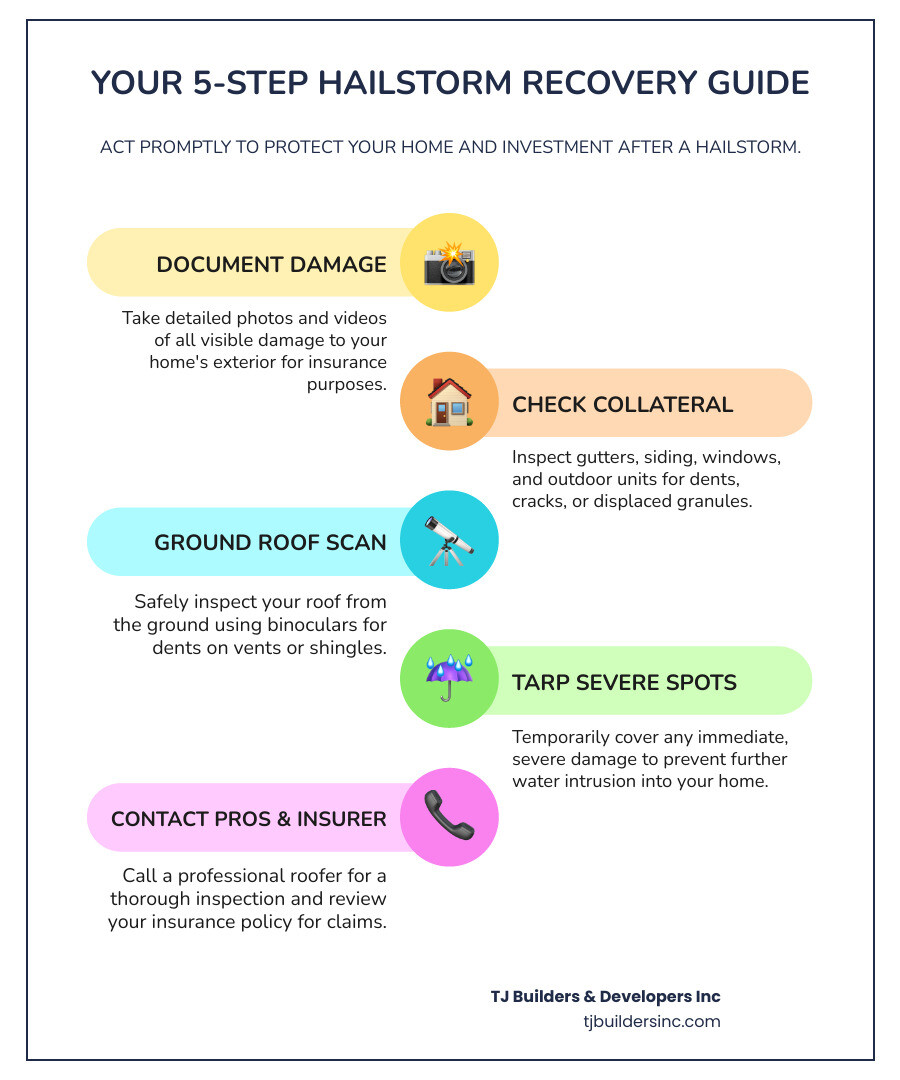
- Document the Damage with Photos and Videos: This is crucial! Before touching anything, take clear photos and videos of all visible damage. Include close-ups of specific impacts on your roof, siding, gutters, windows, and any other affected areas. Take pictures of hail balls with a measuring tape next to them if possible. This documentation is invaluable for your insurance claim.
- Cover Severe Damage with a Tarp: If you notice any large holes or significant breaches in your roof, make temporary repairs to prevent further water intrusion. This might involve covering the area with a tarp. FEMA offers guidance on Protecting Your Home From Hail Damage. Save receipts for any materials used for temporary repairs, as your insurance might reimburse you.
- Contact a Professional Roofer: Even if you don’t see obvious damage, it’s always best to have a professional inspection. We can identify subtle or latent damage that might not be visible to an untrained eye. We have the expertise to assess the full extent of the damage and provide an accurate estimate for repairs.
- Review Your Insurance Policy: Familiarize yourself with your homeowner’s insurance policy. Understand your coverage limits, deductible, and the process for filing a claim.
The Role of Homeowners Insurance
A typical homeowners insurance policy usually includes coverage for hail damage roof repairs or replacement. However, the amount you receive can vary significantly based on your policy type.
- Filing a Claim: Contact your insurance agent or company as soon as you suspect hail damage. Most policies have a time limit for filing claims, often up to one year from the date of the storm.
- ACV vs. RCV Policies:
- Actual Cash Value (ACV) Policy: This type of policy pays out the depreciated value of your roof. It means the older your roof, the less you’ll receive, which often won’t cover the full cost of a new roof.
- Replacement Cost Value (RCV) Policy: This policy pays to replace your roof with a new one of similar quality. Often, the insurance company will initially pay the ACV, and then release the “recoverable depreciation” once the repair or replacement work is completed and verified.
- Deductibles: You’ll be responsible for paying your deductible before your insurance coverage kicks in.
- Working with an Adjuster: Your insurance company will send an adjuster to assess the damage. It’s often beneficial to have your roofing contractor present during this inspection to ensure all damage is identified and documented. We can help you steer this process. For more information on roof repairs, visit our page on More info about roof repair services.
Repair Costs and Prevention
The cost of repairing hail damage can vary widely. Homeowners in the US spend anywhere from $375 to $7,500 on hail damage repairs, depending on the extent of the damage, the roofing material, and whether a full replacement is needed. You can find more details on homeowners spend anywhere from $375 to $7,500 on hail damage repairs.
While we can’t control the weather, we can take preventative measures to mitigate hail damage:
- Impact-Resistant Materials: Investing in impact-resistant roofing materials, especially if you live in hail-prone areas like the Chicago suburbs, is one of the best preventative steps. These materials are designed to withstand significant hail impacts.
- Regular Maintenance: Keep your roof and gutters clean and well-maintained. Trim overhanging tree branches that could fall and cause further damage during a storm.
- Secure Outdoor Items: Before a predicted hailstorm, secure or bring inside any loose outdoor items like patio furniture, grills, and decorative elements.
- Gutter Guards: Gutter guards can offer a small amount of protection to your gutters by absorbing some of the hail’s impact.
Need Help With Your Home?
TJ Builders & Developers handles roofing, siding, gutters, windows, home additions, and fire damage restoration for homes and businesses in Lakewood, Crystal Lake, Schaumburg, and nearby McHenry County towns.
- Free, no-obligation estimates
- Licensed & insured
- 20+ years of local experience
The Gold Standard: Impact-Resistant Roofing
For homeowners in hail-prone areas, choosing impact-resistant (IR) roofing materials is a smart investment. These roofs are specifically engineered to withstand the force of hail impacts, offering superior protection and peace of mind.
What is the UL 2218 Classification?
The national standard for roof impact resistance is the UL 2218 classification, established by Underwriters Laboratories. This classification rates roofing materials from Class 1 to Class 4 based on their ability to withstand impact from steel balls dropped from varying heights.
- The Test: In the UL 2218 test, steel balls of different sizes (ranging from 1.25 inches to 2 inches in diameter) are dropped onto roofing material samples from heights up to 20 feet.
- The Ratings:
- Class 1: Withstands a 1.25-inch steel ball.
- Class 2: Withstands a 1.5-inch steel ball.
- Class 3: Withstands a 1.75-inch steel ball.
- Class 4: Withstands a 2-inch steel ball (the highest rating). This means the material showed no evidence of cracking, splitting, or other damage after two impacts in the same spot.
Benefits of Class 4 Impact-Resistant Shingles
Opting for Class 4 impact-resistant shingles offers several compelling advantages:
- Improved Durability: These shingles are significantly more durable and less likely to suffer functional damage from hailstorms compared to traditional asphalt shingles. Polymer-modified (rubberized) asphalt shingles, for example, are more flexible and can better absorb impact forces.
- Longer Lifespan in Hail Regions: While standard roofs might last 20 years, roofs in severe hail-prone areas often need replacement every 7-10 years. Class 4 IR shingles can dramatically extend your roof’s life in these conditions, saving you money and hassle in the long run.
- Potential for Lower Insurance Premiums: Many insurance providers recognize the improved protection offered by Class 4 IR roofs and offer discounts on homeowner’s insurance premiums. This can lead to significant savings over the life of your roof.
- Peace of Mind: Knowing your roof has the highest level of hail protection provides invaluable peace of mind, especially during severe weather events common in the Chicago suburbs.
Frequently Asked Questions about Hail Damage
We get a lot of questions about hail damage, and for good reason! Here are some of the most common inquiries we address for homeowners in Lakewood, Crystal Lake, Schaumburg, and the surrounding Chicago suburbs.
Can small hail cause roof damage?
Yes, absolutely! While larger hailstones (1 inch or more in diameter) are more likely to cause obvious and significant damage, even smaller hail can be problematic, especially when combined with high winds or on older, more brittle roofs. Even ¾-inch hail can dislodge granules from asphalt shingles, damage vinyl siding, window screens, and metal fascia. Granule loss is a critical issue because it exposes the asphalt layer to UV radiation, accelerating the aging process and leading to premature cracking and brittleness. So, don’t underestimate the impact of smaller hail.
How long do I have to file a hail damage claim?
The timeframe for filing a hail damage roof claim varies by insurance policy and state regulations. However, many insurance companies typically require claims to be filed within one year from the date the damage occurred. It is crucial to check your specific policy documents immediately after a hailstorm to understand your deadline. Acting promptly is always the best course of action; the longer you wait, the harder it might be to prove the damage was caused by a specific storm.
Does hail damage always cause immediate leaks?
No, not usually. This is one of the biggest misconceptions about hail damage. Hail impacts often create subtle damage—like bruising, fractured shingle mats, or granule loss—that doesn’t immediately result in a visible leak. Instead, these weak points compromise the roof’s integrity, making it more vulnerable to future weather events. Over time, with exposure to sun, wind, and rain, these “minor” damages can worsen, eventually leading to leaks months or even years down the road. Ignoring these initial signs can result in much more extensive and costly water damage to your attic, ceilings, and interior.
Conclusion: Protecting Your Home in Lakewood, IL
Understanding hail damage roof issues is essential for every homeowner in hail-prone areas like Lakewood, Crystal Lake, Schaumburg, and the broader Chicago suburbs. We’ve explored how hail forms, how to safely identify damage from the ground, what to look for on different roofing materials, and the critical distinction between functional and cosmetic damage. We’ve also highlighted the severe long-term consequences of ignoring hail damage and the benefits of proactive measures, including impact-resistant roofing.
Prompt inspection and action after a hailstorm are key to protecting your home and maximizing your insurance coverage. We understand that dealing with storm damage can be overwhelming, but you don’t have to do it alone.
For a professional inspection and reliable repairs, trust a local expert to protect your investment. At TJ Builders & Developers Inc., we’re committed to providing our community with reliable workmanship, competitive pricing, and eco-friendly solutions for all your roofing needs. Learn more about our comprehensive roofing services.