When a Hailstorm Hits: What You Need to Know About Your Hail Damage Roof Insurance Claim
A hail damage roof insurance claim is the formal process of notifying your homeowners insurance company about roof damage caused by hail, documenting that damage, and working with an adjuster to receive compensation for repairs or replacement.
Here’s a quick overview of how the process works:
- Inspect safely – Check for visible damage from the ground after the storm passes
- Document everything – Take photos and videos of all damage with scale references
- Contact your insurer – Report the loss promptly; most policies require filing within 1 year
- Get a professional inspection – A licensed roofer’s written report strengthens your claim
- Meet with the adjuster – Be present and provide all documentation
- Review the settlement offer – Compare it against your contractor’s estimate
- Appeal if needed – Dispute low offers through appraisal or a public adjuster
Hail is not a rare event. In 2024, NOAA recorded 5,373 hail events across the United States. That same year, hail damage accounted for an estimated 50% to 80% of all thunderstorm-related insurance claims, resulting in roughly $10 billion in property damage nationwide. U.S. roof-related claims alone reached nearly $31 billion — a 30% jump since 2022.
For homeowners in Northern Illinois, this isn’t abstract data. The region’s severe spring and summer storm seasons put roofs at real, recurring risk.
And yet, the claims process trips up thousands of homeowners every year. Missed deadlines, poor documentation, misunderstood policy terms, and underestimating damage are just a few of the reasons valid claims get denied or underpaid.
The goal of this guide is simple: walk you through the entire process so you know exactly what to do — and what to avoid.
I’m Thomas Pruszynski of TJ Builders & Developers Inc. With over 20 years of hands-on experience helping Northern Illinois homeowners recover from storm damage, I’ve guided countless families through the hail damage roof insurance claim process from first inspection to final repair. The steps and insights in this guide reflect what we’ve seen work — and what doesn’t — in the real world.

Identifying the Signs of a Hail Damage Roof Insurance Claim
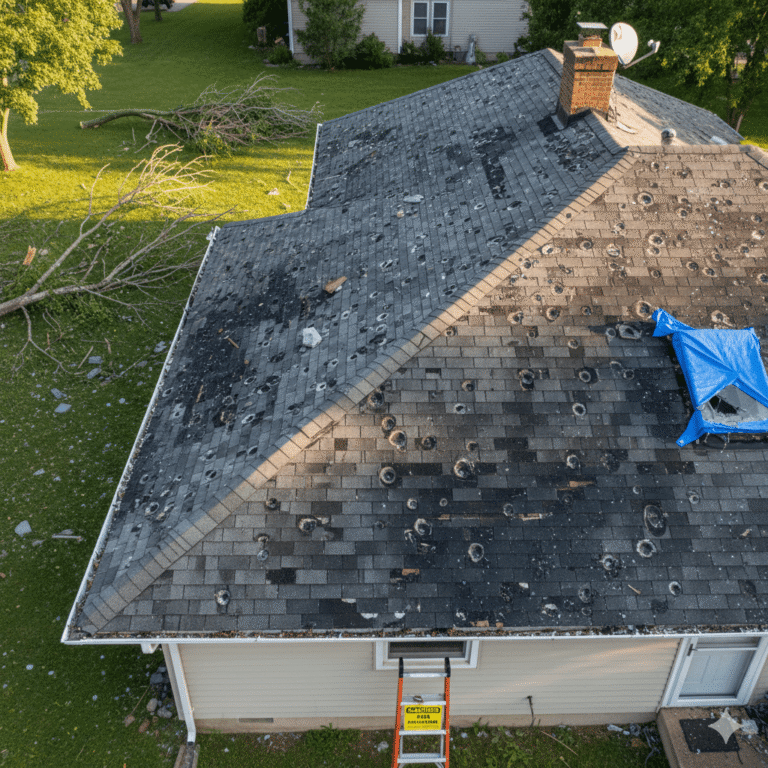
After the thunder stops rolling over Lakewood or Crystal Lake, the first thing most of us do is peek out the window. But identifying hail damage isn’t always as obvious as seeing a tree limb through the living room ceiling. Often, the damage is subtle, acting like a “bruise” on an apple—it looks okay on the surface, but underneath, the structure is failing.
When we talk about Hail Damage Roof issues, we are looking for several key indicators:
- Shingle Bruising: This feels like a soft spot on the shingle. If you press it, it may give way. This indicates the internal mat of the shingle has been fractured.
- Granule Loss: Look for random black spots on your shingles where the protective ceramic granules have been knocked off. You might also see piles of these granules at the base of your downspouts.
- Metal Dents: Check your gutters, downspouts, and roof vents. Soft metals show dents easily, and if your vents are dinged up, your shingles almost certainly took a beating too.
- Cracked Tiles or Slates: For those with premium materials, hail can cause clean circular cracks or star-shaped fractures.
- Interior Warning Signs: Don’t just look up; look in. Check your attic for dampness or new water stains on the ceiling. Even a small leak can lead to mold and structural rot over time.
According to identifying hail damage to your roof resources, these internal signs are clear signals that your roof’s integrity has been compromised.
Documenting Your Hail Damage Roof Insurance Claim
The success of your claim lives and dies by your documentation. Think of yourself as a detective building a case. You need to prove that the damage happened on a specific date due to a specific storm.
First, note the date and time of the storm. You can often find local weather reports to corroborate the event. When taking photos, use a “scale reference.” Placing a coin or a ruler next to a hail dent helps the insurance company understand the size of the stones that hit your home.
For more comprehensive help, look into storm hail damage restoration services that include documentation assistance. We recommend creating a “damage log”—a simple folder (digital or physical) where you keep:
- Photos and videos of the roof, yard, and any damaged property (like patio furniture or AC units).
- Receipts for any emergency measures, such as emergency tarps used to prevent further leaking.
- A record of all communication with your insurance company.
According to the iii.org guide on how to file a homeowners claim, your phone is your best tool. Capture close-ups of dents on gutters and wider shots of the property to show the scope of the storm.
The Role of Professional Roof Inspections
While a DIY look from the ground is a great start, insurance adjusters require professional proof. A certified inspector from a reputable company specializing in roofing will use standardized methods to evaluate your home.
One common technique is the use of “test squares.” An inspector will mark off a 10×10 foot section on different slopes of your roof and count the number of “functional strikes” (hail hits that actually damage the shingle) within that area. If the count meets the insurance company’s threshold, it usually triggers a recommendation for a full roof replacement.
Professional inspectors also look for hidden damage that the naked eye might miss, such as micro-cracks in the shingle mat that will eventually lead to leaks. Standardized reporting ensures that the language used in the inspection matches what the insurance company expects to see.
Need Help With Your Home?
TJ Builders & Developers handles roofing, siding, gutters, windows, home additions, and fire damage restoration for homes and businesses in Lakewood, Crystal Lake, Schaumburg, and nearby McHenry County towns.
- Free, no-obligation estimates
- Licensed & insured
- 20+ years of local experience
Navigating the Insurance Policy: ACV vs. RCV
Understanding your policy is the difference between getting a brand-new roof and being stuck with a massive bill. Most homeowners in the Chicago suburbs have one of two types of coverage:
| Feature | Actual Cash Value (ACV) | Replacement Cost Value (RCV) |
|---|---|---|
| Definition | Pays the depreciated value based on age. | Pays the cost to replace the roof at today’s prices. |
| Payout Style | One check for the “current” worth of the old roof. | Two checks: one for ACV, one for “recoverable depreciation” after work is done. |
| Out-of-pocket | Often very high for older roofs. | Usually just your deductible. |
With RCV, you can often recover the “depreciation”—the value the roof lost over time—once you prove the repairs are complete. However, keep an eye out for cosmetic exclusions. Some policies, especially for metal roofs, won’t pay if the hail only caused “ugly” dents but didn’t affect the roof’s ability to shed water.
It is also vital to check your property’s insurance claim history via reports like CLUE. This information tracks how many claims have been filed on your specific property, which can impact your future premiums or insurability.
If you are considering reroofing, check if your policy has a “matching clause.” In some cases, if the insurance can’t find shingles that match your existing ones, they may be required to replace the entire roof rather than just a patch.
What to Expect During the Adjuster Inspection
Once you file your hail damage roof insurance claim, the company will send an adjuster to your home. This is the most critical hour of the entire process.
We always tell our clients in Schaumburg and Barrington: never let the adjuster on the roof alone. You want your own roofing contractor present. Why? Because adjusters are busy and might miss subtle damage. Your contractor can point out specific bruises or roof repair needs that the adjuster might overlook.
During the visit, the adjuster will:
- Measure the roof and check all slopes.
- Look for “collateral damage” on gutters, siding, and windows.
- Create a “scope of work” which is a line-by-line breakdown of what they are willing to pay for.
According to InterNACHI’s guide on documenting damage, having a professional who “speaks the same language” as the adjuster can lead to a much fairer settlement offer. If the adjuster’s estimate is lower than your contractor’s, don’t panic. This is the start of a negotiation, not the final word.
Why a Hail Damage Roof Insurance Claim Gets Denied
It’s a frustrating reality: sometimes claims are denied. Knowing why can help you avoid these pitfalls. Common reasons include:
- Wear and Tear: If your roof is 25 years old and falling apart, the insurance company may argue the hail didn’t cause the damage—age did.
- Late Filing: Most policies require you to file within 30 to 60 days of the storm, though some allow up to a year. If you wait too long, they may deny the claim because they can’t verify which storm caused the damage.
- Improper Installation: If the previous roofer cut corners, the insurance company might claim the failure was due to poor workmanship rather than the storm.
- Lack of Maintenance: If you haven’t kept up with basic services, like cleaning gutters or replacing missing shingles, the insurer might blame you for the extent of the water damage.
If you have questions about your specific situation, it’s always best to contact us early to get an honest assessment before the adjuster arrives.
Appealing a Denied Claim or Low Payout
If your claim is denied or the payout is too low to cover a quality repair, you have rights.
- Request a Re-inspection: You can ask for a different adjuster to come out, especially if you have new evidence from a professional roofing report.
- The Appraisal Process: Most policies have an appraisal clause. If you and the insurer can’t agree on the amount of the loss, you can both hire independent appraisers to settle the dispute.
- Public Adjusters: You can hire a public adjuster who works for you, not the insurance company. They take a percentage of the settlement but are experts at maximizing payouts.
- State Department of Insurance: If you feel you are being treated unfairly, you can file a complaint with the Illinois Department of Insurance.
At TJ Builders & Developers Inc, we believe in providing independent estimates that reflect the true cost of high-quality Northern Illinois workmanship, ensuring you aren’t left holding the bill for a subpar repair.
Need Help With Your Home?
TJ Builders & Developers handles roofing, siding, gutters, windows, home additions, and fire damage restoration for homes and businesses in Lakewood, Crystal Lake, Schaumburg, and nearby McHenry County towns.
- Free, no-obligation estimates
- Licensed & insured
- 20+ years of local experience
Frequently Asked Questions about Hail Damage Claims
Does filing a hail claim increase my insurance premiums?
Generally, no. Hail damage is considered an “Act of God,” which means it wasn’t caused by your negligence. In most states, insurance companies are prohibited from raising your individual rates based on a weather-related claim. However, if an entire area (like a specific Chicago suburb) is hit by a massive storm, the insurance company may raise rates for the entire zip code to cover their collective losses.
How long do I have to file a claim after a hailstorm?
While many policies allow up to one year, we strongly recommend filing as soon as possible. The longer you wait, the harder it is to prove that the hail caused the specific leaks you are seeing. Furthermore, if you wait six months and a second storm hits, the documentation becomes incredibly messy.
Can I choose my own roofing contractor for the repairs?
Absolutely. You are never required to use the “preferred contractor” suggested by your insurance company. In fact, many “insurance builders” are high-volume companies that subcontract the work out to the lowest bidder. Choosing a local expert ensures you get someone who stands by their work and understands local building codes in places like Elk Grove Village or Palatine.
Conclusion
Navigating a hail damage roof insurance claim can feel like a full-time job, but it doesn’t have to be overwhelming. By acting quickly, documenting every dent, and partnering with a professional who understands the local landscape, you can ensure your home is protected for years to come.
From the initial shingle bruising to the final settlement check, the goal is long-term property protection. Whether you are in Lakewood, Crystal Lake, or the surrounding Chicago suburbs, don’t settle for a “quick fix” that might fail during the next Illinois winter. Professional workmanship and reliable materials are the only way to truly secure your home.
Secure your home with a professional hail damage roof assessment today, and let us help you turn a stressful storm into a stronger, safer roof for your family.