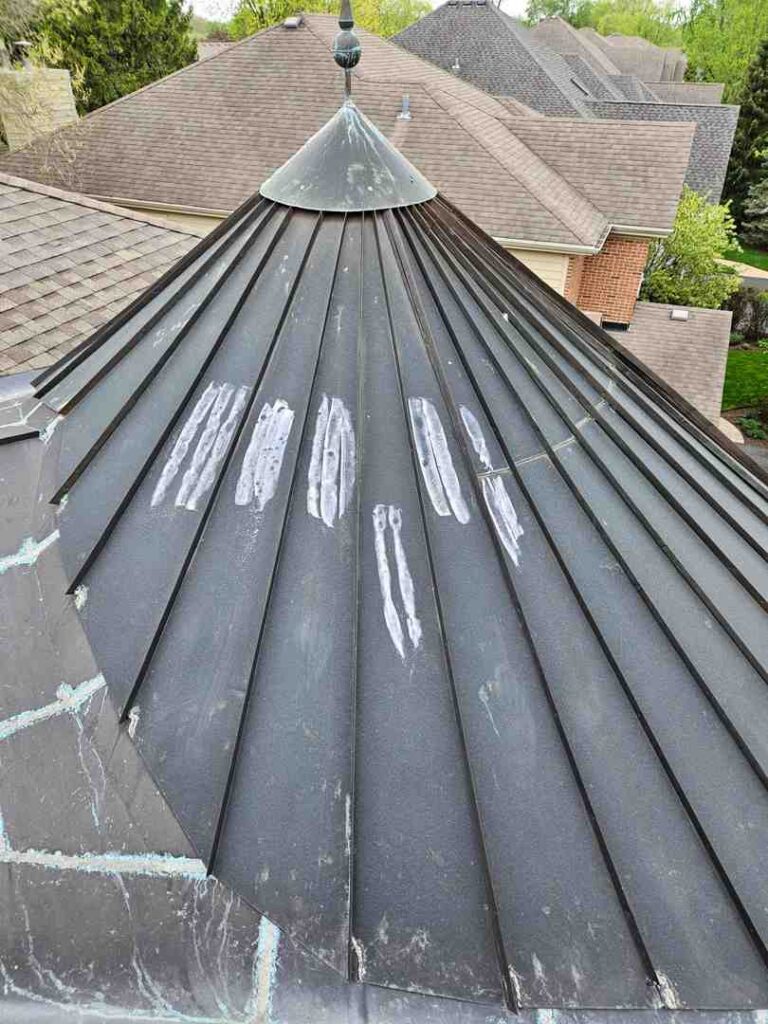
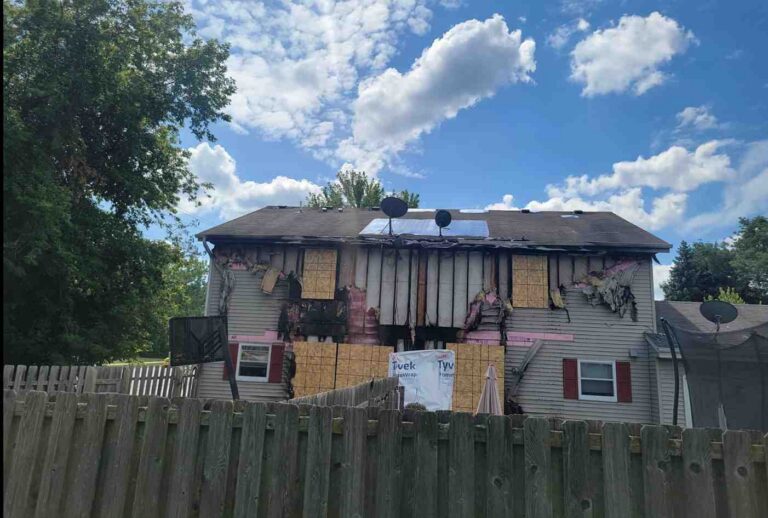
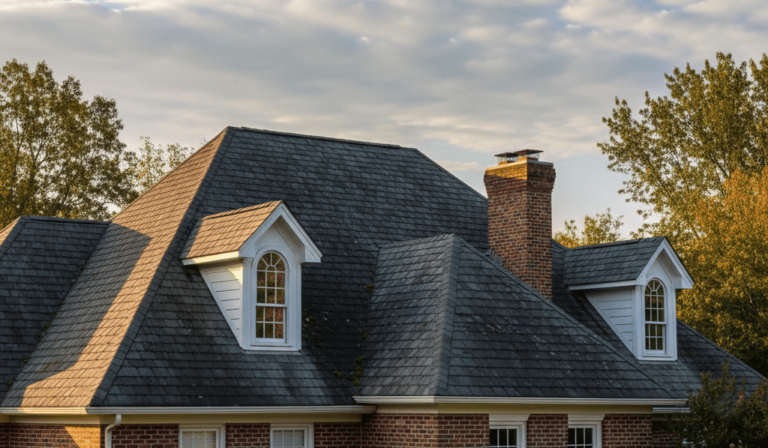
Understanding Box Gutters and Identifying Failure Signs
Box gutter repair services address one of the most damaging — and most overlooked — problems a home can have. If your conservatory box gutter is dripping, staining ceilings, or pooling water, here’s what you need to know right away:
Quick Answer: How to Fix a Leaking Box Gutter
- Identify the source — look for rust, open seams, clogged outlets, or standing water inside the trough
- Choose the right repair tier — patching for isolated holes, coating for surface rust, full relining for widespread failure
- Address the wood substrate — rotted framing must be replaced before any new lining goes in
- Restore proper slope — minimum 1/8 inch per foot toward the outlet to prevent pooling
- Test before finishing — run water through the system to confirm no leaks before closing up
Box gutters are built directly into the roof structure — not hung on the outside like standard K-style gutters. That means when they fail, water doesn’t just drip off the edge. It travels inward, soaking rafter bays, ceiling joists, and interior finishes before you ever notice a stain. According to industry data, water infiltration from faulty gutters accounts for up to 80% of basement and foundation issues in residential properties. The damage is real, it’s expensive, and it almost always starts quietly.
I’m Thomas Pruszynski from TJ Builders & Developers, and over more than 20 years of exterior restoration work across Northern Illinois, our team has delivered professional box gutter repair services ranging from targeted patching to full copper relining on historic and residential properties. That hands-on experience is what this guide is built on.
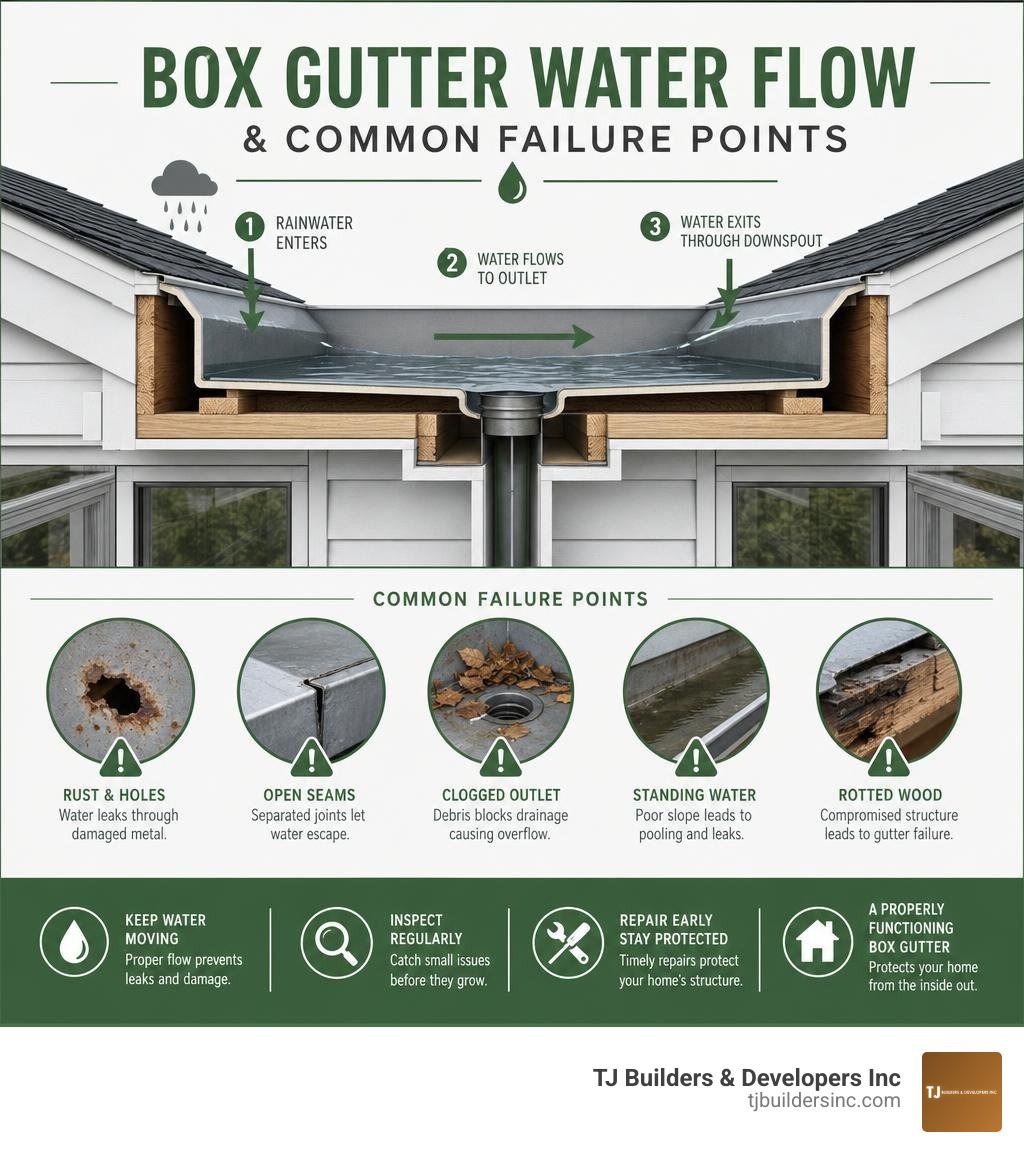
To understand why a leaking box gutter is such a threat to your home, you have to look at how it differs from traditional gutter systems. Most modern homes in communities like Crystal Lake, Algonquin, and Lake in the Hills feature external gutters. These are the familiar K-style or half-round metal troughs fastened to the fascia board along the roof’s edge. If an external gutter overflows or leaks, the water typically spills onto the ground below.
A box gutter, however, is a concealed drainage system. It is literally framed into the roof overhang or behind a decorative cornice. The structural trough is made of wood, which is then lined with a waterproof layer—traditionally sheet metal like copper or galvanized steel, or modern synthetic membranes. Because it is integrated directly into the building’s envelope, the box gutter is completely hidden from view from the ground. While this preserves the clean, historic architectural lines of older homes, it also means any failure of the lining is hidden.
When we discuss external options in our guide on The Hole Truth: Why a Seamless Gutter is the Ultimate Upgrade, we emphasize how seamless designs reduce leak points. With box gutters, avoiding leaks is even more critical because the water has nowhere to go but inside your home’s structural framing.
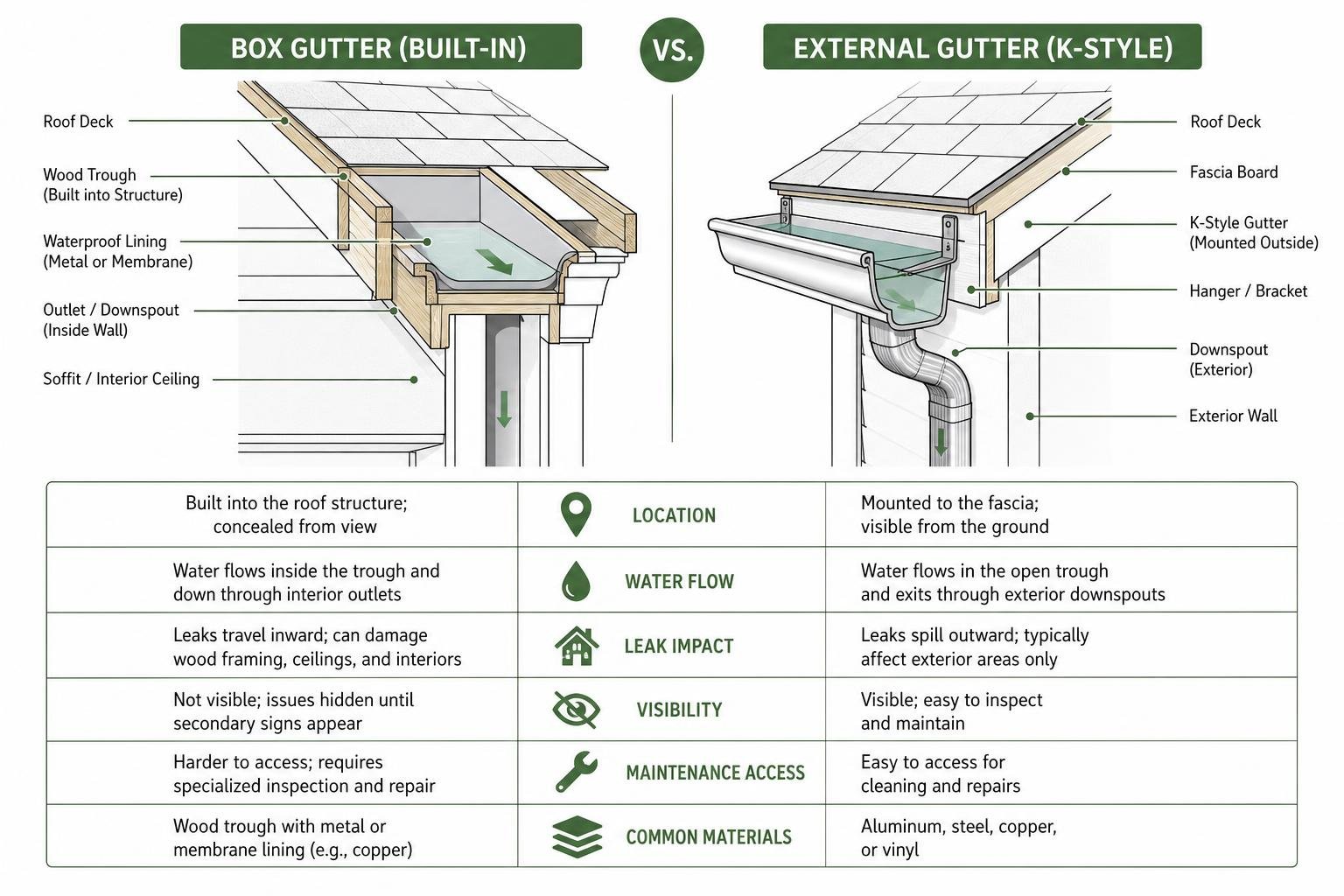
Identifying a failing box gutter early can save you from catastrophic restoration costs. Because you cannot easily see inside the trough without climbing a ladder, you must rely on secondary symptoms:
- Soffit and Eave Leaks: During a heavy rainstorm, look up at your roof overhangs. If you see water dripping or pouring from the soffit vents or the decorative wooden trim beneath the gutter line, water has already breached the lining.
- Interior Paint Damage: Inside your home or conservatory, look for bubbling, flaking, or peeling paint on plaster or drywall near the ceiling-to-wall joints.
- Water Staining: Dark, tea-colored rings on your ceilings or upper walls are a classic indicator that water is traveling horizontally through your rafter bays.
- Visible Rust or Standing Water: If you inspect the gutter trough and find stagnant pools of water or areas where galvanized steel has turned reddish-brown, your lining is deteriorating.
- Ice Damming: In our cold Northern Illinois winters, ice building up inside the concealed trough indicates that water is trapped and freezing, putting immense pressure on the lining’s seams.
Why Integrated Drainage Demands Specialized Expertise
Many homeowners assume that any local roofing contractor can handle a box gutter leak. This is a dangerous misconception. Repairing or replacing a built-in gutter system is not a simple roofing job; it is a highly technical discipline that requires simultaneous expertise in carpentry, sheet metal fabrication, and advanced waterproofing.
Because the gutter’s structural support is made of wood, a leaking lining almost always leads to underlying wood rot. Before a new lining can be installed, a skilled craftsman must carefully cut away the rotted structural framing and rebuild the wooden trough. This carpentry work must be incredibly precise to re-establish the correct drainage slope. To prevent standing water, a box gutter must maintain a minimum slope of 1/8 inch per foot toward the downspout outlets.
Once the wooden frame is structurally sound, the new lining must be custom-fabricated. If you are using traditional metals like copper or stainless steel, this requires on-site metal bending and precision soldering. Standard gutters rely on caulks and sealants that dry out and crack over time. A professional box gutter installation uses fully soldered seams that physically fuse the metal sheets together, creating a single, continuous, watertight unit.
Furthermore, the installer must account for thermal expansion and contraction. In Northern Illinois, seasonal temperature swings can exceed 100°F. As the metal lining heats up in the summer and freezes in the winter, it expands and contracts. Without proper expansion joints and skilled installation, this cyclic stress will tear soldered seams apart within a few seasons. This level of craftsmanship is why we highlight the importance of specialized skills in our article on Expert Gutter Installation Services in Lakewood.
How Climate and Weather Accelerate Damage
The local climate in McHenry County and the surrounding suburbs places unique stresses on integrated drainage systems. Our weather is characterized by intense seasonal shifts that act as a catalyst for box gutter degradation.
During the spring and summer, heavy downpours test the carrying capacity of your gutters. Because box gutters are built into the roof, they must handle not only the water falling directly into them but also the rapid runoff from large roof spans. If the downspouts are slightly restricted by debris, the trough will quickly fill. Unlike external gutters that simply spill over the front yard, an overflowing box gutter will back water up under the roofing shingles or behind the fascia, leading to immediate interior flooding.
In the winter, the challenges shift to freezing temperatures and snow accumulation. Because box gutters sit directly over the heated living space of the home, they are highly susceptible to ice dams. Snow on the upper roof melts from escaping home heat, runs down to the unheated eave, and refreezes inside the cold gutter trough. This ice buildup blocks the outlets, creating a frozen reservoir. As more meltwater runs down, it pools behind the ice dam and exerts upward pressure, forcing its way under the metal seams and roofing materials.
This constant cycle of freezing, thawing, and intense summer UV exposure means that minor installation errors or neglected maintenance will quickly escalate into major structural failures. This local environmental pressure is a key reason we emphasize protective measures in our discussion on Why Your Palatine Home Needs a Professional Gutter Refresh.
Need Help With Your Home?
TJ Builders & Developers handles roofing, siding, gutters, windows, home additions, and fire damage restoration for homes and businesses in Lakewood, Crystal Lake, Schaumburg, and nearby McHenry County towns.
- Free, no-obligation estimates
- Licensed & insured
- 20+ years of local experience
Professional Box Gutter Repair Services and Restoration Methods
When a box gutter system begins to fail, homeowners are faced with choosing the right restoration method. A professional contractor will diagnose the severity of the damage and recommend one of three primary repair tiers: patching, coating, or full relining.
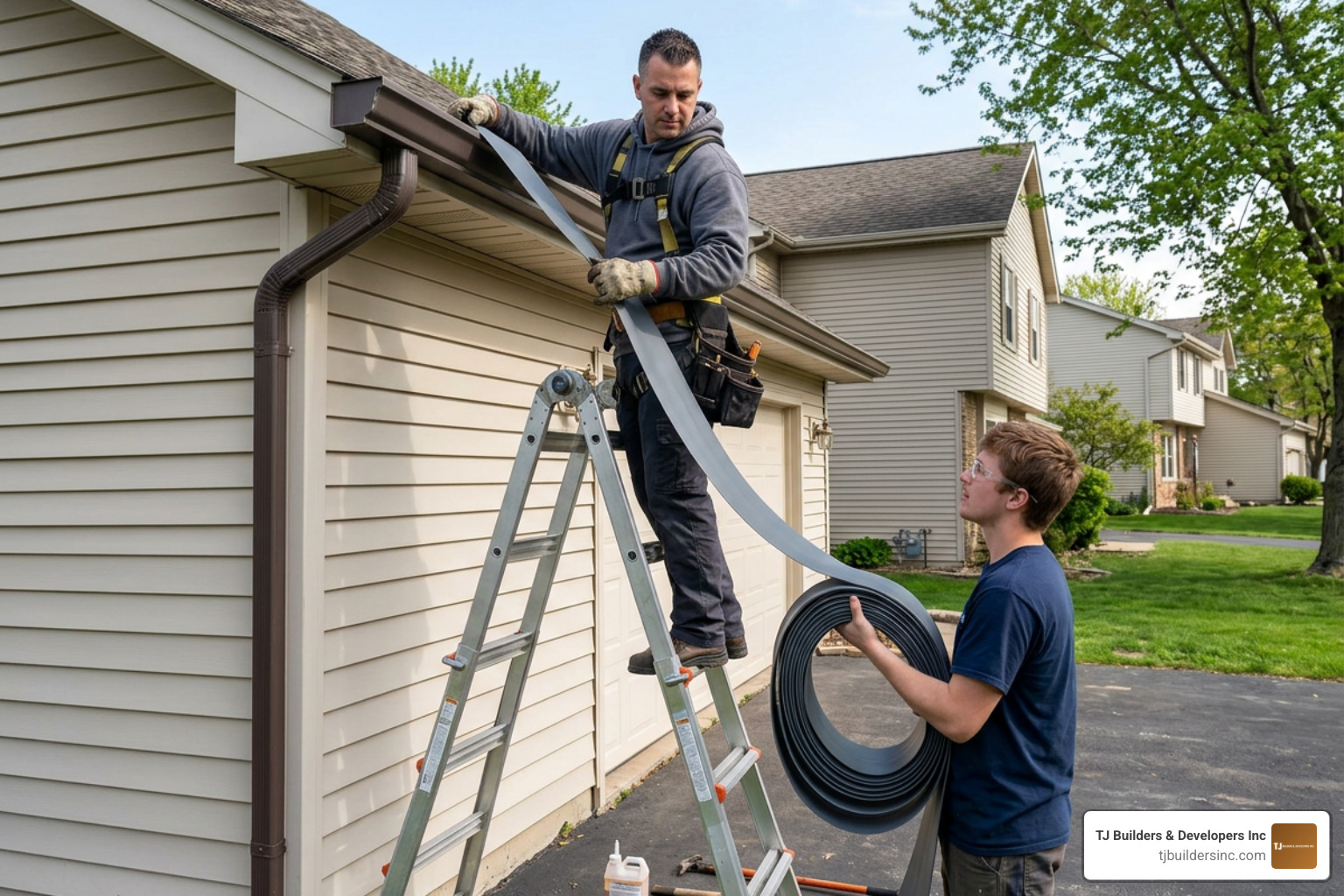
To help you understand your choices, we have compiled a reference table comparing the most common lining materials used in professional box gutter repair services:
| Lining Material | Expected Lifespan | Primary Installation Method | Best Suited For | Risk Factors |
|---|---|---|---|---|
| Copper | 50 – 100+ Years | Custom fabrication & soldered seams | Historic homes, ultimate durability | High upfront material cost |
| Stainless Steel | 50 – 75 Years | Custom fabrication & soldered seams | Heavy-duty protection, modern roofs | Requires specialized soldering skills |
| Galvanized Steel | 20 – 30 Years | Soldered seams & protective paint | Budget-conscious metal restoration | Must be repainted every 3–5 years to prevent rust |
| EPDM Rubber | 20 – 40 Years | Adhered membrane with sealed seams | Low-slope integrations, flat roofs | Can degrade faster under extreme UV exposure |
| TPO Membrane | 20 – 30 Years | Heat-welded commercial membrane | Modern flat roofs, seamless transitions | Requires commercial heat-welding equipment |
For those exploring general gutter repair information, understanding standard external gutter repair practices can provide helpful context. However, keep in mind that integrated box gutters require a much higher level of craftsmanship than standard hanging systems.
When to Choose Patching vs. Full Relining
Deciding whether to perform a localized repair or commit to a full system relining depends on a thorough physical inspection of the gutter’s lining and the health of the underlying wood.
Patching is an appropriate solution when the overall lining is in excellent condition, but has suffered isolated damage. For example, if a tree branch falls and punctures a small hole in a copper liner, or if a single soldered seam has popped due to thermal expansion on an otherwise sound system, we can perform a targeted patch. This involves cleaning the metal to bare substrate, applying a compatible metal patch, and soldering or sealing it in place.
However, patching is a temporary fix if the material itself is reaching the end of its lifespan. If we find three or more leaks, or if galvanized steel shows widespread surface rust and thinning metal, patching is a waste of resources.
Full Relining is required when the existing lining has failed systematically. If the metal is severely corroded, or if synthetic membranes have shrunk, cracked, and pulled away from the walls, the entire liner must be replaced. Relining involves removing the old material completely, inspecting and repairing the wooden trough, and installing a brand-new, continuous waterproof barrier.
If you ignore widespread failure and continue to apply temporary patches, water will slowly rot the rafter tails and cornices. Rebuilding this structural woodwork can easily double or triple the cost of the project. We discuss the structural mechanics of alignment and proper water flow in our guide on Gutter Repair Realigning. If you are looking for verified local professionals to assess your system, checking resources like the Top 10 Best Gutter repair and replacement pros in Crystal Lake, IL can connect you with experienced regional technicians.
The Step-by-Step Process of Professional Box Gutter Repair Services
A successful box gutter restoration requires a highly disciplined, systematic approach. Here is the step-by-step process our team follows to ensure a watertight finish:
- Debris Removal and Deep Cleaning: We begin by removing all leaves, silt, and standing water from the trough. The lining must be completely clean and dry to allow for an accurate assessment.
- Physical and Moisture Inspection: We conduct a visual survey of the entire lining, paying close attention to seams, outlets, and wall terminations. We also use moisture meters to probe the surrounding wood and plaster inside the home to locate hidden leaks.
- Removal of Damaged Lining: If we are performing a relining, the old metal or membrane is carefully pried out of the wooden trough.
- Substrate Repair and Re-Sloping: We inspect the exposed wooden framing. Any rotted wood is cut out and replaced with high-quality, preservative-treated lumber. At this stage, we verify the slope of the trough, adjusting the woodwork if necessary to ensure a minimum 1/8 inch per foot fall toward the downspouts.
- Liner Installation:
- For Metal Liners (Copper/Steel): We custom-bend the sheet metal to fit the exact contours of the wooden trough. The sheets are laid in place, secured with hidden cleats, and all joints are prepped, riveted, and fully soldered with heavy-duty soldering irons.
- For Membrane Liners (EPDM/TPO): The wood is coated with a specialized adhesive, and the membrane is rolled out smoothly, eliminating air bubbles. Seams are either chemically sealed (EPDM) or heat-welded (TPO) to create a monolithic barrier.
- Outlet and Overflow Integration: The lining is carefully sealed around the downspout outlets. We also install overflow scuppers where appropriate—these are safety drains cut into the outside edge of the gutter that allow water to spill safely outdoors if the main downspout ever becomes completely clogged.
- Water Testing: Before we consider the job complete, we block the downspouts and fill the gutter with water to simulate a heavy storm. This allows us to verify that every seam is 100% watertight and that the system drains completely without any pooling.
To keep your system clean before and after repairs, regular maintenance is essential. You can read our tips on How to Find the Best Gutter Cleaning Pros in Lakewood IL to maintain proper flow and prevent debris buildup.
Material Options and Conversion Decisions
Selecting the right material for your box gutter lining is a balance of performance, architectural style, and long-term value.
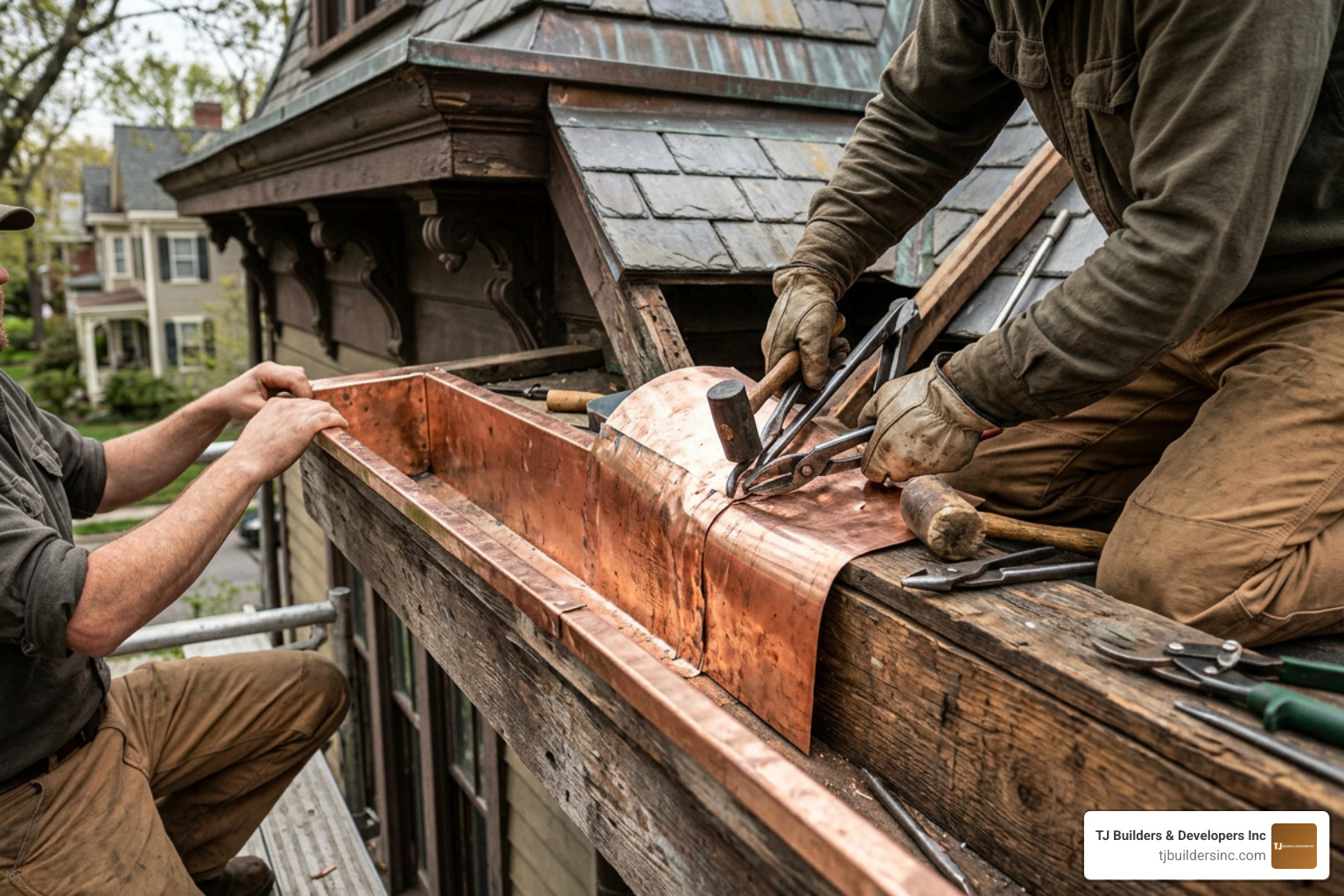
- Copper: Copper is widely considered the gold standard for box gutter linings. It is highly malleable, allowing craftsmen to form it perfectly to complex historic rooflines. It naturally resists corrosion and develops a beautiful protective green patina over time. A properly installed copper liner can easily last 50 to 100+ years, making it a permanent solution for historic homes.
- Galvanized Steel: This is a strong, traditional metal option. While more budget-friendly upfront than copper, galvanized steel is susceptible to rust once its zinc coating wears off. It requires regular painting every 3 to 5 years to maintain its integrity and typically lasts 20 to 30 years.
- Stainless Steel: Offering the same 50+ year durability as copper, stainless steel is highly resistant to corrosion and does not develop a patina, maintaining its metallic finish. It requires specialized soldering skills to install correctly.
- EPDM and TPO Membranes: These modern synthetic rubbers and thermoplastics are excellent options for flat roofs or contemporary integrations. They are highly flexible and completely impervious to water. While they offer a respectable 20 to 40-year lifespan, they are more vulnerable to physical punctures and extreme UV degradation than premium metals.
When dealing with historic properties, specialized restorations highlight the technical demands of historic metalwork and the importance of preserving architectural integrity.
Comparing Lifespan, Performance, and Long-Term Value
When planning a restoration, it is vital to look beyond the initial installation and consider the lifecycle value of the materials. While synthetic membranes or galvanized steel may seem appealing due to lower immediate material costs, they require more frequent replacement and maintenance.
Copper and stainless steel require virtually no maintenance beyond regular cleaning. They do not rust, do not require painting, and can withstand the most severe freeze-thaw cycles without cracking. When you spread the cost of a copper lining over its 100-year lifespan, it represents an incredibly smart investment that protects the structural integrity and resale value of your home.
We discuss the financial planning of exterior projects in our guide, Don’t Get Drained: Estimating Your Gutter Replacement Budget. Understanding these long-term dynamics is essential to making an informed decision. For those interested in standard installation techniques, our step-by-step guide on How to Install New Gutters Like a Pro provides useful context for understanding local seamless metal applications.
When to Convert to External Gutters
In some cases, restoring a box gutter system may not be the most practical path forward. If the wooden framing of your roof overhang has suffered severe, widespread rot, or if a previous contractor improperly altered the roofline, a full structural rebuild can be incredibly complex.
In these situations, homeowners should consider converting their box gutters to external hanging gutters. The conversion process involves:
- Carefully cutting away the integrated wooden box gutter framing flush with the exterior wall.
- Rebuilding the eave with a traditional fascia board and soffit assembly.
- Extending the roofing materials over the new edge.
- Installing a modern, high-capacity seamless aluminum or copper K-style gutter system.
To help you make this decision, we use a simple three-question conversion framework:
- Is the home historic? If your home is a registered historic property or features landmark architecture, preserving the original box gutters is usually required to maintain its character and value.
- Is the underlying framing sound? If the wood support structure is healthy, relining is almost always the best choice. If the framing is completely rotted, conversion may be more practical.
- What is your long-term plan? If you want a low-maintenance, modern drainage system that is easy to inspect and repair from the ground, converting to seamless external gutters is a highly reliable option.
We specialize in these conversions, and you can learn more about our process in our article on Seamless Gutter Installation. We also offer comprehensive replacement services detailed in our guides on Gutters Installation Replacement, Lakewood Gutter Replacement, and our main Gutters service page.
Choosing the Right Contractor for Box Gutter Repair Services
Because box gutters are integrated structural elements, hiring the wrong contractor can lead to thousands of dollars in hidden water damage. When evaluating professionals for your project, look for the following qualifications:
- Proven Carpentry and Metalwork Experience: Ask specifically if they have in-house carpentry and sheet metal fabrication capabilities. A standard roofing crew that only installs pre-formed aluminum gutters does not have the skills required to rebuild wooden troughs or solder copper seams.
- Local Knowledge: Ensure they are familiar with the specific weather challenges of Northern Illinois, particularly ice damming and freeze-thaw cycles.
- Comprehensive Licensing and Insurance: Never work with an uninsured contractor. Box gutter work often involves working at significant heights and using open flames for soldering, making proper liability and worker’s compensation insurance non-negotiable.
- Detailed, Itemized Estimates: A professional estimate should clearly outline the scope of wood repair, the specific lining material and thickness being used, and the methods for seam sealing and water testing.
We pride ourselves on meeting these rigorous standards. You can read more about what to look for in a quality contractor in our guide to Expert Gutter Installation Services in Lakewood.
Need Help With Your Home?
TJ Builders & Developers handles roofing, siding, gutters, windows, home additions, and fire damage restoration for homes and businesses in Lakewood, Crystal Lake, Schaumburg, and nearby McHenry County towns.
- Free, no-obligation estimates
- Licensed & insured
- 20+ years of local experience
Frequently Asked Questions About Box Gutter Repair
How much does box gutter repair or replacement typically cost?
The cost of box gutter services depends heavily on the extent of the damage, the accessibility of your roof, and the materials selected.
- Minor Patching: For isolated seam repairs or small punctures on an otherwise healthy lining, professional repairs typically range from $400 to $1,650.
- Protective Coating: Applying a professional elastomeric or rust-inhibiting coating to a sound metal lining averages $20 to $40 per linear foot.
- Full Relining: For a complete system overhaul, including minor wood framing repairs and a new high-quality lining, costs typically range from $160 to $230 per linear foot. A standard 60-foot relining project generally ranges between $9,600 and $13,800 depending on the material (with copper being on the higher end and synthetic membranes on the lower end).
- Structural Rebuilds: If the underlying wooden framing is completely rotted and requires a full rebuild along with new lining, the complexity of the carpentry can drive costs between $15,000 and $27,000.
How often should box gutters be cleaned and inspected?
Because box gutters are concealed, keeping them free of debris is absolutely critical to prevent water backups. We recommend a minimum of two cleanings and inspections per year: once in the late fall after all leaves have dropped, and once in the late spring to clear out seed pods and organic buildup. If your home is surrounded by mature trees, you may require three to four cleanings per year.
During every cleaning, ensure your technician checks the health of the lining, inspects all soldered seams for cracks, and verifies that the downspout outlets are completely clear. For advice on finding local cleaning services, read our guide on How to Find the Best Gutter Cleaning Pros in Lakewood IL.
Can you install gutter guards on box gutters?
Yes, but standard, off-the-shelf gutter guards designed for K-style gutters will not fit a box gutter. Because box gutters have a wide, rectangular profile, they require custom-fit, heavy-duty micro-mesh screens or flat screens cut to the exact width of the trough.
These screens must be installed flush with the roofline to allow leaves and debris to blow off naturally while letting water drain freely into the system. We discuss the benefits of these advanced protection systems in our articles on Gutter Guard Leaf Protection and Why You Need Gutter Guards in the Lakewood Area Right Now. To ensure water is carried safely away from your home once it leaves the gutters, we also recommend reviewing our guide on Downspout Extension Drainage.
Conclusion
A leaking conservatory box gutter is a serious threat to your home’s structure, but with professional box gutter repair services, it is a problem that can be resolved permanently. Whether your system requires targeted patching, a protective coating, or a complete copper relining, the key to success lies in professional workmanship, proper water sloped drainage, and durable materials.
At TJ Builders & Developers Inc, we are dedicated to protecting homes across Lakewood, Crystal Lake, Schaumburg, and the surrounding Northern Illinois suburbs. We specialize in high-quality exterior residential improvements, historic restorations, and long-term property protection. If you suspect your box gutters are leaking or are ready to schedule a professional assessment, contact us today to secure the safety of your home.
Ready to protect your home’s exterior? Explore our professional services at TJ Builders & Developers Inc Roofing Services.