
In Lakewood, siding takes hail in spring, sun in summer, and freeze-thaw cycles all winter. Fiber cement stands up to all of it. It does not melt, dent easily, or feed a fire.
We handle fiber cement siding in Lakewood, Crystal Lake, and Cary, on new additions and full re-siding jobs. We install lap siding, board-and-batten, shingle-style panels, and matching trim.
We are a siding contractor first. Fiber cement is heavy and must be cut, fastened, and sealed the right way. Our crews follow the maker's install rules on every wall.
Every fiber cement siding project starts with a free on-site visit. We measure the walls, check the sheathing, and show you profiles and colors. You get a written quote with no pressure to sign.
Fiber cement is a mix of cement, sand, and wood fibers. It looks like painted wood but lasts much longer. Here is when we recommend it to Lakewood homeowners:
Many homes around Turnberry have large wall areas facing open ground. Those walls take the worst hail, so a tougher siding pays off. If you prefer vinyl, see our vinyl siding installation and replacement service.
Fiber cement comes in many profiles and finishes. We bring full-size samples so you can see them in daylight against your roof and brick.
Profiles: Lap siding gives a classic look. Board-and-batten suits farmhouse and modern homes. Shingle panels work well on gables and dormers.
Factory finish or field paint: Factory-finished boards arrive painted and hold color longer. Primed boards can be painted on site in any color you like.
Trim and accents: Matching fiber cement trim goes around windows, doors, and corners. Brands like James Hardie publish color charts you can browse at home. We help you pair siding, trim, and roof colors before you order.
Fiber cement is heavier than vinyl, so the wall underneath must be solid. In the Village of Lakewood, we plan each project before the first board is cut.
Sheathing check: We remove the old siding and check the sheathing for rot. Soft spots are cut out and replaced.
House wrap and flashing: New wrap goes on every wall. Windows and doors get new flashing before siding goes up.
Permits: Full re-siding jobs may need a permit. We check with the village and handle the paperwork.
Site setup: Cutting fiber cement makes fine dust. We cut outside with dust-control saws and keep windows closed nearby.
Fiber cement lasts only as long as the install is right. Gaps, nails, and clearances all follow the maker's rules. Here is how we do it:
Lakewood freeze-thaw cycles punish any board that sits in snow or water. Proper clearances keep the bottom edges dry for decades. We use the same method in Crystal Lake and Barrington. If storm damage started your project, see our siding repair and storm restoration service.
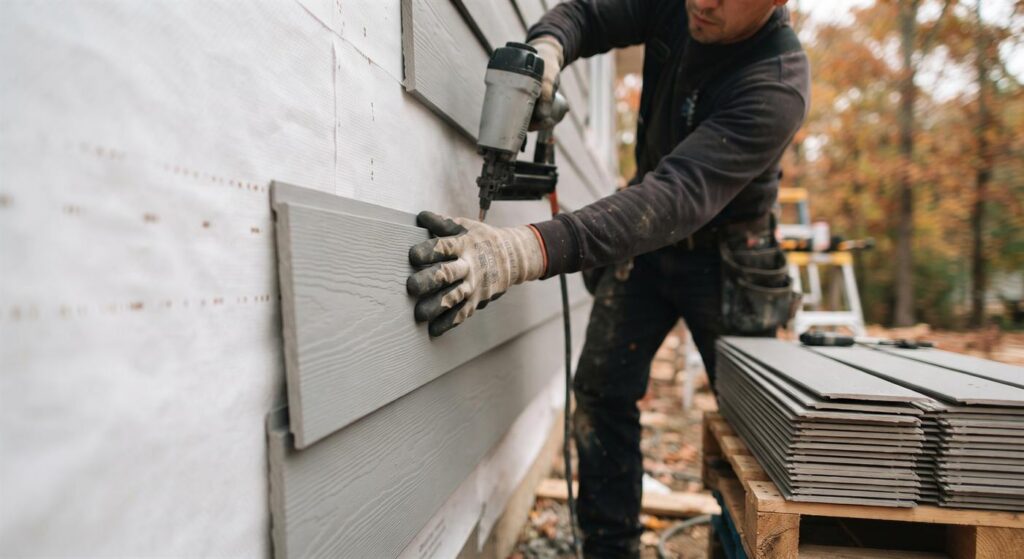
How does fiber cement siding installation in Lakewood work? We measure the house, help you pick a profile and color, and order the material. Then we remove the old siding, prep the walls, and install and finish the new boards.
Here is how each step works on a typical job:
Step 1 – Site visit: We measure every wall and check the sheathing, trim, and gutters.
Step 2 – Design: You choose a profile, color, and trim from full-size samples.
Step 3 – Ordering: Boards and trim are ordered for your house. We confirm the start date with you.
Step 4 – Tear-off: Old siding is removed one side at a time, so the house is never left open.
Step 5 – Wall prep: Sheathing repairs, house wrap, and flashing go on before siding.
Step 6 – Install and walkthrough: Boards, trim, and touch-up go on, and we walk the house with you. For homes near RedTail, we sweep the yard with a magnet for stray nails.
Here are common questions about fiber cement siding from homeowners in Lakewood, Crystal Lake, Cary, and nearby towns:
Fiber cement can last for decades when it is installed correctly. It does not rot or melt, and it resists hail. Factory finishes hold color longer than field paint.
Fiber cement is tougher, fire-resistant, and looks more like wood. Vinyl costs less and needs no paint. We show you both so you can choose what fits your home and budget.
Yes, fiber cement resists hail much better than vinyl. Very large hail can still chip it. Chips are easy to touch up or repair board by board.
Yes, fiber cement does not burn. It will not feed a fire the way vinyl or wood can. That makes it a strong choice for homes close to neighbors or woods.
Factory-finished boards arrive painted and need no paint for many years. Primed boards must be painted after install. Both types need touch-up on cut ends and nail heads.
In most cases, no. We remove the old siding so we can check the sheathing and install new wrap. This keeps the wall dry and the boards flat.
A typical house takes one to two weeks, depending on size and trim detail. Weather and wall repairs can add time. We give you a schedule with your quote.
Yes, fiber cement can be installed in cold weather. Some sealants and paints need warmer temperatures, so we plan finishing work around the forecast.
Yes, it is much heavier than vinyl. It needs solid sheathing and the right fasteners. We check the wall before we start and repair any weak spots.
Yes, we replace damaged boards one at a time. The new board is fastened, sealed, and painted to match the wall.
Siding is the first thing people see and the first thing hail hits. Fiber cement gives you a tougher, longer-lasting wall with the look of painted wood. We offer free fiber cement siding estimates in Lakewood, Crystal Lake, Cary, and Barrington. You see samples and a written scope before you decide anything.
TJ Builders & Developers Inc handles the whole job: design, tear-off, wall repair, wrap, flashing, siding, and trim. One crew works from start to finish. Call us today to book your fiber cement siding estimate.