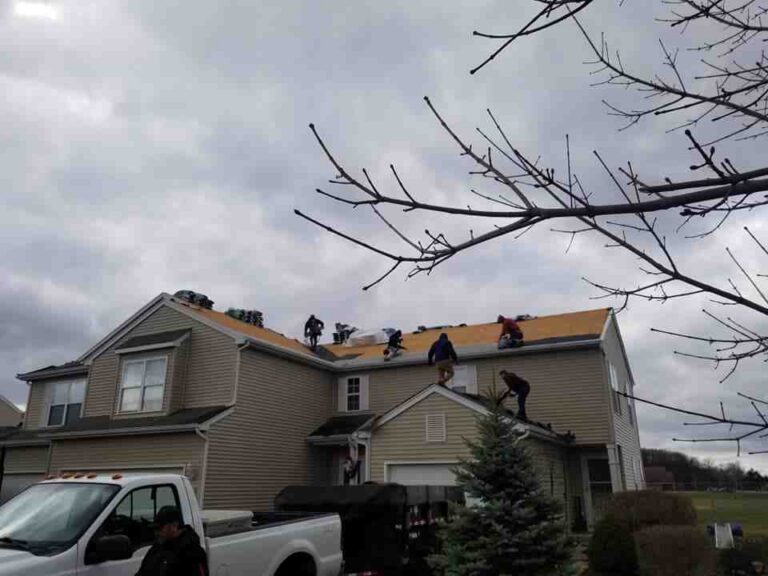
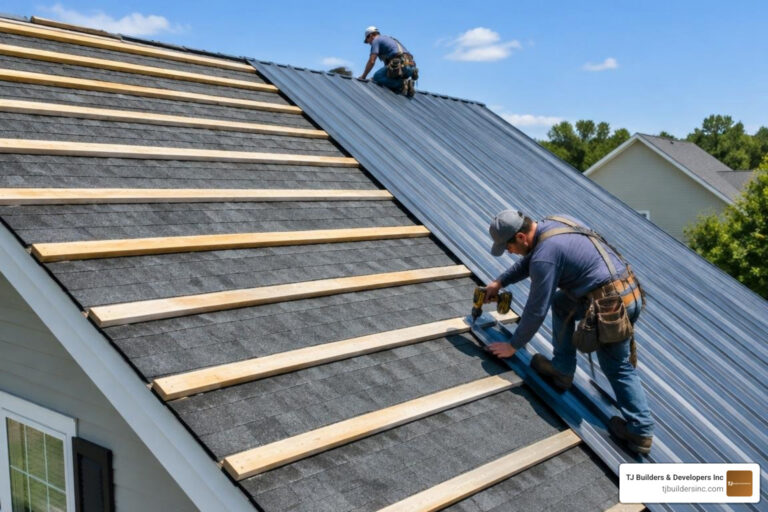
Why Metal Roof Installation Is One of the Smartest Home Investments You Can Make
Metal roof installation done right can protect your home for 50 to 70 years — more than three times the lifespan of a standard asphalt shingle roof.
Here’s a quick overview of what the process involves:
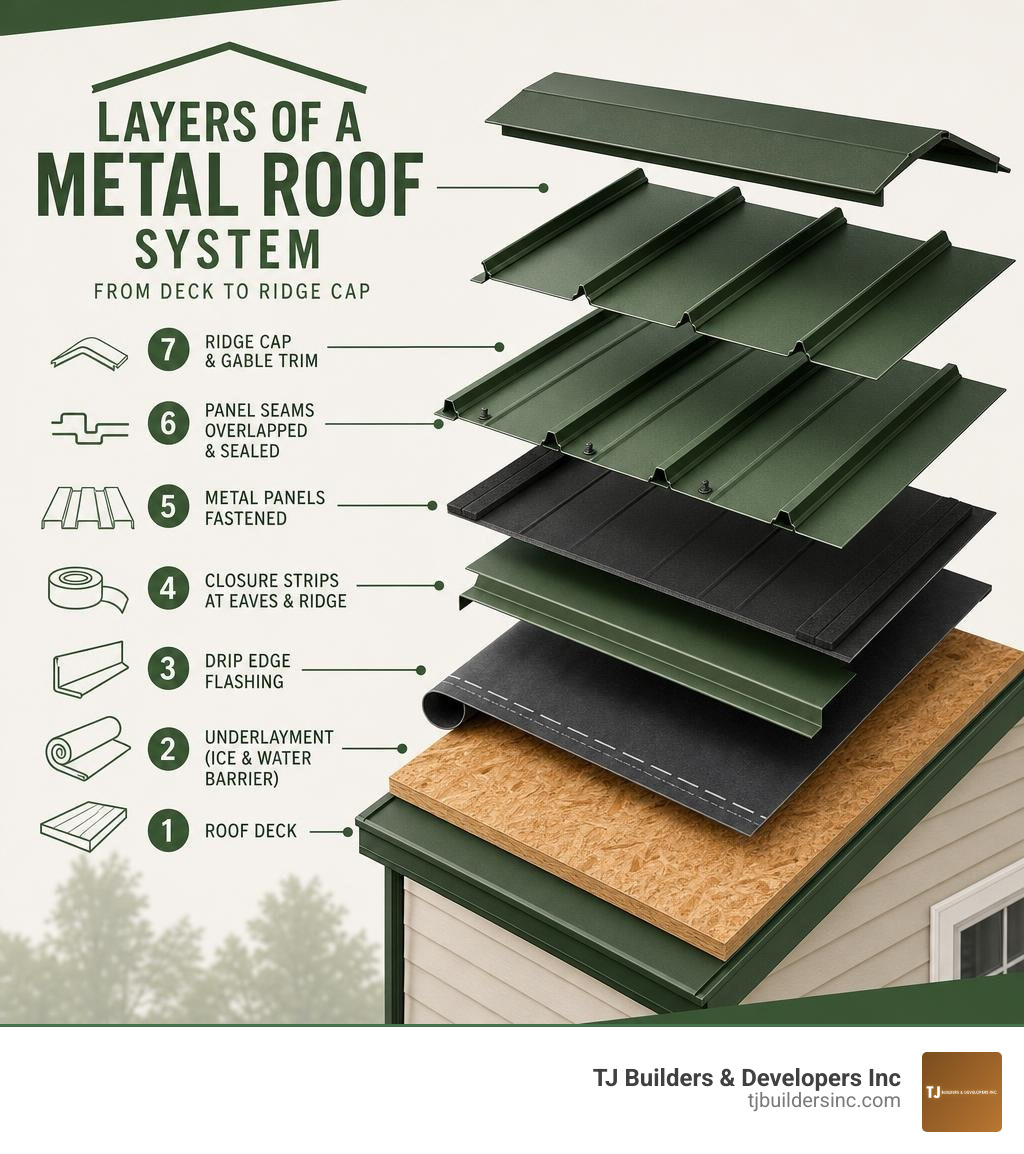
- Inspect and prepare the roof deck — remove old materials, check for damage
- Install underlayment — self-healing ice-and-water barrier, laid flat with proper overlaps
- Attach drip edge flashing — starting at corners, with 3-inch overlaps and sealant
- Install closure strips — foam or butyl tape at eaves and ridge to seal open ribs
- Fasten metal panels — aligned square to the roofline, screws spaced per manufacturer specs
- Overlap and seal panel seams — ribs nested correctly, anti-siphon channel exposed
- Install ridge cap and gable trim — secured with closure strips and two-inch screws through every rib
Each step builds on the last. Skip one, and you risk leaks, rust, or voided warranties.
Metal roofing isn’t just durable — it reflects heat away from your home, resists moss and mold, and adds long-term value to your property. But the installation requires precision, the right tools, and a solid understanding of how each component works together as a system.
I’m Thomas Pruszynski from TJ Builders & Developers Inc., and with over 20 years of hands-on experience in metal roof installation and exterior home renovation across Northern Illinois, I’ve seen what separates a roof that lasts from one that fails prematurely. In this guide, I’ll walk you through everything you need to know to understand the process, make informed decisions, and protect your home the right way.
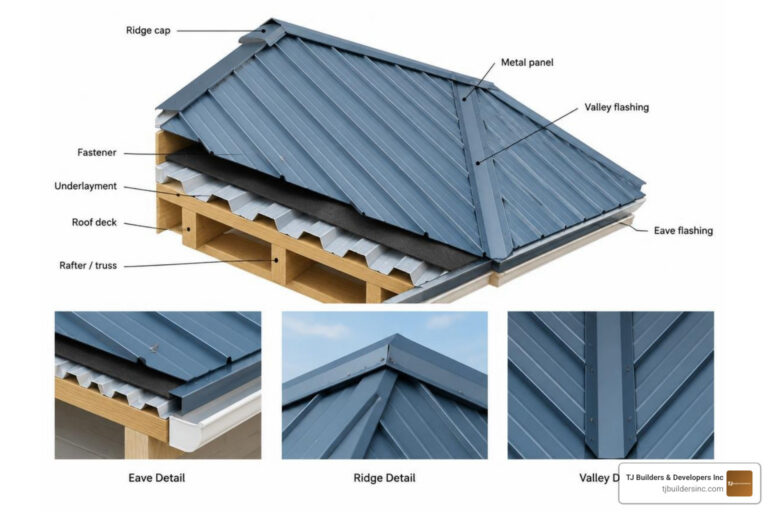
Key metal roof installation vocabulary:
The Benefits of Professional Metal Roof Installation
When evaluating a long-term upgrade for your home, comparing material classes is the best place to start. Many homeowners in our Northern Illinois service areas—from Lakewood to Schaumburg—initially consider standard asphalt roof installation due to its lower upfront cost. However, looking at the long-term return on investment paints a very different picture.
| Feature / Metric | Metal Roofing | Traditional Asphalt Shingles |
|---|---|---|
| Lifespan | 50 to 70 years | 15 to 20 years |
| Weight (per Square) | 40 to 120 lbs | 200 to 350 lbs |
| Upfront Cost | 2x to 3x higher | Standard baseline |
| Wind Resistance | Extreme (up to 140+ mph) | Moderate (varies by class) |
| Energy Efficiency | High (reflects radiant heat) | Low (absorbs and holds heat) |
| Maintenance Needs | Very low (occasional inspections) | Moderate (algae treatment, shingle replacement) |
Longevity and Long-Term Value
A professional metal roof installation is designed to last a lifetime. While asphalt shingles begin to degrade under the punishing freeze-thaw cycles of McHenry and Lake County winters, metal stands firm. It does not rot, crack, or support the growth of moss and algae.
Weight and Structural Benefits
One of the most surprising statistics for homeowners is weight. Metal weighs only 40 to 120 pounds per square (a 100-square-foot area), whereas asphalt or fiberglass shingles weigh a hefty 200 to 350 pounds per square. This lower weight reduces the structural stress on your home’s framing and trusses.
Energy Efficiency and Wind Resistance
Metal roofs act as natural radiant barriers. By reflecting solar heat back into the atmosphere rather than absorbing it into your attic, they can significantly reduce summer cooling costs. Additionally, their interlocking panel structures provide elite wind resistance, easily weathering the severe storms that sweep through Northern Illinois.
Need Help With Your Home?
TJ Builders & Developers handles roofing, siding, gutters, windows, home additions, and fire damage restoration for homes and businesses in Lakewood, Crystal Lake, Schaumburg, and nearby McHenry County towns.
- Free, no-obligation estimates
- Licensed & insured
- 20+ years of local experience
Metal Roofing Materials and Panel Profiles
Choosing the right metal and profile is critical to matching your home’s architectural style and structural needs.
1. Metal Material Options
- Steel: The most common and cost-effective residential choice. It is coated with zinc (galvanized) or an aluminum-zinc alloy (Galvalume) to prevent rust, then finished with high-performance paint systems.
- Aluminum: Highly recommended for areas prone to moisture. It is naturally rust-resistant and lightweight.
- Copper and Zinc: Premium, architectural metals that develop a natural protective patina over time. They are incredibly long-lasting but represent a significant investment.
2. Panel Profiles
- Standing Seam: The gold standard for residential properties. It features raised interlocking seams that conceal the fasteners underneath. Because there are no exposed screws, the risk of leaks over time is virtually zero.
- Corrugated and Ribbed Panels: These feature exposed fasteners. While highly durable and excellent for accessory structures, agricultural buildings, or post-frame projects, they require periodic screw inspections to ensure the rubber washers remain sealed. If you are planning a project with these, you must refer to precise 36-inch metal panel specifications to ensure correct rib nesting and fastener placement.
- Polycarbonate Panels: Unlike metal panels, polycarbonate panels are transparent or translucent plastic. They are designed to let light through while blocking UV rays. They are perfect for sunrooms or patio covers, often paired alongside metal roofs or integrated during a skylight installation in Lakewood, but they are not used as primary residential roofing.
Planning, Measuring, and Safety Standards
A successful metal roof installation starts long before the first panel is lifted. Proper preparation prevents material shortages and ensures job site safety.
Measuring and Ordering Materials
To measure a roof accurately:
- Divide the roof plane into basic geometric shapes (rectangles and triangles).
- Calculate the square footage of each section.
- Order panels cut to the exact length of your roof slope to minimize end-to-end seams.
- Always order an additional 10% of materials to account for waste, rake cuts, and job site adjustments.
Safety Standards and Fall Protection
Roofing is inherently hazardous, and metal panels are exceptionally slick, especially when damp. We strictly adhere to OSHA safety standards on every project. This includes:
- Utilizing approved personal fall arrest systems (harnesses, anchors, and lifelines).
- Wearing rubber-soled shoes for optimal traction.
- Avoiding work during high winds, rain, or frost.
- Handling panels on-edge rather than flat to prevent permanent wind distortion or bending.
Professional vs. DIY Risks in Northern Illinois
While a DIY approach might seem appealing for a small garden shed, a full residential home is a different story. Proper installation requires specialized tools like hand seamers, heavy-duty metal snips, and torque-limiting screw guns.
Improperly sealed seams, over-tightened fasteners, or incorrect flashing around chimneys and valleys will lead to leaks, rot, and voided manufacturer warranties. Our team at TJ Builders & Developers Inc. delivers precision engineering that meets the highest GAF certified roofing standards and local building codes across our service regions.
Homeowners planning a project should consult our roof installation replacement complete guide to understand the structural demands involved. You can also read more about finding qualified crews in our article on Metal Roofing Contractors Near Me Get Your Dream Roof Today to learn how to evaluate local standards and ensure you hire a qualified team.
Need Help With Your Home?
TJ Builders & Developers handles roofing, siding, gutters, windows, home additions, and fire damage restoration for homes and businesses in Lakewood, Crystal Lake, Schaumburg, and nearby McHenry County towns.
- Free, no-obligation estimates
- Licensed & insured
- 20+ years of local experience
The Professional Metal Roof Installation Process
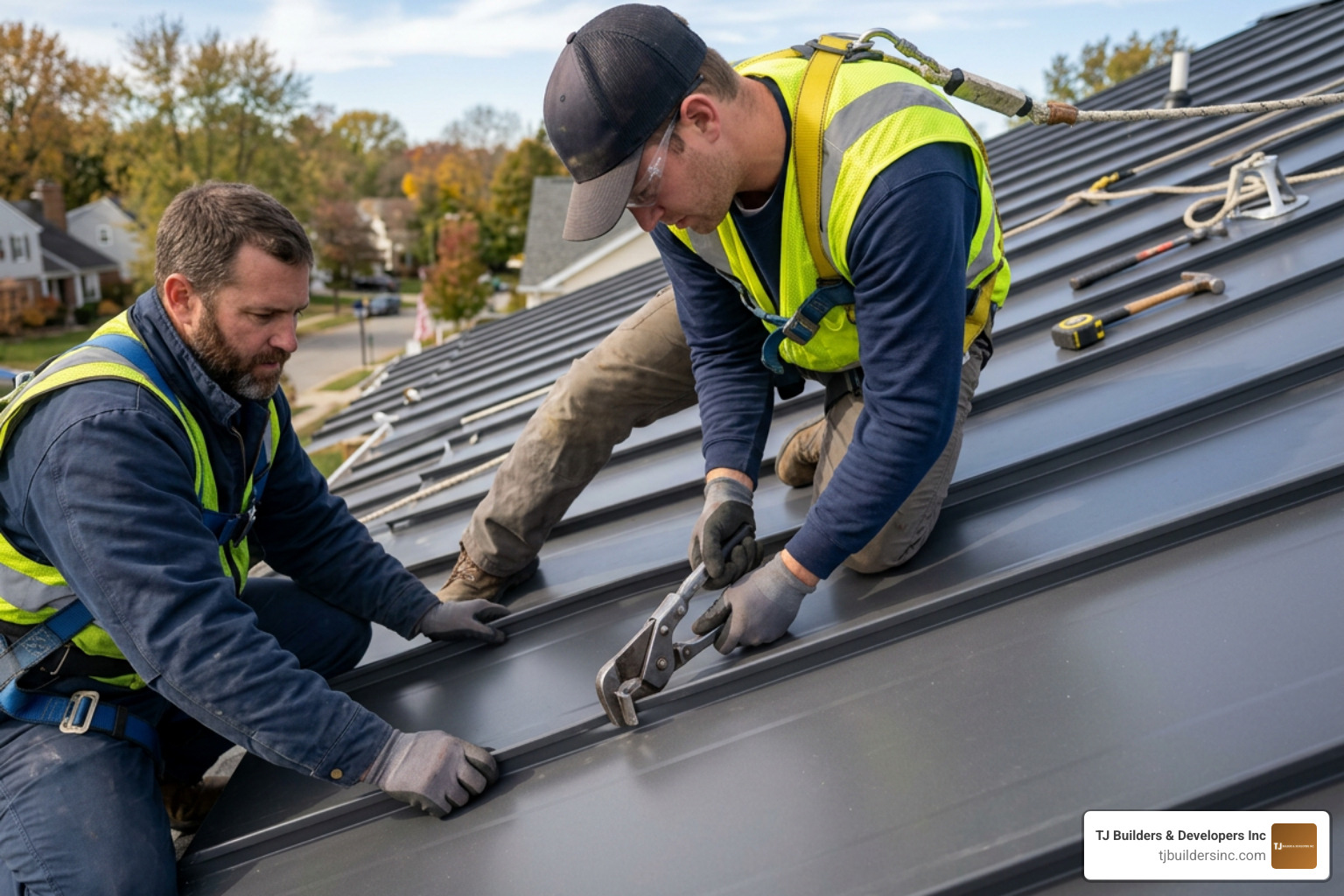
A high-performance roof is more than just metal panels; it is a carefully engineered system of layered components. At TJ Builders & Developers Inc., we specialize in both residential and commercial roofing services, ensuring that every layer is installed to perfection.
Preparing the Substrate for Metal Roof Installation
Before any metal is laid, the roof deck must be prepared:
- Decking Inspection: We strip away old roofing down to the bare wood decking, replacing any rotted or damaged plywood to ensure a completely flat, structurally sound substrate.
- Underlayment Application: We apply a high-quality, self-healing ice-and-water underlayment across the entire deck. This membrane acts as a secondary water barrier. We start at the lowest point of the roof, overlapping horizontal seams by at least 3 inches and end joints by 6 inches.
- Drip Edge Flashing: The drip edge is secured along the eaves using fasteners spaced every 12 to 16 inches. Overlapping sections are spliced by at least 3 inches and sealed with high-grade butyl tape.
- Closure Strips: Foam or butyl closure strips are installed along the eaves to block wind-driven rain, pests, and debris from entering the open ribs of the panels.
Executing the Standing Seam Metal Roof Installation
Once the prep work is complete, the metal panels are installed:
- Establish a Square Reference Line: Using the classic 3-4-5 triangle method, we snap a perfectly square chalk line from the eave to the ridge. This ensures the first panel—and every subsequent panel—runs perfectly straight.
- First Panel Alignment: The first panel is aligned with the reference line, extending 1 inch past the eave to create a clean drip edge.
- Concealed Fastening: For standing seam systems, we secure the panels using clips and #10 pancake-head screws driven into the roof deck. This allows the panels to slide slightly during thermal expansion and contraction, preventing “oil canning” (the warping or buckling of the metal surface).
- Interlocking and Seaming: The next panel is positioned to overlap the male leg of the first panel. Using a manual or electric hand seamer, we lock the seams together to create an airtight, watertight seal.
- Gable and Rake Trim: Gable trim is installed along the rake edges of the roof, fastened every 12 inches with butyl tape underneath to prevent lateral water intrusion.
- Ridge Cap Installation: At the peak of the roof, we place outside foam closure strips over the top of the panels, then position the ridge cap. The ridge cap is secured with 2-inch metal screws driven through the ribs of the panels, ensuring a watertight cap that allows proper attic ventilation.
Frequently Asked Questions About Metal Roofing
How long does a metal roof last compared to asphalt shingles?
A professionally installed metal roof will last between 50 and 70 years, whereas traditional asphalt shingles typically require replacement every 15 to 20 years. This makes metal a “once-in-a-lifetime” roofing choice that adds permanent equity to your home.
Is a metal roof noisier during rain or hail storms?
This is a common myth! When installed over solid wood decking with a high-quality underlayment and standard attic insulation, a metal roof is no noisier than an asphalt shingle roof. The attic space and home ceiling act as excellent acoustic barriers.
Why should homeowners avoid DIY metal roof installation?
Metal roof installation requires specialized tools, precise mathematical calculations, and strict adherence to safety protocols. A single misplaced fastener, an improper valley transition, or a poorly sealed flashing can trap moisture, leading to rot and structural damage that is incredibly costly to repair. Professional installation ensures your warranty remains fully intact.
Conclusion

Investing in a standing seam metal roof is one of the most effective ways to secure your home’s structural integrity, boost its energy efficiency, and eliminate the need for future roof replacements.
At TJ Builders & Developers Inc., we bring decades of local experience, professional workmanship, and a commitment to durable, weather-tight construction to every project in Lakewood, IL, and the surrounding Northern Illinois communities. For more information on our services, visit our comprehensive roofing guide or contact us directly to discuss your next project.
Ready to protect your home with a lifetime roof? Explore our professional roofing services and schedule your consultation today!