Why a Proper Extractor Fan for Your Attic Is a Mold Prevention Essential
An extractor fan for attic spaces is one of the most effective tools for protecting your home from heat damage, moisture buildup, and mold — yet it’s one of the most overlooked components of a healthy roofing system.
Quick answer: What does an attic extractor fan do?
- Exhausts superheated air that can reach 150°F or higher in summer
- Reduces moisture and condensation that leads to mold and wood rot
- Lowers the load on your air conditioning system, cutting cooling costs by up to 30%
- Protects shingles from heat-related curling, cracking, and premature failure
- Prevents ice dams in winter by maintaining consistent attic temperatures
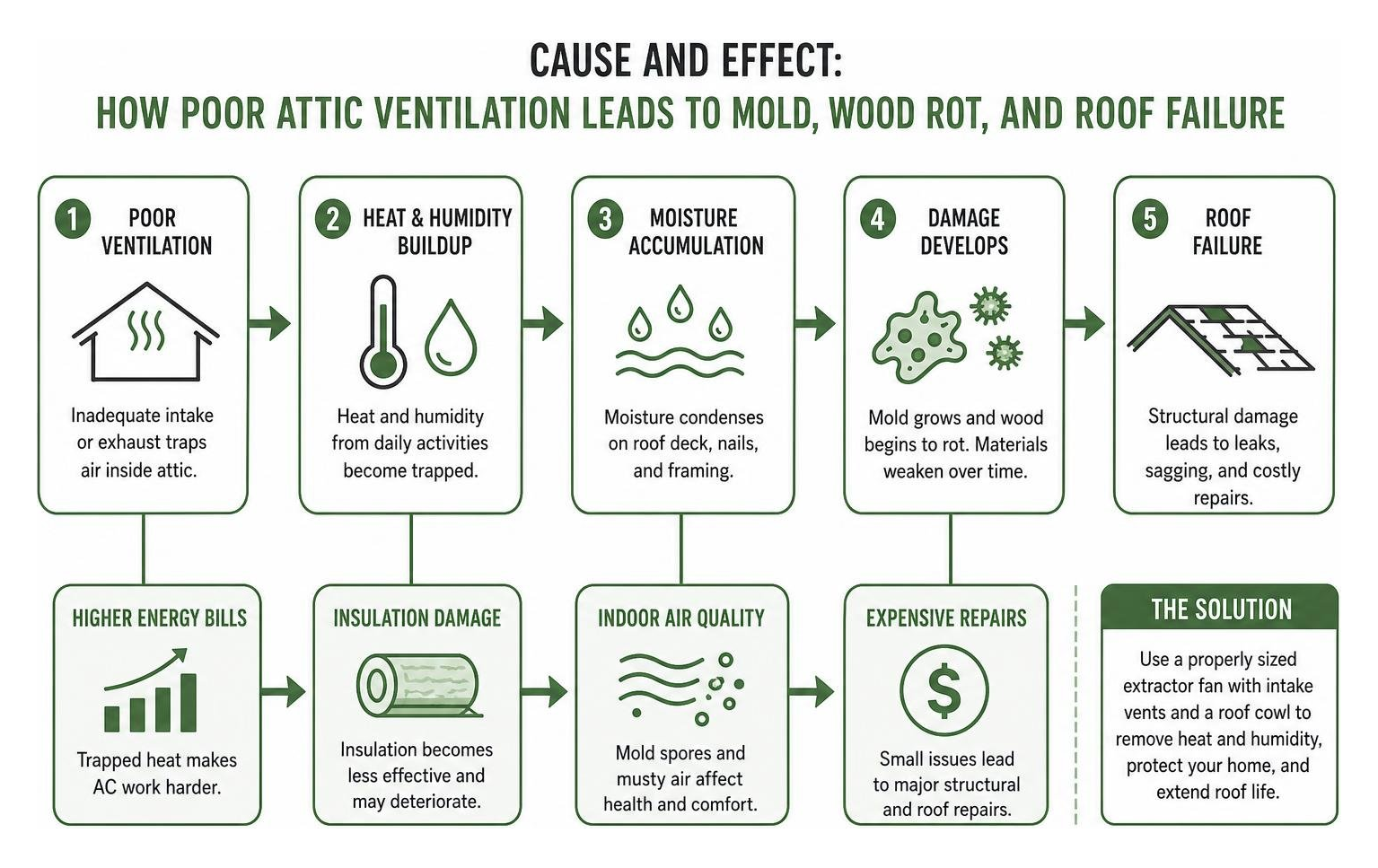
Without proper ventilation, your attic becomes what experts call a thermal oven — trapping heat and humidity that silently destroys insulation, warping roof decking, and creating the perfect conditions for mold to spread. Everyday activities like cooking, showering, and doing laundry push humid air upward into your attic, where it has nowhere to go without an active exhaust system in place.
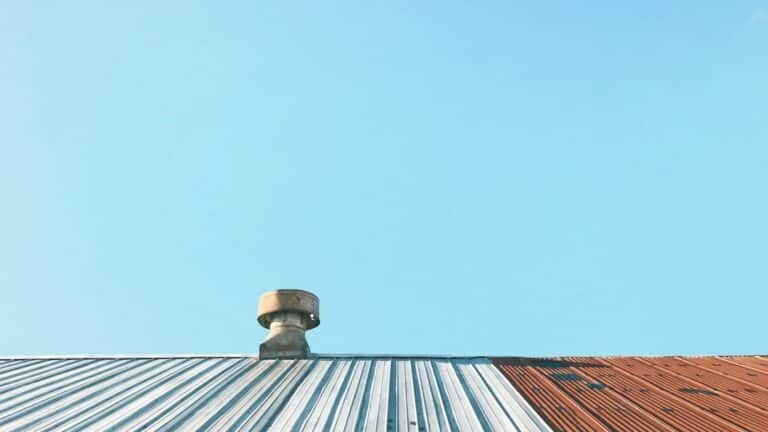
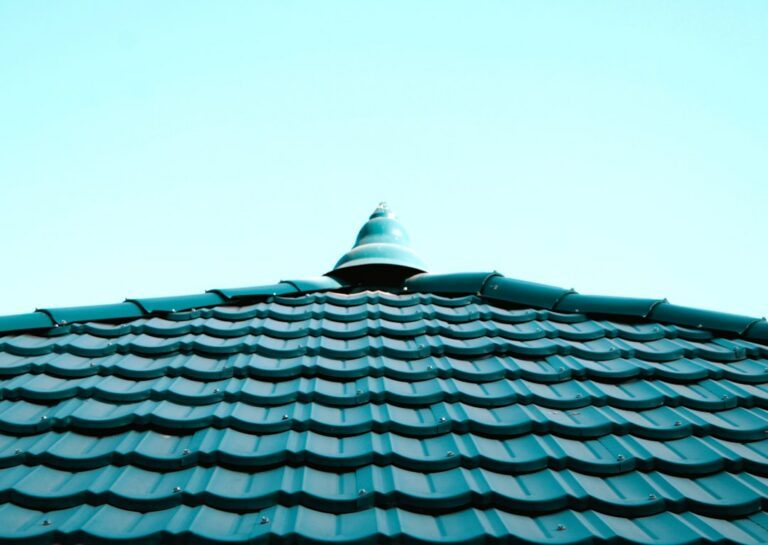
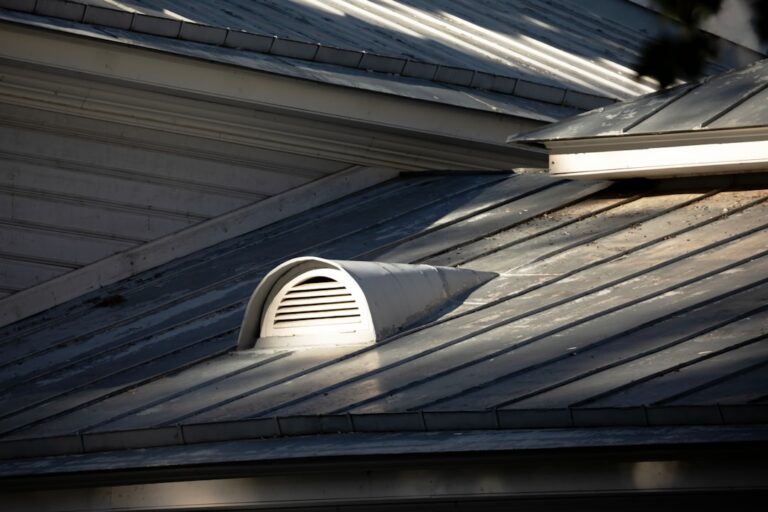
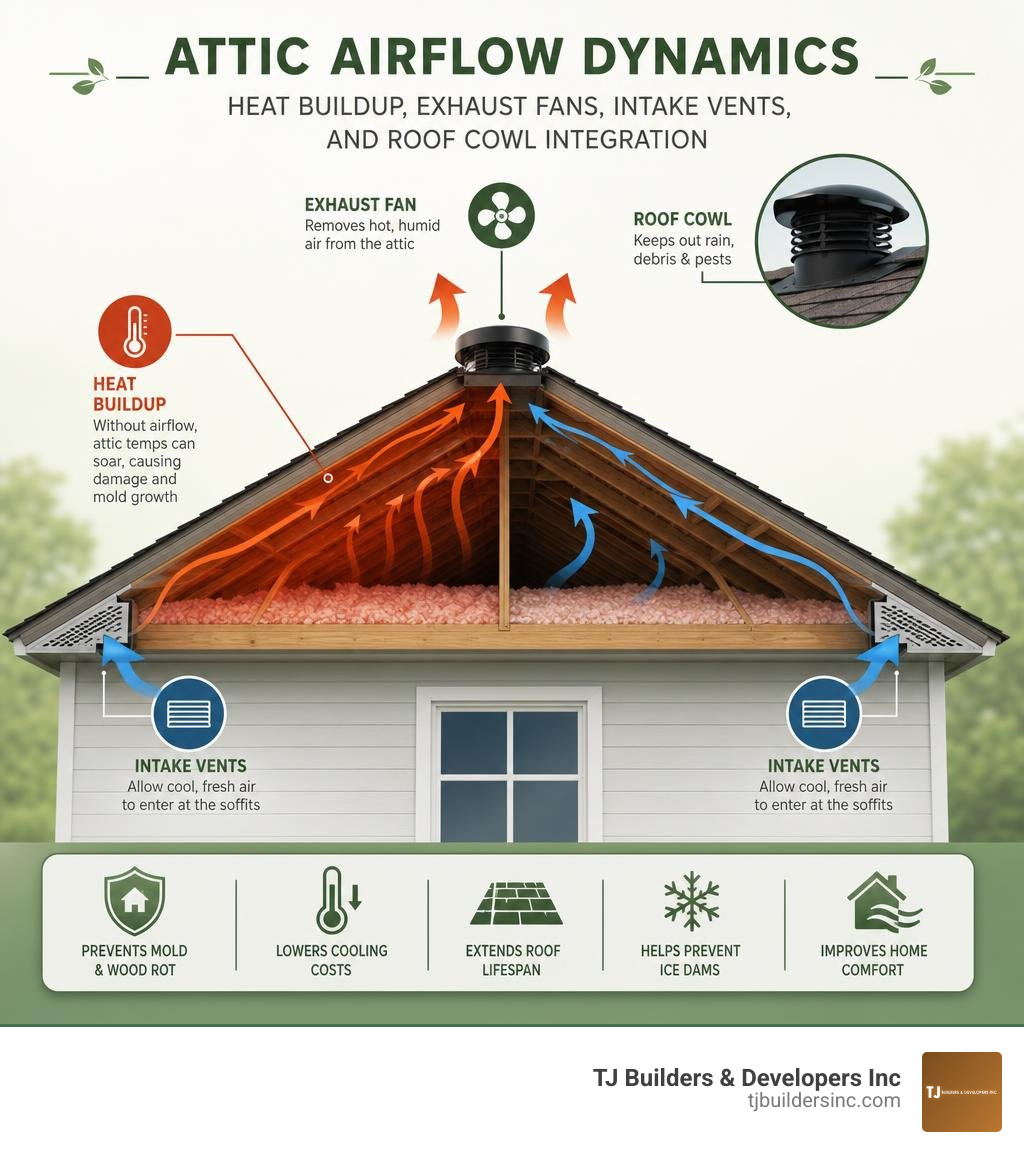
A roof cowl — the weatherproof cap fitted over an attic vent — plays a critical role too. Without it, even a well-sized fan can pull in rain, debris, and pests, turning your ventilation solution into a new problem.
I’m Thomas Pruszynski from TJ Builders & Developers, and over more than 20 years of helping homeowners across Northern Illinois with roofing and exterior restoration, I’ve seen how an improperly vented extractor fan for attic spaces causes thousands of dollars in avoidable damage. In this guide, I’ll walk you through everything you need to get it right.
Extractor fan for attic word guide:
What is an Extractor Fan for Attic Spaces and How Does It Work?
An extractor fan for attic ventilation is an active motorized system designed to mechanically exhaust stale, hot, and humid air from your home’s highest point. Unlike passive vents, which rely entirely on natural convection (warm air rising and escaping), an active extractor fan uses motorized blades to force air movement.
To understand how this works, we must look at the “thermal oven effect.” On a hot summer day in Northern Illinois, solar radiation beats down on your roof shingles. The shingles absorb this heat and transfer it into the roof decking, which then radiates heat into your attic. Without mechanical ventilation, attic temperatures can easily reach 150°F to 160°F. This trapped heat acts like a giant radiator, pressing down through your ceiling insulation and heating up your living spaces. Your air conditioning system has to work twice as hard to keep up.
An active attic extractor fan breaks this cycle by pulling the superheated air out of the attic space and pushing it outside. However, a fan cannot blow air out unless new air can come in to replace it. This is where passive intake vents, such as soffit vents located under the eaves, come into play. As the fan exhausts hot air, it creates a slight negative pressure zone in the attic. This pressure difference draws cooler, fresh outdoor air in through the soffit vents.
When you learn more about attic roof vent fans, you realize that this continuous cycle of active exhaust and passive intake keeps the attic temperature within 5°F to 10°F of the outdoor temperature.
Modern systems have evolved significantly from the loud, energy-hungry models of the past. Today, homeowners can explore smart attic fan systems that utilize advanced brushless DC motors and smart controllers. These units operate proactively rather than reactively. Instead of waiting for the attic to reach a scorching 120°F before kicking on at a single high speed, smart fans can run quietly at lower speeds starting at 80°F, preventing heat from building up in the first place.
Need Help With Your Home?
TJ Builders & Developers handles roofing, siding, gutters, windows, home additions, and fire damage restoration for homes and businesses in Lakewood, Crystal Lake, Schaumburg, and nearby McHenry County towns.
- Free, no-obligation estimates
- Licensed & insured
- 20+ years of local experience
Key Benefits of Proper Attic Ventilation and Roof Cowl Integration
Installing a high-performance extractor fan for attic spaces offers deep structural and financial benefits. When combined with a professional roof cowl, this system acts as a shield for your entire home.
1. Structural Roof Protection
Excessive heat in the summer does more than raise your energy bills—it actively degrades your roofing materials. When your attic is trapped in a thermal oven effect, the underside of your roof deck gets incredibly hot. This heat transfers directly to your asphalt shingles, causing them to bake from both sides. Over time, this leads to:
- Shingle curling and cracking
- Loss of protective mineral granules
- Premature structural failure of the roof deck itself due to thermal warping
By keeping the roof deck cool, active ventilation preserves the adhesive bonds and flexibility of your shingles, extending the lifespan of your roof.
2. Mold and Moisture Prevention
Moisture is a silent threat to your home’s structural framing. Everyday household activities like showering, washing dishes, and drying clothes release gallons of water vapor into the air. Because warm air rises, this moisture migrates up through your ceilings and into the attic.
During our cold Northern Illinois winters, this warm, humid air hits the freezing underside of your roof deck. This causes immediate condensation. Water droplets collect on the wood, dripping onto your ceiling drywall and soaking your insulation. Wet insulation loses its thermal resistance rapidly because water transfers heat 25 times more efficiently than air. This moisture also triggers wood rot and toxic mold growth. An active extractor fan sweeps this damp air out before it can condense.
3. Ice Dam Mitigation
In winter, heat escaping from an unventilated attic can warm the upper sections of your roof deck. When snow on the roof melts, the water runs down to the colder eaves and gutters, where it refreezes. This creates an ice dam—a thick ridge of ice that prevents melting water from draining. The backed-up water seeps under your shingles, leading to ceiling leaks and structural rot. Keeping your attic cold with balanced ventilation ensures snow melts evenly, preventing ice dams from forming in the first place.
4. Direct Energy Savings
By removing the pocket of superheated air hovering over your living spaces, your air conditioning system doesn’t have to cycle as frequently. Solar-powered and smart attic fans can save homeowners up to 30% on summer cooling costs.
To help visualize the difference, here is a comparison between passive ventilation systems and active extractor fans:
| Feature | Passive Vents (Ridge & Soffit Vents) | Active Extractor Fans (Gable & Roof Mount) |
|---|---|---|
| Airflow Driver | Natural convection and wind pressure | Motorized fan blades (active mechanical pull) |
| Airflow Volume | Low to moderate (dependent on outdoor wind) | High and consistent (up to 3,000+ CFM) |
| Temperature Control | Reactive (allows heat to escape slowly) | Proactive (actively cools attic to match outdoor temp) |
| Moisture Extraction | Slow (can allow winter condensation buildup) | Rapid (quickly evacuates high-humidity air) |
| Installation Impact | Minimal electrical requirements | Requires proper wiring or solar panel integration |
To get the most out of these benefits, it is vital to understand how your roof’s components work together. You can discover the benefits of roof ventilation to see how airflow protects your shingles, and understand the impact of attic insulation upgrades to learn how insulation and ventilation work as a team to lock in comfort.
Choosing and Sizing Your Attic Ventilation System
Choosing the wrong size extractor fan for attic spaces can lead to serious issues. If the fan is too small, it won’t move enough air to cool the space. If it is too powerful and your attic lacks sufficient intake vents, the fan will pull air from your living spaces through ceiling cracks, recessed lights, and bypasses. This pulls conditioned air out of your home, wasting energy and potentially pulling carbon monoxide from gas appliances back into your living areas.
To prevent this, you must calculate the correct Cubic Feet per Minute (CFM) rating and ensure you have enough Net Free Area (NFA) for intake.
The general rule of thumb for sizing an attic fan is:
- 0.7 CFM per square foot of attic floor space
- Add a 15% safety margin for dark shingles or steep roof pitches, as they absorb and trap more heat.
Additionally, you need a balanced intake system. For every 300 CFM of fan airflow, you need at least 1 square foot (144 square inches) of Net Free Area of intake ventilation. A standard recommendation is to have 1 active unit per 800 sq. ft. of attic space, paired with a minimum intake ventilation of 240 sq. in. of net free area.
To help you design the ideal layout, you can read our guide to the best roof ventilation systems to learn how to balance intake and exhaust.
Sizing an Extractor Fan for Attic Volume and Roof Pitch
Let’s look at a real-world sizing scenario. Suppose you have a home in Crystal Lake with a 1,500-square-foot attic floor plan, dark asphalt shingles, and a steep roof pitch.
Base CFM Calculation:
1,500 sq. ft. × 0.7 = 1,050 CFMAdjusting for Dark Shingles & Steep Pitch (+15%):
1,050 CFM × 1.15 = 1,207.5 CFM
In this case, you would need a fan rated for at least 1,200 to 1,300 CFM.Calculating Required Intake (Soffit Vents):
1,200 CFM ÷ 300 = 4 sq. ft. of Net Free Area
4 sq. ft. × 144 sq. in. = 576 sq. in. of Net Free Area required for intake.
If your fan moves more air than your intake vents can supply, it will create a vacuum. High-quality fans are designed for specific attic sizes. For example:
- The ERV5 model Power Roof Mount Vent moves air up to 1250 CFM and is designed for attics up to 2,200 sq. ft.
- The ERV6 model Power Roof Mount Vent moves air up to 1500 CFM and is designed for attics up to 2,800 sq. ft.
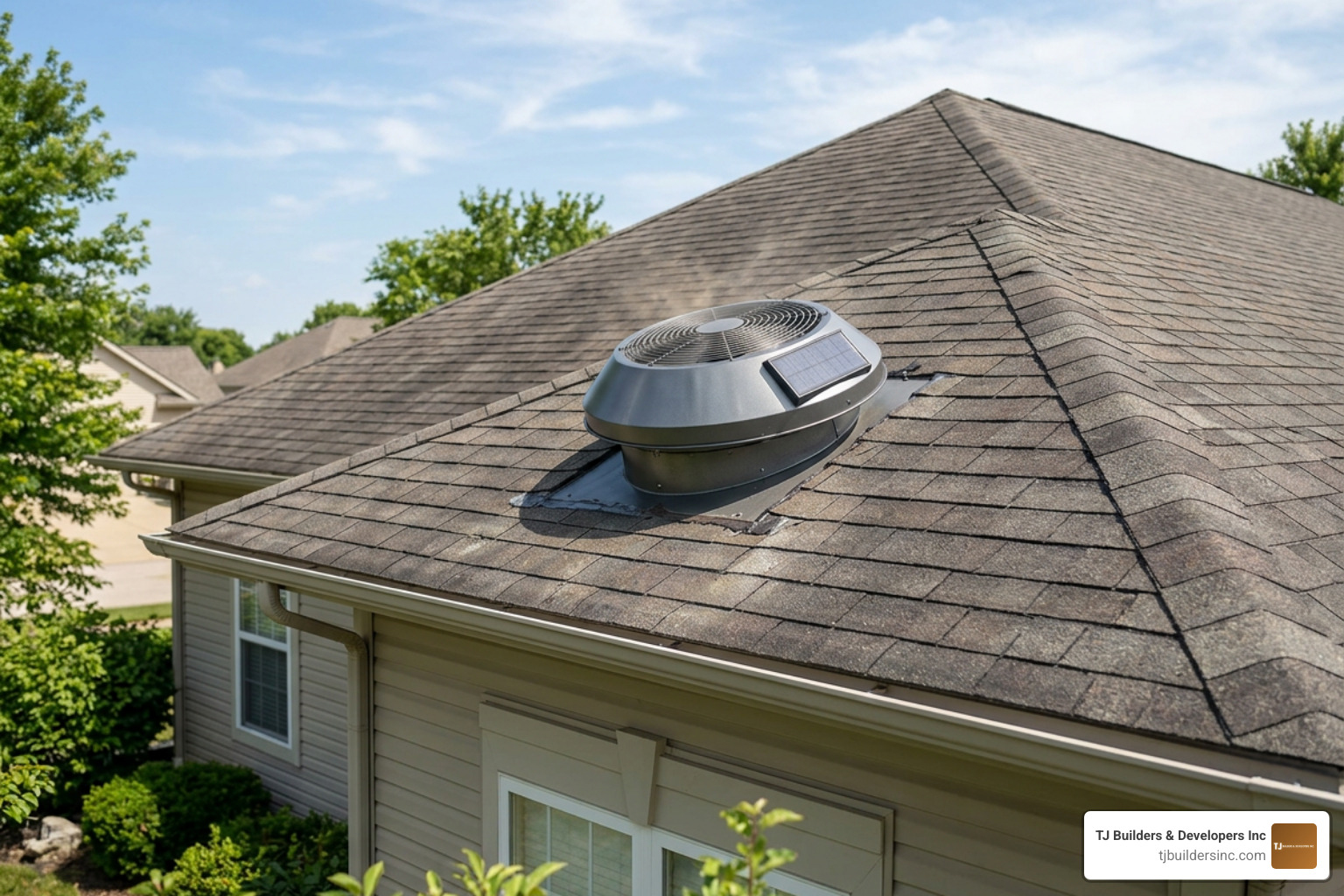
If you are looking for an eco-friendly, zero-electricity option, you can check out high-efficiency solar-powered ventilation options like the iSolar 50W108-FLEX, which retrofits into existing openings and provides up to 615 CFM of active, solar-powered airflow.
Key Features to Look for in an Extractor Fan for Attic Moisture Control
When comparing attic fans, look for features that ensure durability, automatic operation, and weather resistance:
- Built-in Thermostat and Humidistat: Look for fans that activate automatically. A great setup is a thermostat that turns the fan on above 80°F and a humidistat that triggers operation when relative humidity rises above 80%. This ensures year-round protection without manual monitoring.
- Galvanized Steel Housing: While plastic and aluminum housings exist, heavy-duty galvanized steel is the gold standard for durability. It resists rust, corrosion, hail damage, and the harsh freeze-thaw cycles of Northern Illinois winters.
- Brushless DC Motors: These motors are highly efficient, run quietly, and last much longer than traditional brushed motors.
- Wildlife and Insect Guards: Ensure the roof cowl features a corrosion-resistant metal mesh screen to keep out birds, squirrels, wasps, and other pests.
For a reliable example of these features in action, you can view durable galvanized steel solar attic fans like the Remington Solar 40-Watt model. This unit features a tilt-adjustable solar panel and a heavy-duty galvanized steel housing built to handle severe weather.
Need Help With Your Home?
TJ Builders & Developers handles roofing, siding, gutters, windows, home additions, and fire damage restoration for homes and businesses in Lakewood, Crystal Lake, Schaumburg, and nearby McHenry County towns.
- Free, no-obligation estimates
- Licensed & insured
- 20+ years of local experience
Professional Installation and Maintenance Requirements
Proper installation is critical to ensure your extractor fan for attic ventilation works correctly and does not leak. At TJ Builders & Developers, we strongly advise against DIY roof cutting. Cutting into your roof deck, routing electrical wiring, and flashing a roof cowl require professional precision to prevent structural damage and water leaks.
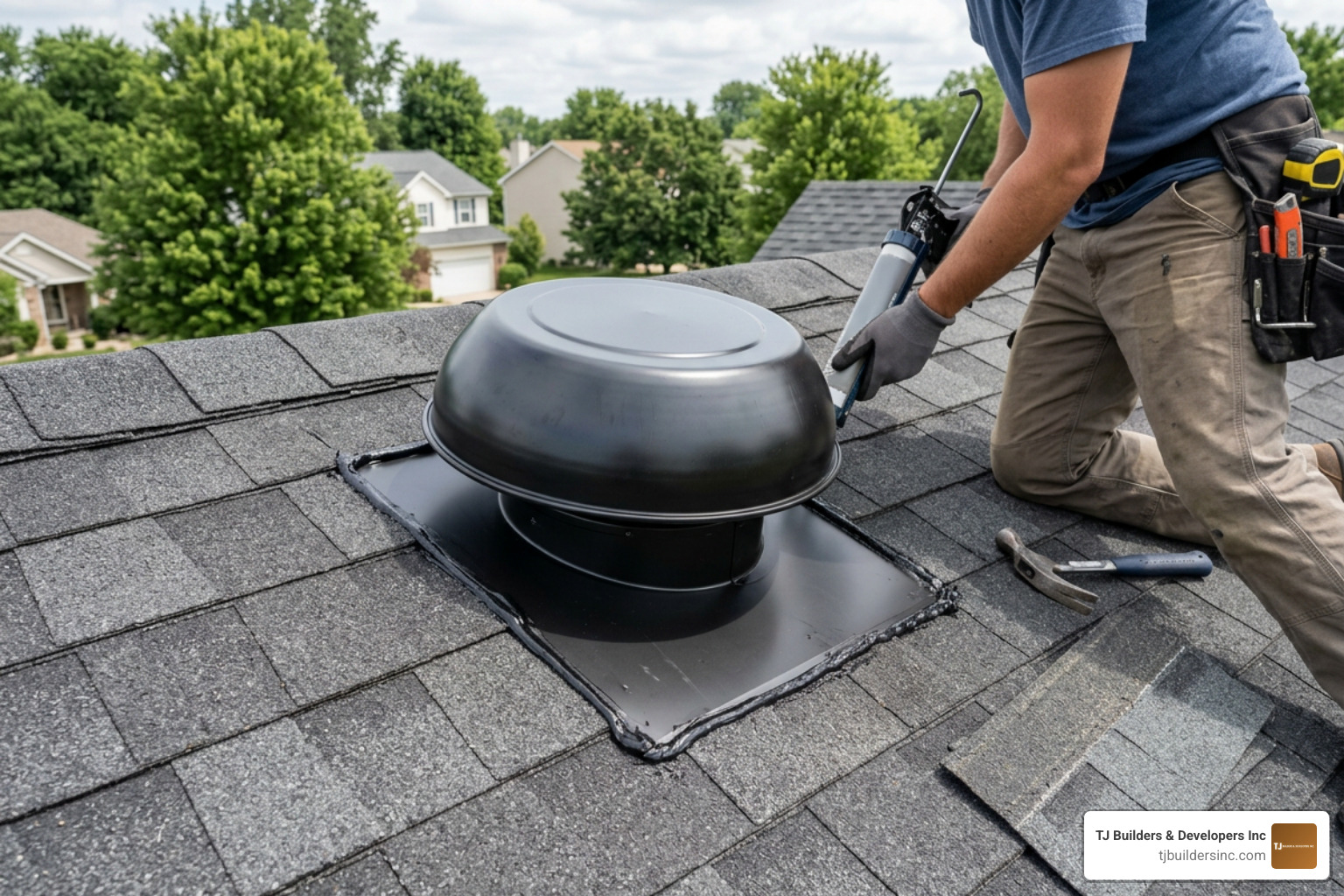
During a professional installation, we focus on several key areas:
- Mounting Position: Fans can be roof-mounted or gable-mounted. Roof-mounted fans require cutting a clean opening through the shingles and roof deck, usually near the ridge line. Gable-mounted fans are installed behind existing gable vents on the side of the house, which can simplify some installations but requires a clear path for airflow.
- Solar Panel Alignment: For solar-powered units, the solar panel must be positioned to receive maximum sunlight. Some models allow the panel to tilt up to 45 degrees, which is helpful for optimizing sun exposure on north-facing roof slopes.
- Weatherproofing and Flashing: The roof cowl must be flashed correctly into the shingle courses. We install high-grade water-resistant underlayment, apply professional-grade roofing sealant, and secure the flashing plate under the upper shingles to ensure water flows smoothly over the cowl.
- Airflow Spacing: Active fans must be placed at least 5 to 10 feet away from passive ridge vents. If they are too close, the fan will simply pull air from the ridge vent and blow it right back out, bypassing the rest of the attic.
To understand how these systems work together, you can read our fresh air guide to attic ventilation installation for details on balancing intake and exhaust, and learn how ridge vents and fans work together to create a highly efficient cooling system.
Ongoing Maintenance
While modern brushless fans are designed to be low-maintenance, a quick annual check keeps them running efficiently:
- Clean the Intake Vents: Ensure your soffit vents are free of dust, spiderwebs, and loose insulation.
- Inspect the Roof Cowl: Check the metal mesh screen on the cowl to ensure it isn’t blocked by leaves, twigs, or debris.
- Verify Fan Operation: In late spring, ensure the fan motor spins freely and the thermostat triggers properly when temperatures rise.
Frequently Asked Questions About Attic Extractor Fans
Should I run my attic fan in the winter?
Yes! While it might seem counterintuitive to run a fan in the winter, doing so is crucial for moisture control. Warm, humid air from your living spaces rises into the attic. If your attic is unventilated, this moisture condenses on the cold underside of the roof deck, leading to wood rot, ruined insulation, and mold. Running the fan on a humidistat setting in the winter keeps the attic dry and maintains a cold roof temperature, which also prevents ice dams.
What is the difference between an attic fan and a whole-house fan?
These two fans serve completely different purposes:
- Attic Extractor Fan: Installed in the attic roof or gable, this fan only ventilates the attic space. It operates 24/7 (controlled by temperature or humidity) to remove trapped heat and moisture, protecting your roof structure and reducing the load on your A/C.
- Whole-House Fan: Installed in the ceiling between your living space and the attic, this fan is used in the cool morning or evening hours. With your house windows open, it pulls cool outdoor air through the living spaces, pushes it into the attic, and exhausts it through your roof vents, rapidly cooling your entire home.
How much intake ventilation do I need for my attic fan?
A balanced system is essential. As a rule of thumb, you need 1 square foot (144 square inches) of Net Free Area of intake ventilation for every 300 CFM of fan airflow. If you install a 1,200 CFM fan, you must have at least 576 square inches of open, unobstructed soffit intake vents to ensure proper airflow and prevent the fan from pulling conditioned air from your home.
Conclusion
An extractor fan for attic spaces is more than just an energy-saving upgrade—it is a vital line of defense that protects your roof structure, prevents mold growth, and keeps your home comfortable year-round. From the hot, humid summer days to the freezing winter months in Northern Illinois, active ventilation ensures your home breathes properly.
At TJ Builders & Developers Inc, we specialize in high-quality roofing, siding, and exterior home services across the Village of Lakewood, Crystal Lake, Schaumburg, McHenry, and the surrounding suburbs. We focus on professional workmanship, durable materials, and long-term protection for your home. If you want to ensure your attic ventilation is balanced, secure, and ready for any season, we are here to help.
Ready to protect your home from mold and heat damage? Schedule a professional roofing consultation with our team today!