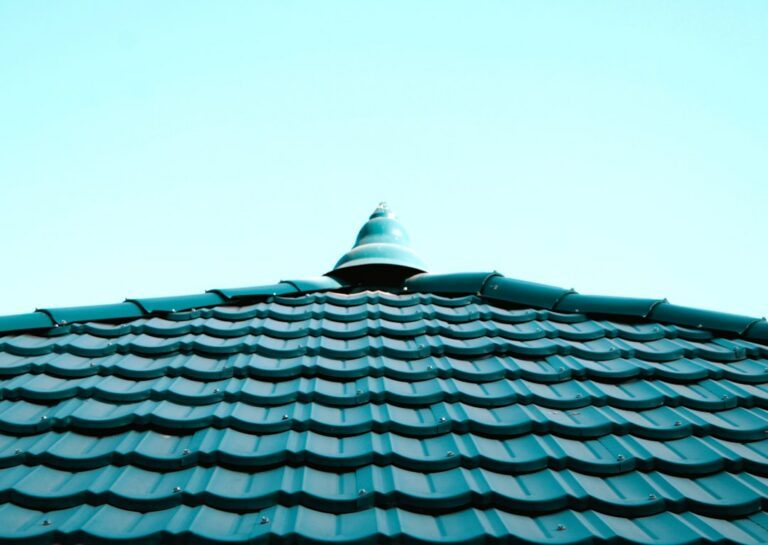
Why the Best Roof Ventilation Systems Matter More Than You Think
Choosing the best roof ventilation systems for your home is one of the most important — and most overlooked — decisions a homeowner can make. A well-ventilated roof doesn’t just move air. It protects your shingles, prevents mold, lowers energy bills, and stops ice dams from forming in winter.
Here’s a quick look at the top roof ventilation system types to consider:
| Vent Type | Best For | System Category |
|---|---|---|
| Ridge vents | Most sloped roofs | Passive exhaust |
| Soffit vents | Intake airflow at eaves | Passive intake |
| Box/static vents | Low-slope or pyramid roofs | Passive exhaust |
| Turbine vents | Windy climates | Active exhaust |
| Solar-powered fans | Hot, sunny climates | Active exhaust |
| Electric power vents | Large attics needing strong airflow | Active exhaust |
| Gable louvers | Supplemental ventilation | Passive exhaust |
| Hybrid attic fans | Variable climates | Hybrid |
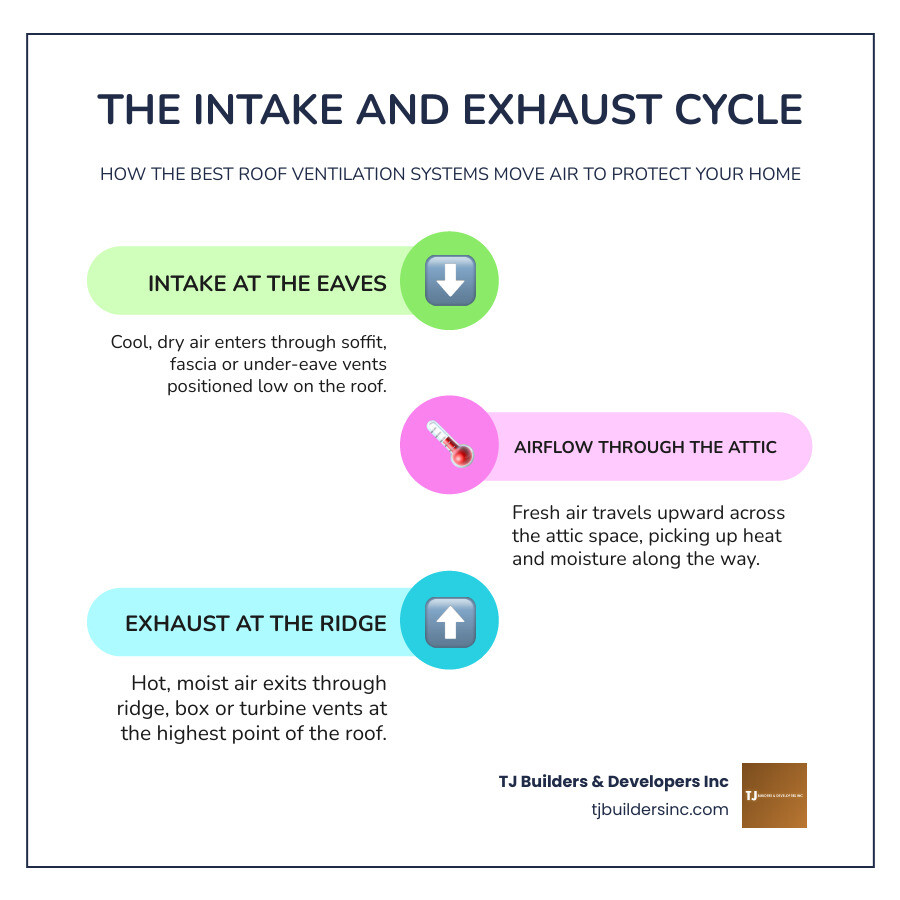
The core idea is simple: fresh air enters low, hot moist air exits high. When that cycle breaks down, the damage can be costly. An unventilated attic can reach 140°F or higher in summer, accelerating shingle wear and forcing your air conditioner to work overtime.
Without proper airflow, everyday activities like cooking and bathing push moisture into the attic, where it gets trapped. Over time, that trapped moisture becomes mold, rot, and structural damage — problems that are far more expensive to fix than a proper ventilation system installed from the start.
I’m Thomas Pruszynski of TJ Builders & Developers Inc, and with over 20 years of hands-on experience in residential roofing and exterior restoration across Northern Illinois, I’ve seen what poor ventilation does to a roof long-term — and how the best roof ventilation systems can dramatically extend a roof’s life. In this guide, I’ll walk you through every major vent type so you can make a confident, informed decision.
Related content about best roof ventilation systems:
Understanding the Mechanics of the Best Roof Ventilation Systems
To understand why certain setups are considered the best roof ventilation systems, we have to look at the physics of your attic. It isn’t just a dusty storage space; it’s a breathing lungs-like system for your home.
Thermal Buoyancy and Airflow
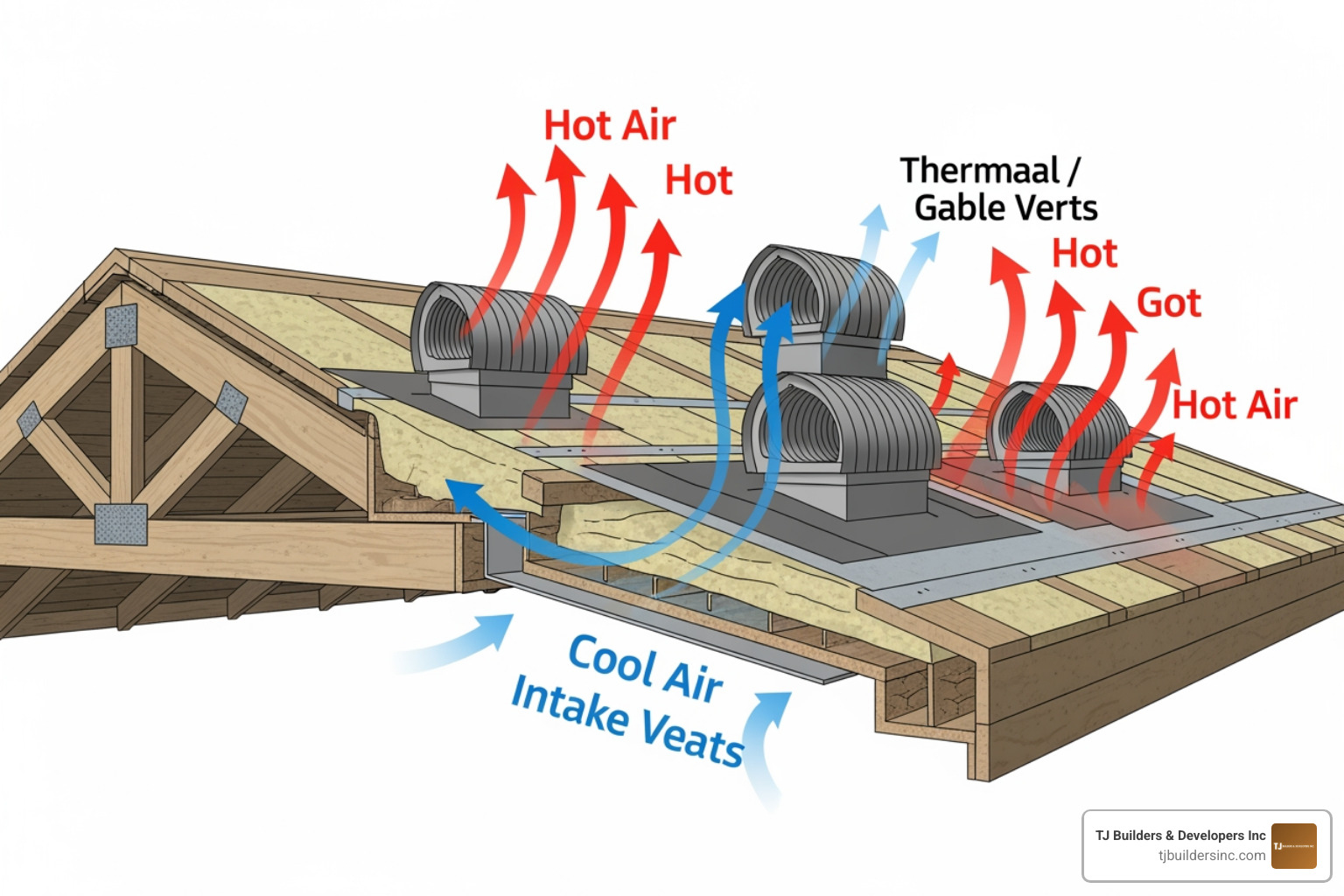
The primary driver of natural ventilation is thermal buoyancy—the simple fact that hot air rises. As the sun beats down on your roof in Crystal Lake or Algonquin, the air inside the attic heats up. In a properly designed system, this hot air rises toward the peak of the roof. To let it out, we use exhaust vents. However, for that hot air to leave, cool air must be pulled in from below to take its place. This is where intake vents come in.
The 1/300 Rule and Net Free Area
How much “breathability” does your roof need? In the roofing industry, we measure this using Net Free Area (NFA), which is the total unobstructed area through which air can pass. The gold standard is the 1/300 rule: for every 300 square feet of attic floor space, you need 1 square foot of net free ventilation area.
- Balanced Ventilation: This 1 square foot should be split 50/50 between intake (at the eaves) and exhaust (at the ridge).
- Code Variations: Some local building codes in Northern Illinois may require a stricter 1/150 ratio, effectively doubling the required ventilation. This is often necessary for modern, tightly-sealed homes that trap more moisture.
If you have a vapor retarder installed, the 1/300 rule is generally sufficient, but without one, moisture levels can spike, requiring more aggressive airflow. For a deeper dive into keeping these spaces moisture-free, check out The Ultimate Guide to Keeping Your Roof Dry with Ridge Ventilation.
Need Help With Your Home?
TJ Builders & Developers handles roofing, siding, gutters, windows, home additions, and fire damage restoration for homes and businesses in Lakewood, Crystal Lake, Schaumburg, and nearby McHenry County towns.
- Free, no-obligation estimates
- Licensed & insured
- 20+ years of local experience
15 Popular Types of Roof Vents for Modern Homes
When we talk about the best roof ventilation systems, there is no “one size fits all.” The design of your home in Huntley or Woodstock dictates which of these 15 types will perform best.
Passive Exhaust: The Foundation of the Best Roof Ventilation Systems
Passive vents rely on natural wind and the rising of hot air. They have no moving parts and require zero electricity.
- Ridge Vents: These are installed along the entire peak of a sloped roof. Products like the ShingleVent II Ridge Vents – Air Vent, Inc. provide a low-profile look that blends into the roofline. They are arguably the most efficient passive exhaust because they are at the highest possible point.
- High-Performance Ridge Systems: Specialized systems like the Cor-A-Vent V-600® Ridge Ventilation System offer up to 20 square inches of NFA per linear foot, making them ideal for large homes or those with complex rooflines.
- Box Vents (Static Vents): These are the “boxes” you see sitting on the back side of a roof. They are great for roofs that don’t have a long, continuous ridge line.
- Off-Ridge Vents: Similar to box vents but longer and thinner, these are typically placed near the ridge but not on it.
- Gable Louvers: Installed on the vertical gable ends of a house. While they look classic, they often don’t provide enough airflow on their own and are best used as supplemental ventilation.
- Cupola Vents: These are decorative structures that sit on the ridge. While they add “curb appeal,” they must be properly sized to actually function as an exhaust.
- Dormer Vents: Small, “hooded” vents that look like tiny windows on the roof. They are useful for ventilating specific sections of an attic.
- Hip Vents: Designed specifically for hip roofs (where all sides slope downward), these allow for ventilation on the angled “hips” of the roof.
- Felt Lap Vents: These are used in older homes or specific waterproofing layers to allow moisture to escape between layers of felt.
- Dry Ridge Systems: A modern method of fixing ridge tiles without mortar, allowing air to flow through the ridge while keeping rain out.
| Passive Vent Type | Airflow Efficiency | Aesthetic Impact |
|---|---|---|
| Ridge Vent | High | Low (Invisible) |
| Box Vent | Medium | Moderate |
| Gable Louver | Low | High (Decorative) |
| Turbine | High | High (Visible) |
Active and Hybrid Options for the Best Roof Ventilation Systems
Active systems use mechanical force to pull air out of the attic, which can be a lifesaver during our humid Illinois summers.
- Turbine Vents: Often called “whirlybirds,” these use the wind to spin a fan that sucks air out. They are incredibly effective in windy areas like McHenry or Cary.
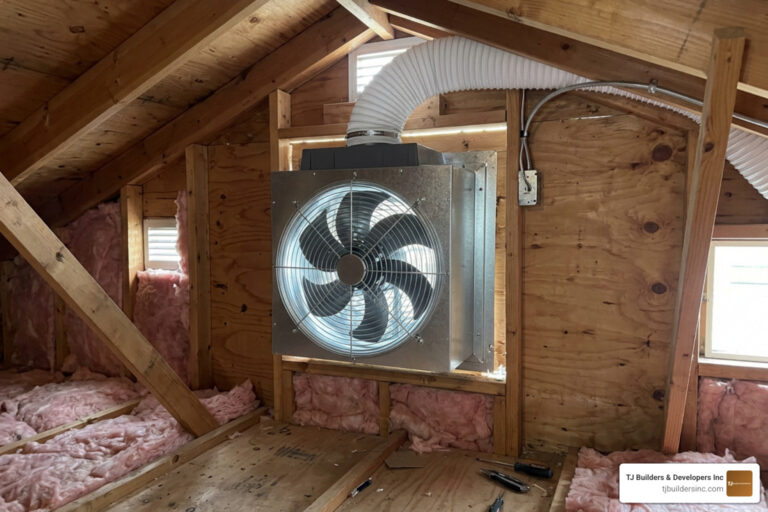
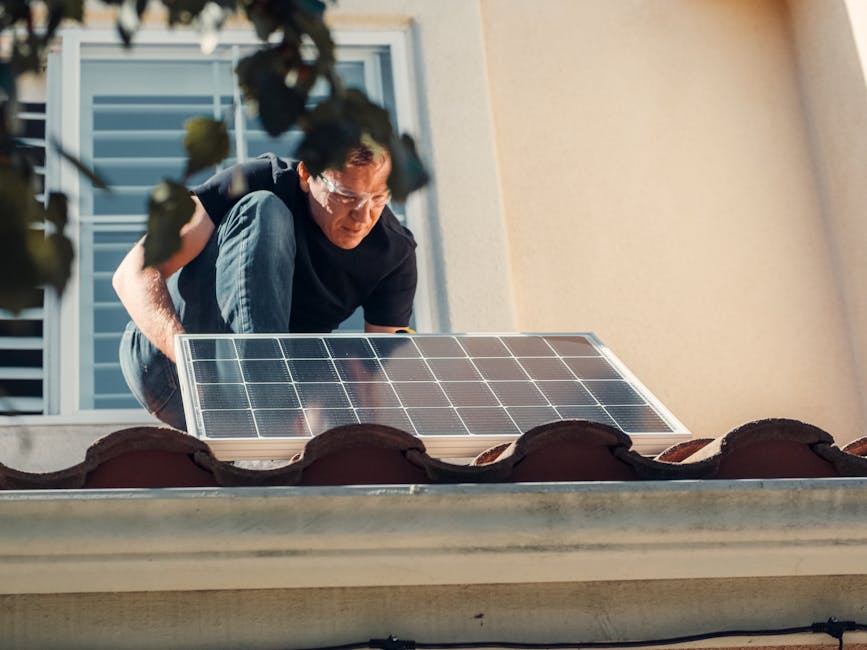
- Solar-Powered Fans: These use a small solar panel to power a fan. They are great for energy efficiency, though their performance drops on cloudy days. To see how these fit into a modern home, read Don’t Sweat It: A Guide to Attic Roof Vent Fans.
- Electric Power Vents: These are hardwired into your home’s electrical system. They can move massive amounts of air and are often controlled by a thermostat or humidistat.
- Hybrid Attic Fans: These are the “smart” vents. They operate as passive vents when the weather is mild but kick into “active mode” with a motor when temperatures or humidity levels hit a certain threshold.
- Solar-Powered Turbines: A combination of the two, these use wind when it’s available and solar power to keep the turbine spinning when the air is still.
Essential Intake Ventilation Components
You cannot have an exhaust system without intake. If you don’t provide a way for air to get in, your exhaust vents might actually start pulling air conditioned air from inside your house!
- Soffit Vents: These are installed under the eaves. The EZSoffitVent™ Soffit Termination System | Panasonic North America is a great example of a system designed to maximize airflow while preventing water intrusion.
- Over-Fascia Vents: If your home doesn’t have eaves (common in some modern or flat-roof designs), these vents sit right above the fascia board to let air in.
- Drip Edge Vents: These combine the roof’s drip edge with an intake vent, providing a sleek, hidden solution for intake.
- Continuous Soffit Strips: These run the entire length of the soffit, providing the most uniform intake possible.
Choosing the Right System for Your Climate and Roof Design
In Northern Illinois, we deal with extreme temperature swings. We go from -20°F in January to 95°F with 90% humidity in July. This makes choosing the best roof ventilation systems a matter of home survival.
Ice Dam Prevention
In areas like Schaumburg and Barrington, ice dams are a major threat. When an attic is too warm in winter, it melts the snow on the roof. That water runs down to the cold eaves and freezes, creating a dam that forces water back under your shingles. A balanced ventilation system keeps the roof deck cold, preventing this cycle.
Avoiding “Short-Circuiting”
A common mistake we see in Lake in the Hills or Algonquin is “short-circuiting.” This happens when someone installs two different types of exhaust vents—like a ridge vent and a power fan—too close together. Instead of pulling air from the soffits, the power fan pulls air from the ridge vent. This leaves the lower part of the attic stagnant and full of moisture.
Building Code and Professional Standards
When we perform a residential upgrade at TJ Builders & Developers Inc, we ensure every vent meets the International Residential Code (IRC) standards. This includes ensuring that at least 40% (and no more than 50%) of the ventilation is located in the upper portion of the attic.
For more localized advice, see our guide on Lakewood Roof Ventilation Pros and How to Choose the Right One.
Need Help With Your Home?
TJ Builders & Developers handles roofing, siding, gutters, windows, home additions, and fire damage restoration for homes and businesses in Lakewood, Crystal Lake, Schaumburg, and nearby McHenry County towns.
- Free, no-obligation estimates
- Licensed & insured
- 20+ years of local experience
Signs of Poor Attic Ventilation and Maintenance Needs
How do you know if your current system is failing? Your roof will usually tell you, but you have to know what to look for.
- Ice Dams: If you see huge icicles hanging from your gutters in Cary or Fox River Grove, your attic is likely too hot.
- Mold and Mildew: If you go into your attic and smell a musty odor or see black spots on the rafters, you have a moisture problem.
- Shingle Deterioration: Excessive heat “cooks” shingles from the inside out, causing them to curl, crack, or lose granules prematurely.
- Sagging Roof Decks: Long-term moisture softens the plywood (decking) of your roof, leading to a wavy or sagging appearance.
- High Energy Bills: If your AC is running non-stop in July, it might be fighting a 150-degree attic right above your ceiling.
Maintenance Checklist
Even the best roof ventilation systems need a check-up. We recommend a professional inspection once a year.
- Check for Clogs: Dust, insulation, and bird nests can block soffit vents.
- Inspect Screens: Ensure the mesh on your vents hasn’t been torn by squirrels or raccoons.
- Test Power Vents: If you have an electric fan, ensure the thermostat is still functioning.
If you suspect your system isn’t performing, consider a Roof Ventilation & Attic Fan Installation to protect your investment.
Frequently Asked Questions about Roof Ventilation
How many roof vents does my home actually need?
As a general rule, you need 1 square foot of ventilation for every 300 square feet of attic floor. If your attic is 1,200 square feet, you need 4 square feet of total vent area—2 square feet for intake and 2 square feet for exhaust.
Can a roof be over-ventilated?
It is very difficult to “over-ventilate” in terms of airflow, but you can have too many holes in your roof. Every vent is a potential leak point if not installed correctly. The goal is balance, not just quantity. Over-ventilation can sometimes lead to increased energy costs in winter if warm air is being sucked out too aggressively.
What is the 1/300 balanced attic ventilation rule?
It is the industry standard for ensuring a healthy attic. It requires 1 square foot of NFA for every 300 square feet of space, perfectly balanced between the intake (bottom) and exhaust (top) to create a continuous “chimney effect” of moving air.
Conclusion
Your roof is more than just shingles; it is a complex system designed to keep your home dry and comfortable. Investing in the best roof ventilation systems is the most cost-effective way to ensure your roof lasts its full 25 to 30-year lifespan.
At TJ Builders & Developers Inc, we pride ourselves on providing the Village of Lakewood and surrounding communities like Crystal Lake and Huntley with durable, professional roofing solutions. Whether you need a simple vent repair or a complete system overhaul, our team brings expert workmanship and eco-friendly solutions to every project.
Don’t wait for a leak or a mold bloom to take action. Schedule a professional roofing consultation with us today and let’s make sure your home is breathing as it should.