
Act Fast When an Older Asbestos Roof Is Damaged
If you are searching for asbestos roof repairs near me, treat the roof as asbestos-containing until a qualified professional confirms otherwise. Do not climb on it, sweep debris, drill holes, pressure-wash it, or apply a DIY patch. Keep people away from the damaged area, limit access below the leak or break, and contact a licensed asbestos assessor or abatement professional for testing and a safe repair plan.
Older corrugated cement roofing, often installed before the late 1980s, may contain asbestos. An intact roof is usually lower risk than one that is cracked, weathered, punctured, or disturbed. Damage can release tiny airborne fibers that may cause serious illnesses, including asbestosis, lung cancer, and mesothelioma.
The right solution depends on the roof’s condition. A specialist may recommend controlled repair, professional encapsulation or coating, or full removal and replacement. Storm damage, fallen branches, and leaks need prompt attention because making the roof watertight must not create more dust or break fragile sheets.
I am Thomas Pruszynski, owner of TJ Builders & Developers Inc, and for more than 20 years I have helped Northern Illinois property owners protect damaged exteriors through careful, quality-focused repair and restoration work. When homeowners ask about asbestos roof repairs near me, the first priority is always a safe assessment and a plan that protects the home, family, and everyone working on the property.
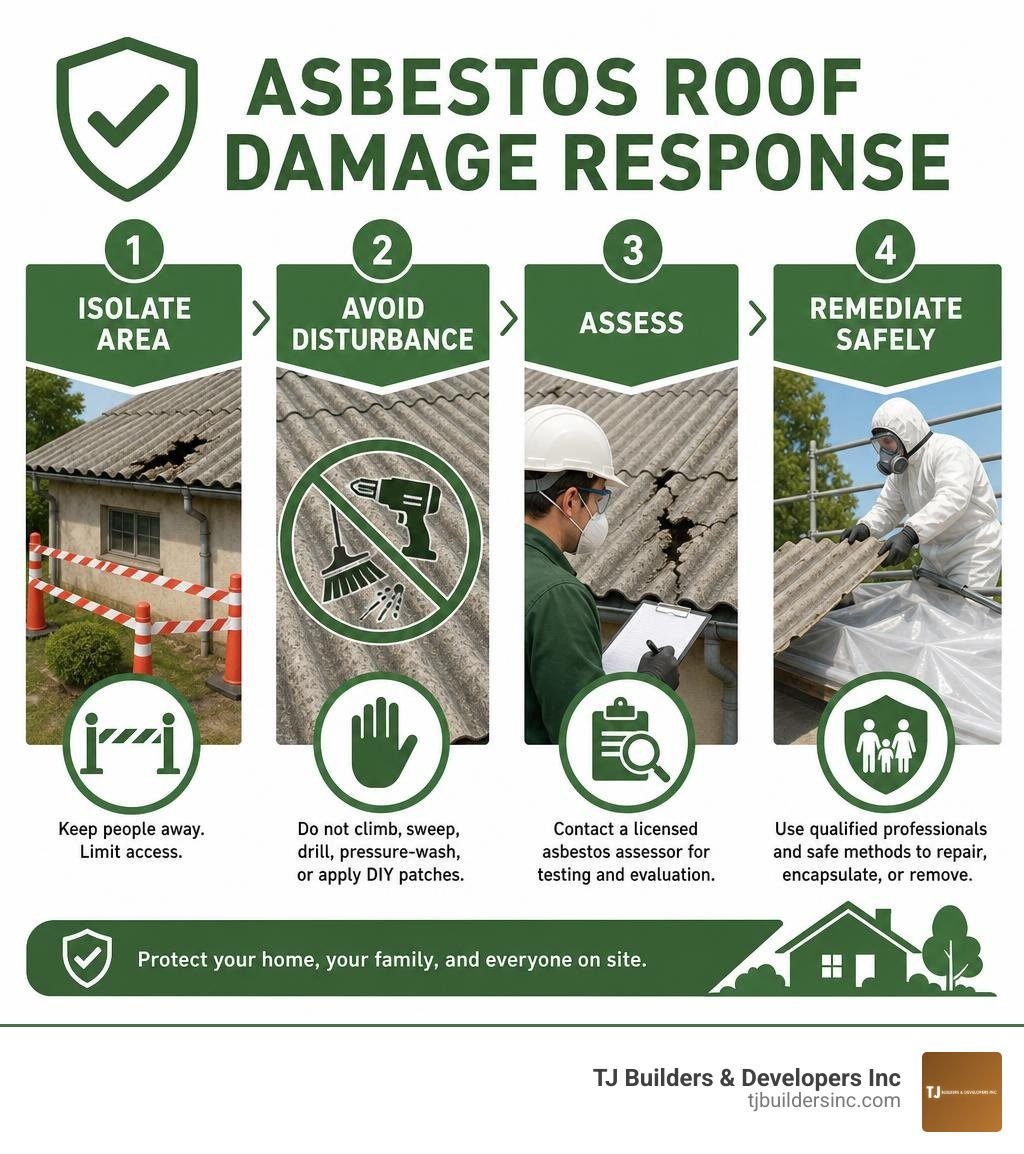
Asbestos roof repairs near me terms at a glance:
Identifying Asbestos Roofing and Assessing Health Risks
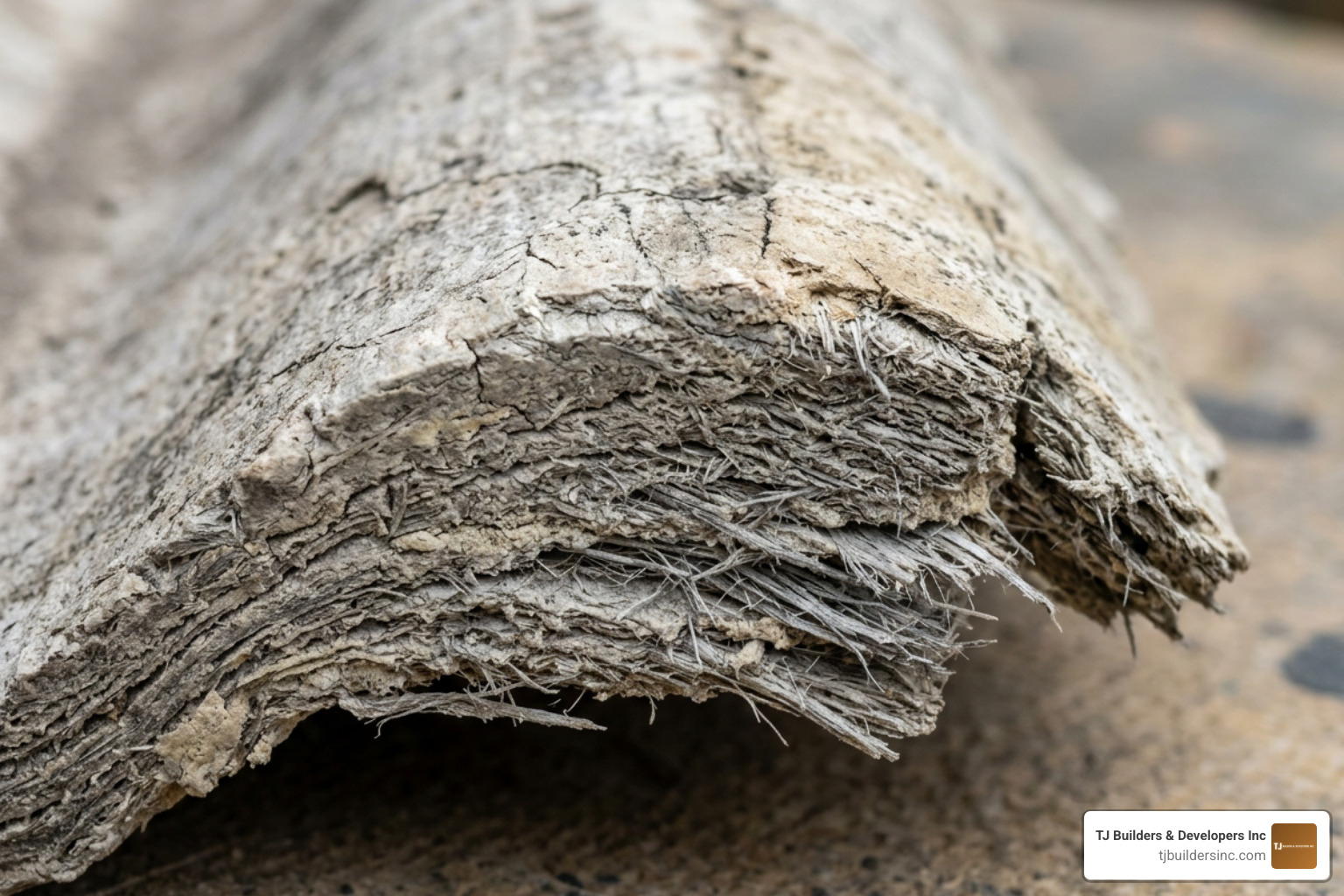
Mid-century construction heavily utilized asbestos-cement composites, marketed widely under trade names like Transite or profiled as “Super 6” corrugated sheeting. Builders prized these materials for their natural fire resistance, structural rigidity, and thermal insulation properties. However, as these installations age past their standard 30- to 40-year service life, the binding matrix weakens.
When bonded (non-friable) asbestos cement degrades due to decades of ultraviolet exposure, moisture cycling, and severe freeze-thaw events, it begins releasing microscopic asbestos fibers into the surrounding air. Inhaling these airborne fibers creates severe, long-term health risks. Over time, lodged fibers cause pulmonary scarring and progressive diseases, including asbestosis, lung cancer, and mesothelioma.
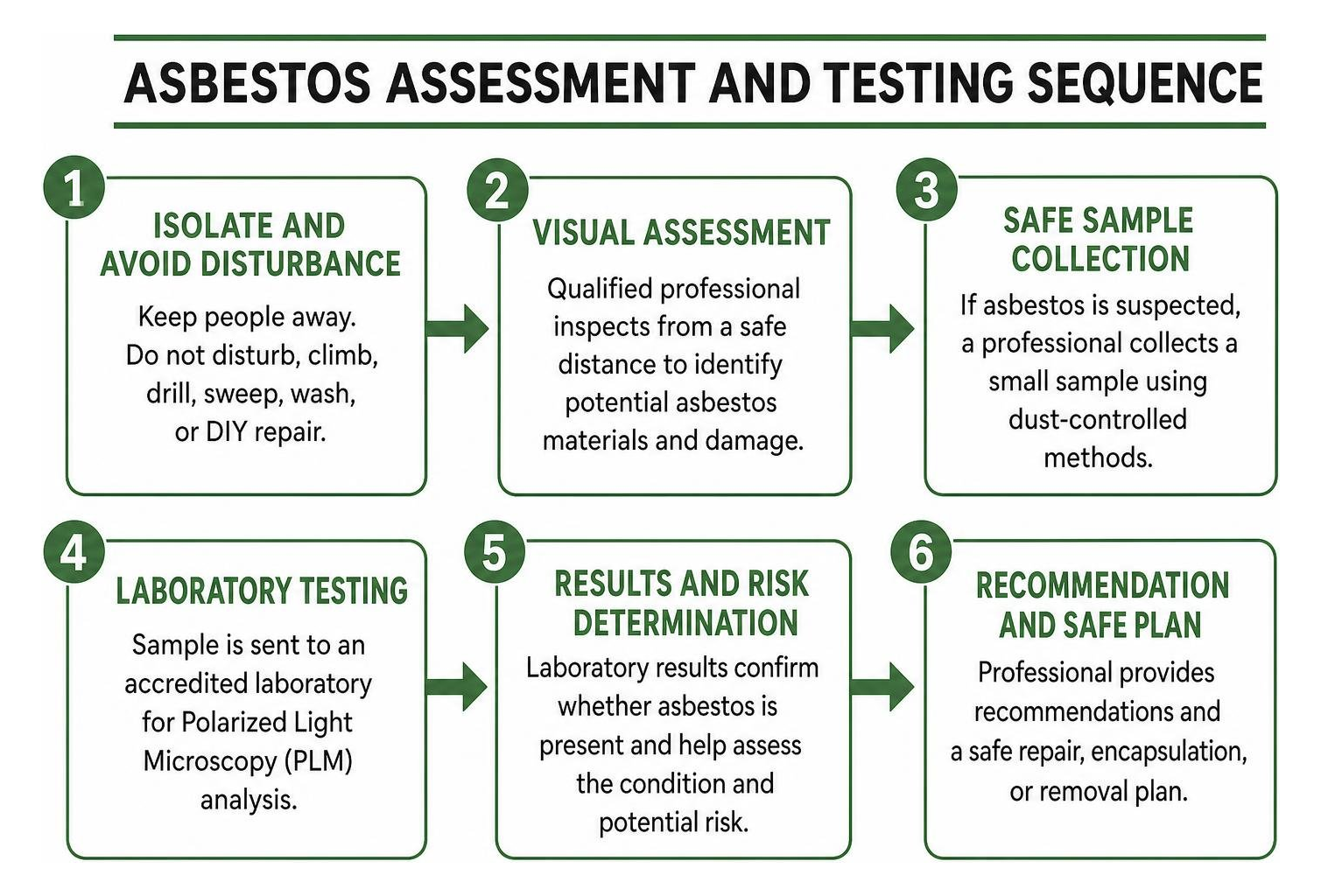
Because microscopic mineral fibers cannot be identified by the naked eye, visual assumptions are never enough. Property owners must adhere to proper protocols for how to inspect your roof, which strictly mandate maintaining physical distance from questionable materials. Formal identification requires a certified technician to collect a physical sample under dust-controlled conditions, submitting it to an accredited laboratory for Polarized Light Microscopy (PLM) analysis.
Common Signs of Retro Asbestos Roof Deterioration
Identifying an aging asbestos roof before catastrophic structural failure occurs helps prevent severe interior contamination. Look for the following exterior indicators:
- Surface Chalking and Pitting: The cement paste binder weathers away, leaving exposed mineral fibers visible as a textured, fuzzy white or light gray film.
- Hairline Cracking and Fissures: Age-related thermal expansion causes small fracture lines, typically concentrated near structural fasteners, seams, and ridge caps.
- Heavy Biological Growth: Thick colonies of lichens and moss root into surface micro-fissures; treating this requires safe methods rather than abrasive standard moss removal roof techniques like mechanical scraping or pressure washing.
- Corrugation Brittleness: Corrugated profiles lose elasticity over time, turning brittle and prone to catastrophic cracking under light foot traffic or snow loads.
- Pre-1980s Building Date: Structures constructed between 1940 and 1985 in Northern Illinois communities like Crystal Lake and Algonquin commonly retain original transite roofing panels.
Evaluating Urgency: When to Search for Asbestos Roof Repairs Near Me
Not every aging roof requires immediate emergency evacuation, but acute physical trauma demands immediate professional intervention. If severe winds, falling branches, or heavy hail fracture an older corrugated panel, moisture intrusion will quickly carry loose fibers into living spaces.
When active interior water stains appear beneath a vintage transite ceiling, property owners must utilize emergency roof repair leak detection strategies that emphasize zero-disturbance fiber containment. Immediate stabilization involves setting up plastic containment barriers beneath the leak site and deploying certified technicians to isolate the exterior fracture without creating airborne dust.
Asbestos Roof Remediation: Repair, Encapsulation, or Full Removal?
Property owners facing asbestos roof challenges generally choose between two primary paths: surface encapsulation or complete structural abatement followed by a modern replacement. Both approaches possess distinct procedural requirements, lifespans, and structural implications.
| Factor | Professional Encapsulation / Coating | Complete Abatement & Modern Replacement |
|---|---|---|
| Primary Method | High-build elastomeric polymer sealing | Complete removal, hazardous disposal, new deck/roof |
| Asbestos Status | Remains intact and locked beneath membrane | 100% eliminated from property structure |
| Typical Lifespan | 10 to 25 years (dependent on coating grade) | 40 to 70+ years (metal, slate, composite systems) |
| Structural Impact | Minimal added dead load; no fastener removal | Re-engineering framing for modern codes and materials |
| Occupant Disruption | Minimal; exterior-only liquid application | Phased scheduling; strict indoor isolation required |
| Future Liability | Requires ongoing monitoring and disclosure | Completely removes long-term environmental liability |
Encapsulation and Liquid Coating Solutions
When the underlying cement substrate remains structurally sound without extensive delamination or pervasive cracking, encapsulation serves as a viable, low-disruption remediation strategy. Using specialized industrial roof waterproofing services because your attic isnt a swimming pool prevents moisture penetration while securing loose surface fibers.
The encapsulation process utilizes heavy-duty elastomeric, polyurethane, or silicone-based polymers. These liquid coatings cure into a seamless, flexible membrane that seals all exterior surfaces, fastener penetrations, and overlapping joints. This barrier prevents fiber release caused by wind scour and UV degradation, extending the roof’s functional lifecycle by up to 25 years without disturbing the hazardous substrate underneath.
Complete Asbestos Removal and Modern Replacement
If panels show widespread fractures, structural sagging, or severe fastener corrosion, complete removal is the only responsible, permanent solution. Abatement teams carefully unfasten each sheet whole, avoiding breaking or cutting the material. Once stripped down to the rafters, certified crews inspect the underlying structural framing for rot or load-bearing fatigue.
Homeowners can then proceed with an engineered installation outlined in our roof installation replacement complete guide. Modern replacement selections—such as standing-seam steel, high-durability corrugated aluminum, or high-performance composite shingles—deliver superior impact resistance, modernized energy insulation values, and complete peace of mind. A planned reroofing transformation eliminates environmental liability permanently while elevating the property’s market value.
Safety Protocols, Regulatory Standards, and Safe Disposal
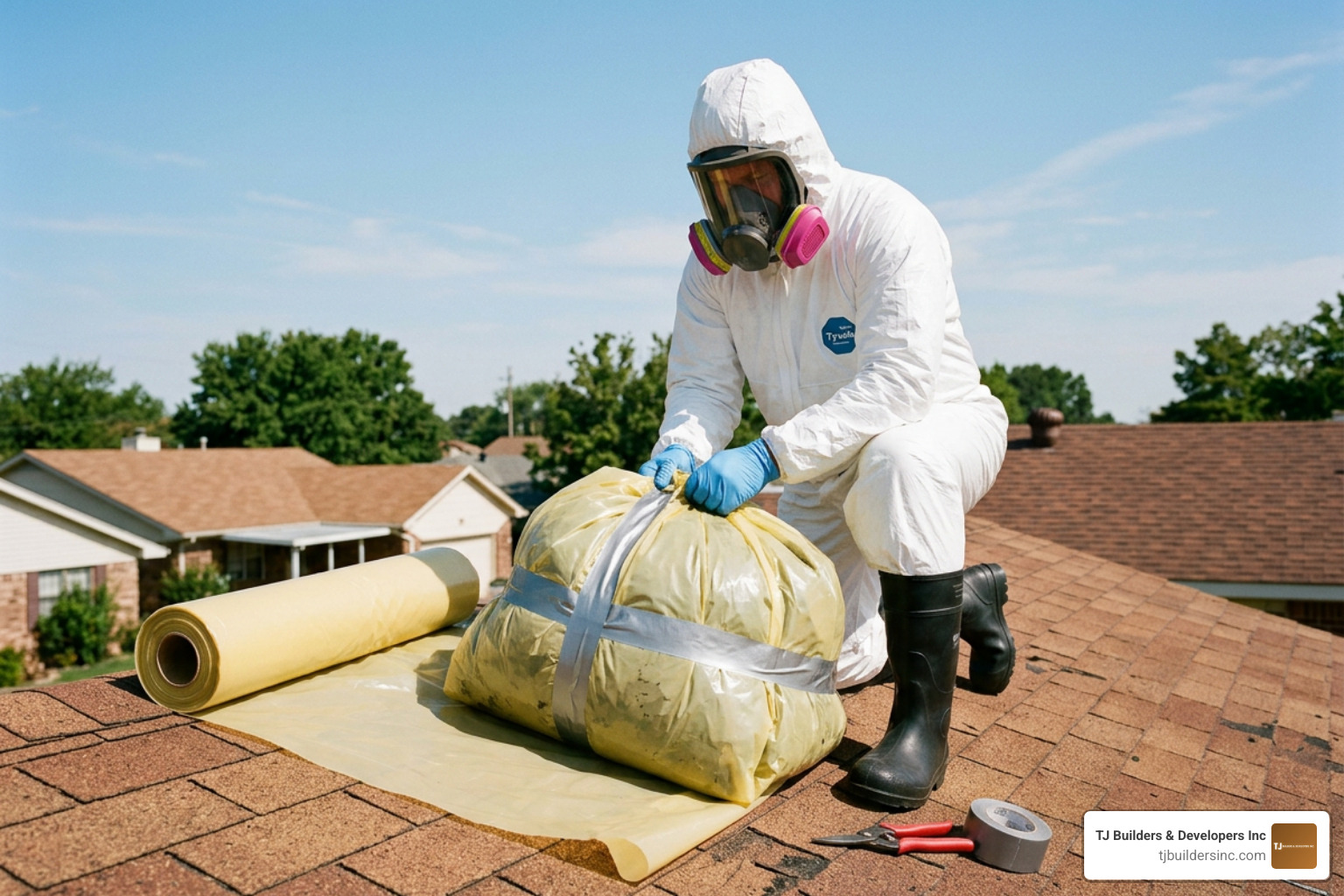
Working on hazardous roofing materials requires strict adherence to federal and state health regulations. The Occupational Safety and Health Administration (OSHA) and the Environmental Protection Agency (EPA) enforce rigorous standards governing worker protection and fiber emissions during exterior abatement.
All onsite technicians must wear specialized Personal Protective Equipment (PPE). This includes Type 5, Category 3 disposable particulate coveralls, impervious safety gloves, steel-toed rubber boots, and half-mask (P2/N100) or full-face (P3/HEPA) elastomeric respirators. Technicians must be fit-tested to ensure a complete facial seal that prevents fiber inhalation.
Step-by-Step Controlled Abatement Process
The execution of safe asbestos removal follows a strictly controlled operational sequence designed to eliminate airborne particulate migration:
- Exclusion Zone Setup: Technicians erect physical perimeter barriers and high-visibility warning signs around the property, establishing controlled access points and sealing nearby building windows and HVAC intake vents.
- Pre-Wetting and Dust Suppression: Operatives thoroughly mist the roofing panels with amended water containing surfactant chemicals, ensuring the cement remains saturated during handling to prevent fiber liberation.
- Manual Fastener Extraction: Fasteners and hook bolts are carefully unbolted or sliced using low-speed hand tools equipped with local HEPA exhaust shrouds; high-speed grinding or abrasive saws are strictly prohibited.
- Intact Sheet Disassembly: Workers lift panels intact without throwing, dropping, or sliding them across structural supports.
- HEPA Vacuuming and Area Wipe-Down: Structural purlins, rafters, and collection tarps undergo meticulous vacuuming using true-HEPA rated filtration systems.
- Clearance Air Monitoring: An independent environmental assessor performs clearance air sampling to verify that airborne fiber concentrations sit well below regulatory safety thresholds before site release.
Hazardous Waste Packaging and Certified Disposal
Asbestos debris cannot be discarded in standard municipal waste facilities. Every removed sheet, fastener, and contaminated collection drop-cloth must be immediately sealed within heavy-duty, 6-mil polyethylene abatement bags or double-wrapped in 6-mil poly sheeting and secured with heavy-grade duct tape.
All packages receive official regulatory danger labels identifying the hazardous contents. The materials are transported under strict EPA waste manifest documentation by a licensed hazardous waste hauler directly to a specialized landfill permitted to accept asbestos-containing material (ACM). Following successful delivery, the property owner receives written consignment documentation confirming lawful, safe disposal.
Why Searching for Asbestos Roof Repairs Near Me Requires Certified Specialists
Handling exterior asbestos remediation requires specialized insurance, hazardous certifications, and deep knowledge of structural construction. Because conventional contractors cannot legally disturb bonded hazardous sheeting, property owners must navigate permitting, regional disposal mandates, and realistic cost calculations. As explained in our guide on the price of a dry ceiling and other roof repair costs, factors such as specialized labor, containment engineering, clearance air testing, and hazardous landfill fees influence the overall remediation investment.
Responding to Severe Storm and Hail Damage
Northern Illinois frequently encounters severe weather, from heavy winter ice to violent summer thunderstorms. Large hail stones strike brittle transite shingles with intense kinetic energy, causing catastrophic fracturing, through-punctures, and scattered debris.
When an extreme weather event strikes, homeowners require swift storm hail damage restoration executed with specialized safety precautions. Rather than aggressively nailing standard tarps into hazardous panels—which releases dangerous dust—emergency teams use non-invasive weighted membranes and sandbag ballasts outlined in our guide on emergency roof repairs your quick guide to stopping storm damage. This stabilizes the building envelope safely until permanent abatement crews arrive.
Finding Qualified Contractors for Asbestos Roof Repairs Near Me
Hiring the right team requires verifying certifications and safety track records. When evaluating prospective exterior restoration contractors, check for the following credentials:
- Current state-level Asbestos Abatement Contractor Licensing and AHERA accreditation.
- Comprehensive commercial general liability insurance containing explicit coverage for environmental and pollution hazards.
- Documented safety protocols, including written Hazard Communication (HAZCOM) and respiratory protection programs.
- Proven expertise referenced in how to pick the best local roofing companies for your home, confirming experience with complex residential structural framing in Lakewood, Huntley, and Schaumburg.
- Transparent, itemized proposals outlining exact encapsulation chemistries, waste manifest processing, and independent clearance testing.
Frequently Asked Questions About Asbestos Roofing
Can I patch a damaged asbestos roof myself with standard sealant?
No. DIY repairs on asbestos roofing materials are dangerous and often violate local environmental regulations. Scraping, wire-brushing, or drilling into the surface releases millions of microscopic, carcinogenic fibers into your breathing zone. Standard hardware store mastics also fail to bond reliably to weathered transite, resulting in recurring leaks. All remediation must be handled by trained, properly equipped professionals.
What is the typical cost difference between encapsulating and replacing an asbestos roof?
Encapsulation typically requires a lower initial investment than full removal because it avoids extensive teardown labor, hazardous transport fees, and structural decking installation. However, complete removal and replacement provides greater long-term value. While encapsulation must be reapplied or monitored every 10 to 20 years, complete replacement permanently eliminates environmental liability, improves attic energy efficiency, and provides structural protection that lasts for decades.
What should I do immediately if a tree branch falls through my asbestos roof?
Immediately evacuate all people and pets from the rooms directly beneath the impact zone. Shut down your HVAC heating and cooling systems to prevent air circulation from pulling disturbed fibers through the ductwork. Close and isolate doors to the affected area. Do not attempt to sweep, vacuum, or touch broken pieces of roofing. Contact certified emergency abatement and roofing specialists immediately to stabilize the exterior and safely secure your interior space.
Conclusion
Managing an aging, weathered, or storm-damaged retro roof requires balancing structural weatherproofing with environmental safety. Treating suspected asbestos panels with caution, avoiding DIY disturbance, and choosing the right combination of professional encapsulation or modern structural replacement ensures your home remains structurally sound and safe.
At TJ Builders & Developers Inc, we help homeowners across Northern Illinois navigate exterior challenges with clear guidance, professional craftsmanship, and durable materials. Whether you are dealing with storm damage, aging materials, or planning a complete exterior renovation, exploring our comprehensive roof repair and restoration solutions is the first step toward lasting property protection. Contact our team today to schedule an exterior consultation.