Why Moss Removal Roof Matters for Your Home
Moss removal roof is essential to protect your home from serious damage. That green, fuzzy growth on your shingles might look harmless, but moss traps moisture against your roof’s surface, causing shingles to curl, crack, and deteriorate. Over time, this leads to leaks, wood rot, and costly structural damage.
Quick Answer: How to Remove Moss From Your Roof
- Gently brush off loose moss using a soft-bristle broom, working from the peak downward
- Apply a moss-killing solution (vinegar mix, dish soap solution, or commercial moss killer)
- Let it sit for 20-45 minutes to kill the moss at its roots
- Scrub gently with a soft brush to remove dead moss
- Rinse thoroughly with low-pressure water, always spraying downward
- Never use a pressure washer – it damages shingles and voids warranties
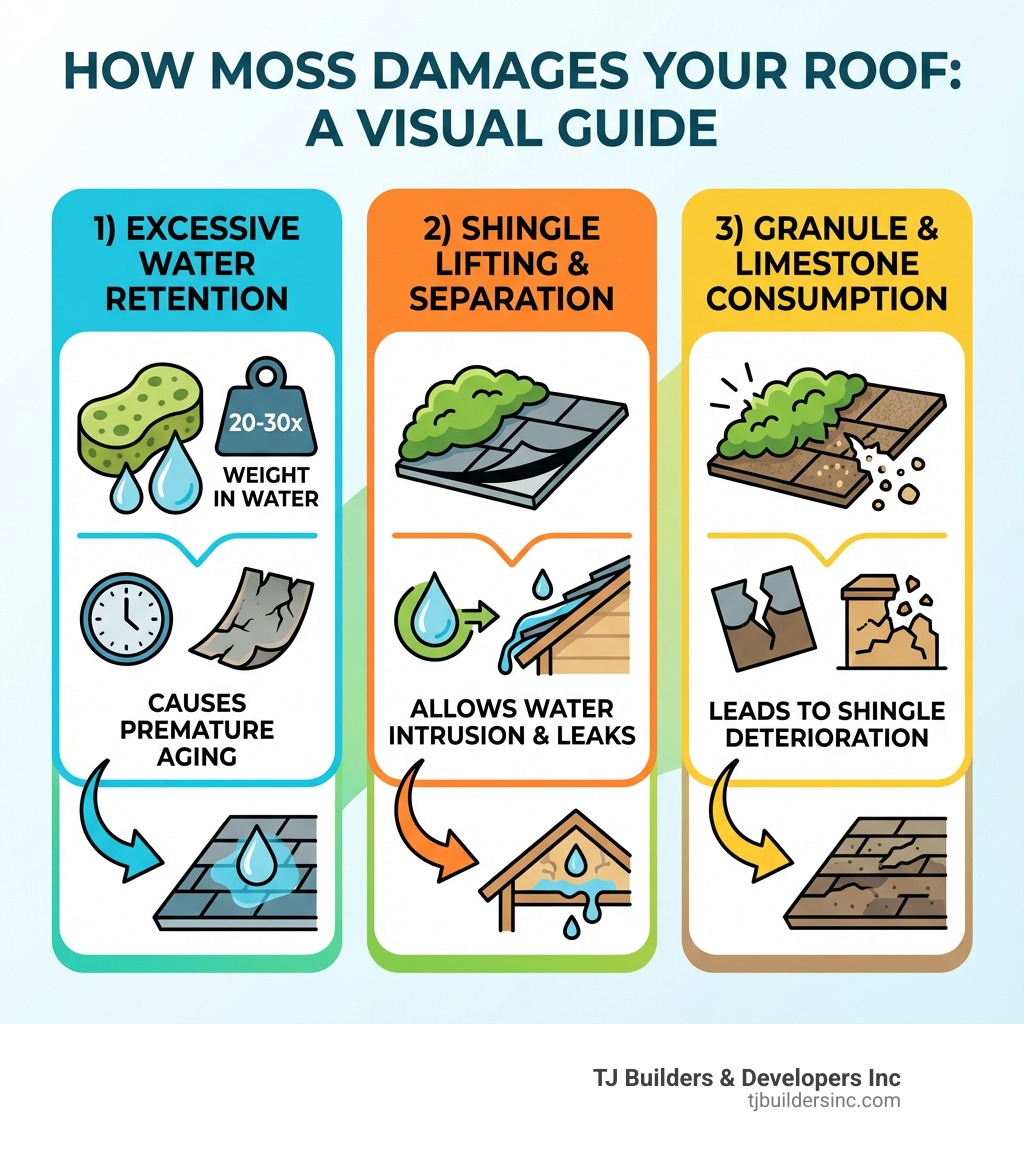
While moss might give your roof that charming, cottage-like appearance, the reality is far less enchanting. Moss holds up to 20-30 times its weight in water, creating constant moisture exposure that accelerates roof aging. It damages roofs by consuming the calcium carbonate in limestone filler used in modern shingles, and it physically lifts shingle edges, making them vulnerable to wind damage and allowing water to seep underneath.
For homeowners dealing with exterior property damage, moss represents a serious threat to your roof’s structural integrity and your home’s protection. The good news? With the right approach, you can safely remove moss and prevent it from returning.
This comprehensive guide will walk you through the complete moss removal roof process, from understanding why moss grows to implementing long-term prevention strategies that keep your roof clean and protected.
Understanding Roof Moss: Why It Grows and the Damage It Causes
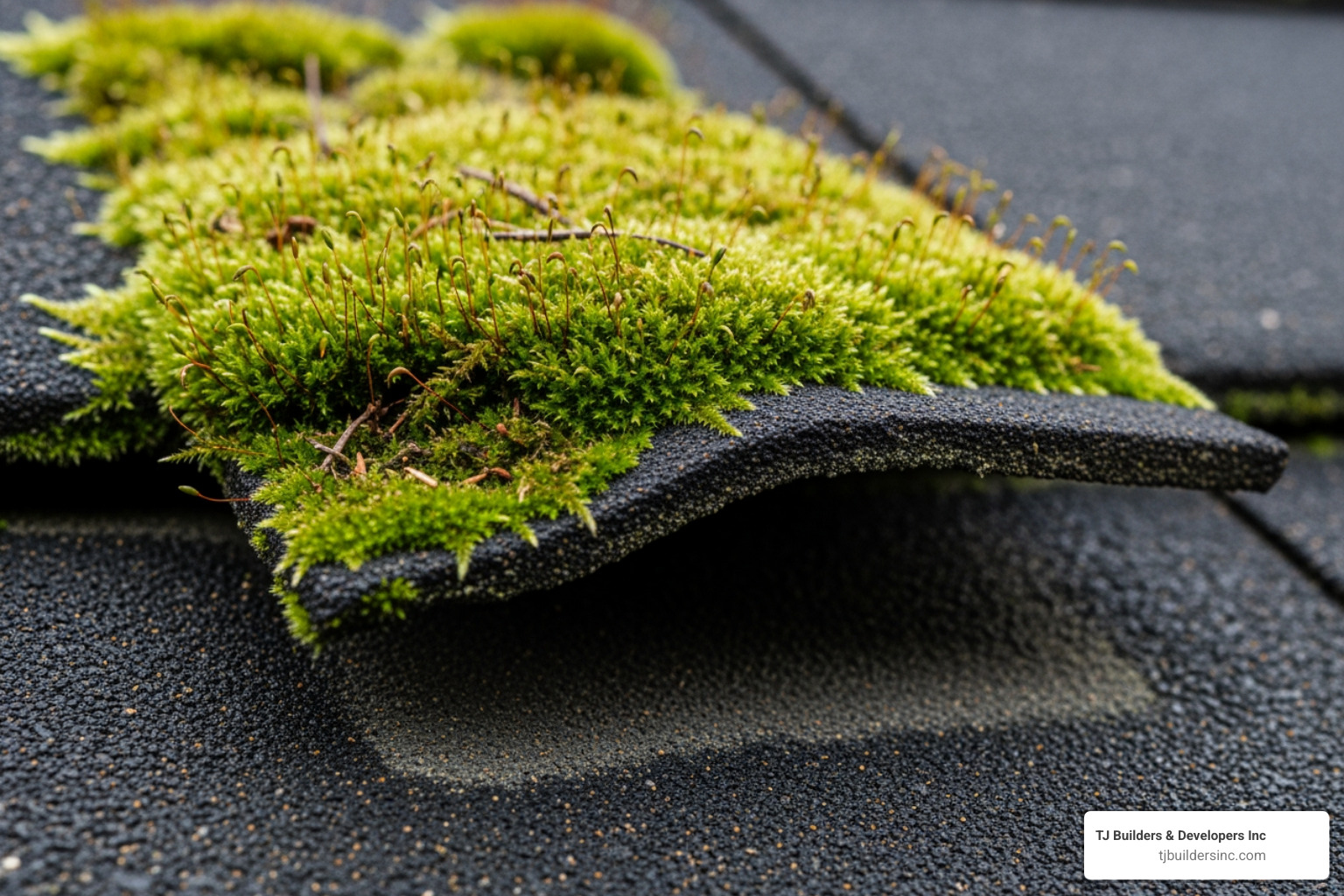
Moss is more than just a green aesthetic; it’s a living organism that can wreak havoc on your roof. Its presence tells a story of moisture and shade, conditions that are all too common in areas like Lakewood, Crystal Lake, Schaumburg, and the wider Chicago suburbs. Let’s dig into what moss is and why it’s so detrimental to your home.
What is Moss and Why Does it Grow on Roofs?
Mosses are primitive, flowerless plants, of which there are over 12,000 species worldwide. Chances are, if you see moss on your roof, it could be species like Dicranoweisia cirrata and Bryum capillare. Unlike vascular plants, mosses don’t have true roots. Instead, they use small, hair-like structures called rhizoids to cling to surfaces, absorbing water and nutrients directly from the air and surface. This means they don’t necessarily need soil to thrive.
The primary reason moss grows on roofs is the presence of ideal conditions: dampness and shade. Moss growth on roofs is often a result of poor drainage, high humidity, and lack of sunlight. In the climate of Illinois, with our humid summers and often wet springs and falls, roofs can remain damp for extended periods, especially on north-facing slopes or areas shaded by overhanging trees. Trapped leaves and other debris also contribute by holding moisture against the roof surface, creating a perfect environment for moss spores to germinate and grow.
The Risks of Ignoring Moss on Your Roof
Ignoring moss on your roof is akin to ignoring a small leak – it will only get worse and lead to more significant, costlier problems down the line. We’ve seen the damage it can cause to homes in the Chicago suburbs. Here are the key risks:
- Water Damage and Leaks: Moss holds a significant amount of water – up to 20-30 times its weight. This constant moisture retention against your roofing materials is the primary culprit. It can cause shingles to curl, crack, or become dislodged, creating pathways for water to seep underneath and into your home. This can lead to interior leaks, damaged ceilings, and compromised insulation.
- Structural Rot: The moisture trapped by moss can accelerate the deterioration of roofing materials and the underlying wood decking. This leads to wood rot, which can severely compromise your roof’s structural integrity. Mold growth, a common companion to dampness, can also begin, creating an unhealthy living environment.
- Reduced Energy Efficiency: Moss can cover the reflective surfaces of your roof, especially asphalt shingles designed to reflect sunlight. By decreasing the roof’s ability to reflect solar radiation, moss can potentially lead to increased cooling costs during warmer months.
- Damage to Shingles: Moss actively degrades shingles. It lifts their edges, making them vulnerable to wind damage. On asphalt shingles, moss can eat away at the calcium carbonate in the limestone filler, and it accelerates the loss of protective granules that shield your roof from UV rays. This premature aging significantly shortens your roof’s lifespan.
- Pest Attraction: The damp, sheltered environment created by moss can attract unwanted guests like rodents and insects. If moss creates openings or lifts shingles, these pests can find their way into your attic or walls, leading to infestations.
- Aesthetic Decline: Beyond the structural issues, a moss-covered roof simply looks neglected and can significantly detract from your home’s curb appeal and overall property value.
- Safety Hazard: A moss-covered roof is also a safety hazard. If you or a professional needs to access the roof for maintenance or repairs, walking on a mossy surface can be extremely slippery and dangerous.
Need Help With Your Home?
TJ Builders & Developers handles roofing, siding, gutters, windows, home additions, and fire damage restoration for homes and businesses in Lakewood, Crystal Lake, Schaumburg, and nearby McHenry County towns.
- Free, no-obligation estimates
- Licensed & insured
- 20+ years of local experience
The Complete Moss Removal Roof Process: A Step-by-Step Guide
Safely and effectively removing moss from your roof requires careful planning and execution. We always prioritize safety when working on roofs, and we encourage you to do the same if you choose the DIY route.

Essential Tools and Safety Gear
Before you even think about climbing a ladder, gather all your necessary tools and safety equipment. This isn’t just about getting the job done; it’s about doing it safely and without damaging your roof or yourself.
Here’s what you’ll need for effective moss removal roof:
- Ladder: A sturdy, well-maintained ladder that extends at least three feet above your roofline.
- Safety Harness Kit: For roofs with a pitch greater than 23 degrees, or if working near edges or high eaves, a safety harness with an anchor bracket and lifeline is crucial. Remember to always follow instructions for safety equipment.
- Non-Slip Shoes: Shoes with excellent traction are a must for working on a roof.
- Safety Goggles: Protect your eyes from debris and cleaning solutions.
- Work Gloves: Rubber or nitrile gloves protect your hands from chemicals and abrasion.
- Garden Hose with Spray Nozzle: For wetting the moss and rinsing the roof.
- Long-Handled, Soft-Bristle Scrub Brush: Essential for gently scrubbing without damaging shingles. Avoid wire brushes unless specifically designed for roof tiles by professionals, as they can be too abrasive for most residential roofs.
- Plastic Sheeting: To protect landscaping and gutters from runoff.
- Pump Spray Bottle (optional): For applying cleaning solutions, a back-mounted sprayer can be safer.
- Moss Cleaning Solution: Either a commercial product or homemade solution (details below).
- Bucket and Rope: To transport tools safely up to the roof.
Step 1: Prepare and Gently Remove Loose Moss
Preparation is key for a successful and safe moss removal roof.
- Choose the Right Day: We recommend selecting a cool, cloudy day with no rain in the forecast. This prevents cleaning solutions from evaporating too quickly and makes working on the roof more comfortable. Summer, after a long dry period, can also make removal easier as moss is drier.
- Protect Your Landscape: Before you begin, drape plastic sheeting over any trees, bushes, or delicate plants around the base of your home. This protects them from falling moss debris and any cleaning solutions that might run off. If using bleach, thoroughly rinse plants with water before and after application.
- Set Up Your Ladder Safely: Place your ladder on stable, level ground. Ensure it extends at least three feet above the roofline and secure the top if possible. If you’re working alone, have another adult hold the base.
- Prioritize Your Safety: Put on all your safety gear: non-slip shoes, safety goggles, and work gloves. If using a safety harness, make sure it’s properly secured to a roof anchor bracket appropriate for your roof type.
- Gently Remove Loose Moss: Begin by hosing off mossy areas with water, spraying at a downward angle. Then, using your long-handled, soft-bristle scrub brush or a broom, gently brush off any loose, dry moss. Always work from the peak of your roof downward to avoid forcing moss or debris underneath shingles. A gas-powered leaf blower can also be used to clear excess debris and loose moss, but be careful not to damage shingles. The goal here is to remove about 80% of the heavy growth without aggressive scrubbing.
Step 2: Apply a Moss Killing Solution
Once the loose moss is gone, it’s time to apply a solution to kill the remaining moss and its spores.
- Homemade Solutions: For those looking for natural or homemade options, we’ve found a few effective choices:
- Vinegar Solution: Mix equal parts white vinegar and warm water in a spray bottle or pump sprayer. Add a few drops of dish soap to help it adhere. Spray this solution directly onto the moss. Let it sit for about 10 minutes before rinsing.
- Dish Soap Mix: A solution of 8 ounces of Dawn Ultra dish soap mixed with 2 gallons of water can also be effective. Apply it to the moss and let it sit for a couple of days to allow the moss to dry and die before rinsing.
- Bleach (Use with Caution): A diluted bleach solution (1-3 cups bleach with 2 gallons of water) can kill moss. However, bleach can be harsh on certain roofing materials and damaging to surrounding plants. If using, ensure plants are thoroughly watered before and after application.
- Commercial Moss Killers: Several commercial products are designed specifically for roofs.
- Wet & Forget is a popular spray-on product.
- BioAdvanced Moss and Algae Killer uses potassium soap of fatty acids, a biodegradable option.
- Moss B Ware is a zinc sulfate monohydrate powder that can be applied directly or mixed with water.
- Potassium salts of fatty acids are an environmentally friendly, non-corrosive alternative to zinc sulfate that kills moss by disrupting cell membranes.
Apply your chosen solution evenly across the mossy areas using a pump sprayer. Always follow the manufacturer’s instructions for concentration and application. Allow the solution to dwell for the recommended time, usually between 20-45 minutes for liquid solutions, or as directed for granular products which are often left to be activated by rainwater.
Step 3: Final Scrub and Rinse
After the solution has had time to work, it’s time for the final cleanup.
- Gently Scrub: With your soft-bristled brush, gently scrub any remaining moss. Focus on areas where the moss is still clinging, but remember to be gentle to avoid damaging your shingles.
- Rinse Thoroughly: Use your garden hose with a gentle spray nozzle to thoroughly rinse the roof. Crucially, never use a pressure washer for moss removal on your roof. Pressure washers can strip away protective granules from asphalt shingles, lift shingles, and force water underneath them, leading to severe damage and potentially voiding your roof’s warranty. Always direct the water flow downwards, from the peak to the eaves, to ensure water runs off the roof and doesn’t get forced under shingles.
- Inspect and Repeat: Inspect the roof for any lingering moss patches. If necessary, you can repeat the application of the cleaning solution and the gentle scrubbing/rinsing process.
- Clear Gutters: As moss detaches, it will inevitably fall into your gutters. Clean your gutters thoroughly after the process to prevent them from clogging.
DIY vs. Hiring a Professional
Deciding whether to tackle moss removal roof yourself or hire a professional is a common dilemma for homeowners in Illinois. Both approaches have their merits, depending on the severity of your moss problem, your comfort level with heights, and your available resources.
| Feature | DIY Moss Removal | Professional Moss Removal |
|---|---|---|
| Cost | Low (tools $330-$690, solutions $16-$45) | Moderate to High ($450-$900 for 1500 sq ft roof) |
| Safety | High risk (falls, improper equipment use) | Low risk (trained, insured, proper equipment) |
| Effectiveness | Good for minor issues, can be inconsistent for severe growth | High (specialized tools, commercial-grade solutions, expertise) |
| Time | Significant time commitment (1.5-2.5+ hours) | Minimal homeowner time commitment |
| Equipment | Requires purchasing/renting specialized tools | Professionals provide all equipment |
| Roof Damage Risk | Moderate (improper technique, harsh chemicals) | Low (soft washing, gentle techniques, warranty knowledge) |
The DIY Approach to Moss Removal Roof
Taking on moss removal roof yourself can be a rewarding experience, especially for smaller, accessible areas of growth.
Pros of DIY:
- Cost Savings: You save on labor costs, only paying for materials and tools.
- Immediate Action: You can address the problem as soon as you notice it without waiting for a professional.
- Small-Scale Infestations: For minor moss patches, DIY methods can be quite effective.
Cons of DIY:
- Safety Risks: Working on a roof can be dangerous. Falls are a serious concern, and improper ladder use is a common cause of injury.
- Potential for Roof Damage: Using the wrong tools, harsh chemicals, or incorrect techniques (like pressure washing) can damage shingles, strip granules, or even void your roof’s warranty.
- Time Commitment: Even a small roof section can take hours, and a larger project can consume an entire weekend or more.
- Equipment Needs: You might need to purchase or rent specialized tools, which can add up.
When to Call a Professional for Moss Removal Roof
While DIY is an option, there are many situations where calling a professional for moss removal roof is the smartest and safest choice. For extensive moss coverage or persistent regrowth, we often recommend professional intervention.
You should consider hiring a professional if:
- Your Roof is Steep or High: Safety is paramount. If you’re uncomfortable with heights or your roof’s pitch makes it difficult to walk on safely, leave it to the experts.
- You Have Extensive Moss Coverage: Heavy, widespread moss growth is incredibly labor-intensive and requires specialized tools and techniques for effective removal.
- Moss Keeps Regrowing: If you’ve tried DIY methods and moss persistently returns, there might be underlying issues (like persistent dampness or shade) that a professional can better diagnose and address.
- You Lack Proper Equipment: Professionals come equipped with everything needed, from industrial-grade solutions to safety gear and soft washing equipment.
- You Want to Ensure Warranty Compliance: Professional roofers know how to clean your roof without inadvertently voiding your roof’s warranty.
- You Need Professional Soft Washing: Many professionals use soft washing techniques, which involve applying a cleaning solution at low pressure, allowing it to do the work before a gentle rinse. This is much safer for your roof than high-pressure washing.
Professional roof cleaners in the Chicago suburbs typically charge about 30-60 cents per square foot for soft-washing asphalt shingles. For example, a 1,500-square-foot asphalt shingle roof cleaning might cost between $450-$900. When hiring, always ensure the technicians are bonded and insured, check their Better Business Bureau (BBB) page, ask for references, and get quotes from at least three local companies. Avoid any company that primarily uses pressure washers for roof cleaning.
If your roof has sustained damage from moss, we also offer expert roof repair services to restore its integrity.
Need Help With Your Home?
TJ Builders & Developers handles roofing, siding, gutters, windows, home additions, and fire damage restoration for homes and businesses in Lakewood, Crystal Lake, Schaumburg, and nearby McHenry County towns.
- Free, no-obligation estimates
- Licensed & insured
- 20+ years of local experience
Long-Term Prevention and Maintenance
Once you’ve gone through the effort of moss removal roof, the last thing you want is for it to grow back! The key to a moss-free roof in Lakewood, Crystal Lake, and beyond is proactive prevention and consistent maintenance.
How to Prevent Moss From Growing Back
Prevention is always easier than removal, especially when it comes to moss. We focus on controlling the environmental factors that encourage moss growth.
- Trimming Overhanging Trees: This is one of the most effective preventative measures. Moss thrives in shade. Trimming tree branches that hang over your roof reduces shade, allowing more sunlight to reach the roof surface. This also minimizes the accumulation of leaves and debris that trap moisture. We know that maintaining a moss-free roof takes some effort, and managing your tree canopy is a big part of that effort.
- Increasing Sunlight: Where possible, encourage more direct sunlight on your roof. Moss plants prefer to grow in the shade, so removing any obviously shady areas is a useful first preventative step.
- Regular Debris Removal: Routinely clear leaves, twigs, and other organic debris from your roof surface. This debris holds moisture and provides nutrients for moss.
The Role of Gutters and Metal Strips
Two unsung heroes in the fight against roof moss are clean gutters and strategically placed metal strips.
- Proper Water Drainage: Moss growth on roofs is often a result of poor drainage. Clogged gutters prevent water from flowing freely off your roof, leading to standing water and prolonged dampness – a moss paradise. We cannot overstate the importance of regular gutter cleaning. Clean gutters ensure proper water drainage, reducing the moisture buildup that moss thrives on. If your gutters are old or damaged, consider our expert gutter installation and replacement services.
- How Zinc or Copper Strips Work: These metal strips are a popular long-term preventative measure. When it rains, water washes over the zinc or copper strips, picking up tiny particles of the metal. As this metal-infused water flows down your roof, it creates an environment that is toxic to moss, algae, and lichen.
- Installation: Install zinc or copper roof strips just below the ridge cap on both sides of the roof, nailing the strips down every foot or so. You can also purchase sheet metal in rolls and cut it into 2- to 4-inch strips.
- Effectiveness: These strips are effective and provide a long-term solution for preventing moss buildup. However, they need periodic replacement, typically every 5 years or so for zinc.
- Important Note: The Asphalt Roofing Manufacturers Association advises against installing zinc strips on existing roofs, as creating new penetrations could potentially lead to leaks. This is especially important for asphalt shingles. For new roof installations, incorporating these strips can be a great preventative measure.
Frequently Asked Questions about Roof Moss
We hear a lot of questions about roof moss from homeowners in Illinois. Here are some of the most common ones we address:
Can I use a pressure washer to remove moss from my roof?
No, absolutely not. This is one of the most critical warnings we can give. Using a pressure washer on your roof, especially on asphalt shingles, is a recipe for disaster. The high-pressure stream can:
- Damage Shingles: It can strip away the protective granules from asphalt shingles, which are vital for deflecting UV rays and protecting the shingle’s core.
- Lift Shingles: The force can lift and separate shingles, creating openings for water to seep underneath.
- Force Water Under Shingles: This can lead to leaks, wood rot, and mold in your roof deck and attic.
- Void Warranties: Most roofing manufacturers will void your warranty if damage is caused by pressure washing.
Always opt for low-pressure water (like a garden hose) and gentle scrubbing.
What should I do if moss removal treatments are not effective?
If you’ve tried moss removal treatments and the problem persists or returns quickly, it’s a sign that there might be an underlying issue or that the moss is particularly stubborn.
- Assess the Underlying Cause: Re-evaluate your roof’s environment. Is there still too much shade? Are your gutters consistently clogged? Is there a persistent moisture issue that you haven’t addressed?
- Check for Persistent Moisture Issues: Ensure your roof has proper ventilation and drainage. Moss thrives in damp conditions, so eliminating excess moisture is key.
- Consider Professional Assessment: For persistent issues, we recommend a professional assessment. Experts can identify specific types of moss, diagnose underlying problems, and recommend more targeted, professional-grade treatments. They may also find existing roof damage that needs repair.
- Stubborn Moss: Some types of moss, especially low-lying and spindly varieties, can have deeper root systems and be harder to eradicate than large, clumpy moss. Professional treatments often use stronger, commercial-grade solutions designed for these tough situations.
How often should I inspect my roof for moss growth?
We recommend inspecting your roof for moss growth at least twice a year, ideally in the spring and fall. These seasons are perfect for catching early signs of growth and addressing them before they become significant problems.
- Spring Inspection: After the winter snowmelt and spring rains, check for any new moss growth or areas that remained damp. Also, inspect for debris accumulated over winter.
- Fall Inspection: Before winter sets in, clear any fallen leaves and branches, which can trap moisture and encourage moss growth. This is also a good time to apply preventative treatments.
- After Major Storms: Always inspect your roof after severe weather, including heavy rains or high winds, to check for debris and any new growth or damage.
Regular inspections allow us to catch moss early, making removal much easier and preventing costly damage down the line.
Conclusion
Moss removal roof is not just about aesthetics; it’s a critical aspect of maintaining your home’s structural integrity and prolonging your roof’s lifespan. We’ve seen how this seemingly harmless growth can lead to significant water damage, wood rot, reduced energy efficiency, and costly repairs for homeowners in Lakewood, Crystal Lake, Schaumburg, and the Chicago suburbs.
By understanding why moss grows, implementing safe and effective removal techniques, and focusing on long-term prevention strategies like proper drainage, tree trimming, and the use of metal strips, you can keep your roof clean, healthy, and protected.
While DIY methods are suitable for minor moss issues, remember to prioritize safety and know when to call in the professionals. For homeowners in Lakewood, IL, TJ Builders & Developers Inc. provides expert exterior home services, including comprehensive roofing solutions.
Don’t let moss compromise your home’s most important defense. Protect your home with professional roofing services from TJ Builders & Developers Inc. today.