
Stop Water Damage Fast After a Roof Emergency
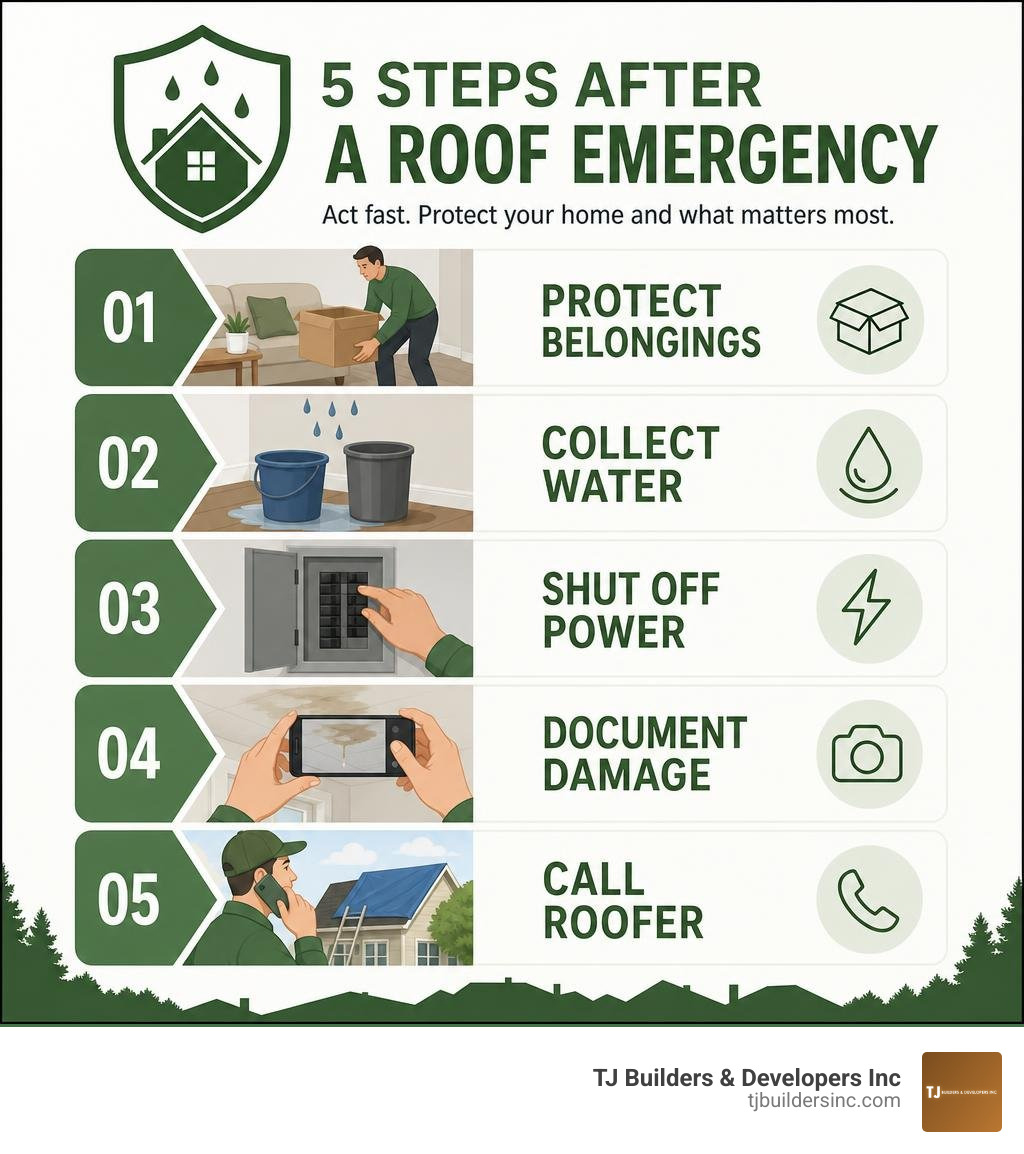
If water is entering your home, treat it as urgent. Move valuables away from the leak, catch water with buckets, turn off power to affected rooms if water is near fixtures or outlets, document the damage, and call a qualified roofing contractor. Do not climb onto a wet or storm-damaged roof.
Emergency roof repairs are needed when damage is actively letting water in or creates a safety risk. Common examples include missing shingles that expose the roof deck, a fallen limb puncture, failed flashing, ice-dam leaks, or a sagging ceiling. Fast temporary protection, often with professional tarping, can limit damage to insulation, drywall, framing, and flooring while permanent repairs are planned.
I’m Thomas Pruszynski, owner of TJ Builders & Developers Inc. For more than 20 years, I have helped homeowners protect and restore their properties through quality exterior repair and restoration work, including emergency roof repairs when storm damage cannot wait.
Learn more about emergency roof repairs:
Identifying Critical Roofing Emergencies and Their Common Causes
A roofing emergency is any sudden failure of your roof system that actively allows weather into your home or threatens the structural stability of the property. When severe weather hits Northern Illinois communities like Lakewood, Crystal Lake, and McHenry, exterior building envelopes can be compromised in minutes.

Common roofing crises stem from distinct physical impacts:
- Structural deck punctures: Heavy tree limbs snapping under high winds and penetrating straight through the asphalt shingles and plywood sheathing.
- Severe wind uplift: Microbursts and gale-force gusts ripping entire sections of shingles off the roof deck, exposing the underlying wood.
- Severe hail impacts: Dense hail fracturing shingle mats, stripping protective mineral granules, and loosening critical seam seals.
- Active interior cascades: Large volumes of water pouring through light fixtures, ceiling joints, or drywall seams.
When extreme weather compromises your exterior, seeking dedicated storm hail damage restoration ensures that hidden structural deck damage is addressed alongside visible surface failures.
Severe Storms, Wind Uplift, and Hail Impact
High-velocity winds create aerodynamic uplift along the edges and ridges of your roof. Once the wind breaks the manufacturer seal on an asphalt shingle, it can tear the material clean off, leaving the roof decking exposed.
Hail storms compound this damage by bruising the asphalt substrate. Even if an immediate hole is not visible from the ground, cracked shingles allow moisture to travel along rafters and valleys. Water rarely enters the ceiling directly below the exterior breach; it follows structural framing before pooling over drywall, resulting in offset ceiling stains and hidden insulation saturation.
Winter Ice Dams and Heavy Snow Accumulation
In Northern Illinois winters, severe freeze-thaw cycles create massive ice dams along the eaves of homes in Algonquin, Huntley, and Woodstock. When heat escapes into an under-insulated attic, it melts snow on the upper roof. As this runoff reaches the cold eaves and gutters, it refreezes into a thick ice ridge.
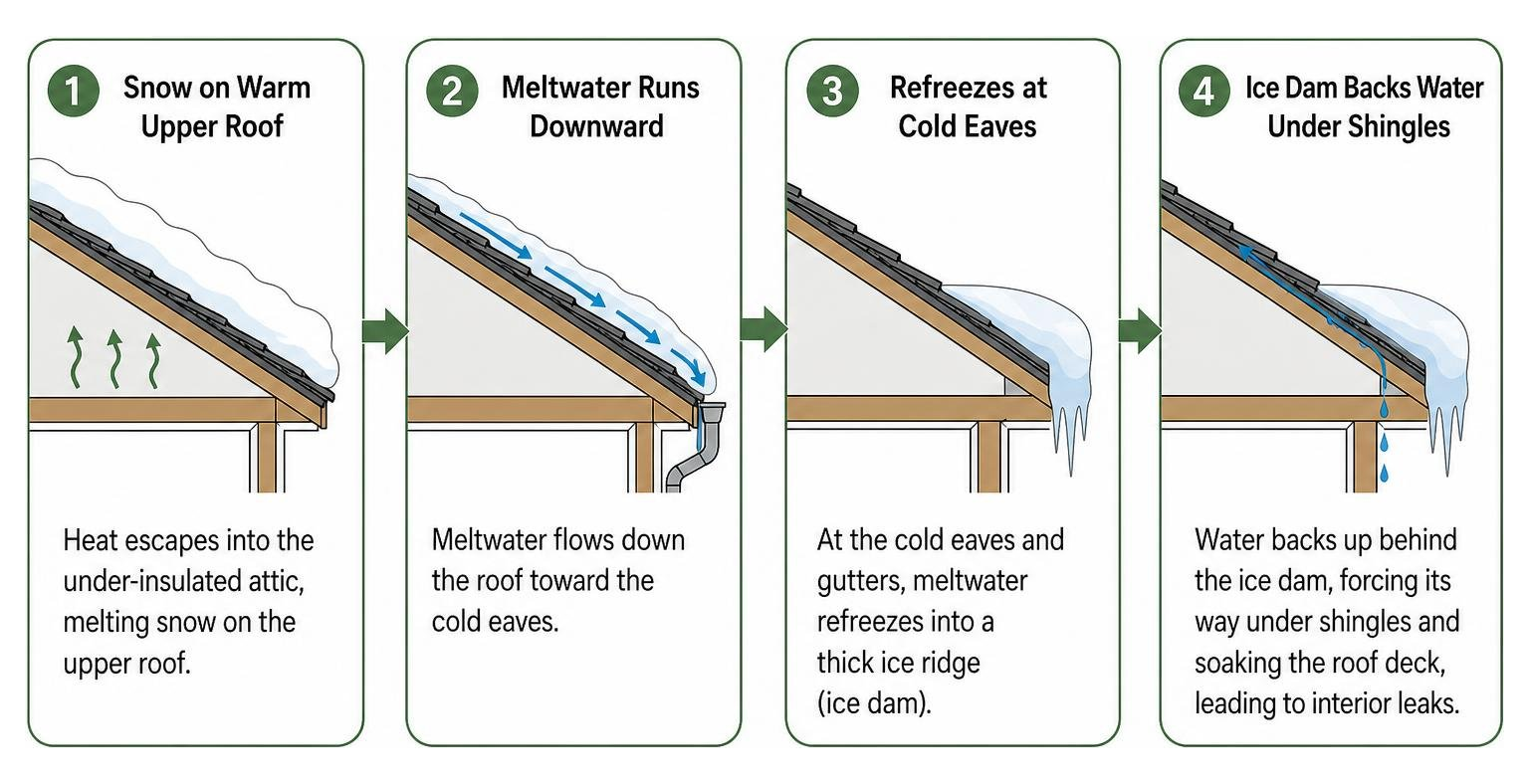
Subsequent meltwater backs up behind this ice dam, forcing its way underneath shingles and soaking the wooden roof deck. Prompt ice dam removal stops active winter leaks before excessive snow load causes structural sagging or interior mold growth.
Immediate Steps While Waiting for Emergency Roof Repairs
When water is actively entering your living space, fast action inside the house prevents thousands of dollars in secondary structural damage while our emergency dispatch team is on the way.
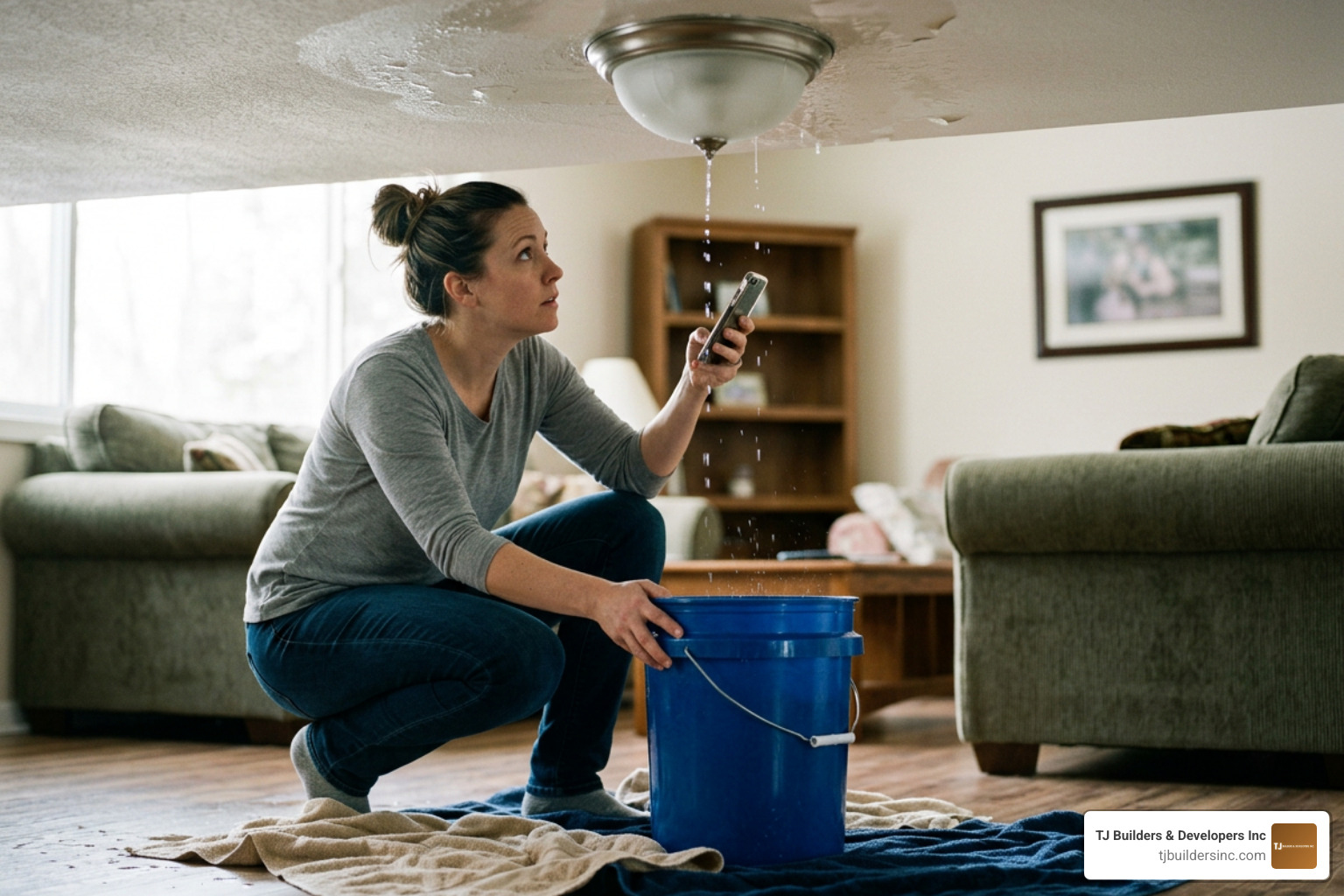
Follow these immediate harm-reduction steps:
- Protect Interior Assets: Clear furniture, electronics, rugs, and valuables away from the dripping area immediately.
- Capture the Water: Place deep plastic buckets or storage bins beneath the leak. Place old towels around the base of the container to catch splashing water.
- Relieve Water Bulges: If water is pooling behind ceiling paint and forming a sagging blister, carefully puncture the center of the bulge with a screwdriver or nail. Relieving this trapped water channels it into your bucket in a controlled stream, preventing a catastrophic drywall collapse.
- Review Mitigation Procedures: Following the complete guide to water damage mitigation steps will keep your property safe until field technicians arrive.
- Stay Off the Roof: Never climb onto a wet, icy, or storm-damaged roof. Wet shingles present extreme fall hazards, and compromised roof decking can give way beneath your weight.
Electrical Safety Precautions and Hazard Mitigation
Water pooling near ceiling fans, recessed lighting, wall outlets, or electrical service panels presents severe electrocution and fire hazards.
If water is dripping anywhere near an electrical fixture, go directly to your main breaker panel and shut off power to the affected room or circuit. If your basement is flooded near the panel or water is actively running down the service box itself, do not touch the equipment—contact your utility provider immediately.
Documenting Damage for Homeowners Insurance Claims
Accurate evidence gathering speeds up insurance processing. Before water is cleaned up and before our crew applies temporary protection:
- Capture wide-angle and close-up photographs of all affected interior ceilings, walls, flooring, and personal property.
- Record clear, time-stamped video footage showing the active drip and water entry points.
- Photograph exterior damage from the ground with a zoom lens, noting fallen tree branches, missing shingle tabs, and displaced metal flashing.
The Two-Step Professional Storm Restoration Workflow
Professional storm restoration follows a precise two-stage methodology: immediate stabilization followed by permanent structural restoration.
Our crews begin with comprehensive emergency roof repair leak detection to locate the exact exterior breach, followed by an immediate weatherproofing seal.
| Feature / Phase | Phase 1: Emergency Stabilization | Phase 2: Permanent Reconstruction |
|---|---|---|
| Primary Goal | Stop active water infiltration immediately | Restore 100% structural integrity & aesthetics |
| Response Time | Target dispatch within 2 to 4 hours | Scheduled after weather clears & permits issue |
| Key Materials | Heavy-duty poly tarps, 2×4 securing battens | Plywood decking, synthetic underlayment, shingles |
| Durability | Temporary barrier (designed for up to 90 days) | Permanent installation (warranted for decades) |
| Permit Needs | Typically exempt under emergency stabilization | Full building permits pulled per local municipal code |
Safe Tarping Protocols for Emergency Roof Repairs
Proper emergency tarping requires specialized non-destructive mounting techniques:
- Heavy-Duty Polyethylene Tarps: We utilize commercial-grade, UV-resistant tarps large enough to span past the damaged zone.
- Ridge-Over-Eave Installation: The upper edge of the tarp must wrap completely over the roof ridge cap so rainwater cannot run underneath the top seam.
- Securing with 2×4 Battens: We wrap the perimeter of the tarp around wooden 2×4 battens and fasten the wood to the roof structure. Fastening through battens distributes holding force, preventing high winds from tearing the tarp away without puncturing exposed shingles unnecessarily.
Permanent Structural Rebuild and Decking Replacement
Once the storm passes and building permits are secured, our installation crews initiate permanent restoration:
- Complete Tear-Off: We remove damaged shingles, saturated underlayment, and compromised decking down to the structural rafters.
- Decking Replacement: Rotted, cracked, or punctured plywood is cut back to rafter centers and replaced with fresh CDX plywood or OSB sheathing.
- Ice & Water Shield Barrier: Self-adhering, waterproof ice and water membranes are installed along eaves, valleys, and rakes.
- Synthetic Underlayment: Advanced synthetic moisture barriers cover all remaining decking areas.
- Master Shingle Installation: Premium architectural shingles are nailed to precise manufacturer wind-resistance standards.
- Flashing & Ventilation: We replace chimney counter-flashing, valley metal, step flashing, and attic exhaust vents to guarantee a fully sealed, weather-tight roofing system.
When facing severe damage in McHenry County, choosing fast emergency roof repair lakewood homeowners can count on ensures code-compliant, permanent reconstruction built to withstand Midwestern storm cycles.
Emergency Repair Costs and Homeowners Insurance Coverage
Understanding standard investment ranges helps homeowners navigate storm restoration confidently.
- Emergency Tarping and Board-Up Stabilization: Typically ranges from $300 to $1,500, depending on roof pitch, height, accessibility, and the square footage requiring temporary weatherproofing.
- Permanent Storm Restoration / Full Roof Replacement: Comprehensive structural rebuilds after severe weather events run between $8,500 and $16,500 for most single-family residential homes in Northern Illinois.
Navigating Insurance Claims and Adjuster Meetings
Standard homeowners insurance policies cover sudden and accidental damage caused by windstorms, severe hail, and falling tree limbs. Most policies require homeowners to take immediate reasonable measures to mitigate ongoing damage—meaning professional emergency tarping costs are routinely covered under the claim.
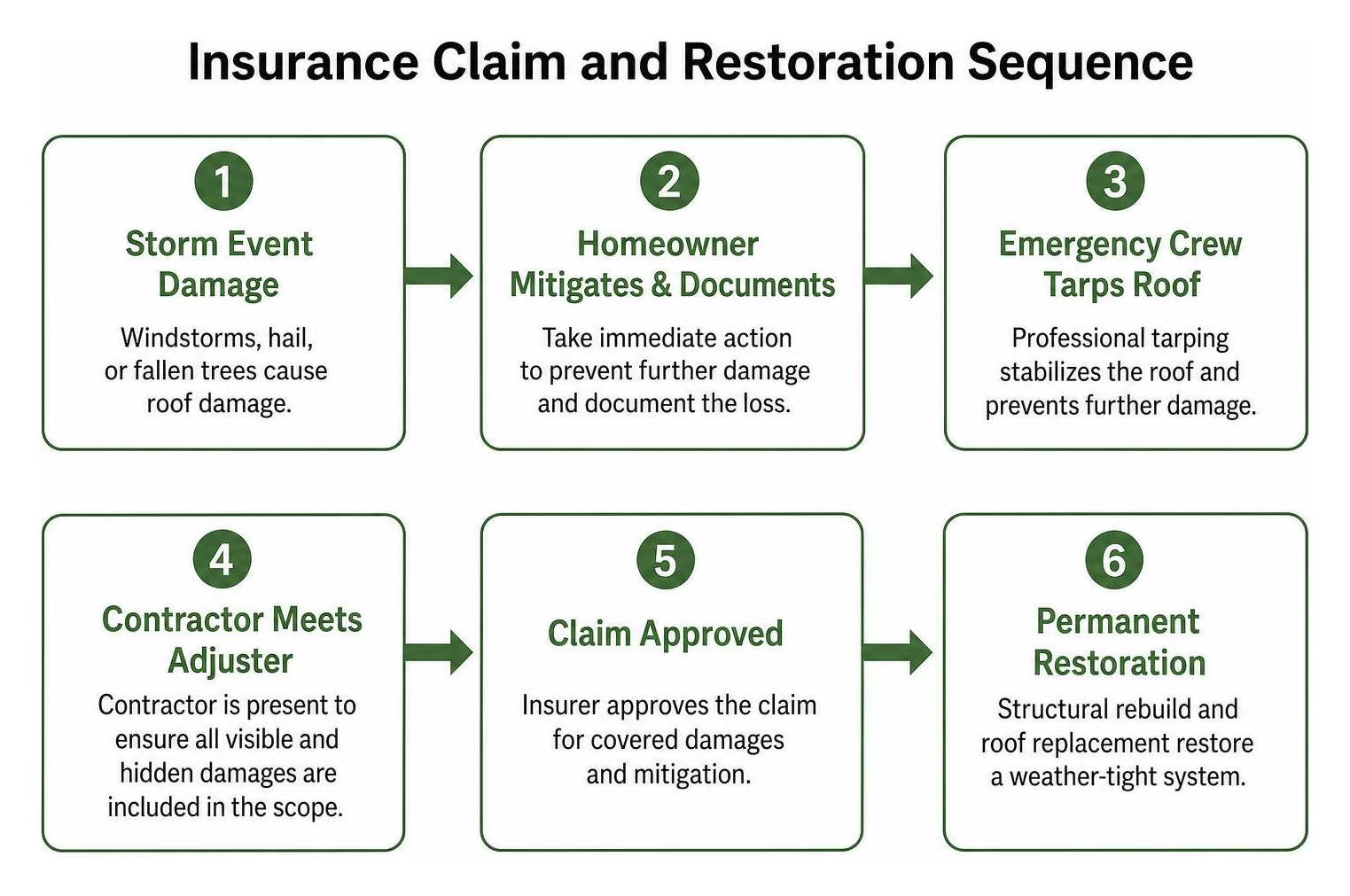
When an insurance adjuster inspects your home, having your roofing contractor present ensures that all collateral structural damages—such as bruised decking, displaced flashing, and saturated insulation—are included in the insurer’s initial scope of loss.
Selecting Reliable Local Contractors for Emergency Roof Repairs
After severe storm events in Cary, Schaumburg, and Barrington, out-of-town “storm chasers” often move through neighborhoods offering quick patches. Choosing an established, locally licensed contractor protects your investment:
- Verify regional physical offices and verifiable local track records.
- Ensure the contractor maintains full general liability and workers’ compensation coverage.
- Look for strong credentials, such as an active Better Business Bureau A+ accreditation.
- Check our educational guide on how to pick the best local roofing companies for your home before signing repair authorizations.
Frequently Asked Questions About Urgent Storm Damage
Will emergency tarping cause additional damage to my roof?
When installed by experienced professionals, emergency tarping will not cause structural harm to your roof. By sandwiching tarp edges in wooden 2×4 battens and securing fasteners through designated anchoring zones, we eliminate loose flapping and wind tear. Any minor nail penetrations made during temporary stabilization are placed in areas that will be replaced during the permanent decking and shingle rebuild.
How quickly can an emergency roofing crew respond to a severe leak?
Our emergency dispatch team prioritizes active residential water leaks and structural breaches, targeting an arrival window within two to four hours across our Northern Illinois service areas. Emergency response teams focus immediately on safety triage, debris clearing, and secure tarping to stop water intrusion on the first visit.
Does homeowners insurance cover the cost of emergency tarping?
Yes. Standard homeowners insurance policies include a “loss mitigation” clause that requires property owners to protect the home from further damage following an insured peril (such as a fallen tree or hail storm). Because emergency tarping directly prevents secondary water destruction to interior drywall, framing, and flooring, insurance carriers routinely reimburse the cost of professional temporary stabilization, subject to your policy deductible.
Conclusion
A damaged roof allows water to compromise structural framing, ruin insulation, and damage interior ceilings within hours. Taking fast action inside your home—moving valuables, safely collecting water, and turning off electrical circuits—buys critical time while emergency contractors mobilize.
At TJ Builders & Developers Inc, we provide Northern Illinois homeowners with rapid emergency stabilization followed by durable, code-compliant exterior reconstruction. If storm winds, hail, or falling branches have compromised your roof in Lakewood, Crystal Lake, Algonquin, or Schaumburg, contact our team immediately to schedule certified expert roof repair services and secure your home.