What Every Homeowner Should Know Before Hiring Roof Ventilation Contractors
Roof ventilation contractors are roofing professionals who assess, design, install, and repair attic airflow systems to protect your home from heat damage, moisture, and high energy bills.
Here’s a quick overview of what they do and why it matters:
- Assess your attic for heat buildup, moisture, mold, and blocked vents
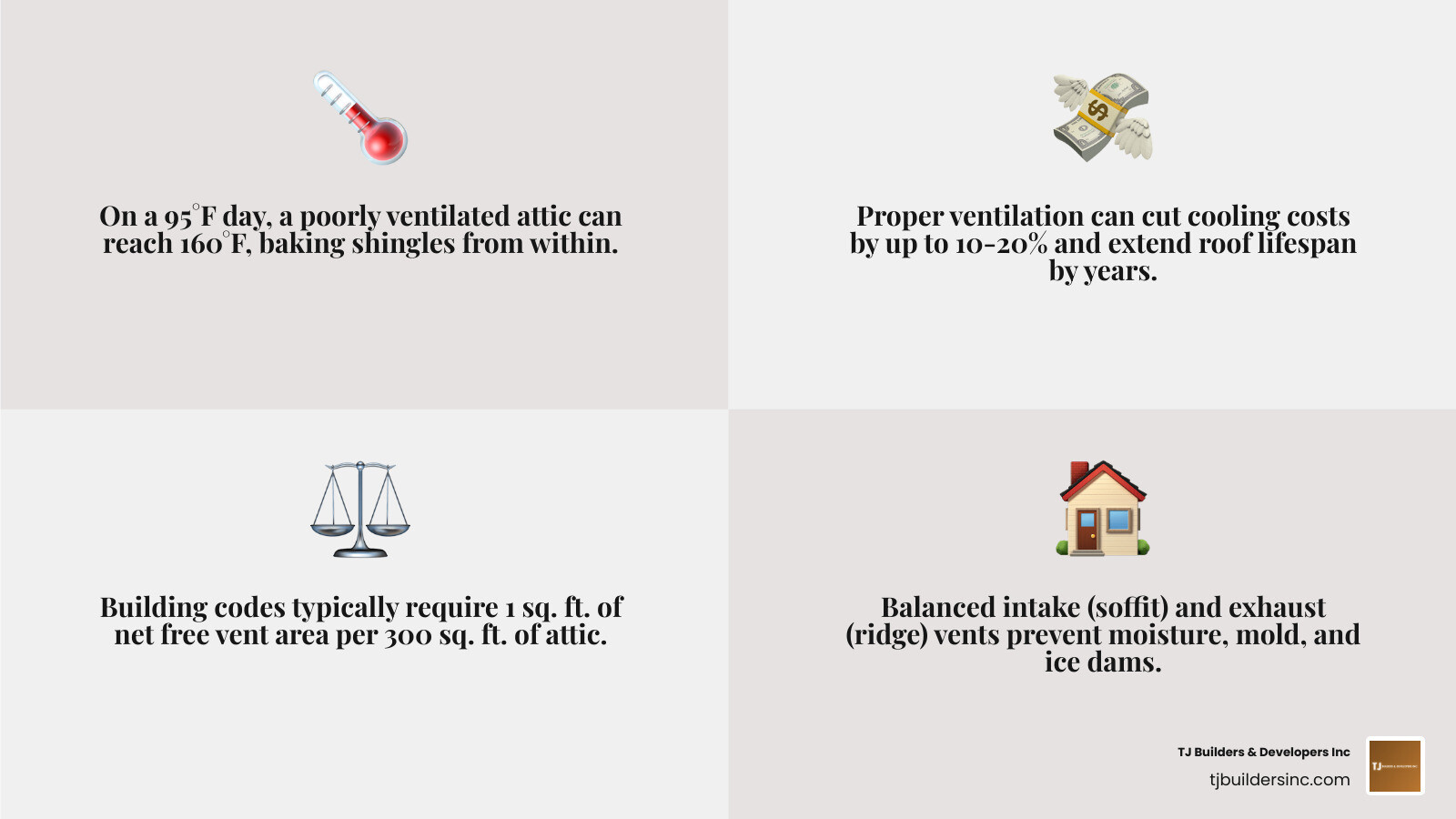
- Calculate the correct ventilation using building code formulas (typically 1 sq. ft. of vent area per 300 sq. ft. of attic)
- Install balanced systems combining intake vents (soffits) and exhaust vents (ridge or box)
- Repair or replace damaged, rusted, or aging vents — most last about 20 years
- Prevent costly problems like warped shingles, wood rot, ice dams, and sky-high cooling bills
Most homeowners don’t think about their attic until something goes wrong. But here’s the reality: on a 95-degree summer day, a poorly ventilated attic can reach 160 degrees. That trapped heat bakes your shingles from the inside out, forces your air conditioner to work overtime, and can cut your roof’s lifespan by years.
Proper ventilation isn’t a luxury — it’s one of the highest-return investments you can make in your home’s long-term health.
I’m Thomas Pruszynski, owner of TJ Builders & Developers Inc, and after more than 20 years of exterior construction and restoration work across Northern Illinois — including roofing projects throughout the Lakewood area — I’ve seen what poor attic ventilation does to a home. Working alongside experienced roof ventilation contractors has taught me that getting this system right from the start saves homeowners thousands in avoidable repairs.
Common roof ventilation contractors vocab:
The Physics of Airflow: How Balanced Roof Ventilation Works
At its core, attic ventilation relies on simple physics. Specifically, it utilizes the principle of natural convection: warm air naturally rises because it is less dense than cold air. When your attic heats up from solar radiation, that hot air climbs to the highest peak of your roof.
To get that trapped air out, your home needs a continuous, cycle-based system consisting of two primary parts: intake vents and exhaust vents. Without both, the air remains stagnant, turning your attic into a thermal trap. To understand the foundational components of this setup, you can read The Ultimate Guide to Keeping Your Roof Dry with Ridge Ventilation.
For a broader perspective on how these systems operate across different climates, you can also explore how industry experts approach Roof Ventilation | Adroit Roof .
The Perfect Partnership of Soffit and Ridge Vents
The most efficient way to achieve natural airflow is through a balanced passive system. This is where soffit vents and ridge vents work hand-in-hand.
- Soffit Vents (Intake): Located under the eaves of your roof, soffit vents draw cool, fresh outdoor air into the lower portion of the attic space.
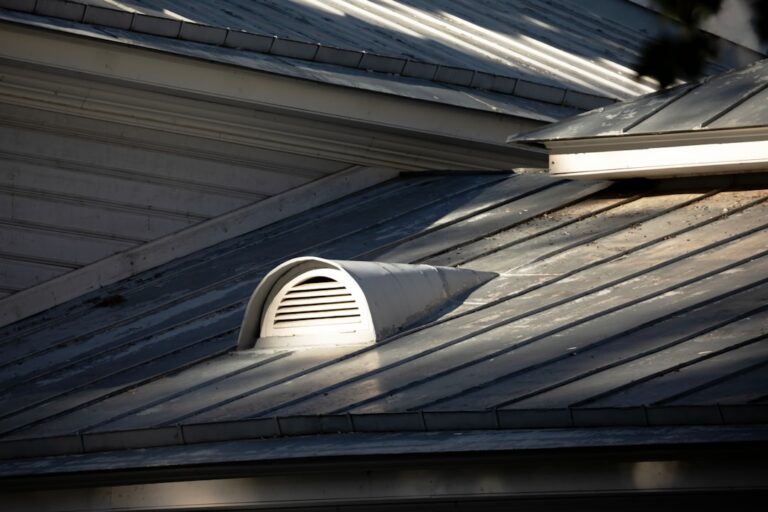
- Ridge Vents (Exhaust): Cut directly into the peak of your roofline, ridge vents allow warm, humid air to escape from the very top of the attic.
As hot air escapes through the ridge vents, it creates a natural vacuum (negative pressure) that pulls fresh, cooler air in through the soffits. This continuous loop keeps attic temperatures close to the ambient outdoor temperature, preventing heat and moisture from settling in your roof deck.
Passive vs. Active Ventilation Systems
While a passive ridge-and-soffit setup is the gold standard for most residential layouts, some homes require active assistance. Understanding the differences between passive and active systems is key when discussing options with roof ventilation contractors.
- Passive Ventilation: Relies entirely on natural forces like wind and thermal convection. It requires no electricity, has no moving parts to wear out, and operates completely silently.
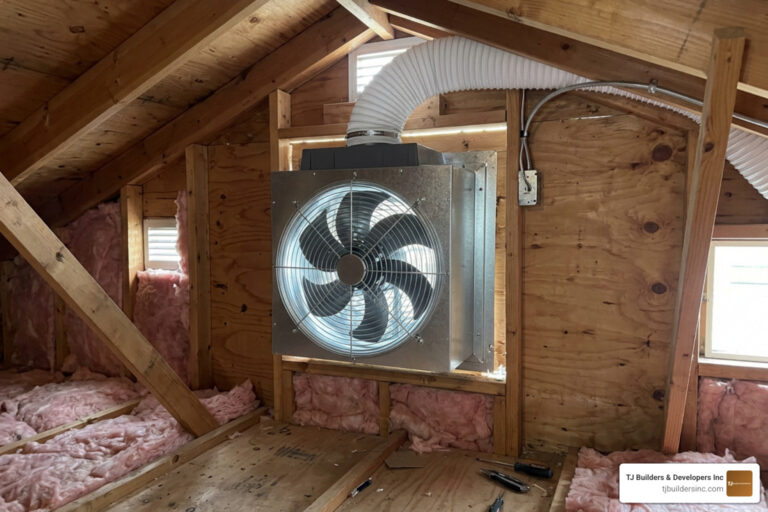
- Active Ventilation: Uses motorized fans (either solar-powered or hardwired electric) to mechanically pull air out of the attic. This creates a highly controlled, high-volume airflow that can quickly cool down stubborn hot spots.
| Feature | Passive Ventilation (Ridge & Soffit) | Active Ventilation (Powered / Solar Fans) |
|---|---|---|
| Power Source | Natural wind & thermal convection | Electricity or solar panels |
| Operating Cost | $0 | Low (Solar) to Moderate (Electric) |
| Moving Parts | None | Motorized fan blades & thermostats |
| Best Suited For | Standard pitched roofs with open eave access | Complex rooflines, flat roofs, or restricted spaces |
| Lifespan | Matches the lifespan of your shingles | 5–10 years for fan motors |
For more details on choosing between these styles, you can read Venting Out: A Guide to the Best Roof Ventilation Systems Available.
Need Help With Your Home?
TJ Builders & Developers handles roofing, siding, gutters, windows, home additions, and fire damage restoration for homes and businesses in Lakewood, Crystal Lake, Schaumburg, and nearby McHenry County towns.
- Free, no-obligation estimates
- Licensed & insured
- 20+ years of local experience
Why You Need Professional Roof Ventilation Contractors
It is tempting to think of roof vents as simple plastic covers that any general handyman can install. However, improper ventilation design can actually cause more harm than good. Professional roof ventilation contractors understand the delicate balance of air pressure, structural design, and weatherproofing required to keep your attic dry and efficient.
For a detailed look at the advantages of a professionally configured system, refer to The Complete Guide to Roof Ventilation Benefits. If you want to see how experts in other regions structure their services, check out Attic Ventilation Services Santa Maria | Boost Efficiency or Roof & Attic Ventilation Contractor | Roof Geeks .
Protecting Your Roof Lifespan and Shingle Warranty
Did you know that poor attic ventilation can instantly void your shingles’ manufacturer warranty? It’s true. Major asphalt shingle manufacturers require adequate attic ventilation as a strict condition for honoring their product warranties.
Without proper ventilation, trapped attic heat cooks your shingles from underneath. This causes thermal degradation, which leads to:
- Premature shingle curling, cracking, and warping
- Accelerated loss of protective mineral granules
- Softening and decay of the underlying plywood roof decking
By hiring qualified roof ventilation contractors to design a balanced system, you protect your investment and can extend the life of your roofing materials by 5 to 10 years.
Slashing Summer Cooling Costs and Winter Ice Dams
In Northern Illinois, we experience the full spectrum of seasonal extremes. Proper ventilation is a year-round shield against these weather shifts.
In the summer, an unventilated attic acts like a giant radiator, transferring heat down through your ceiling and into your living spaces. This forces your air conditioner to run constantly. Correcting this issue can reduce your summer cooling costs by 10% to 15%.
In the winter, the problem flips. Heat escaping from your living space accumulates in an unventilated attic, warming the upper roof deck. This melts the snow on your roof. As the meltwater runs down to the colder eaves, it refreezes, forming destructive ice dams. These dams trap water on your roof, forcing it under your shingles and creating costly leaks. A cold, well-ventilated attic prevents this melting-and-freezing cycle entirely.
The Math Behind the Airflow: Sizing Your System Correctly
You cannot simply guess how many vents your home needs. Proper ventilation requires precise mathematical calculations based on the physical dimensions of your attic floor.
How Roof Ventilation Contractors Calculate Net Free Area
To determine your home’s needs, contractors calculate the Net Free Area (NFA). This is the total unobstructed area through which air can freely enter or exit a vent.
Building codes and manufacturers generally recommend the following standards:
- The 1:300 Rule (With Vapor Barrier): If your attic has a balanced vapor barrier, you need 1 square foot of net free vent area for every 300 square feet of attic floor space.
- The 1:150 Rule (Without Vapor Barrier): If your attic lacks a vapor barrier, you need 1 square foot of net free vent area for every 150 square feet of attic floor space.
Once the total required NFA is calculated, it must be split exactly 50/50 between intake (soffit) and exhaust (ridge or box) vents to maintain a balanced, pressurized system. If you have too much exhaust and not enough intake, the system will pull air from your conditioned living spaces through tiny gaps in your ceiling, driving up your energy bills.
The Danger of Mixing Exhaust Vent Types
A common mistake made by inexperienced installers is mixing different types of exhaust vents on the same roof—such as combining a ridge vent with box vents or a powered attic fan.
When you mix exhaust types, you short-circuit the airflow. Because air takes the path of least resistance, a active fan or a high box vent will pull air from the nearby ridge vent instead of drawing fresh air up from the soffits. This leaves the lower portions of your attic stagnant, hot, and prone to mold growth.
Signs Your Home Has Poor Attic Ventilation
Recognizing the warning signs of poor ventilation early can save you from costly structural repairs down the road.

Warning Signs in the Summer Heat
- Unusually Hot Second Floor: If your upstairs bedrooms feel like an oven even when the air conditioning is running, heat is likely trapped in your attic.
- Constantly Running AC: Your cooling system has to work twice as hard to fight the heat radiating from above.
- Warped or Curling Shingles: Look at your roof from the driveway; if the edges of your shingles are curling upward, they are being baked from below.
Warning Signs in the Winter Cold
- Ice Dams and Icicles: Thick ridges of ice along your gutters or massive icicles hanging from your eaves are classic indicators of an overheated roof deck.
- Condensation and Frost: Inspect your attic with a flashlight during freezing weather. If you see frost on the roof rafters or rusted roofing nails, moisture is trapping inside.
- Damp Insulation or Mold: Trapped moisture will drip onto your attic floor, packing down your fiberglass insulation and creating perfect conditions for black mold.
Need Help With Your Home?
TJ Builders & Developers handles roofing, siding, gutters, windows, home additions, and fire damage restoration for homes and businesses in Lakewood, Crystal Lake, Schaumburg, and nearby McHenry County towns.
- Free, no-obligation estimates
- Licensed & insured
- 20+ years of local experience
Choosing the Right Ventilation Upgrades for Your Home
Improving your home’s airflow is highly customizable, and you don’t necessarily have to wait for a full roof replacement to make a change.
Can Ventilation Be Added to an Existing Roof?
Yes! While it is highly efficient to configure a brand-new ventilation system during a full roof replacement, professional roof ventilation contractors can easily retrofit upgrades to your existing roof.
Retrofitting might involve cutting in new soffit vents, installing rafter baffles (chutes that keep your attic insulation from blocking the soffit airflow), or carefully cutting back your roof peak to install a continuous ridge vent. For a step-by-step breakdown of how these installations are handled, explore The Fresh Air Guide to Attic Ventilation Installation.
What to Look For in Roof Ventilation Contractors
When hiring a contractor to evaluate your attic, look for a professional who treats ventilation as an engineered system, not an afterthought. Here is what to verify:
- Mathematical Accuracy: They should physically measure your attic and explain their Net Free Area calculations.
- Local Expertise: Ensure they understand the unique weather challenges of Northern Illinois, including heavy winter snows and humid summers.
- Workmanship Warranties: A quality contractor will back their installations with a solid workmanship guarantee.
For helpful tips on selecting the right local professional in our area, check out Lakewood Roof Ventilation Pros and How to Choose the Right One.
Frequently Asked Questions About Roof Ventilation
How long do roof vents typically last before needing replacement?
Most high-quality roof vents last around 20 years. Over time, exposure to extreme temperature swings, rust, UV degradation, and storm damage can cause seals to fail or plastics to crack, requiring professional repair or replacement.
Do solar-powered attic fans actually work?
Yes, solar-powered attic fans are highly effective because they run on abundant sunshine and are most active during the hottest parts of the day. They provide active exhaust ventilation without adding to your monthly electricity bill. If you want to see how other companies integrate these solutions, you can read about Attic Venting St. Petersburg — Duralast Roofing and Construction Largo FL or Roof Ventilation Installation in Sunshine Coast | Vent Wise .
Will adding more roof ventilation make my home colder in the winter?
No. Your attic insulation is what keeps heat inside your living space, not your roof vents. Proper winter ventilation actually keeps the attic space cold, which prevents condensation and destructive ice dams from forming on your roof. For additional perspectives on regional installation practices, see Roof Ventilation Installation Canton GA | Teran Roofing .
Conclusion
Your roof is a complex protective system, and proper ventilation is the engine that keeps it running smoothly. By understanding the physics of balanced airflow, recognizing the warning signs of poor ventilation, and working with qualified professionals, you can protect your shingles, lower your energy bills, and keep your home comfortable through every Northern Illinois season.
At TJ Builders & Developers Inc, we specialize in delivering professional workmanship, durable materials, and tailored exterior solutions for homeowners throughout the Lakewood, IL area. Whether you need a comprehensive attic inspection, a ventilation upgrade, or a complete roof replacement, our team is here to help.
Ready to give your home the fresh air it needs? Explore our Roof Ventilation & Attic Fan Installation services, or Schedule a professional roof inspection with TJ Builders & Developers Inc today!