What to Do When a Roof Leak Causes Water Damage
Water damage roof restoration is the process of repairing and recovering a home after a roof leak allows water to penetrate into the structure. Here’s a quick overview of what it involves:
- Identify the signs — water stains, mold, sagging ceilings, damaged shingles
- Stop the water — move belongings, catch drips, apply a temporary tarp
- Locate the source — inspect the attic, trace moisture back to the roof entry point
- Document everything — photos and video for your insurance claim
- Call a professional — extraction, structural drying, mold remediation, and full repairs
- Prevent recurrence — clean gutters, inspect flashing, maintain attic ventilation
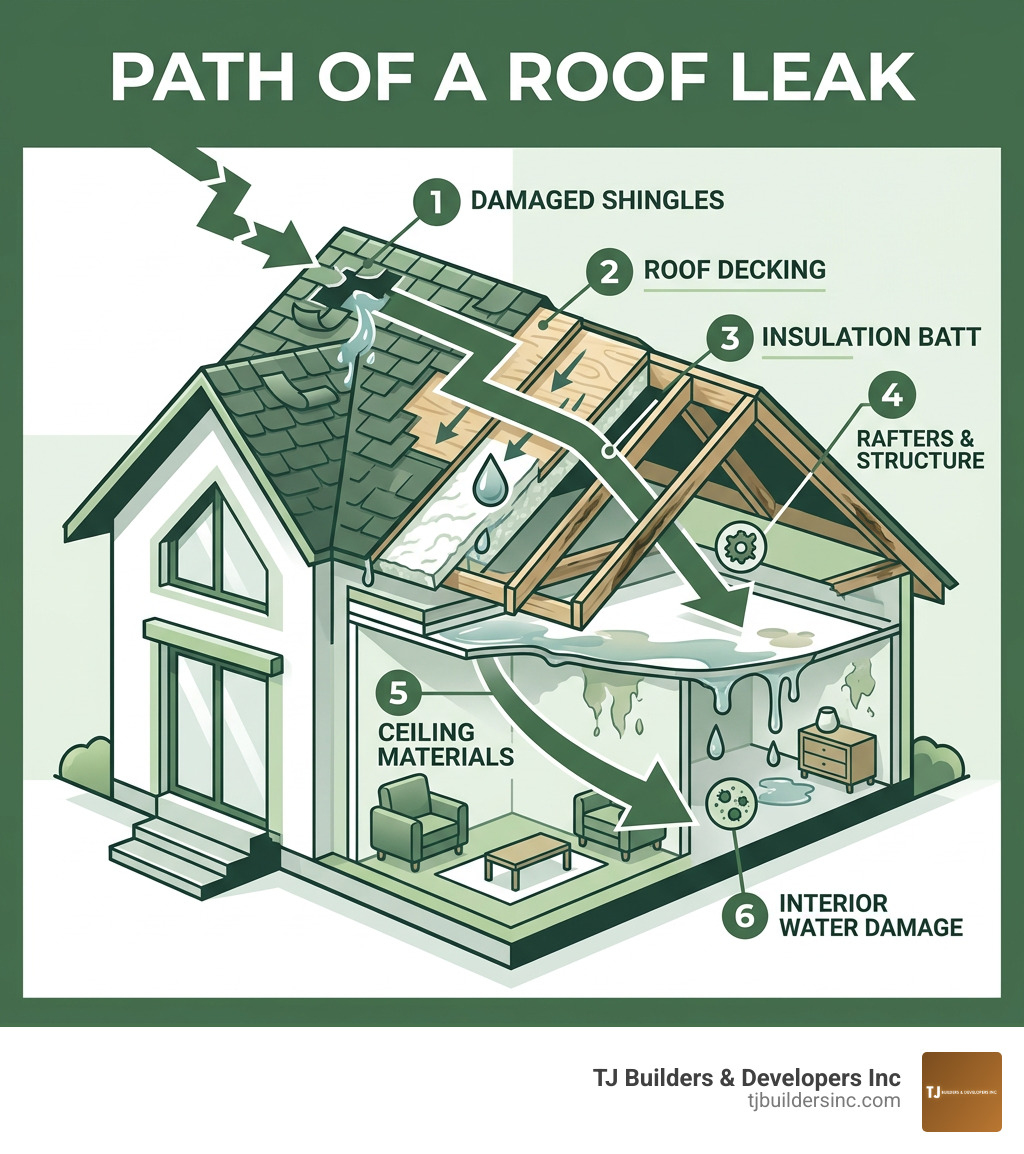
A roof leak might start small — a faint stain on the ceiling, a faint musty smell in a spare room. But what’s visible inside is rarely the full picture. Water travels. It follows rafters, soaks insulation, and pools in places you can’t see. Mold can begin forming within 24 to 48 hours after water first enters your home. Left untreated, what starts as a minor drip can quietly become thousands of dollars in structural damage, rotted decking, and health-threatening mold growth.
That’s what makes roof water damage so deceptive — and so urgent.
I’m Thomas Pruszynski, and over my 20+ years at TJ Builders & Developers, I’ve helped countless Northern Illinois homeowners navigate water damage roof restoration — from emergency tarping after a storm to full structural repairs and interior recovery. In the sections below, I’ll walk you through everything you need to know to protect your home and restore it the right way.
Identifying the Signs of Roof Water Damage
Recognizing the early warning signs of a leak is the most effective way to minimize the scope of water damage roof restoration. In our experience serving areas from Lakewood to Schaumburg, we often find that homeowners don’t realize they have a problem until a heavy rain makes the issue impossible to ignore. However, many leaks are “slow leaks”—insidious drips that happen over weeks or months.
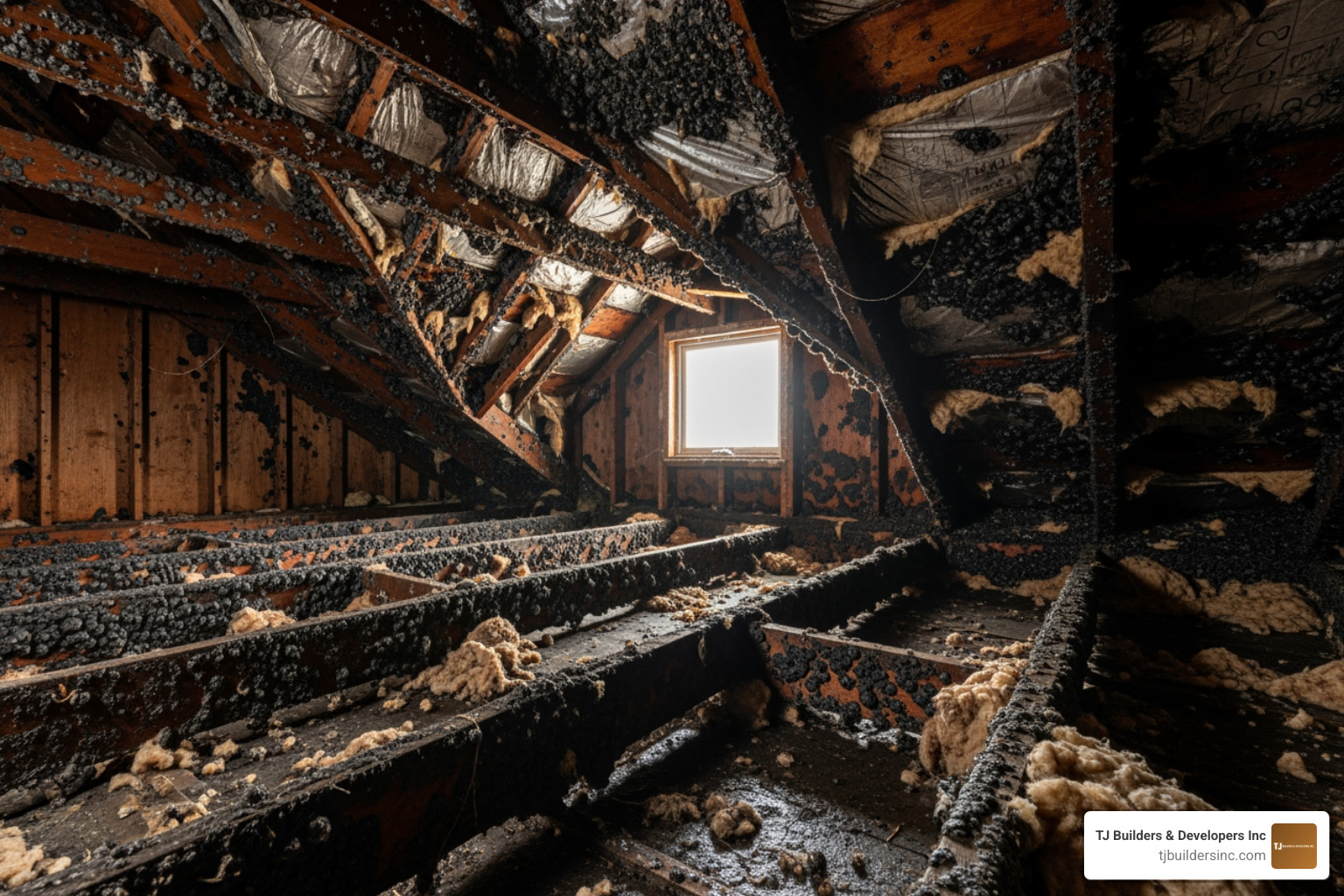
Common indicators include:
- Water Stains: Dark, tea-colored “halos” on your ceiling or running down your walls.
- Musty Odors: A persistent earthy or damp smell, especially in the attic or top-floor rooms.
- Sagging Roof Deck: If you look at your roofline from the street and notice dips or “waves,” the plywood underneath may be saturated and rotting.
- Granule Loss: Finding excessive sand-like granules in your gutters is a sign that your shingles are reaching the end of their life and are no longer shedding water effectively.
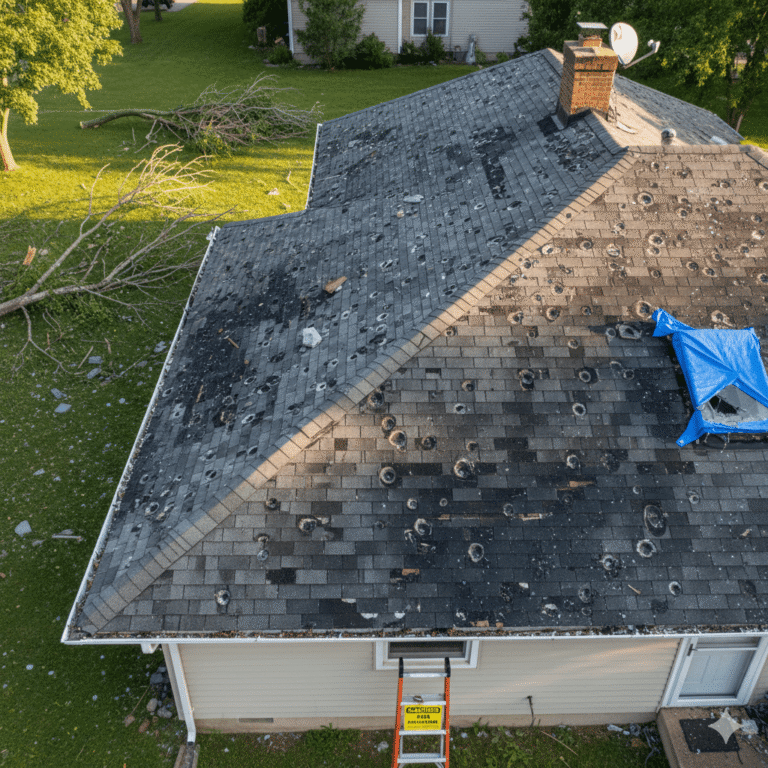
It is vital to prevent mold after water damage by acting quickly. If you suspect storm-related issues, our team specializing in Storm Hail Damage Restoration can provide a comprehensive assessment.
Exterior Warning Signs
Your roof’s exterior is the first line of defense. When we perform inspections in Crystal Lake or Palatine, we look for:
- Damaged Shingles: Missing, cracked, or curling shingles create direct pathways for water.
- Cracked Flashing: The metal transition pieces around chimneys and dormers often fail first.
- Dripping or Drooping Gutters: If water isn’t moving away from the house, it backs up under the shingles.
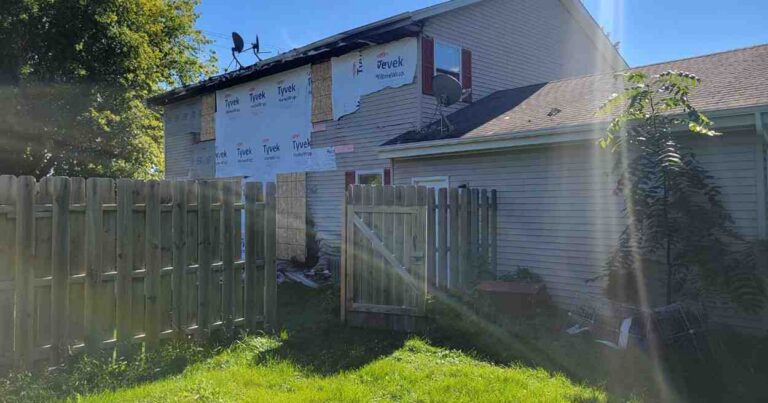
As the experts say, a leaky roof can be destructive, often causing damage to the siding and exterior walls before you even see a drip inside.
Interior Indicators
Inside the home, look for bubbling paint or wallpaper peeling away from the wall. This often means water is trapped behind the surface. If you have access to your attic, check the insulation. Saturated insulation loses its R-value and becomes a breeding ground for bacteria. In extreme cases, we’ve seen rotted rafters that require structural reinforcement. While we focus on water, moisture can also lead to electrical shorts; for homes that have suffered secondary issues, we also offer Fire Damage Restoration.
Need Help With Your Home?
TJ Builders & Developers handles roofing, siding, gutters, windows, home additions, and fire damage restoration for homes and businesses in Lakewood, Crystal Lake, Schaumburg, and nearby McHenry County towns.
- Free, no-obligation estimates
- Licensed & insured
- 20+ years of local experience
Immediate Steps for Water Damage Roof Restoration
When you discover water actively entering your home, your first goal is “triage”—minimizing the immediate harm to your property.
- Contain the Flow: Place buckets under drips. If you see a bulge in the ceiling where water is pooling, poking a small hole in the center with a screwdriver can allow the water to drain into a bucket in a controlled way, preventing a sudden, messy ceiling collapse.
- Protect Belongings: Move furniture, electronics, and valuables out of the splash zone. Cover heavy items with plastic sheeting.
- Emergency Tarping: If it is safe to do so (and the weather permits), a waterproof tarp can be secured over the damaged area of the roof. However, we strongly advise against climbing on a wet, damaged roof yourself. Our Emergency Roof Repair & Leak Detection team is equipped with the safety gear needed to handle this.
Locating the Source of the Leak
Finding the entry point is often harder than fixing it. Water rarely travels in a straight line; it may enter at the ridge, run down a rafter for ten feet, and then drip onto your ceiling. During an attic inspection, we look for “flow lines”—stains or mineral deposits left behind by traveling water. Because a leaky roof can be destructive to the plywood sheathing, we also check for soft spots and “mushy” wood that indicates long-term saturation.
Documenting Damage for Insurance Claims
Before you start cleaning up, grab your phone. You need a “paper trail” for your insurance provider.
- Photos/Video: Capture the roof damage, the ceiling leaks, and any damaged personal property (rugs, furniture, etc.).
- Save Samples: If a contractor replaces damaged materials, keep a small piece of the damaged shingle or flashing for the adjuster to see.
- Professional Estimates: Having a detailed quote from a reputable contractor like TJ Builders & Developers helps ensure your claim covers the actual cost of restoration. For more on storm-specific claims, see our guide on Hail Damage Roof.
The Professional Restoration Process for Leaky Roofs
Professional water damage roof restoration goes far beyond just “patching a hole.” It is a multi-stage process designed to return your home to a pre-loss condition, ensuring no hidden moisture remains to cause future problems.
| Restoration Step | Purpose | Method |
|---|---|---|
| Inspection | Identify all wet areas | Thermal imaging & moisture meters |
| Extraction | Remove standing water | High-powered vacuums & pumps |
| Structural Drying | Remove deep-seated moisture | Industrial air movers & dehumidifiers |
| Sanitization | Prevent mold and odors | Antimicrobial treatments |
| Repairs | Restore integrity | Replacing shingles, decking, and drywall |
For a deeper look at the full scope of roof work, consult our Roof Installation & Replacement Complete Guide.
Professional Standards for Water Damage Roof Restoration
We adhere to strict industry standards for restoration. This includes using thermal imaging cameras to find water hidden behind walls without having to tear them down. Once the water is extracted, we use industrial-grade dehumidifiers to pull moisture out of the air and the wooden framing of the house. Safety is our priority; we follow this guide provided by Princeton University regarding fall protection and personal arresting systems when working on high-pitched or damaged roofs.
Mold Remediation and Structural Integrity
As mentioned, the 24–48 hour window is critical. Black mold thrives in the dark, damp, unventilated spaces of an attic. If mold has already taken hold, we perform professional remediation, which involves:
- Removing contaminated materials (insulation, drywall).
- Applying antimicrobial treatments to kill spores.
- Using HEPA air scrubbers to ensure the air you breathe is clean.
Restoring structural integrity means replacing any “punky” or rotted wood in the roof deck or rafters. We don’t just cover up the damage; we ensure the “bones” of your roof are strong enough to support the next Illinois snow load.
Need Help With Your Home?
TJ Builders & Developers handles roofing, siding, gutters, windows, home additions, and fire damage restoration for homes and businesses in Lakewood, Crystal Lake, Schaumburg, and nearby McHenry County towns.
- Free, no-obligation estimates
- Licensed & insured
- 20+ years of local experience
Long-Term Prevention and Maintenance Strategies
The best water damage roof restoration is the one you never have to perform. Maintenance is a small investment that prevents massive repair bills.
- Gutter Maintenance: Clean your gutters at least twice a year. Clogged gutters cause water to pool at the roof’s edge, leading to “wicking” where water is pulled up under the shingles.
- Tree Trimming: Overhanging branches can scrape shingles raw or fall during a storm. Keep trees trimmed at least 10 feet away from your roofline.
- Debris Removal: Leaves and twigs trapped in roof valleys hold moisture against the shingles, accelerating rot.
- Winter Care: In Northern Illinois, ice dams are a major cause of winter leaks. We offer specialized Ice Dam Removal to protect your home during the coldest months.
The Role of Flashing and Ventilation in Water Damage Roof Restoration
Flashing—the metal used around chimneys, vents, and valleys—is the most common failure point. Over time, the sealant around “vent boots” (the rubber seals around pipes) can crack due to UV exposure. Furthermore, proper attic ventilation is essential. Without it, heat and moisture build up in the attic, causing “internal” water damage through condensation. This is why we recommend checking your ventilation during Roof Snow Removal or general maintenance.
Seasonal Maintenance for Northern Illinois Weather
Our climate in Lakewood and the surrounding Chicago suburbs is tough on roofs. Between the humid summers and the freezing winters, materials expand and contract constantly.
- Spring/Fall Inspections: Check for loose shingles or moss growth. If you notice green patches, consider Moss Removal Roof services to prevent the roots from lifting your shingles.
- Post-Storm Checks: After a significant wind or hail event, do a quick visual check from the ground with binoculars.
Frequently Asked Questions about Roof Water Damage
How long does the restoration process typically take?
A simple leak repair might take a few hours, but full water damage roof restoration (including drying out the interior) usually takes 3 to 7 days. If structural repairs or mold remediation are required, it may take longer.
Can a roof leak cause electrical hazards?
Yes. Water is a conductor. If a leak reaches an electrical junction box, light fixture, or outlet, it can cause a short circuit or even a fire. If you see water dripping from a light fixture, turn off the power at the breaker immediately and call a professional.
Will my homeowners insurance cover flood damage from a roof leak?
Generally, yes—if the leak was caused by a “sudden and accidental” event, like a storm or a fallen tree limb. However, many policies will deny claims if the leak was caused by “lack of maintenance” (e.g., you ignored a 20-year-old roof that was clearly failing). It is always best to review your policy and work with a contractor who understands insurance documentation.
Conclusion
At TJ Builders & Developers Inc, we believe your home should be your sanctuary, not a source of stress. Dealing with a roof leak is overwhelming, but with the right approach to water damage roof restoration, you can protect your investment and your family’s health. From our home base in Lakewood, IL, to our neighbors in Crystal Lake and the wider Chicago suburbs, we provide the professional workmanship and reliable solutions needed to make your roof “better than before.”
Don’t wait for the next storm to turn a small drip into a disaster. More info about professional roofing services is just a click away, or you can reach out to us for a professional assessment of your property’s exterior.