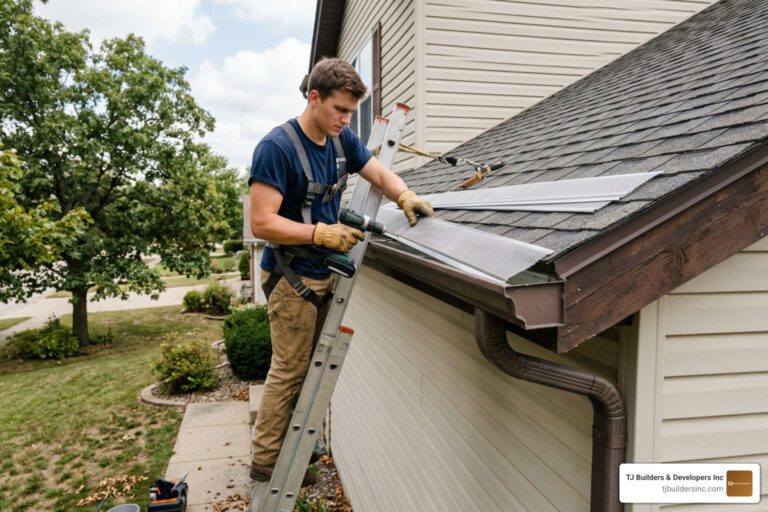
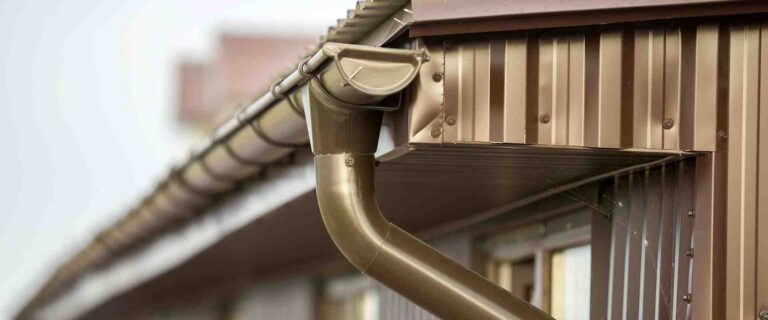
Why Gutters Are Your Home’s First Line of Defense Against Water Damage

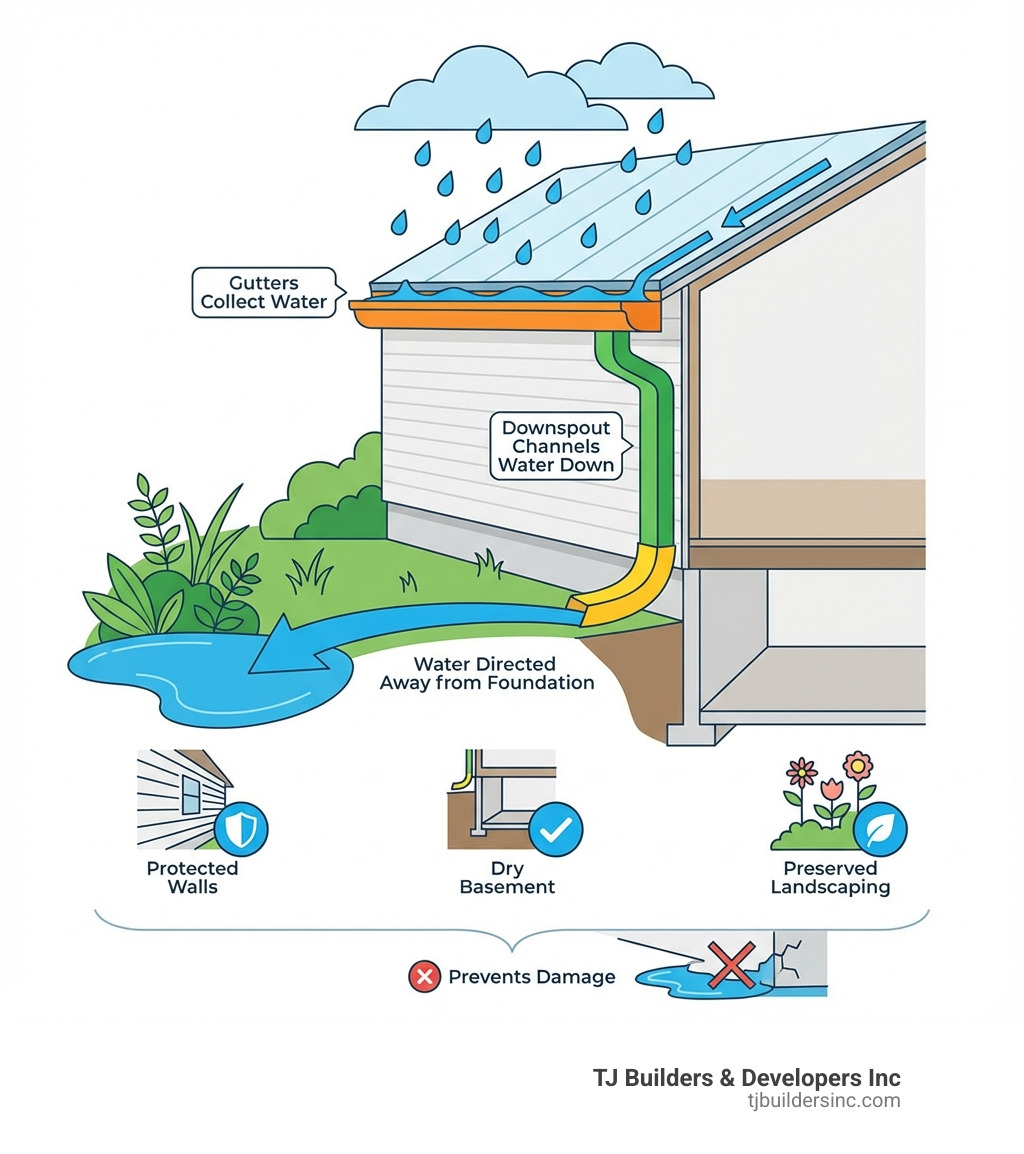
Gutters are your home’s primary water management system, protecting your foundation, walls, and landscaping from costly damage. They collect rainwater from the roof and channel it safely away through downspouts.
What gutters do for your home:
- Protect your foundation – Direct water away to prevent erosion and cracks.
- Preserve your siding – Keep moisture from seeping into walls and causing rot or mold.
- Prevent basement flooding – Channel water away before it can saturate the soil.
- Maintain curb appeal – Avoid unsightly water stains and landscape erosion.
Without functioning gutters, rainwater pours off your roof, pooling around your foundation, seeping into your basement, and damaging your siding. The cost of neglecting a gutter system can be monumental, far exceeding the investment in proper installation and maintenance.
A single heavy rainstorm can dump thousands of gallons of water onto your roof. Your gutters are the unsung heroes working to protect your biggest investment.
This guide walks you through everything you need to know about gutters, from types and materials to installation and maintenance, helping you make informed decisions to protect your home.
The Anatomy of a Gutter System
Before selecting and installing gutters, it’s helpful to understand the components that work together to protect your home. A robust gutter system is a carefully designed network that safeguards your home from water damage.

Key Gutter Components and Their Functions
Each part of your gutter system has a specific job. Understanding them helps with maintenance and replacement decisions.
- Gutter Channels (Troughs): The main horizontal sections that collect rainwater as it flows off your roof.
- Downspouts: Vertical pipes that carry water from the gutters down to the ground. Common sizes are 2×3 or 3×4 inches.
- Elbows: Angled pieces that direct water flow around corners, connecting the gutter to the downspout and directing water away from the foundation at the bottom.
- Hangers and Brackets: Secure the gutters to your home’s fascia board, supporting the weight of water.
- Miters (Corners): Join two sections of gutter at an inside or outside corner of your roofline.
- End Caps: Close off the ends of gutter channels to prevent water from spilling out.
- Outlets (Drop Outlets): Fittings that create the opening for water to flow from the gutter channel into the downspout.
- Seams: In sectional systems, these are the joints where gutter pieces connect. They are common points for leaks. Seamless gutters eliminate most of these.
For a visual breakdown, check out this resource on How Gutters & Downspouts Work.
The Role of Downspout Extensions and Splash Blocks
Getting water to the ground isn’t the final step. Downspout extensions and splash blocks provide the last layer of protection for homes in Lakewood, Crystal Lake, and across the Chicago suburbs.
- Water Diversion: The main job of extensions is to carry water several feet away from your home’s foundation. This prevents soil saturation, which can exert immense pressure on foundation walls, leading to cracks and structural damage.
- Erosion and Flood Prevention: By diverting water, extensions prevent soil erosion in your landscaping and are critical for preventing basement leaks, especially if your yard slopes toward your house.
- Splash Blocks: These concrete or plastic blocks are placed under the downspout to disperse water as it exits, preventing concentrated erosion and ensuring a gentler flow onto your lawn.
Together, these components ensure rainwater is collected and safely channeled away from your property, protecting your home from the ground up.
Need Help With Your Home?
TJ Builders & Developers handles roofing, siding, gutters, windows, home additions, and fire damage restoration for homes and businesses in Lakewood, Crystal Lake, Schaumburg, and nearby McHenry County towns.
- Free, no-obligation estimates
- Licensed & insured
- 20+ years of local experience
Choosing Your Gutter System: Materials and Styles
Selecting the right gutter system involves considering the shape, material, and installation method to match your budget, climate, and home’s aesthetic.

Common Gutter Shapes and Profiles
A gutter’s shape affects its capacity and suitability for different architectural styles.
- K-Style Gutters: The most common type, resembling crown molding.
- Pros: High water capacity and structural integrity make them ideal for areas with heavy rain, like Illinois.
- Cons: Internal corners can collect debris, increasing the risk of clogs.
- Half-Round Gutters: A U-shaped channel, often chosen for a classic, historical appearance.
- Pros: Their smooth interior is less prone to debris buildup and easier to clean. Popular for older or historic homes.
- Cons: They have a smaller water capacity than K-style gutters and can be more expensive.
- Box-Style Gutters: Large, rectangular gutters for commercial buildings or homes with large roofs.
- Pros: Designed to handle very high volumes of water.
- Cons: More expensive and require professional installation, often during new construction.
- Custom Fascia Gutters: Integrated seamlessly with the fascia for a sleek, modern look. They are almost always seamless and professionally installed.
Choosing the Right Materials for Your Gutters
The material dictates your gutters’ durability, maintenance, cost, and lifespan. Here’s a comparison of common options for Illinois homes:
| Gutter Material | Lifespan (Years) | Cost per Linear Foot (Installed) | Pros | Cons |
|---|---|---|---|---|
| Vinyl (PVC) | 10-20 | $1-2 (DIY), $5 (Pro) | Inexpensive, DIY-friendly, rust/rot resistant, lightweight. | Can become brittle in extreme temps (hot or cold), prone to sagging, limited color options, can look less premium. |
| Aluminum | 20-30 | $2-3 (DIY), $5-6 (Seamed Pro), $10-12 (Seamless Pro) | Lightweight, rust-resistant, wide range of colors, relatively affordable, good durability. | Can dent easily, seamed versions prone to leaks, expansion/contraction can stress joints. |
| Galvanized Steel | 20-30 | $8-10 (Pro) | Very sturdy, resistant to heavy rainfall and wet weather, good strength. | Heavy, can rust if coating is scratched or damaged, requires professional installation. |
| Zinc | Up to 80 | $10-22 (Pro) | Extremely durable, develops a beautiful, self-sealing patina, low maintenance, sophisticated look. | High initial cost, professional installation required, not ideal for salty air or cedar-shingled roofs. |
| Copper | Up to 100 | $15-25 (Pro) | Exceptional durability, develops a distinctive patina, resists extreme weather, adds significant curb appeal, potentially antimicrobial. | Very high initial cost, professional installation only, can be a target for theft. |
(Note: Costs are estimates and can vary.)
For our Illinois climate, consider materials that can withstand temperature swings and heavy snow. While vinyl is budget-friendly, its tendency to become brittle in the cold makes aluminum or steel a more robust choice for our harsh winters.
Seamed vs. Seamless Gutters
This choice impacts both performance and appearance.
- Sectional (Seamed) Gutters: Come in 10-foot sections joined with sealant.
- Pros: More affordable and suitable for DIY projects. Damaged sections are easy to replace.
- Cons: Every seam is a potential leak point that can fail over time due to temperature changes.
- Seamless Gutters: Custom-made on-site from a single coil of metal to fit your home’s exact dimensions.
- Pros: The absence of seams drastically reduces the risk of leaks, making them more durable and lower maintenance. They offer a clean, uniform appearance.
- Cons: Require professional installation with specialized equipment, making them more expensive upfront.
For homeowners in the Chicago suburbs seeking durability and a polished look, seamless gutters are often the preferred choice.
Installation, Maintenance, and Repair for Your Gutters
Proper installation and regular maintenance are key to your gutters’ performance and longevity, saving you money and headaches.
Gutter Installation: DIY vs. Professional
Deciding how to install your gutters impacts cost, quality, and durability.
- DIY Installation:
- Best Suited For: Sectional gutters (vinyl or aluminum).
- Pros: Lower upfront material costs.
- Cons: High risk of errors like improper pitch or weak seams, which lead to leaks and water damage. No labor warranty.
- Professional Installation:
- Best Suited For: Seamless gutters and durable materials like steel or copper.
- Expertise: Professionals like us at TJ Builders & Developers Inc. have the specialized equipment and experience to ensure a perfect fit and optimal performance. We guarantee the proper slope for effective drainage.
- Warranty: Professional installations typically include warranties on materials and labor for peace of mind.
- Proper Slope: Gutters must have a slight slant (about a 1/4-inch drop for every 25 feet) toward the downspouts to prevent standing water and debris buildup.
For expert gutter installation in the Chicago suburbs, we invite you to explore our services at More info about gutter installation services.
Essential Gutter Maintenance and Cleaning
Regular maintenance extends the life of your gutters.
- Seasonal Cleaning: Clean your gutters at least twice a year: in the spring and again in the fall after leaves have dropped. Homes in wooded areas may need more frequent cleaning.
- How to Clean: Remove large debris by hand (with gloves). Then, flush the gutters with a garden hose to clear small particles and check for proper flow and leaks.
- Inspection: While cleaning, look for cracks, loose hangers, sagging sections, or signs of rust and water damage on your fascia.
Neglecting these steps can lead to clogs and damage. As noted by Gutters 101, water and debris add significant weight and stress to your system.
Common Problems with Gutters and How to Fix Them
Knowing how to spot and address common issues can prevent major problems.
- Clogs and Blockages: The most common problem. Overflowing water can damage your roof, siding, and foundation. Fix: Regular cleaning. Use a plumber’s snake for stubborn downspout clogs.
- Sagging Gutters: Usually caused by failing hangers or the weight of debris. Fix: Re-attach loose sections with stronger hangers or add more for support.
- Leaks and Holes: Often occur at seams or from corrosion. Fix: Use a quality gutter sealant for small holes. Larger damage may require replacing the section.
- Improper Pitch: If water stands in your gutters, the slope is incorrect. Fix: This often requires professional re-adjustment of the gutter‘s angle.
- Ice Dams: Common in Illinois winters, ice dams form when melting snow refreezes at the eaves, backing up under shingles and damaging gutters. Fix/Prevention: Proper attic insulation and ventilation are key. Heated gutter cables can also help.
Understanding Gutter Guards
Gutter guards (or leaf guards) are covers designed to keep debris out while letting water in, significantly reducing cleaning frequency.
- Brush Guards: Bristled inserts that trap large debris. Pros: Easy to install. Cons: Can trap small debris and still require cleaning.
- Foam Inserts: Foam blocks that fit inside the gutter. Pros: Inexpensive. Cons: Can clog with small particles and degrade over time.
- Screen Guards: Mesh screens that sit over the gutter. Pros: Affordable and block larger leaves. Cons: Small debris can get through or accumulate on top.
- Reverse Curve Guards: Use surface tension to guide water in while debris falls off. Pros: Very effective. Cons: Can be expensive; heavy rain may overshoot.
- Micro-Mesh Guards: Fine stainless steel mesh over a frame. Pros: Block almost all debris. Cons: The most expensive option; may require occasional brushing.
Gutter guards are an investment that can pay off in reduced maintenance and a longer lifespan for your system.
Need Help With Your Home?
TJ Builders & Developers handles roofing, siding, gutters, windows, home additions, and fire damage restoration for homes and businesses in Lakewood, Crystal Lake, Schaumburg, and nearby McHenry County towns.
- Free, no-obligation estimates
- Licensed & insured
- 20+ years of local experience
Beyond the Basics: Historical and Environmental Factors
While functional, gutters have a rich history and are designed to handle the unique challenges of our Illinois climate.
The History of Rain Gutters
The concept of channeling rainwater is ancient. Early systems evolved from simple stone troughs to Roman lead gutters. The Industrial Revolution brought mass-produced cast iron gutters, a common feature on Victorian homes. A notable innovation was Joseph Paxton’s wooden gutter design for The Crystal Palace in 1851, which managed both rain and condensation, as detailed in The innovative Paxton gutters. The 20th century introduced modern materials like UPVC (vinyl) and aluminum, which became widespread for their lightweight, corrosion-resistant, and affordable properties.
How Climate and Rainfall Influence Gutter Design
Our Chicago-area climate, with its heavy rain and snow, dictates gutter design.
- Rainfall and Roof Size: Gutter sizing must account for your roof’s square footage, its pitch, and the maximum local rainfall intensity to prevent overflow during heavy storms. A general rule is that a 4-inch (100 mm) gutter with a single 68-millimetre (2.7 in) downpipe can drain a 600-square-foot (56 m2) roof. Larger or steeper roofs require larger gutters or more downspouts.
- Snow and Ice: Illinois winters add weight from snow and stress from ice dams. Materials must be durable enough to withstand these conditions. For example, vinyl (UPVC) gutters require space for expansion and contraction in fluctuating temperatures to prevent buckling.
Gutters for Commercial vs. Residential Buildings
The purpose of gutters is the same, but the scale differs between building types. Commercial buildings have much larger roofs, requiring bigger, more durable systems like heavy-duty box gutters to handle massive runoff. These installations are also subject to stricter building codes. While residential needs are different, this highlights the importance of choosing a system that is appropriately sized and robust enough for your specific home and local climate.
Frequently Asked Questions about Gutters
Here are answers to some of the most common inquiries we receive about gutters.
How often should I clean my gutters?
For most homes in the Chicago suburbs, we recommend cleaning your gutters at least twice a year—once in the spring and once in the fall. If your home is surrounded by many trees, you may need to clean them more frequently. If you see water overflowing or visible debris, it’s time for a cleaning, regardless of the schedule.
How are gutters sized for a specific house?
Gutter sizing is not one-size-fits-all. Professionals calculate the required capacity based on several factors:
- Roof Square Footage: A larger roof collects more water.
- Roof Pitch: A steeper roof sheds water faster.
- Maximum Local Rainfall Intensity: The system must handle the heaviest storms in our Illinois climate, not just average rainfall.
- Downspout Quantity and Size: The number and size of downspouts must be adequate to drain the collected water. A common rule of thumb is that a 4-inch gutter with one 2.7-inch downpipe can handle a 600-square-foot roof area.
What are the signs of a failing gutter system?
Your gutters will often show warning signs when they need attention. Look for:
- Water Overflowing: A clear sign of a clog, improper pitch, or an undersized system.
- Sagging or Pulling Away: Indicates hangers are failing or the gutters are overloaded with debris.
- Water Stains on Siding: Streaks below the gutters signal leaks or overflow, which can lead to rot.
- Peeling Paint: Moisture from failing gutters is a common cause of peeling paint on fascia and trim.
- Foundation Cracks or Basement Water: A serious sign that water is not being diverted properly, leading to soil erosion and pressure on your foundation.
- Mold or Mildew: Can grow on siding or in your basement due to excess moisture from faulty gutters.
If you notice these signs, it’s time for an inspection to prevent minor issues from becoming costly problems.
Conclusion
We’ve covered everything from the anatomy of a gutter system to its maintenance. The key takeaway is clear: gutters are a vital component of your home’s defense against the elements.
By properly choosing, installing, and maintaining your gutters, you are actively protecting your investment. You safeguard your foundation, preserve your siding, prevent basement flooding, and maintain your home’s curb appeal and long-term value.
Whether you need to upgrade an old system, install new gutters, or get expert advice on repairs, we are here to help. For expert gutter installation and replacement in the Lakewood, Crystal Lake, Schaumburg, and wider Chicago suburbs area, trust the professionals at TJ Builders & Developers Inc. We pride ourselves on reliable workmanship and competitive pricing.
Don’t let your home get soaked! Ensure its protection for years to come.