Why Bartlett Roof Vent Repair Matters for Your Home
If you’ve noticed water stains, musty smells, or rising energy bills, Bartlett roof vent repair may be exactly what your home needs. Damaged or poorly sealed roof vents are one of the most common — and most overlooked — causes of attic moisture problems, roof deterioration, and costly interior damage.
Here’s what Bartlett homeowners need to know at a glance:
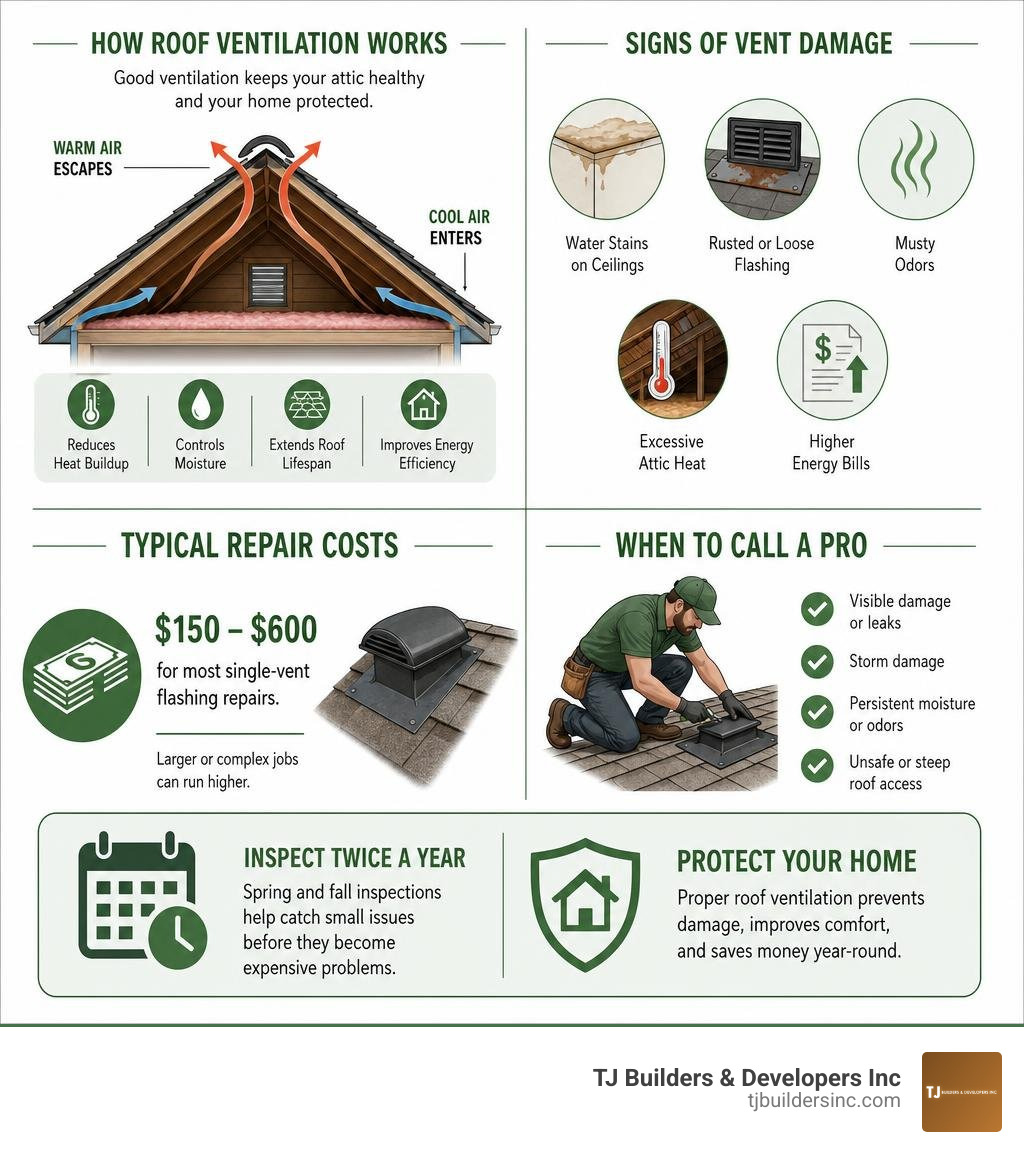
- Signs you need vent repair: Water stains on ceilings, rusted flashing, musty odors, excessive attic heat, or higher energy bills
- Common causes: Storm damage, freeze-thaw cycles, aging sealant, animal intrusion, and clogged vents
- Typical repair cost: $150–$600 for most single-vent flashing repairs; larger or complex jobs can run higher
- Who should do it: A licensed local roofing contractor — roof work is not a safe DIY project
- How often to inspect: Twice a year, ideally in spring and fall
Roof leaks account for roughly 30% of all home insurance claims in the U.S., and vent-related issues are a frequent contributor — especially in Illinois suburbs like Bartlett, where harsh winters and hot summers put constant stress on roofing systems.
I’m Thomas Pruszynski from TJ Builders & Developers, and with over 20 years of hands-on exterior restoration experience — including Bartlett roof vent repair and full roof system work across Northern Illinois — I’ll walk you through everything you need to know to protect your home. Let’s start with why proper roof ventilation is so critical in this region.
Bartlett roof vent repair vocabulary:
The Importance of Proper Roof Ventilation in Northern Illinois
To understand why a damaged roof vent is such a big deal, we have to look at how a roof is designed to breathe. Your roof isn’t just a lid on top of your house; it is a dynamic system designed to balance temperature and manage moisture. In our Northern Illinois climate—where we experience freezing winters, humid summers, and everything in between—proper ventilation is your home’s primary line of defense.
When ventilation fails, heat and moisture build up inside your attic. This can lead to a host of structural issues, including warped roof decking, ruined insulation, and mold growth. To keep this system working, we must understand the individual components that keep the elements out, starting with the most vulnerable point of any roof penetration: the flashing.
What is Roof Vent Flashing?
Roof vent flashing is a specialized weatherproofing material installed around the base of your roof vents. Its primary job is to create a watertight seal where the vent pipe or exhaust hood cuts through your roof shingles. Without flashing, water would simply run down the side of the vent and straight into your attic.
Typically, local contractors use high-quality metal flashing options such as:
- Galvanized steel: Known for its strength and durability in harsh climates.
- Aluminum: Highly resistant to rust and easy to shape around complex vent bases.
- Copper: The premium standard for longevity and aesthetic appeal, often used on historic or high-end properties.
These metals, often combined with a flexible rubber collar (or “boot”) around plumbing stacks, ensure that rainwater and melting snow slide safely off the roof rather than finding a way inside. Over time, however, exposure to the elements causes these materials to degrade, making regular maintenance and timely repairs essential.
Why Proper Ventilation Matters for Bartlett Homes
Proper roof ventilation does much more than just keep rain out; it regulates the entire climate of your home. By allowing hot, humid air to escape while drawing cool, dry air in through the soffits, proper ventilation protects your home in several ways:
- Prevents Ice Dams: In the winter, heat escaping from a poorly ventilated attic melts snow on the upper parts of the roof. As that meltwater runs down to the cold eaves, it refreezes, forming ice dams that back up under your shingles.
- Combats Mold and Mildew: High humidity in an unventilated attic creates the perfect breeding ground for mold, which can quickly rot your roof deck and compromise your indoor air quality.
- Improves Energy Efficiency: During our hot Illinois summers, an unventilated attic can reach temperatures upwards of 150°F. This heat radiates downward, forcing your air conditioning system to work overtime. Proper ventilation can reduce cooling energy costs by up to 15-20%.
To achieve this balance, many modern homes rely on a combination of intake and exhaust systems. To learn more about how different systems work together, read our guide on how ridge vents and fans are the ultimate cool down team to keep your home comfortable year-round.
Need Help With Your Home?
TJ Builders & Developers handles roofing, siding, gutters, windows, home additions, and fire damage restoration for homes and businesses in Lakewood, Crystal Lake, Schaumburg, and nearby McHenry County towns.
- Free, no-obligation estimates
- Licensed & insured
- 20+ years of local experience
Common Causes of Roof Vent Damage in Bartlett, IL
Living in Northern Illinois means our homes are subjected to a wide range of weather extremes. From heavy winter snows to intense summer thunderstorms, your roof vents are constantly under attack. Understanding what causes this damage can help you catch problems before they lead to structural failure.
Weather Extremes and Storm Damage
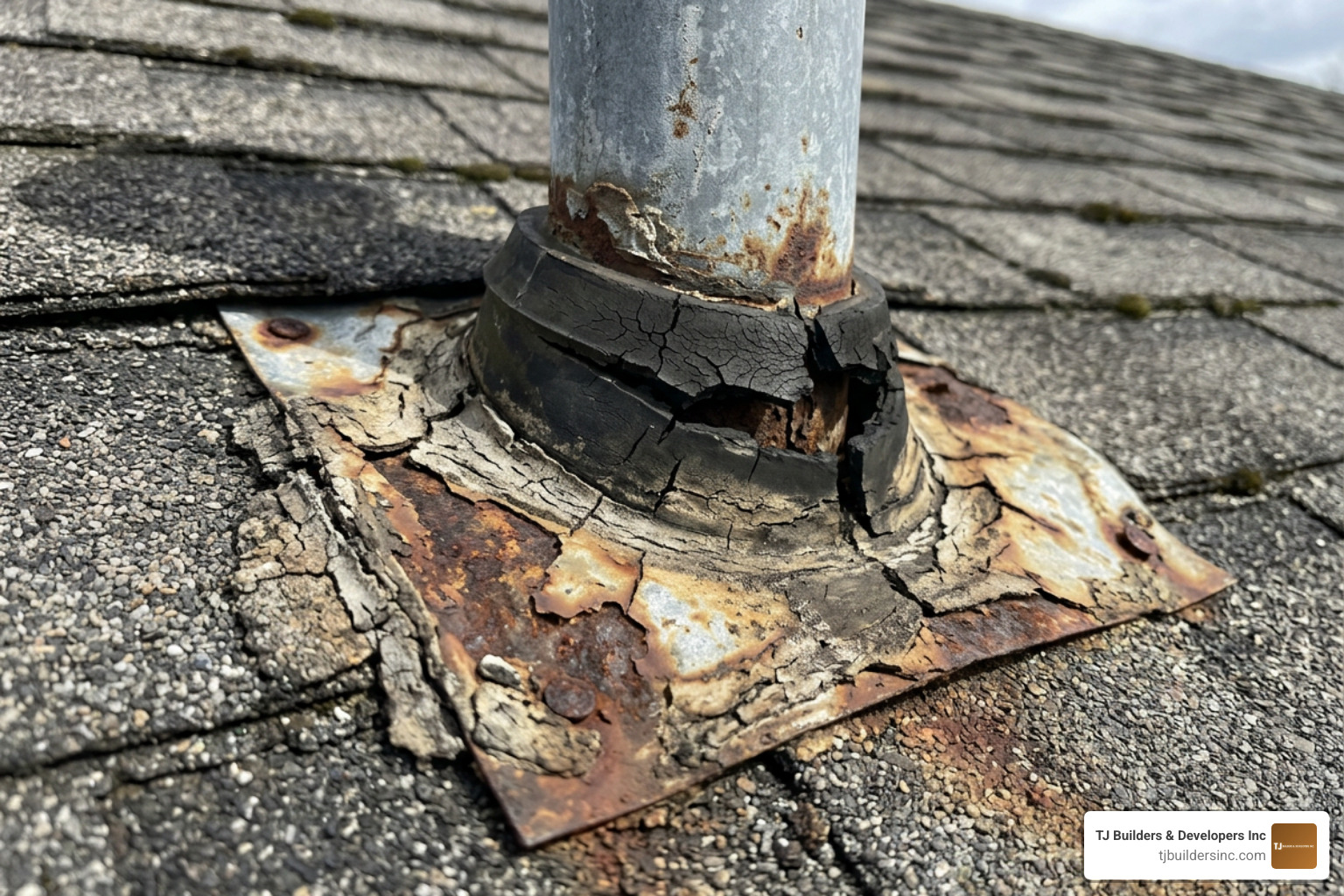
Our local weather is the single biggest contributor to roof vent wear and tear. The constant freeze-thaw cycles of late winter cause materials to expand and contract rapidly. This movement can break the seals around your flashing, back out roofing nails, and split rubber boots.
Additionally, summer severe weather brings high winds and hail that can dent metal vents, crack plastic exhaust hoods, and tear away surrounding shingles. When storm damage strikes, it is critical to address it promptly to avoid a progressive failure of your underlayment and decking. If your ventilation system is compromised, it can also put a strain on your home’s HVAC system, which is why keeping up with both roof and expert HVAC services is so important for whole-house health.
Clogged Vents and Animal Intrusion
Weather isn’t the only threat to your ventilation. Nature has a way of finding its way into warm, cozy attics. Birds, squirrels, raccoons, and insects often view roof vents as an open invitation to build nests.
When animals nest inside or around your vents, they block the essential airflow required to keep your attic dry. Over time, leaves, pine needles, and dust can also build up, completely clogging the vent openings. If you suspect your home’s overall ventilation pathways are blocked, seeking professional ventilation cleaning services can help restore clean airflow.
Identifying Roof Vent and Flashing Damage
How do you know if it’s time to call in the professionals for a Bartlett roof vent repair? While some signs are obvious, others require a bit of detective work. Catching these indicators early can save you thousands of dollars in structural restoration.
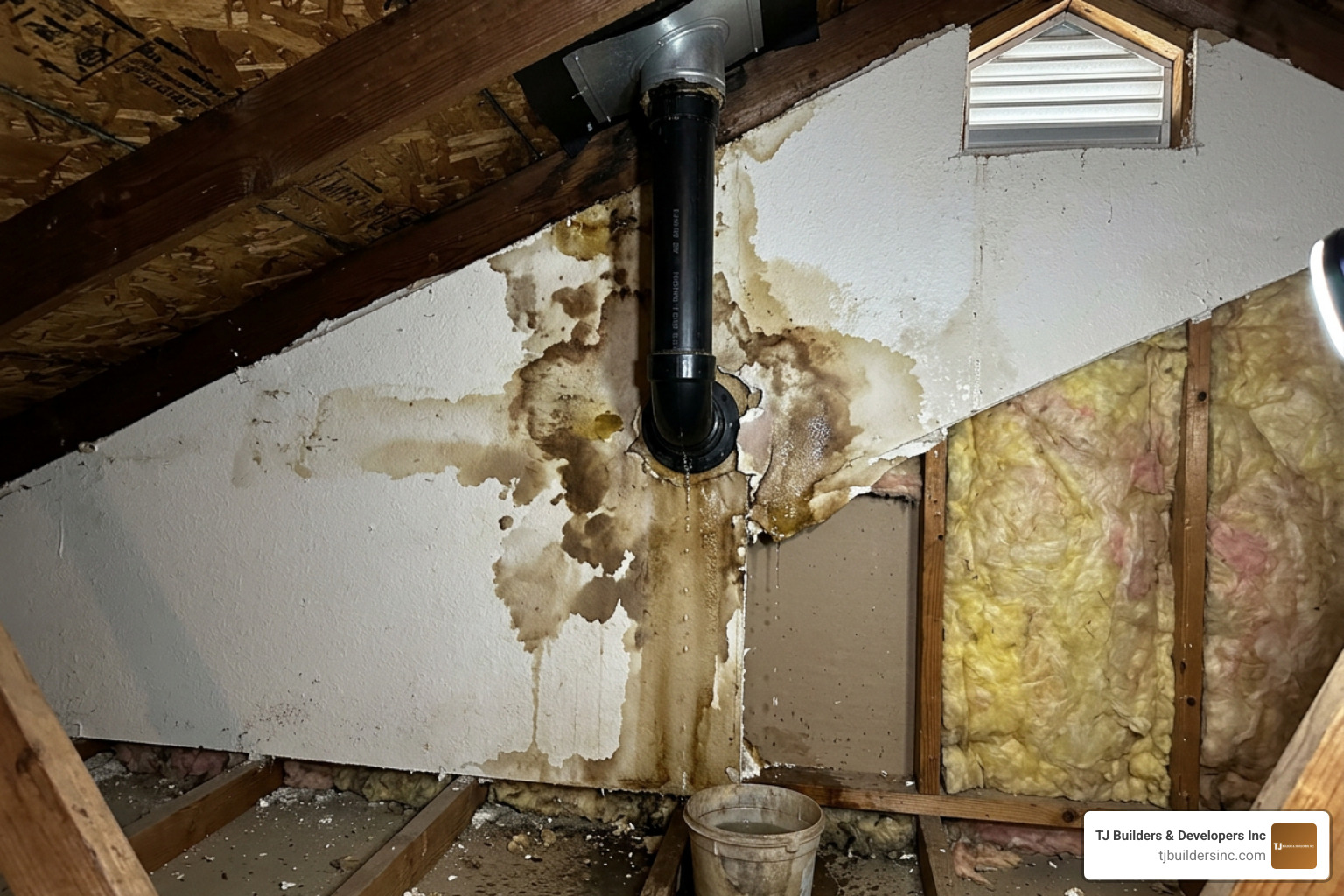
Key Indicators You Need Bartlett Roof Vent Repair
If you are comfortable performing a visual inspection from the ground or using binoculars, keep an eye out for these exterior warning signs:
- Rusted or corroded metal flashing around the base of your vents.
- Cracked, peeling, or missing sealant along the flashing seams.
- Warped, curled, or missing shingles immediately surrounding the vent.
- Visible cracks in plastic vent hoods or split rubber collars on plumbing stacks.
If water has already found its way past the roof line, you may notice indoor signs such as peeling wallpaper, bubbling paint, or dark water stains on your upper-floor ceilings and walls.
Indoor Indicators of Attic Ventilation Issues
Sometimes, the vent itself isn’t leaking water, but it is failing to let moisture and heat escape. If your attic ventilation is inadequate, you may notice:
- Excessive heat in the attic during summer afternoons.
- A stale, musty odor in your upper hallway or attic space.
- Frost or condensation forming on the underside of your roof sheathing during winter.
- A sudden spike in your monthly energy bills as your cooling system struggles.
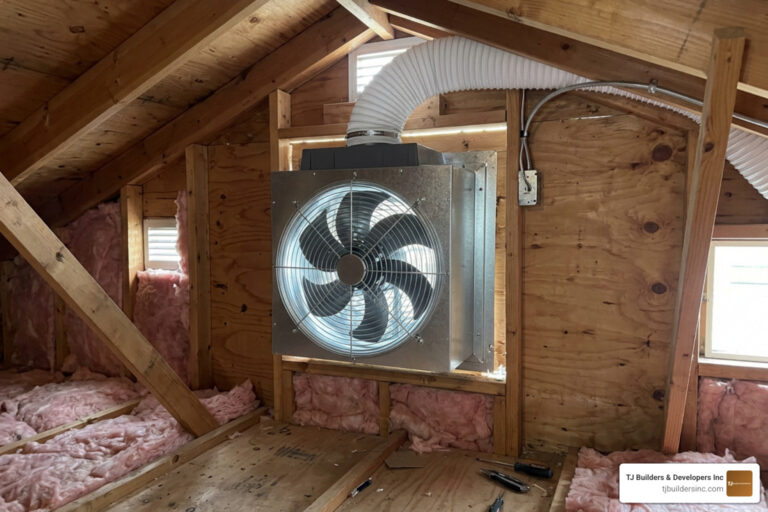
If you suspect your attic is trapping too much heat, adding an active exhaust system can make a massive difference. Take a look at our comprehensive guide to attic roof vent fans to see if this upgrade is right for your home.
Need Help With Your Home?
TJ Builders & Developers handles roofing, siding, gutters, windows, home additions, and fire damage restoration for homes and businesses in Lakewood, Crystal Lake, Schaumburg, and nearby McHenry County towns.
- Free, no-obligation estimates
- Licensed & insured
- 20+ years of local experience
Professional Techniques for Bartlett Roof Vent Repair
When it comes to protecting your home, cutting corners is never worth the risk. Professional roofing contractors use specialized materials and techniques to ensure that every repair stands up to the unpredictable Midwest climate.
Selecting the Right Venting Materials
Using premium materials is the key to a long-lasting repair. For example, upgrading to lifetime pipe boots—which feature a durable silicone collar instead of standard rubber—can prevent future leaks caused by UV degradation.
Depending on your roof’s design, we may recommend installing ridge vents, static box vents, or turbine vents to achieve balanced airflow. To explore your options and find the best fit for your home’s architecture, read the ultimate guide to keeping your roof dry with ridge ventilation.
The Step-by-Step Professional Repair Process
A professional Bartlett roof vent repair involves a precise process to ensure a watertight seal:
- Assessment: We thoroughly inspect the vent, surrounding shingles, and underlying roof deck for signs of rot or damage.
- Removal: We carefully remove the shingles around the damaged vent and pry up the old, failing flashing.
- Deck Preparation: Any damaged wood deck is repaired, and we apply a self-adhering ice and water shield membrane over the penetration.
- Installation: We install the new, high-grade metal flashing or vent hood, securing it with rust-resistant roofing nails.
- Sealing: We apply professional-grade, UV-resistant polyurethane sealant to all exposed nail heads and joints.
- Shingle Integration: We carefully weave new, matching shingles back around the vent to ensure proper water shedding.
Frequently Asked Questions About Attic Ventilation
What is the typical cost of a Bartlett roof vent repair?
For a standard single-vent flashing repair or pipe boot replacement, homeowners in Northern Illinois can typically expect to pay between $150 and $600. The final price depends on several factors, including the height and pitch of your roof, the extent of any underlying wood rot, and the specific materials selected.
For more complex issues, such as replacing a complete ridge vent system or correcting major storm damage, costs can range from $600 to $1,200 or more. When evaluating your options, it is always wise to consult with experienced Lakewood roof ventilation pros who can provide a detailed, written estimate tailored to your home’s specific needs.
How often should Bartlett homeowners inspect their roof vents?
We highly recommend having your roof and venting systems inspected at least twice a year—once in the spring to check for winter ice damage, and once in the fall to ensure your vents are clear of leaves and debris before the snow arrives. Regular inspections are the most effective way to prevent minor wear from turning into a major emergency.
What are the risks of ignoring damaged roof vent flashing?
Ignoring a damaged vent or failing flashing is a recipe for disaster. Over time, even a tiny, slow leak will saturate your attic insulation, rendering it useless and driving up your heating and cooling costs.
Worse yet, persistent moisture will lead to structural wood rot in your rafters and roof deck, eventually requiring a highly expensive full roof replacement. To understand the long-term benefits of maintaining proper airflow and avoiding these costly issues, read about how attic fan installation can protect your home’s structural integrity.
Conclusion
Your roof is a complex system, and your attic vents are its lungs. Keeping them in top condition is essential for protecting your home from structural rot, mold, and skyrocketing energy bills. Whether you are dealing with storm damage, a slow leak, or old, worn-out flashing, acting quickly is the best way to safeguard your investment.
If you suspect your home needs a Bartlett roof vent repair, don’t wait for the next heavy storm to find out for sure. At TJ Builders & Developers Inc, we specialize in high-quality residential roofing, siding, and exterior restoration throughout the Village of Lakewood, Crystal Lake, Schaumburg, Huntley, and the surrounding suburbs. We focus on professional workmanship, durable materials, and long-term protection to keep your home safe and dry in every season.
Ready to ensure your roof is ready for whatever the Midwest weather throws its way? Schedule a professional roof inspection today with our team of trusted local experts!