Why Homeowners Consider a Second-Story Addition
When you add a 2nd story to your house, you’re making a major investment that can solve your space problems without leaving your neighborhood or sacrificing your yard. But is it worth it?
Here’s what you need to know:
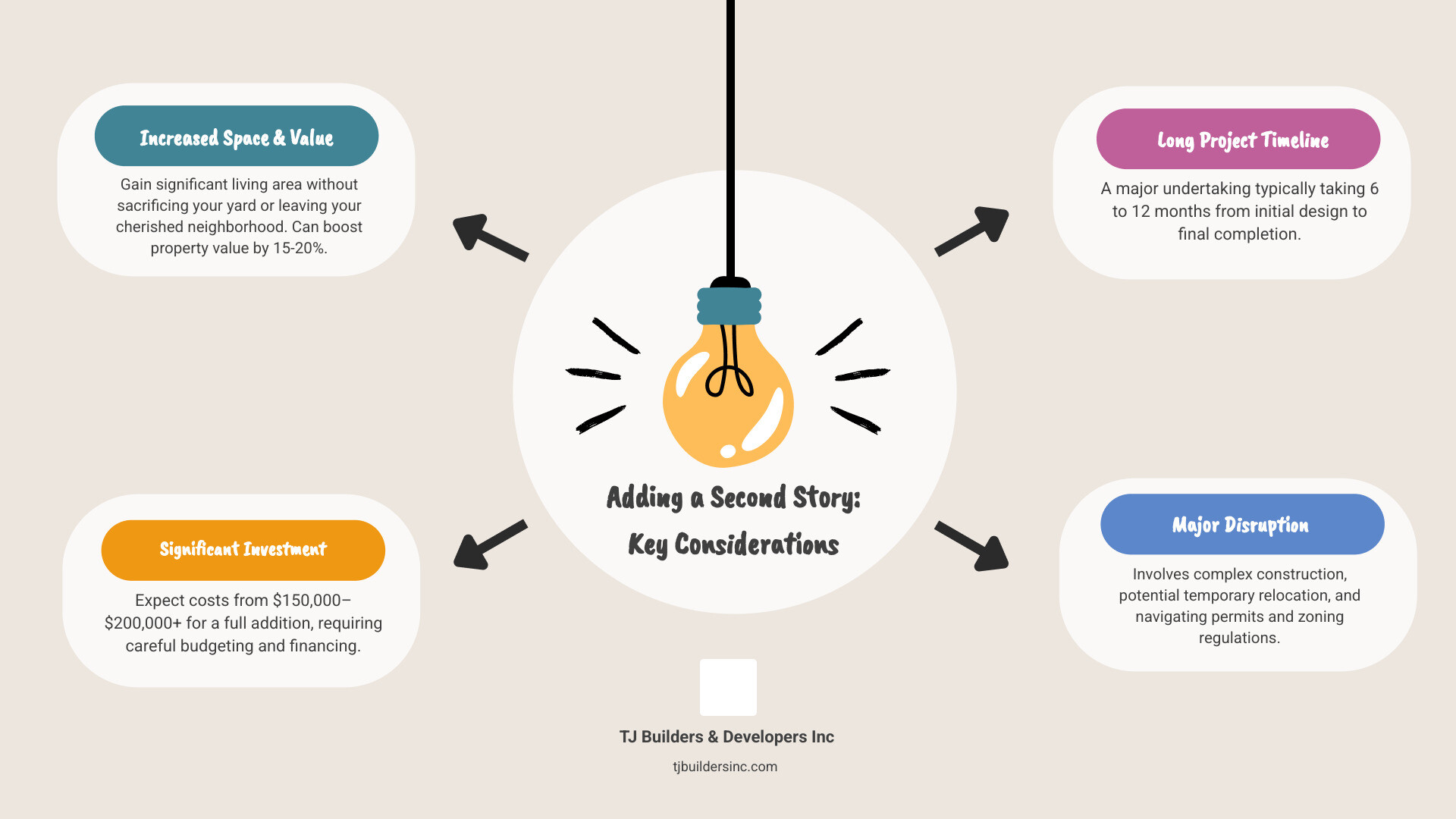
- Average Cost: $100 to $300 per square foot (typically $150,000–$200,000+ for a full addition)
- Timeline: 6 to 12 months from design to completion
- ROI: Roughly 65% return on investment
- Best For: Homeowners who love their location but need more space
Have you ever dreamed of expanding your living space without sacrificing your outdoor area? You’re not alone. Thousands of homeowners face the same dilemma: their family is growing, they need a home office, or they simply want more breathing room—but they don’t want to move.
Adding a second story offers a solution that building out often can’t. You gain square footage without losing your backyard, stay in the neighborhood you love, and potentially increase your home’s value significantly. In popular neighborhoods, homes with second stories often sell for 15-20% more than similar single-story homes.
But this isn’t a simple weekend project. It’s a major construction undertaking that requires careful planning, a solid budget, and the right team of professionals. You’ll need to consider your foundation’s capacity, steer local building codes, potentially move out during construction, and manage a project that can easily cost six figures.
The real question isn’t just “Can I add a second story?” It’s “Is this the right choice for my family, my budget, and my long-term goals?” This guide will help you answer that question by walking through everything homeowners need to know—from initial planning to final walkthrough.
The Big Decision: Key Advantages and Potential Challenges
Deciding to add a 2nd story to your house is a monumental step, filled with exciting possibilities and significant challenges. On one hand, you open up a world of new space and functionality; on the other, you commit to a complex project with a substantial financial and personal impact. Let’s weigh the pros and cons to help you understand what you’re getting into.

Advantages of Building Up
When we talk about the benefits of adding a second story, we’re really talking about changing your living experience.
- More Square Footage: This is often the primary driver. A second story can double your home’s livable space, providing room for additional bedrooms, bathrooms, or a home office.
- Better Views & Improved Layout: Elevating your living areas can open up new perspectives and provides an opportunity to reconfigure your entire home. You might relocate bedrooms upstairs, freeing up the first floor for an open-concept living area.
- Potential for Strong Return on Investment (ROI): Adding a second story can increase your home’s value by approximately 65%. In desirable areas like Lakewood or Crystal Lake, two-story homes can sell for 15-20% more than comparable single-story properties.
- New Roof and Systems: The project includes a brand-new roof and is an ideal time to upgrade essential systems like HVAC, electrical, and plumbing to modern standards.
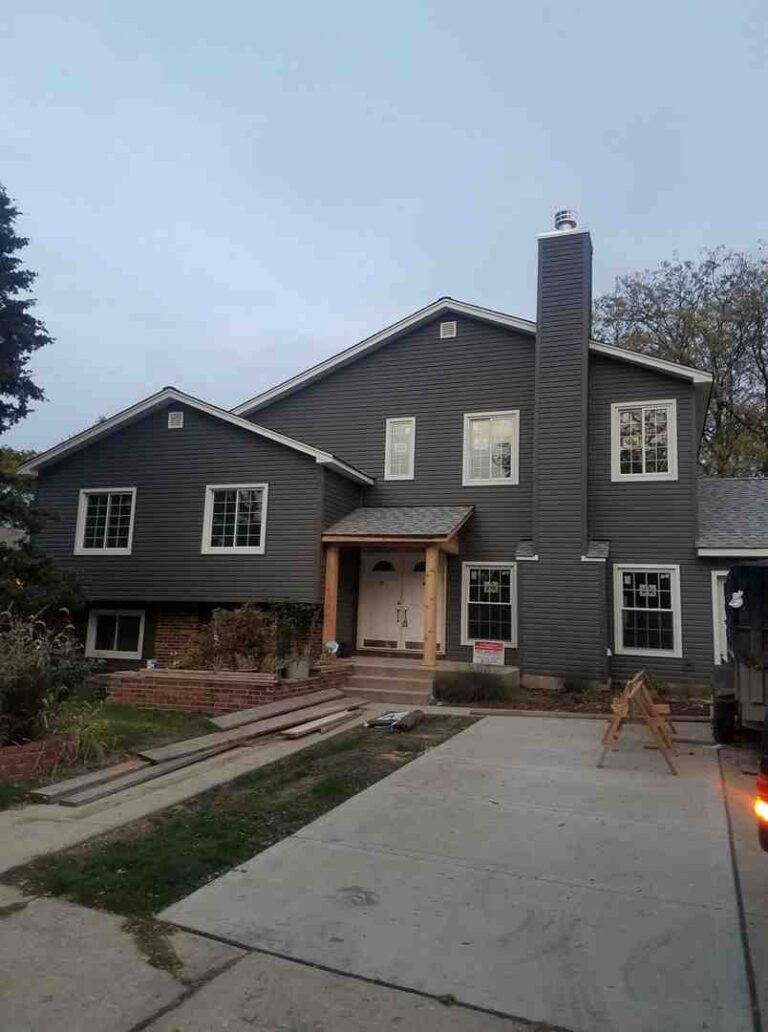
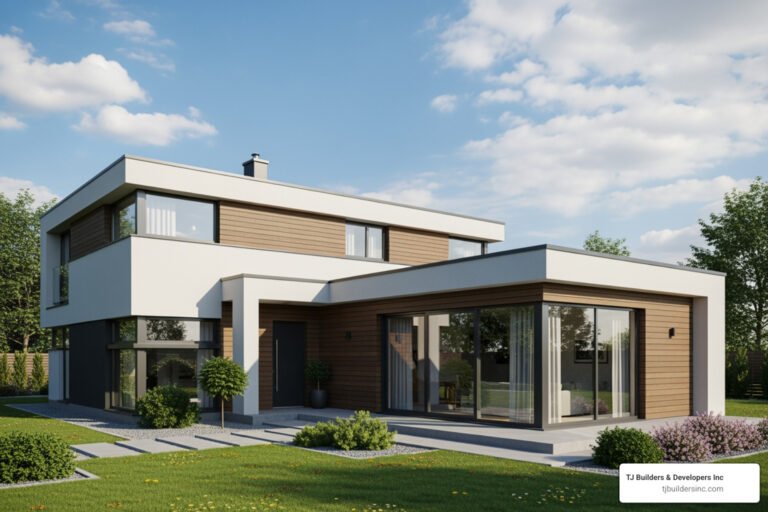
- Improved Curb Appeal: A well-designed second story can dramatically improve your home’s exterior aesthetic, adding height and architectural interest.
- Staying in Your Neighborhood: Gain the space you need without the hassle and expense of moving from a community you love.
- Preserving Outdoor Space: Unlike building out, building up means you don’t sacrifice any of your yard space.
Disadvantages and Common Headaches
While the advantages are significant, we must also be realistic about the challenges.
- Significant Investment: A full addition can easily cost $200,000 or more, requiring careful financial planning.
- Major Disruption: Your home will be a construction site for months, with considerable noise and dust.
- Potential for Unexpected Issues: Unforeseen structural weaknesses or outdated wiring can lead to delays and increased costs.
- Weather Delays: With the roof removed, bad weather can cause delays and potential damage.
- Living Elsewhere During Construction: For many full second-story additions, temporary relocation is necessary, adding to the overall cost.
- Navigating Permits and Regulations: The approval process can be complex and time-consuming, requiring detailed plans and multiple inspections.
- Staircase Impact: A new staircase will take up valuable floor space on your existing first level, requiring careful design integration.
Need Help With Your Home?
TJ Builders & Developers handles roofing, siding, gutters, windows, home additions, and fire damage restoration for homes and businesses in Lakewood, Crystal Lake, Schaumburg, and nearby McHenry County towns.
- Free, no-obligation estimates
- Licensed & insured
- 20+ years of local experience
The Essential Planning Phase to Add a 2nd Story to Your House
The success of your second-story addition hinges on meticulous planning. Before any construction begins, it’s crucial to assess your home’s structure, assemble the right team, and steer the necessary permits.

How does adding a 2nd story to your house impact structural integrity?
This is the most critical question. Your home’s original foundation was not designed to support an entire additional floor.
- Foundation Check: A structural engineer must determine if your foundation can bear the added weight. Homes with a full basement or crawl space are often better candidates than those on a slab foundation, which may require costly reinforcement.
- Load-Bearing Walls: The engineer will also evaluate your existing walls and beams to ensure they can transfer the new load to the foundation.
- Hiring a Structural Engineer: This is non-negotiable. An engineer will inspect your home, analyze its structure, and specify any required reinforcements, such as new footings or steel beams. This assessment is vital for safety and feasibility. Reinforcing a foundation, if required, can cost around $5,000, but this is a small price to pay for structural integrity.
- Soil Conditions: The engineer will also consider the soil conditions beneath your home, as this plays a role in how effectively the foundation can distribute the load.
Hiring Your Professional Team
A project of this scale demands a team of experienced professionals. Don’t try to go it alone.
- Architect: Translates your vision into detailed plans, ensuring the new story integrates with your existing home’s style and complies with local codes.
- Structural Engineer: As mentioned, this expert ensures the structural integrity of your entire home.
- General Contractor: A reliable general contractor with experience in second-story additions is your project manager. They will oversee all aspects of construction, coordinate subcontractors, and manage the timeline and budget.
Vetting Your Team: We recommend thoroughly vetting each professional. Check their licenses, bonds, and insurance. Ask for references and review their portfolio of similar projects. At TJ Builders & Developers Inc., we pride ourselves on our reliable workmanship and transparent processes. Learn more about our home additions services.
Navigating Permits and Zoning Regulations
Before construction begins, you must ensure your project complies with all local rules.
- Local Building Codes: These are detailed standards for construction, safety, and materials. Your plans must meet or exceed these codes. You can learn more about the general framework from the International Code Council (ICC).
- Zoning Ordinances: Many municipalities, including those in the Chicago suburbs, have restrictions on building height, floor-area ratio (FAR), and setbacks (the distance your home must be from property lines).
- Historical District Rules: If your home is in a historical district, there may be additional regulations regarding architectural style and materials.
- Permit Application Process: This involves submitting detailed plans to your local building department for review. The permitting phase can take six weeks or longer, so factor this into your timeline.
Decoding the Costs and Timeline
Adding a second story is a substantial financial and time commitment. Understanding the estimated costs and typical timelines upfront will help you budget effectively and manage your expectations.
What is the Estimated Cost?
The cost to add a 2nd story to your house varies widely, but homeowners can generally expect to pay between $100 and $300 per square foot. For a typical 1,000-square-foot addition, this often totals $150,000–$200,000 or more.
Key factors that influence the final price include:
- Material Quality: High-end vs. standard-grade finishes.
- Labor Rates: Varies by region and trade expertise.
- Project Complexity: Simple, rectangular designs are more cost-effective.
- Structural Work: Foundation reinforcement can add $5,000 or more.
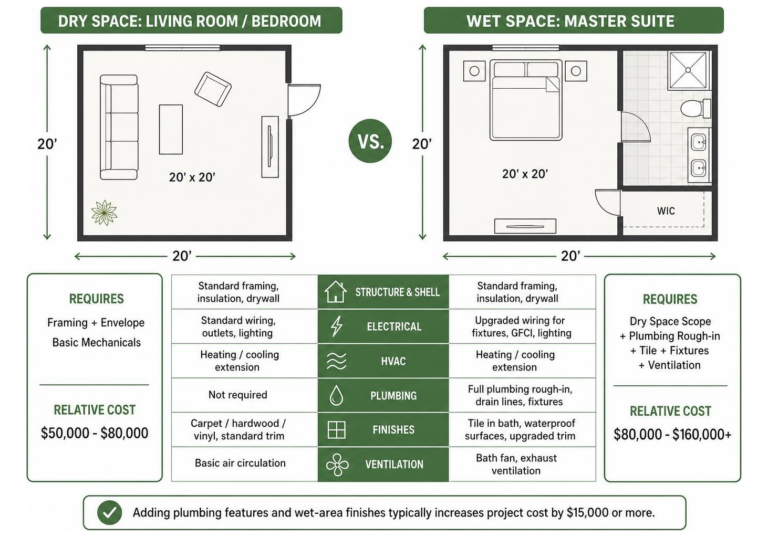
- Systems Upgrades: Extending HVAC, electrical, and plumbing is a major cost factor.
- Professional Fees: Costs for architects, engineers, and permits.
- Contingency Fund: Always set aside 10-20% for unexpected costs.
Investing in your home’s roof is also a critical part of any second-story addition, as you’ll be getting a new one! Our team at TJ Builders & Developers Inc. are experts in all things roofing. You can find more information about our roofing services here: More info about roofing services.
Typical Project Timelines
A second-story addition is a marathon, not a sprint, typically taking 6 to 12 months from start to finish.
- Design Phase: 1-3 months
- Permitting Phase: 6+ weeks
- Construction Duration: 3-6 months
- Finishing Work: 1-2 months
Delays can arise from weather, material shortages, or unforeseen structural issues. Proactive planning and a good contractor can help mitigate these.
How to Save Money on Your Addition
While this is a major investment, there are ways to manage costs:
- Choose Standard Finishes: Opting for standard-grade materials over custom options can save thousands.
- DIY Non-Structural Tasks: Handle tasks like painting or demolition yourself, but leave all structural work to professionals.
- Phase the Project: Build the exterior shell first and finish the interior later as your budget allows.
- Simplify the Design: A simple, rectangular footprint is the most cost-effective option.
- Consider Modular Additions: Prefabricated additions can be 10-20% cheaper and faster to install, though they offer less design flexibility.
- Select Cost-Effective Siding: Choose durable, affordable siding that complements your home. Our team at TJ Builders & Developers Inc. specializes in siding installation and replacement. Find out more about our services here: More info about siding installation services.
Design and Construction: Bringing Your Second Story to Life
Once the planning is complete and the permits are in hand, the exciting phase of design and construction begins. This is where your vision truly starts to take shape.
What are the options when you add a 2nd story to your house?
There isn’t a one-size-fits-all approach to adding a second story. Your choice will depend on your needs, budget, existing home structure, and local regulations.
| Addition Type | Cost (Per Sq. Ft.) | Timeline (Approx.) | Disruption Level | Key Features -|
| Full Second Story | $100 – $300+ / sq. ft. | 6-12 months | High | Maximizes living space by adding a full new level. Involves removing the roof and requires temporary relocation. Offers the highest potential for increased home value. |
| Partial Second Story | $100 – $300+ / sq. ft. | 3-6 months | Medium | Adds space over a portion of the house (e.g., garage). Less disruptive and more affordable than a full addition. Ideal for a master suite or bonus room. |
| Modular Addition | $80 – $200 / sq. ft. | 2-4 months | Low to Medium | Constructed off-site and installed with a crane. Faster and often cheaper, but with less design flexibility. Minimizes on-site disruption. |
Integrating the New with the Old
A successful addition should look like it was always part of the original house.
- Architectural Style: Match rooflines, window styles, and exterior materials for a seamless look.
- Exterior Finishes: Siding, trim, and paint should blend the old with the new. This is a great time to update your home’s entire exterior. Consider professional window and gutter replacement to complete the look.
- Interior Flow: The new staircase is a critical element. Its placement should feel natural and not disrupt the flow of your first-floor living space.
Upgrading Essential Home Systems
Adding a new floor puts more demand on your home’s systems.
- HVAC: Your current system may need an upgrade or a separate, zoned system for the new floor to handle the additional space.
- Electrical: An electrical panel upgrade is often required to support new outlets and lighting safely.
- Plumbing: New bathrooms or laundry rooms require extending plumbing lines, a job for professionals to prevent leaks.
- Insulation: Proper insulation in the new walls and attic is crucial for energy efficiency and comfort, helping to keep your utility bills in check.
Need Help With Your Home?
TJ Builders & Developers handles roofing, siding, gutters, windows, home additions, and fire damage restoration for homes and businesses in Lakewood, Crystal Lake, Schaumburg, and nearby McHenry County towns.
- Free, no-obligation estimates
- Licensed & insured
- 20+ years of local experience
Design and Construction: Bringing Your Second Story to Life
Once the planning is complete and the permits are in hand, the exciting phase of design and construction begins. This is where your vision truly starts to take shape.
What are the options when you add a 2nd story to your house?
There isn’t a one-size-fits-all approach to adding a second story. Your choice will depend on your needs, budget, existing home structure, and local regulations.
| Addition Type | Cost (Per Sq. Ft.) | Timeline (Approx.) | Disruption Level | Key Features NHO_Kajaka for building up, it might be that your existing home’s foundation and ground floor are structurally sound enough to support the weight. Our team at TJ Builders & Developers Inc. are experts in all things roofing. You can find more information about our roofing services here: More info about roofing services.
Typical Project Timelines
A second-story addition is not a quick flip; it’s a marathon. The full process typically takes 6 to 12 months, depending on the size of the addition, permitting, weather, and contractor availability.
- Design Phase: This can take up to three months as you work with your architect to finalize plans, make revisions, and select finishes.
- Permitting Phase: As mentioned, securing necessary permits from your local municipality (e.g., in Lakewood or Schaumburg) can take six weeks or longer.
- Construction Duration: The actual construction phase, from demolition to rough-ins (framing, electrical, plumbing), can span three to six months. A partial second story may take only half that time.
- Finishing Work: The final touches—drywall, flooring, painting, fixture installation—can add another one to two months.
- Factors Causing Delays: Beyond permitting and weather, delays can arise from material shortages (a common issue in recent years due to supply chain disruptions), unexpected structural issues, or changes requested during construction. Proactive planning and a good contractor can help mitigate these.
How to Save Money on Your Addition
While a second-story addition is a significant investment, there are smart ways we can help you potentially reduce costs without compromising quality or safety.
- Standard vs. Custom Finishes: Opting for standard-grade cabinets, flooring, lighting, and fixtures instead of custom or luxury options can save tens of thousands of dollars.
- DIY Non-Structural Tasks: If you have the skills and time, tackling tasks like demolition, painting, or installing simple fixtures (after consulting with your contractor) can reduce labor costs. However, never attempt structural work yourself unless you are a licensed professional.
- Phasing the Project: Sometimes, it might be possible to complete the structural shell and exterior first, then finish the interior rooms in phases as your budget allows. Discuss this strategy with your architect and contractor.
- Sourcing Materials: With your contractor’s approval, you might be able to find discounted materials or purchase items directly from suppliers at a better price. Reusing existing materials where possible can also save money.
- Choosing a Simpler Design: Complex architectural designs with multiple rooflines, angles, or bump-outs require more labor and materials. A simpler, more rectangular footprint is generally more cost-effective.
- Consider Modular Additions: Modular home additions, which are pre-fabricated rooms built off-site, can run 10-20% cheaper than conventional, on-site additions. They also offer faster construction times and less disruption. However, they may not suit all home styles, especially those with unique architecture.
- Siding and Exterior Materials: For the exterior, consider cost-effective yet durable siding options that complement your existing home. Our team at TJ Builders & Developers Inc. specializes in siding installation and replacement, ensuring a cohesive and weather-resistant finish for your addition. Find out more about our services here: More info about siding installation services.
Conclusion
We know that deciding to add a 2nd story to your house is a significant undertaking. We’ve walked through the many advantages, from gaining precious living space and improving your home’s value to preserving your cherished outdoor areas and allowing you to remain in the neighborhood you love. We’ve also candidly discussed the challenges, including the substantial investment, potential disruptions, and the complexities of structural integrity and permitting.
The decision to build up is a personal one, but it can be incredibly rewarding. It’s an investment not just in your property, but in your family’s lifestyle. With careful planning, a clear understanding of the process, and the right team of professionals, your dream of a larger, more functional home can become a reality.
At TJ Builders & Developers Inc., we have the experience and expertise to guide you through every step of your home addition project. From ensuring structural soundness to navigating local regulations in Lakewood, Crystal Lake, Schaumburg, and across the Chicago suburbs, we’re committed to delivering reliable workmanship and ensuring your satisfaction.
Ready to explore the possibilities for your home? Contact us for your home addition project today. We’re here to help you build the home you’ve always dreamed of.
Conclusion
We know that deciding to add a 2nd story to your house is a significant undertaking. We’ve walked through the many advantages, from gaining precious living space and improving your home’s value to preserving your cherished outdoor areas and allowing you to remain in the neighborhood you love. We’ve also candidly discussed the challenges, including the substantial investment, potential disruptions, and the complexities of structural integrity and permitting.
The decision to build up is a personal one, but it can be incredibly rewarding. It’s an investment not just in your property, but in your family’s comfort and lifestyle. With careful planning, a clear understanding of the process, and the right team of professionals, your dream of a larger, more functional home can become a reality.
At TJ Builders & Developers Inc., we have the experience and expertise to guide you through every step of your home addition project. From ensuring structural soundness to navigating local regulations in Lakewood, Crystal Lake, Schaumburg, and across the Chicago suburbs, we’re committed to delivering reliable workmanship and ensuring your satisfaction.
Ready to explore the possibilities for your home? Contact us for your home addition project today. We’re here to help you build the home you’ve always dreamed of.