Why Lakewood Homeowners Are Searching for Better Roof Ventilation
Best roof ventilation Lakewood is one of the most searched roofing topics among local homeowners — and for good reason. Lakewood, IL experiences everything from sweltering summer heat to heavy winter snow, and your attic takes the hit of every extreme.
Here are the top roof ventilation options best suited for Lakewood homes:
| Ventilation Type | Best For | Avg. Installation Cost |
|---|---|---|
| Ridge Vents | Continuous exhaust along the roofline | Included in most roof installs |
| Soffit Vents | Intake airflow at the eaves | $300–$600 per vent |
| Turbine Vents | Wind-powered heat and humidity removal | $300–$600 per vent |
| Solar-Powered Attic Fans | Energy-efficient powered exhaust | $650–$1,200 installed |
| Roof-Mounted Power Fans | Larger attics needing active ventilation | $450–$800 installed |
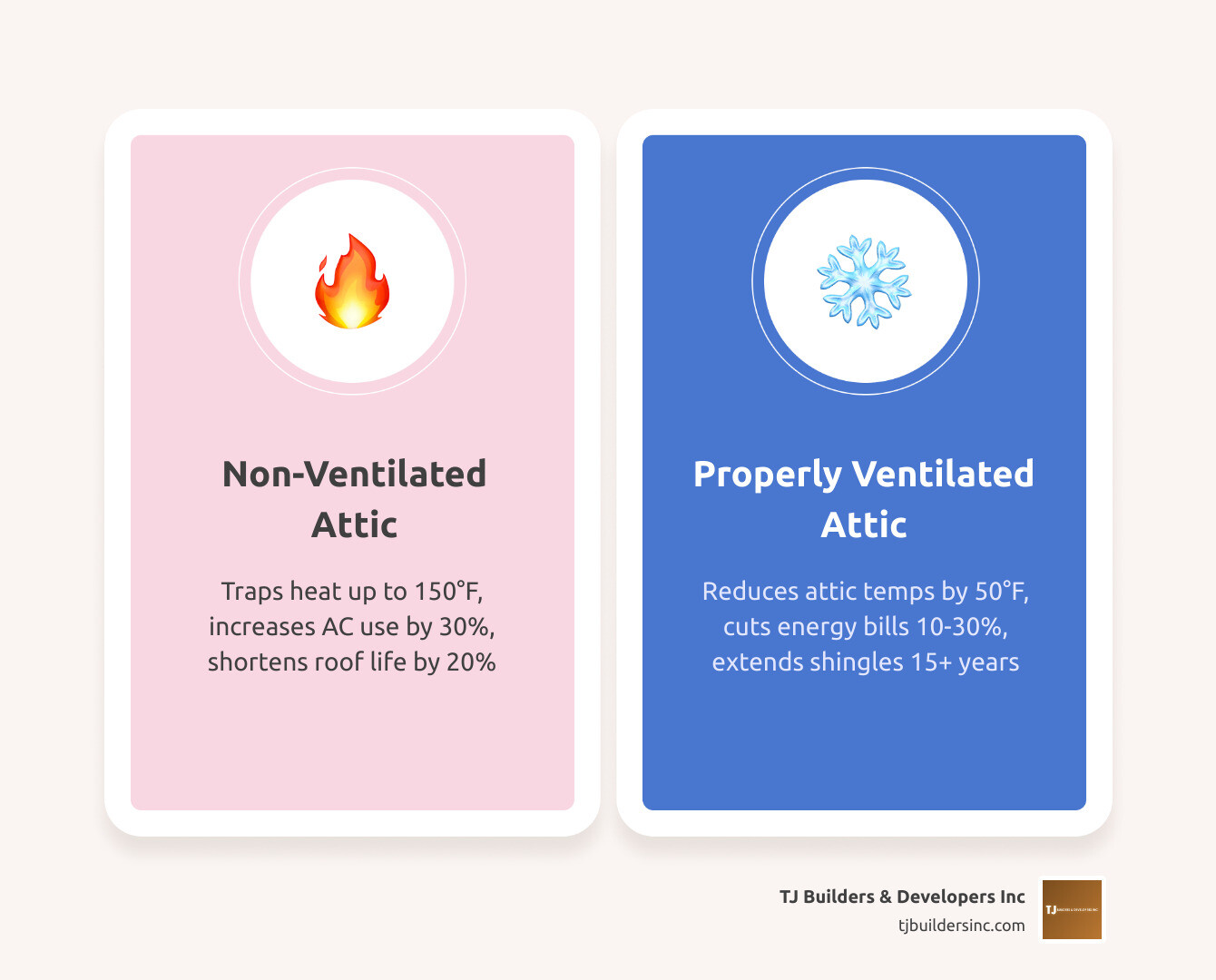
Without the right system, your attic traps heat in summer and holds moisture in winter. Both scenarios shorten the life of your roof, drive up energy bills, and can lead to mold, wood rot, and ice dams.
The good news? Choosing the right ventilation system for your home is simpler than most people think — once you know what to look for.
I’m Thomas Pruszynski of TJ Builders & Developers, and after 20+ years helping Lakewood-area homeowners protect their properties, I’ve seen how the best roof ventilation Lakewood solutions prevent costly damage and keep homes comfortable year-round. Let’s walk through everything you need to know to make the right choice.
Best roof ventilation Lakewood terms made easy:
Why Proper Roof Ventilation is Essential for Lakewood Homes
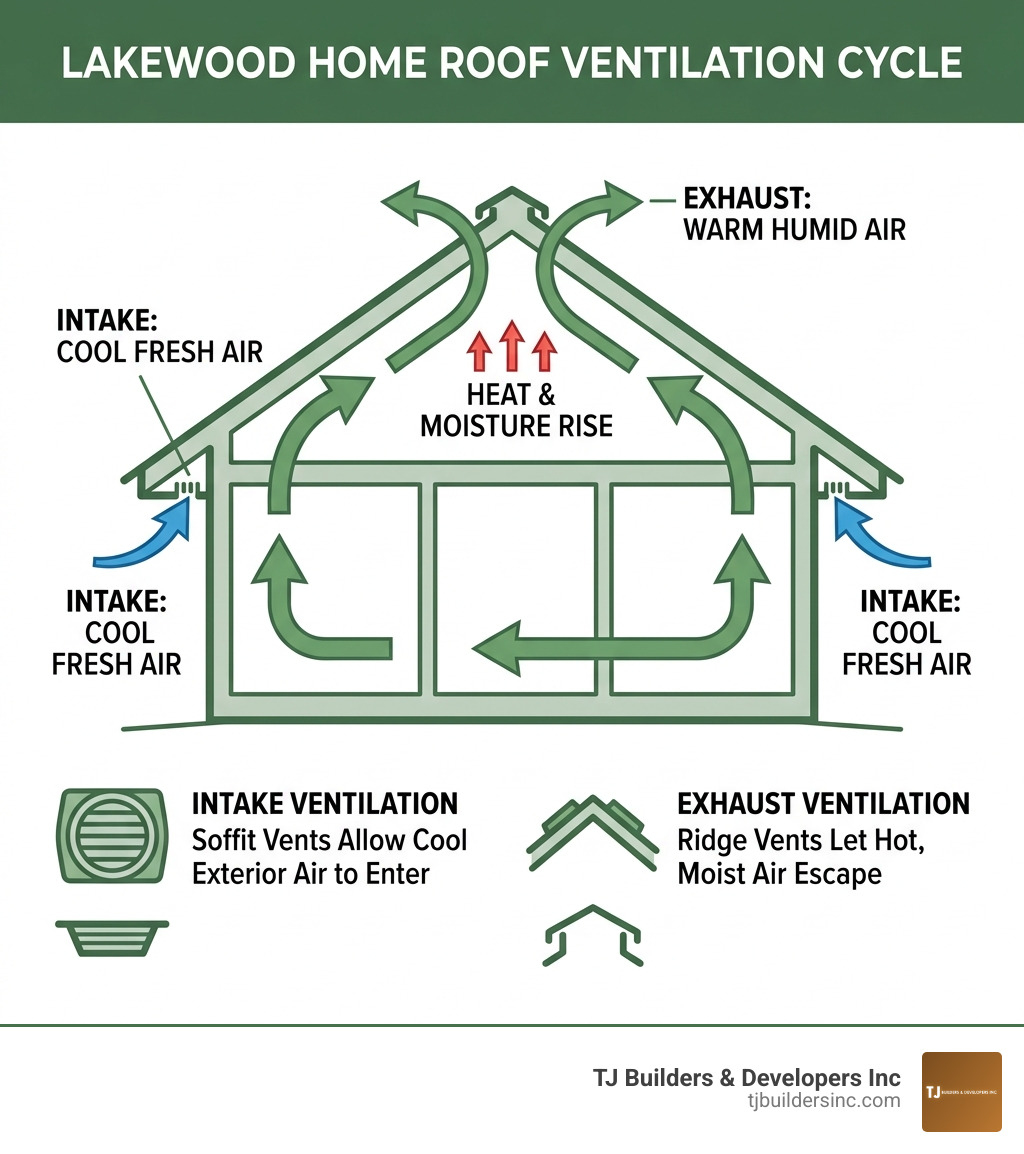
In our neck of the woods, the attic isn’t just a place to store old holiday decorations; it’s the “lungs” of your home. Proper ventilation involves a balanced system of intake and exhaust that allows your home to breathe. When this system fails, the consequences aren’t just uncomfortable — they’re expensive.

In Lakewood, IL, we deal with a unique set of environmental factors. During the summer, the sun beats down on your shingles, heating the air in your attic to over 150 degrees. Without a way to escape, that heat radiates downward into your living space. In the winter, the problem flips. Warm, moist air from your showers and cooking rises into the attic. If it doesn’t have a way out, it hits the cold underside of your roof deck and turns into condensation.
This cycle of heat and moisture is why roof repair is so common in homes with poor airflow. Proper ventilation acts as a buffer zone, regulating the temperature and ensuring that moisture doesn’t have a chance to settle and cause structural damage.
Impact of Local Weather Patterns
Lakewood’s weather is nothing if not temperamental. We experience heavy snow loads in the winter, high humidity in the spring, and scorching heat in the summer. These seasonal transitions are particularly hard on roofs.
In the winter, poor ventilation is the primary culprit behind ice dams. When heat is trapped in your attic, it warms the roof deck and melts the snow sitting on top. That water then runs down to the colder eaves and refreezes, creating a “dam” that forces water back up under your shingles. This can lead to significant leaks that require the expertise of roofers in Lakewood IL to fix. By keeping the attic temperature closer to the outside air temperature, ventilation prevents this uneven melting.
Protecting Your Roofing Materials
Your roof is a significant investment, and the best roof ventilation Lakewood systems are designed to protect that investment. High-quality materials, like GAF shingles, are built to last, but even the best shingles can’t survive being “baked” from both sides.
Excessive attic heat causes asphalt shingles to become brittle, leading to shingle curling and premature granule loss. Furthermore, moisture trapped in the attic can lead to wood rot in the rafters and roof deck, as well as mold growth that can affect your family’s health. When we perform an asphalt roof installation, we always prioritize the ventilation system to ensure those shingles reach their full 50-year potential.
Need Help With Your Home?
TJ Builders & Developers handles roofing, siding, gutters, windows, home additions, and fire damage restoration for homes and businesses in Lakewood, Crystal Lake, Schaumburg, and nearby McHenry County towns.
- Free, no-obligation estimates
- Licensed & insured
- 20+ years of local experience
Identifying the Best Roof Ventilation Lakewood Systems
Finding the best roof ventilation Lakewood solution isn’t about picking the most expensive fan; it’s about creating a balanced system. You need “intake” (cool air coming in) and “exhaust” (hot air going out). If you have one without the other, your ventilation is like trying to breathe through a straw while someone holds the other end shut.
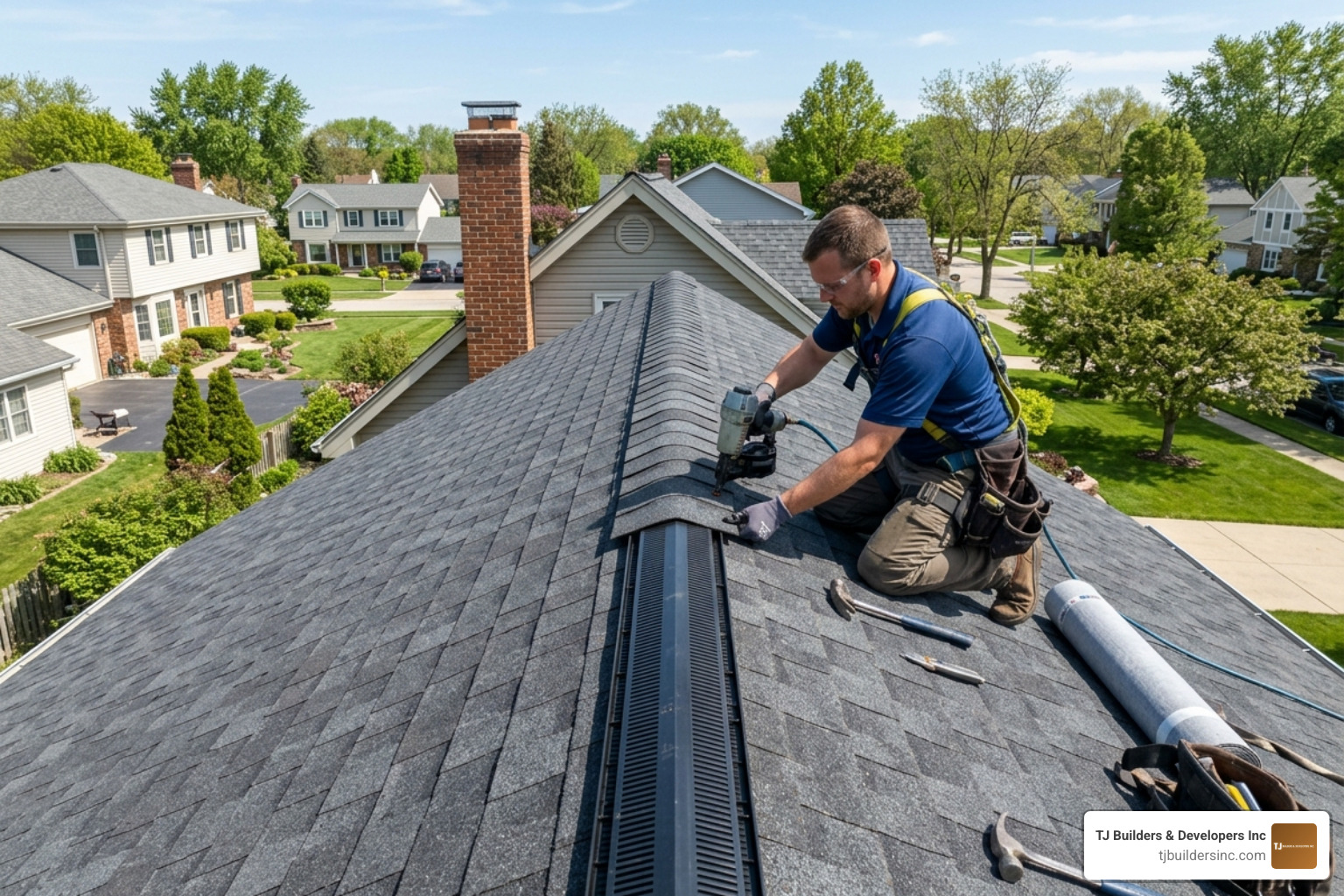
Effective roofing requires a calculation based on the size of your attic. The general industry standard is 1 square foot of ventilation for every 300 square feet of attic space, divided equally between intake and exhaust.
Choosing the Best Roof Ventilation Lakewood for Your Attic
Depending on your roof’s pitch and design, different systems may work better than others. Here are the most common components we use for Lakewood homes:
- Ridge Vents: These are installed along the peak of the roof. They are low-profile and provide a continuous exhaust path for hot air. When paired with a breathable underlayment, they are incredibly effective.
- Soffit Vents: These are your intake vents, located under the eaves. They draw in cool, fresh air from the outside.
- Turbine Vents: These use wind power to “pull” air out of the attic. They are great for areas with consistent breezes, though some homeowners find them less aesthetically pleasing than ridge vents.
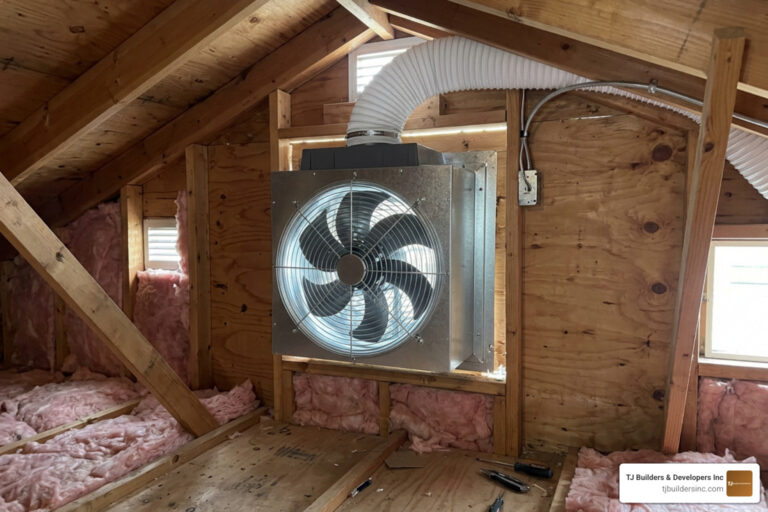
- Solar-Powered Fans: An eco-friendly option that uses the sun’s energy to power an exhaust fan, active only when the heat is at its peak.
When exploring asphalt shingle options, it’s important to ask how the specific shingle style integrates with these vent types.
Maintaining the Best Roof Ventilation Lakewood Performance
Installation is only the first step. To keep your home efficient, you need to ensure the system stays clear. We recommend annual inspections to check for:
- Bird nests or pest debris blocking the vents.
- Insulation blockages (often, DIY insulation projects accidentally cover the soffit vents).
- Seal integrity around roof-mounted fans to prevent leaks.
- Tree branches that may be overhanging and dropping debris into turbine vents.
Regular checks are a key part of emergency roof repair & leak detection, as catching a blocked vent early can prevent a massive moisture problem later.
Signs Your Home Needs a Ventilation Upgrade
How do you know if your current system isn’t cutting it? Your home will usually tell you, though the signs can be subtle at first.
- High Utility Bills: If your AC is running constantly but the upstairs rooms are still sweltering, your attic is likely acting like a giant radiator.
- Uneven Temperatures: If the second floor is significantly warmer than the first, heat is trapped at the top of the house.
- Unpleasant Odors: A musty smell in the attic or upper closets often points to mold growth or mildew caused by trapped humidity.
- Ice Damming: As mentioned, if you see large icicles forming only on the edges of your roof, your ventilation is failing.
- Condensation: If you notice moisture on your windows or dampness on the attic insulation, you have a moisture control issue.
Sometimes, issues with other roof penetrations can mimic ventilation problems. For instance, if you notice leaks near the peak, it could be a ventilation issue or it might require skylight repair Lakewood. A professional inspection can help differentiate between the two. If the damage is extensive, it may be time to consider reroofing to start fresh with a modern, integrated system.
Need Help With Your Home?
TJ Builders & Developers handles roofing, siding, gutters, windows, home additions, and fire damage restoration for homes and businesses in Lakewood, Crystal Lake, Schaumburg, and nearby McHenry County towns.
- Free, no-obligation estimates
- Licensed & insured
- 20+ years of local experience
The Financial Impact: Energy Efficiency and Installation Costs
Investing in the best roof ventilation Lakewood offers has a high Return on Investment (ROI). While there is an upfront cost, the long-term savings on energy and roof longevity are substantial.
Cost Comparison Table
| System Component | Estimated Cost | Efficiency Level |
|---|---|---|
| Basic Ridge/Soffit Setup | $1,000 – $2,500 | High (Passive) |
| Solar Attic Fan | $650 – $1,200 | Very High (Active) |
| Roof-Mounted Power Fan | $450 – $800 | High (Active) |
| Individual Box Vents | $300 – $600 each | Moderate |
Note: Prices vary based on attic accessibility and roof pitch.
By reducing the workload on your HVAC system, proper ventilation can lower cooling costs by up to 15-20% in the summer, according to U.S. Department of Energy guidelines. For more details on the total cost of ownership, check out our roof installation & replacement complete guide. This is especially relevant for those with specialized structures, such as those requiring flat roof installation, where ventilation strategies differ from traditional sloped roofs.
Frequently Asked Questions about Roof Ventilation
How much does roof ventilation installation cost in Lakewood?
In Lakewood, the cost typically ranges from $300 to $600 per vent for basic installations. However, a complete attic ventilation overhaul usually ranges between $1,000 and $3,000. The final price depends on the type of fans used, the number of vents required to meet the 1:300 ratio, and the complexity of your roof’s design.
Can I install roof vents myself or should I hire a professional?
While some homeowners are handy, we strongly recommend professional installation. Cutting holes in your roof deck requires precision to prevent leaks and ensure compliance with Lakewood building codes. Furthermore, professional installation ensures your manufacturer warranty (like the GAF Limited Lifetime Warranty) remains valid. One wrong cut can lead to structural issues that far outweigh the cost of hiring a pro.
How does attic insulation work with roof ventilation?
They are two sides of the same coin. Insulation acts as a thermal barrier, keeping your heated or cooled air inside the living space. Ventilation, on the other hand, manages the air above that insulation. For the best results, you need both. If you have great ventilation but poor insulation, you’ll lose heat in the winter. If you have great insulation but poor ventilation, you’ll trap moisture that ruins the insulation.
Conclusion
At TJ Builders & Developers Inc, we believe that every Lakewood home deserves a roof that does more than just shed water—it should contribute to the health and efficiency of the entire house. From the initial inspection to the final shingle, our team is dedicated to providing the best roof ventilation Lakewood homeowners can rely on.
Whether you’re dealing with ice dams, high energy bills, or you’re simply ready for a roof that’s built to last, we’re here to help. We serve Lakewood, Crystal Lake, and the surrounding Chicago suburbs with professional workmanship and a commitment to customer satisfaction.
Don’t let a “stuffy” attic ruin your roof. Contact our Lakewood roofing experts today for a comprehensive assessment and let us help you find the perfect ventilation solution for your home.