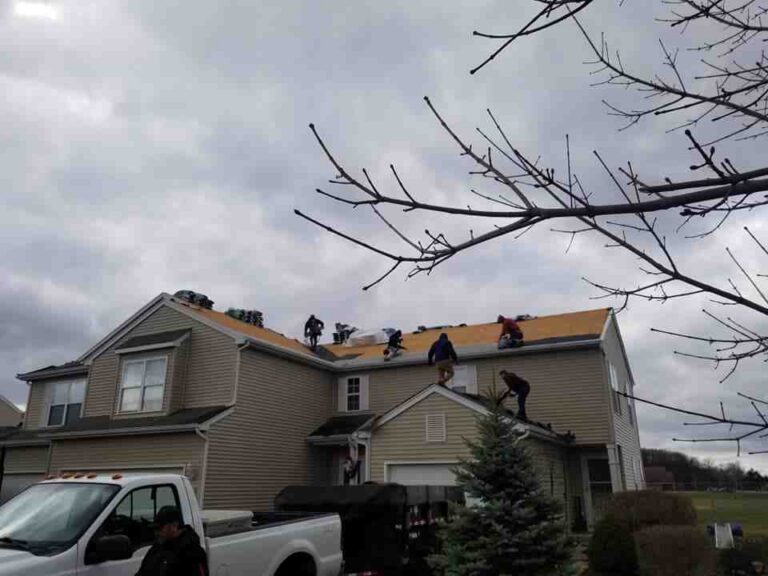
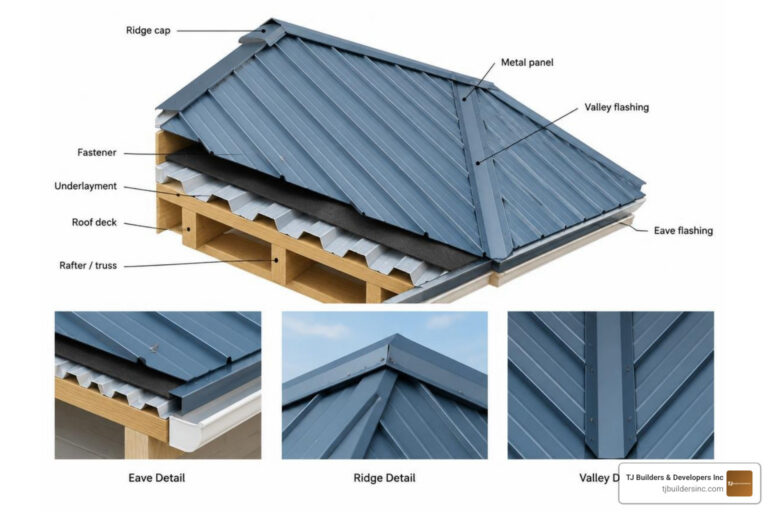
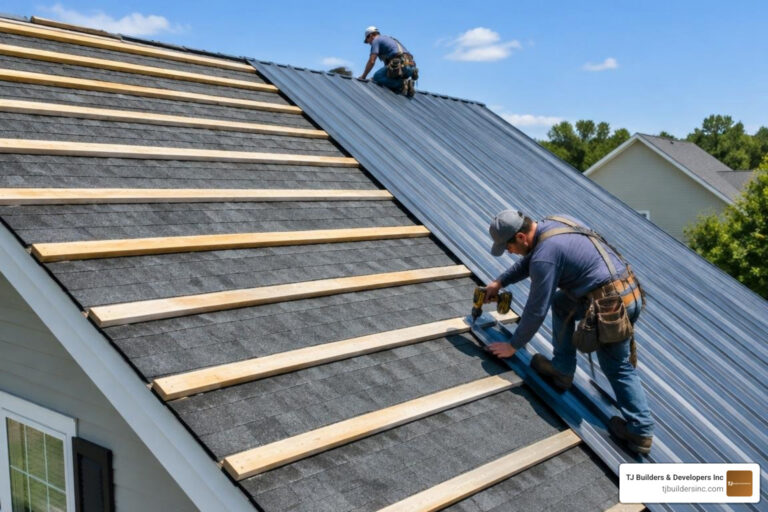
Why Asphalt Roof Installation Matters for Your Home
Asphalt roof installation is a critical home improvement project that protects your property, improves energy efficiency, and boosts curb appeal. With over 80% of U.S. homes using asphalt shingles, understanding the process helps you make informed decisions, whether you’re considering a DIY project or hiring professionals.
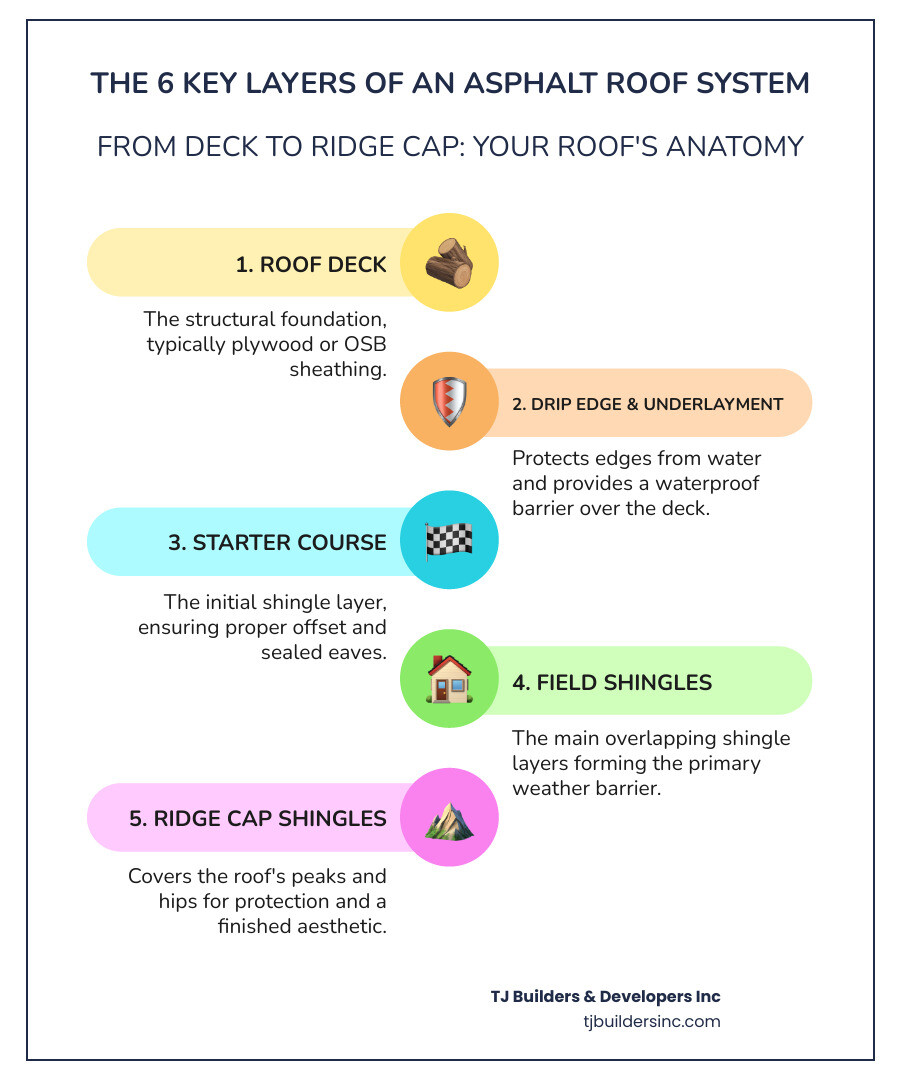
Quick Overview: The 6 Essential Steps
- Prepare the Deck: Remove old materials and inspect the sheathing.
- Install Drip Edge & Underlayment: Apply an ice and water shield, then lay the underlayment.
- Apply Starter Course: Create the foundation row along the eaves.
- Lay Field Shingles: Work from the bottom up with a staggered pattern.
- Flash Valleys & Penetrations: Install metal flashing around vents and in valleys.
- Finish with Ridge Caps: Cap the hips and ridges and seal all exposed nails.
Installing a shingle roof is challenging and dangerous. The key is working from the bottom up, overlapping components correctly so gravity can shed water effectively. Asphalt shingles require a minimum roof slope of 2:12, with standard methods used for slopes from 4:12 to 21:12. As of October 2025, professional installation costs typically range from $5.01 to $6.55 per square foot in our service areas like Lakewood, Crystal Lake, and Schaumburg.
Safety is paramount, as falls from roofs are a leading cause of construction fatalities. This guide walks you through each step, emphasizing safety, material selection, and proper techniques to ensure your roof lasts for decades.
Pre-Installation Essentials: Planning for Success
Before climbing onto the roof, thorough planning is paramount for a successful and safe asphalt roof installation. This stage involves choosing materials, prioritizing safety, measuring your roof, and gathering tools. Getting these details right ensures a smooth project and a long-lasting roof.

Choosing Your Shingles and Materials
The type of asphalt shingle you choose impacts your roof’s appearance, durability, and cost. Here’s a breakdown of the main types:
- Three-Tab Shingles: The most economical option, with a flat, uniform appearance. They are lightweight, easy to install, and typically come with a 20-30 year lifespan.
- Architectural (Laminated) Shingles: Thicker and heavier, these shingles offer a textured, dimensional look mimicking wood or slate. They are more durable, have better wind resistance, and are a popular choice for their aesthetic appeal.
- Luxury Shingles: Premium architectural shingles offering the highest quality, most distinctive designs, and the best performance, designed to replicate natural slate or cedar shakes.
Here’s a quick comparison:
| Feature | 3-Tab Shingles | Architectural Shingles |
|---|---|---|
| Cost | Lower | Moderate to Higher |
| Lifespan | Typically 20-30 years | Typically 30-50 years |
| Appearance | Flat, uniform, classic look | Dimensional, textured, mimics natural materials |
| Wind Resistance | Good (e.g., 60-80 mph) | Excellent (e.g., 110-130 mph) |
| Pros | Economical, lightweight, easy to install | Improved durability, better curb appeal, higher resale value |
| Cons | Less aesthetic variety, shorter lifespan | More expensive, heavier |
Beyond shingles, you’ll need other critical components from suppliers like Home Depot Roofing Materials:
- Underlayment: A protective layer (asphalt-saturated felt or synthetic) over the roof deck that acts as a secondary water barrier.
- Ice and Water Protector: A self-adhering membrane essential in cold climates like Illinois to prevent water backup from ice dams.
- Drip Edge: Metal flashing along eaves and rakes to direct water away from the fascia.
- Flashing: Metal pieces used to create watertight seals around chimneys, vents, and skylights.
- Roofing Nails: Corrosion-resistant, 12-gauge nails with a 3/8-inch head.
- Starter Strips: Shingles for the first course that provide a sealed edge and improve wind resistance.
- Ridge Cap Shingles: Shingles used to cover the hips and ridges of the roof.
Safety First: Essential Precautions
Working on a roof is dangerous. Prioritize personal protection and job site awareness.
- Personal Protective Equipment (PPE): Always use a sturdy ladder, non-slip shoes, a safety harness (especially on steep roofs), safety glasses, and work gloves.
- Fall Protection: Adhere to OSHA standards by using guardrails, safety nets, or personal fall arrest systems.
- Weather Conditions: Never work in rain, high winds, or on icy surfaces. Cold temperatures (below 40°F) can also prevent shingles from sealing properly.
- Electrical Hazards: Be aware of overhead power lines. Maintain a safe distance and contact the utility company if lines are too close.
- Ladder Safety: Position ladders on stable ground at a 1:4 angle (1 foot out for every 4 feet up) and ensure they extend 3 feet above the roof edge.
- Clear Work Area: Keep the roof and ground clear of debris and tools to prevent tripping.
Measuring and Estimating for Your Asphalt Roof Installation
Accurate measurement is crucial to avoid material shortages or waste.
- Calculate Total Roof Area: Measure the length and width of each roof section and sum the areas. For complex roofs, break them down into simple geometric shapes (rectangles, triangles).
- Convert to “Squares”: Roofing materials are sold by the “square” (100 sq ft). Divide your total square footage by 100.
- Account for Waste: Add a 10-15% waste factor for cuts and overlaps, depending on roof complexity.
- Estimate Materials: Based on the number of squares, calculate the needed bundles of shingles (typically 3 per square), underlayment, drip edge, and ridge caps.
- Determine Roof Pitch: Measure the roof’s slope (e.g., 4:12), which is the vertical rise for every 12 inches of horizontal run. This affects application methods.
Gathering Your Tools and Materials
Having the right tools ensures efficiency and quality. Here’s a list of essentials:
- Safety Gear: Sturdy ladder, safety harness, non-slip shoes, safety glasses, and work gloves.
- Measuring & Marking: Tape measure, chalk line, and rafter square.
- Cutting & Fastening: Utility knife with extra blades, and a roofing nailer or hammer.
- Tear-Off & Cleanup: Pry bar, roofing shovel, caulk gun, tin snips, broom, and tarps.
Need Help With Your Home?
TJ Builders & Developers handles roofing, siding, gutters, windows, home additions, and fire damage restoration for homes and businesses in Lakewood, Crystal Lake, Schaumburg, and nearby McHenry County towns.
- Free, no-obligation estimates
- Licensed & insured
- 20+ years of local experience
The Step-by-Step Asphalt Roof Installation Process
With planning complete, it’s time for the core of the asphalt roof installation. This process involves carefully building up layers of protection, starting from the bare roof deck.
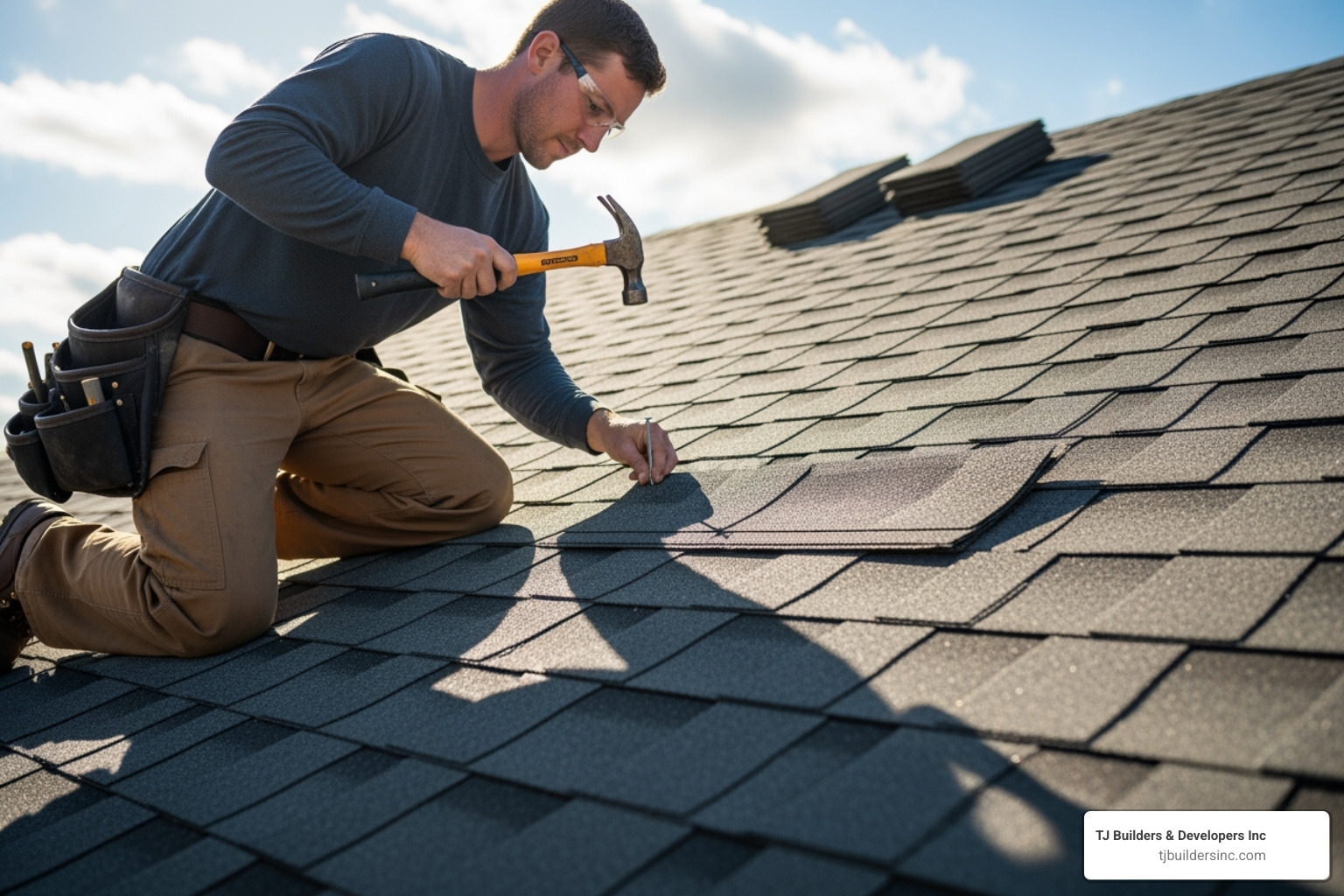
Preparing the Roof Deck
The roof deck is the foundation of your roofing system. Its condition is critical for the performance of your new shingles.
- Tear-Off Old Roofing: We recommend a complete tear-off, removing all existing materials down to the bare deck. This allows for a thorough inspection and provides a clean, stable surface for the new roof.
- Deck Inspection and Repair: Inspect the deck (plywood or OSB) for any rotten or soft wood. Damaged sections must be replaced to ensure the sheathing is solid and securely fastened. For extensive damage, consider professional roof repair services.
- Clean and Smooth Surface: Sweep the entire deck clean of debris, old nails, and dust. A clean, dry, and smooth surface is essential for proper underlayment adhesion and to prevent punctures.
Installing Drip Edge and Underlayment
These layers are the first line of defense against water intrusion.
- Drip Edge Installation: This metal flashing directs water into the gutters. Install it along the eaves under the underlayment and along the rakes (side edges) over the underlayment.
- Ice and Water Protector Application: In Illinois, this self-adhering membrane is critical. Apply it along the eaves, extending up the roof at least 24 inches inside the exterior wall line, to prevent water backup from ice dams.
- Underlayment Application: Lay roofing felt or synthetic underlayment over the entire roof deck, starting from the bottom and working up. Overlap each horizontal row by 2-4 inches to create a continuous barrier, as recommended by sources like the EPA’s Moisture Control Guidance for Building Design, Construction and Maintenance.
Laying and Nailing the Shingles
Precision is key for both aesthetics and performance.
- Creating a Starter Course: Install a starter strip (or a regular shingle with the tabs cut off) flush with the drip edge. This provides a sealed edge and improves wind resistance.
- Installing the First Row: Lay the first full course of shingles directly on top of the starter course, using chalk lines to ensure straightness.
- Staggering Subsequent Courses: To prevent water intrusion, stagger the shingle joints. A common method is to cut 6 inches off the first shingle of the second course, 12 inches off the first shingle of the third course, and so on, creating a visually appealing and water-resistant offset. Use chalk lines to maintain consistent exposure (the visible part of the shingle, typically 5 to 5 5/8 inches).
- Nail Placement: This is critical for wind resistance and warranty coverage. Use four nails per shingle for standard applications (six in high-wind areas), driven straight and flush with the shingle surface. Nails must penetrate at least ¾ inch into the roof deck.
Advanced Techniques and Finishing Touches
Once the main field of shingles is laid, the focus shifts to intricate details like valleys, penetrations, and peaks, where leaks are most likely to occur. These areas require flashing—an added layer of water-shedding material. You can see how to apply flashing materials in concert with the shingle installation procedure for a visual guide.
Mastering Roof Valleys and Flashing
Valleys and penetrations require meticulous attention to prevent leaks.
- Roof Valleys: Where two roof planes meet, you can use one of two methods:
- Open Valley: A continuous strip of metal flashing is installed in the valley, and shingles are cut and sealed along its edges, leaving the metal exposed. This is often preferred for its superior water and debris shedding.
- Closed-Cut Valley: Shingles from one roof plane are laid across the valley, and shingles from the adjoining plane are laid over them and trimmed back from the valley centerline. This creates a continuous shingled appearance.
- Step Flashing for Walls: Where a roof meets a vertical wall, L-shaped metal pieces are woven into each shingle course to direct water away from the wall.
- Flashing Around Pipes and Vents: Use pre-formed pipe collars or custom flashing to create a watertight seal around plumbing stacks and vents. The flashing sits over the shingle below and is covered by the shingle above.
- Chimney Flashing: This complex area requires apron flashing at the front, step flashing along the sides, and counter-flashing mortared into the chimney. A cricket (a small diversionary roof) is often built behind wide chimneys to divert water and debris.
Applying the Finishing Touches
With the main field and flashing complete, the final steps ensure a professional, long-lasting finish.
- Hip and Ridge Capping: Use specialized hip and ridge cap shingles to cover the roof’s peaks and hips. Install them starting from the bottom, overlapping each piece, and nail them securely. You can watch a video about hip and ridge capping.
- Ridge Vent Installation: If your design includes a ridge vent for attic ventilation, it is installed along the peak before the ridge caps are applied.
- Sealing Exposed Nail Heads: Carefully seal any exposed nail heads on ridge caps or flashing with a high-quality roofing cement to prevent water penetration.
- Final Cleanup and Inspection: Conduct a thorough cleanup of the job site. A final inspection ensures all shingles are aligned, nails are sealed, and the new asphalt roof installation is secure and watertight.
Need Help With Your Home?
TJ Builders & Developers handles roofing, siding, gutters, windows, home additions, and fire damage restoration for homes and businesses in Lakewood, Crystal Lake, Schaumburg, and nearby McHenry County towns.
- Free, no-obligation estimates
- Licensed & insured
- 20+ years of local experience
Project Considerations: Cost, Challenges, and Calling a Pro
An asphalt roof installation is a significant project. Understanding the cost, potential pitfalls, and when to call an expert is as important as knowing the installation steps.
Understanding the Costs
The cost of an asphalt shingle roof varies based on roof size and complexity, shingle type, and local labor rates. As of October 2025, the estimated cost in our Illinois service area starts at $5.01 – $6.55 per square foot. Key cost factors include:
- Materials: Shingles, underlayment, flashing, nails, and other components.
- Labor: Wages for the roofing crew, which are a significant portion of the total. General contractor overhead and markup typically add 13% to 22%, as detailed in resources like Labor Wages and Costs: Building a Unit-Price System.
- Tear-Off and Disposal: Costs associated with removing and disposing of the old roof.
- Permit Fees: Required by most municipalities to ensure work meets local building codes.
- Additional Work: Unexpected repairs to the roof deck or fascia can add to the final cost.
Common Challenges in Asphalt Roof Installation
Even with careful planning, challenges can arise. Being aware of these helps avoid costly mistakes:
- Improper Nailing: Overdriven, underdriven, or misplaced nails are a leading cause of leaks and reduced wind resistance.
- Incorrect Flashing: Poorly installed flashing around chimneys, valleys, and vents is a primary source of roof leaks.
- Poor Ventilation: An improperly ventilated attic traps heat and moisture, leading to premature shingle aging, rot, and ice dams.
- Working on Steep Slopes: Steep roofs (over 7:12 pitch) increase safety risks and require special installation techniques.
- Misaligned Shingles: Inconsistent alignment can create a wavy appearance and compromise water shedding.
- Not Following Manufacturer Guidelines: Deviating from the manufacturer’s instructions can void your product warranty.
DIY vs. Hiring a Professional
While a DIY roof installation can seem appealing, the complexities and risks often make hiring a professional the smarter choice.
Consider DIY only if:
- You have extensive roofing experience.
- Your roof is small, low-sloped, and simple (few valleys or penetrations).
- You own all the necessary tools and are committed to strict safety protocols.
Why hire a professional (recommended for most homeowners):
- Safety: Professionals have the training and equipment to work safely at heights, minimizing the significant risk of falls.
- Expertise & Efficiency: An experienced crew understands complex details like flashing, works efficiently, and knows how to handle unexpected issues, minimizing your home’s exposure to the elements.
- Warranties: Reputable contractors like TJ Builders & Developers Inc. offer a workmanship warranty. Professional installation is also often required to validate the manufacturer’s product warranty.
- Tools & Equipment: Professionals have the specialized tools required for a high-quality job, saving you a large upfront investment.
- Code Compliance: A pro ensures the installation meets all local building codes.
- Integrated Services: If your project involves more than just roofing, our team also specializes in siding installation & replacement services, providing a comprehensive solution.
For homeowners in Lakewood, Crystal Lake, and the Chicago suburbs, the peace of mind from a professionally installed roof is well worth the investment.
Frequently Asked Questions about Asphalt Roof Installation
What is the minimum slope for installing asphalt shingles?
Asphalt shingles are designed for roof slopes of 2:12 (2 inches of rise for every 12 inches of run) or greater. Slopes between 2:12 and 4:12 are considered low-slope and require special application methods, such as a double layer of underlayment. Standard methods are used for slopes from 4:12 to 21:12. Shingles should not be used on roofs with a slope less than 2:12.
How many nails should be used per shingle?
Standard application requires four nails per shingle, placed according to manufacturer specifications. However, in high-wind areas or on steep-slope roofs, six nails per shingle are recommended for improved wind resistance and to meet warranty requirements.
Can I install new shingles over an old layer?
While some local codes may permit one reroofing layer, we almost always recommend a complete tear-off. A tear-off allows for a full inspection and repair of the roof deck, ensuring it is structurally sound. It also provides a flat, stable surface for the new shingles, which maximizes their lifespan and prevents the new roof from inheriting issues from the old one. Installing over an existing layer can also void some manufacturer warranties.
Conclusion
This guide has highlighted the intricate process of asphalt roof installation. From material selection and safety to deck preparation and precise shingle laying, every step is vital for a durable, long-lasting roof. Details like proper flashing, shingle staggering, and correct nail placement are critical for a watertight and attractive finish.
While a DIY installation can be rewarding, its complexity and risks mean it’s not for everyone. The potential for injury, costly mistakes, and voided warranties often outweighs any savings. For a guaranteed professional result that protects your home for decades, especially in the varied weather of Lakewood, Crystal Lake, and the Chicago suburbs, consider consulting with experts.
At TJ Builders & Developers Inc., we pride ourselves on reliable workmanship and customer satisfaction. If you’re considering a new roof or need expert advice on our roofing services, we’re here to help you nail it.