
Understanding Permit Requirements for City of Lakewood Roofing Inspections
City of Lakewood roofing inspections are required for most roofing projects — and skipping the process can mean fines, failed sales, or being forced to tear off finished work.
Here’s a quick snapshot of what you need to know:
| Location | Permit Required? | Portal | Flat Fee |
|---|---|---|---|
| Lakewood, CO | Yes (full replacements, structural repairs) | eTRAKiT | $110 |
| Lakewood, OH | Yes (re-roofing and repairs) | CitizenServe | Varies |
| Lakewood, CA | Yes (re-roofing) | OpenGov | Varies |
| Lakewood, WA | Yes (re-roofing) | Contact city | Varies |
Key exemptions: In Lakewood, CO, repairs under 100 square feet do not require a permit. Minor shingle overlays under 25% of roof area may also be exempt.
Getting a permit wrong — or skipping one entirely — is one of the most common and costly mistakes homeowners make. Inspectors in Lakewood follow strict code requirements covering everything from underlayment and flashing to nailing patterns and slope minimums. One missed step can mean a failed inspection and expensive rework.
This guide walks you through every stage of the process: what triggers a permit, how to apply, what inspectors look for, and how to pass the first time.
I’m Thomas Pruszynski from TJ Builders & Developers Inc, and with over 20 years of hands-on experience in residential exterior construction — including navigating city of Lakewood roofing inspections — I’ve seen what separates a smooth approval from a costly reinspection. In the sections ahead, I’ll break down exactly what you need to know to get it right.
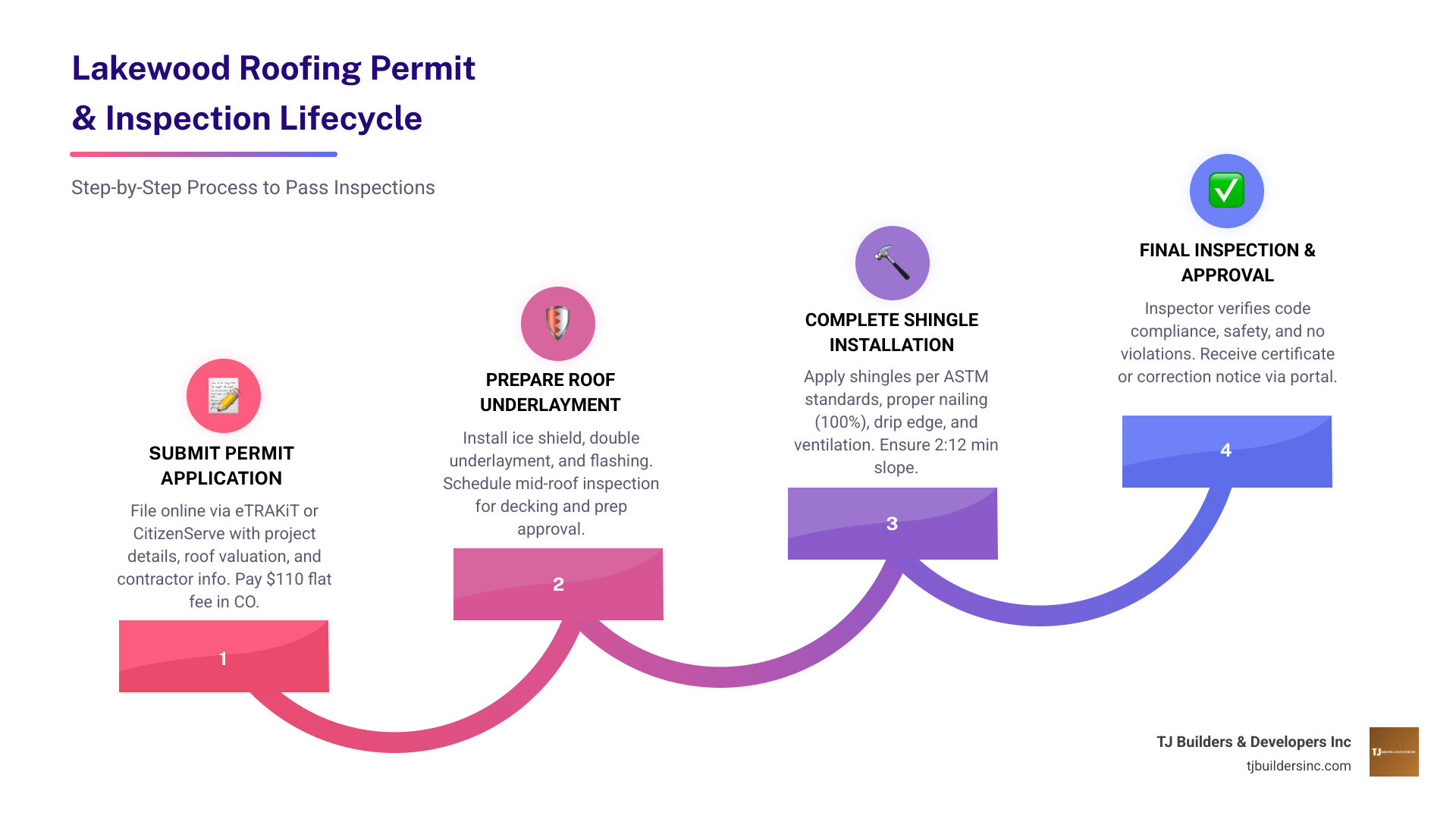
When we talk about city of Lakewood roofing inspections, the first hurdle isn’t the ladder—it’s the paperwork. Many homeowners assume that because they own the home, they can swap out a few shingles or even replace the whole deck without telling the city. In reality, the building department views the roof as a critical structural component that protects the life and safety of the occupants.

A permit is more than just a fee; it is a contract with the city ensuring that the work meets the current International Residential Code (IRC). Whether you are dealing with a reroofing project or a complete tear-off, the city wants to ensure the new system can handle the local climate’s demands, from heavy snow loads to high winds.
According to Lakewood’s Building Code § 105.2, most work that involves structural changes or complete replacements requires official oversight. You can find a detailed list of exemptions from permits provided by the city, but for most substantial roofing work, you should expect to file an application.
When a Permit is Mandatory
In almost every “Lakewood” across the country, a permit is mandatory for:
- Full Tear-offs: Removing the old material down to the roof deck.
- Structural Decking Repairs: If you find rotted plywood or oriented strand board (OSB) that needs replacing, the city needs to verify the new deck is fastened correctly.
- Material Changes: Switching from asphalt shingles to heavy tile or metal often requires a structural review to ensure the rafters can support the weight.
We always tell our clients in the Northern Illinois suburbs, like Lakewood and Crystal Lake, that pulling a permit is your best insurance policy. It ensures that the roofing work is documented and compliant, which is vital when it comes time to sell your home.
Exemptions for Minor Repairs
There are a few instances where you can skip the permit line. In Lakewood, CO, for example, repairs of less than 100 square feet (one “square” in roofing lingo) do not require a permit. Additionally, minor shingle overlays that cover less than 25% of the total roof area may be exempt, though we generally advise against overlays as they trap heat and shorten the life of the new shingles.
For more information on what constitutes a “minor” repair versus a regulated project, you can visit the city’s building and construction permits page.
Regional Variations: Navigating Portals and Fees
If you are a property owner or manager with buildings in different Lakewoods, you’ve likely noticed that every city hall has its own way of doing things. Some prefer high-tech portals, while others still value a phone call.
Navigating the City of Lakewood Roofing Inspections in Colorado
Lakewood, CO, has streamlined its process for residential trades. For a single-family home, duplex, or townhome, there is often a $110 flat fee for a roofing permit. This is much simpler than the valuation-based fees used for major additions or new builds.
To get started, you’ll use the eTRAKiT portal. This is where you’ll upload your building permit application, pay your fees, and eventually schedule your inspections. If you’re a contractor, you’ll need to be registered in the system before you can pull trade-specific permits. You can find the full fee schedule PDF online to calculate costs for larger commercial projects.
Compliance in Ohio and California
In Lakewood, OH, the process moves through citizenserve.com/lakewoodoh. The city is very protective of its historic housing stock, so contractor registration is strictly enforced. You can’t just have a “guy with a truck” do the work; they must be registered with the city and provide proof of insurance.
Meanwhile, Lakewood, CA, has recently transitioned its Building & Safety services. They now use the OpenGov portal for all building permit applications and plan checks. Whether you are in California or Ohio, the goal remains the same: ensuring the roof is installed to handle local weather, whether that’s coastal winds or Great Lakes snow.
Technical Code Requirements and Material Standards
The city of Lakewood roofing inspections aren’t just a “looks good” check. Inspectors are looking for specific technical benchmarks. If you’re installing asphalt shingles, they must meet high standards for wind resistance.
In many areas, shingles must meet ASTM D 7158 classification F or H. These ratings mean the shingles have been tested to withstand high-velocity winds. At TJ Builders & Developers Inc, we prioritize these high-performance materials because we know how punishing the weather can be in the Chicago suburbs. When we perform an asphalt roof installation, we ensure every bundle meets or exceeds these local requirements.
Underlayment and Ice Barrier Rules
One of the biggest reasons for a failed inspection is improper underlayment. In cold climates, an ice barrier (often called “Ice and Water Shield”) is non-negotiable.
- Ice Barrier: Must extend from the eave’s edge to a point at least 24 inches inside the exterior wall line. This prevents leaks caused by ice dams.
- Felt Paper: For standard slopes (4:12 and up), a single layer of #15 felt is usually enough. However, for lower slopes (2:12 to 4:12), you must use double underlayment with a 19-inch overlap to ensure water cannot seep through.
For a deeper dive into these layers, check out our roof installation & replacement complete guide.
Slope and Ventilation Specifications
The slope of your roof dictates what materials you can use. Asphalt shingles generally require a minimum slope of 2:12. If your roof is flatter than that, you’ll likely need a flat roof installation using rolled roofing or membrane systems.
Ventilation is the other “silent killer” of roofs. If your attic can’t breathe, heat builds up, frying your shingles from the inside out and causing ice dams in the winter. Inspectors will check to ensure you have adequate intake (soffit vents) and exhaust (ridge or box vents) to meet the 1/300 rule (1 square foot of ventilation for every 300 square feet of attic floor space).
Preparing for Your City of Lakewood Roofing Inspections
Preparation is the difference between a ten-minute sign-off and a two-hour headache. When the inspector arrives, they need to be able to do their job safely and efficiently.
Scheduling and Ladder Access for City of Lakewood Roofing Inspections
In Lakewood, CO, you can schedule your inspection through the eTRAKiT dashboard. But here is the catch: you must provide a safe ladder for the inspector. If the ladder isn’t set up, or if it doesn’t meet OSHA safety standards, the inspector will likely drive away and charge you a reinspection fee.
Make sure your permit is printed and posted in a visible location (usually a front window). You can find more about the different eTRAKiT permit types to ensure you’ve requested the correct inspection for your specific project phase.
The Mid-Roof Inspection Process
For some roofs, a “final” inspection isn’t enough. If you are installing a tile or metal roof system (excluding standing-seam), the city of Lakewood roofing inspections require a “mid-roof” check.
This happens after the underlayment (felt), flashing, and battens are installed, but before the actual tiles or metal panels go on. The inspector needs to see that the “bones” of the waterproofing system are correct. This is especially important for storm hail damage restoration, where the integrity of the underlying layers is paramount.
Common Violations and How to Avoid Failure
We’ve seen it all—from shingles nailed with too few fasteners to flashing that looks like it was installed with a glue stick. To pass your city of Lakewood roofing inspections, you need to pay attention to the details.
Fastening and Nailing Patterns
Nailing is the most common point of failure. Most shingles require four to six nails per shingle, placed specifically in the “nailing strip.” If the nails are too high, they won’t hold the shingle below. If they are too low, they’ll be exposed to the weather and rust.
For heavy materials like tile, the requirements are even stricter. If the tile weight exceeds 7.5 pounds per square foot, the city may require an engineer’s review of the roof structure. During a hail damage roof replacement, we ensure that every fastener meets the manufacturer’s high-wind specifications to avoid uplift during the next big storm.
Flashing and Penetration Errors
Flashing is what keeps water out of the “holes” in your roof—chimneys, vents, and skylights.
- Crickets: If you have a chimney wider than 30 inches, the code requires a “cricket” or saddle to divert water around it.
- Drip Edge: This must be installed at both eaves and rakes. It should overlap at the ends by at least 2 inches and extend down below the roof sheathing.
- Pipe Boots: All roof jacks and storm collars must be replaced during a reroof. Reusing old, cracked rubber boots is a guaranteed way to fail an inspection.
If you have a leaky skylight, don’t just caulk it. A proper skylight repair in Lakewood involves removing the surrounding shingles and installing new step flashing to ensure a watertight seal. If you’re unsure about a leak, our roof repair team can help identify these common failure points before the inspector does.
Frequently Asked Questions about Lakewood Roofing
Do homeowners need a license to perform their own roofing work?
In many Lakewood jurisdictions, including Lakewood, CO and OH, homeowners can pull an “Owner-Builder” permit. This allows you to perform the work yourself on your primary residence. However, you are still held to the exact same code standards as a professional. You’ll still need to register on portals like CitizenServe and pass every inspection phase. If you hire anyone to help you, they must be a registered contractor with the city.
What assistance is available for low-income roof repairs?
For residents in Lakewood, WA, there are robust assistance programs. Martha Larkin is a key contact for the CDBG (Community Development Block Grant) programs, which offer 0-1% interest loans for essential repairs like roofing, plumbing, and electrical. These programs are designed to help low-to-moderate-income households maintain safe living conditions.
How do I check the status of a failed inspection?
If you fail an inspection, don’t panic. You can log into your eTRAKiT portal to view the inspector’s comments. These notes will tell you exactly what needs to be fixed. Once the corrections are made, you can schedule a “re-inspection.” Be aware that most cities charge a fee for a second visit if the first failure was due to obvious negligence or lack of access.
Conclusion
Navigating city of Lakewood roofing inspections doesn’t have to be a nightmare. By understanding the permit requirements, following the technical codes for underlayment and flashing, and preparing your site for the inspector, you can ensure your project stays on track.
At TJ Builders & Developers Inc, we take the stress out of the process. Whether you’re in Lakewood, IL, or the surrounding Chicago suburbs like Schaumburg and Palatine, we handle the permitting, the installation, and the inspections for you. Our commitment to professional workmanship and durability means your roof won’t just pass inspection—it will protect your home for decades to come.
If you’re ready to start your next exterior project, from roofing to siding and gutters, reach out to us. We’ll make sure your home is the best-protected one on the block.