Why Green Roofing Contractors Are Essential for Your Sustainable Building Project
Green roofing contractors specialize in designing and installing living roof systems that combine environmental benefits with long-term property protection. If you’re exploring green roofing options, here’s what you need to know:
What Green Roofing Contractors Do:
- Design and install extensive or intensive green roof systems
- Assess structural capacity and perform load calculations
- Source specialized materials (waterproofing membranes, growing media, vegetation)
- Steer local building codes and permit requirements
- Provide ongoing maintenance and inspection services
Key Qualifications to Look For:
- Green Roof Professional (GRP) or Green Roof Installation & Maintenance Professional (GRIMP) certification
- Portfolio of completed projects in your climate zone
- Knowledge of structural requirements and waterproofing systems
- Proper licensing, bonding, and insurance coverage
- Experience with local weather patterns and suitable plant species
Green roofs offer exceptional benefits that traditional roofing systems simply can’t match. They can last 40 years or more—double the lifespan of conventional roofs—while reducing energy costs, managing stormwater runoff, and creating natural habitats for local wildlife. The vegetation covering a green roof acts as a natural insulator, keeping buildings cooler in summer and warmer in winter, which translates directly to lower utility bills.
But here’s the challenge: installing a green roof isn’t like replacing asphalt shingles. It requires specialized expertise in waterproofing systems, drainage design, structural engineering, and horticulture. The wrong contractor can leave you with leaks, plant die-off, or even structural problems.
That’s why choosing the right green roofing contractor is critical. You need someone who understands how these complex systems work together—from the waterproof membrane at the base to the carefully selected plants on top. Not all roofing contractors have this knowledge, and attempting to work with a generalist can lead to costly mistakes.
I’m Thomas Pruszynski, and at TJ Builders & Developers, we’ve spent over 20 years helping Northern Illinois homeowners protect and improve their properties with expert exterior solutions. While we specialize in traditional roofing, siding, and restoration, I’ve researched extensively how green roofing contractors approach these sustainable systems to help you make informed decisions about your property’s future.
Learn more about Green roofing contractors:
Understanding the Value of a Green Roof
When we talk about green roofs, we’re not just discussing a trendy architectural feature; we’re exploring a robust, multifaceted system that brings significant advantages to both property owners and the environment. For homeowners and businesses across Lakewood, Crystal Lake, Schaumburg, and the wider Chicago suburbs, embracing green roofing can be a game-changer. Green roofs offer exceptional energy efficiency, leading to substantial energy savings and lower utility bills. They also provide better sound and weather insulation, creating a more comfortable indoor environment.
Perhaps one of the most compelling statistics is that green roofs can have up to a 200% longer lifespan compared to conventional roofs. While a traditional roof might last around 20 years, a properly installed and maintained green roof can endure for 40 years or more, offering remarkable long-term money savings by delaying costly replacements. This extended lifespan is due to the protective layer of vegetation and soil, which shields the underlying roofing membrane from harsh UV rays, extreme temperature fluctuations, and physical damage.
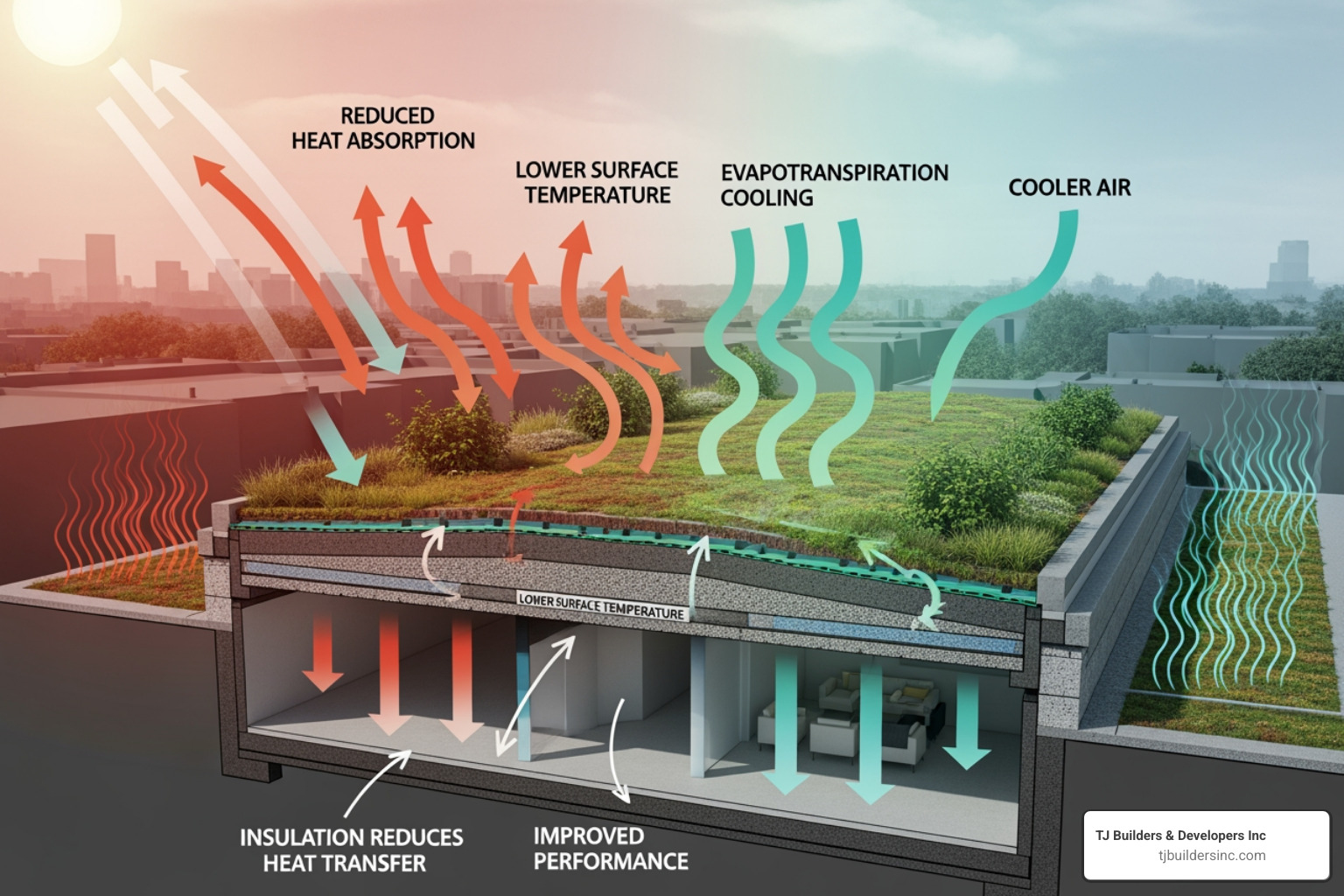
Beyond the immediate financial and structural benefits, green roofs are powerful tools for environmental sustainability. They naturally absorb stormwater, significantly reducing the need for expensive drainage systems and alleviating pressure on urban infrastructure. This ability to capture rainwater and reduce stormwater runoff is particularly valuable in densely populated areas like our Chicago suburbs, where impervious surfaces often contribute to flooding. Green roofs also play a vital role in combating the urban heat island effect, a phenomenon where cities become significantly warmer than surrounding rural areas due to heat absorption by conventional building materials. By insulating the building and cooling the air through evapotranspiration, green roofs help moderate urban temperatures.
Furthermore, these living landscapes improve air quality and air filtration by absorbing pollutants and increasing oxygen production. They contribute to urban biodiversity, creating essential habitats for native and migrating species, including pollinators. Imagine a vibrant ecosystem thriving right on your rooftop! Research from institutions like Kent State University consistently highlights these profound sustainable building benefits. We believe that choosing a green roof is not just an upgrade; it’s an investment in a healthier, more sustainable future for your property and community.
Primary Benefits for Homeowners and Businesses
For our clients in Northern Illinois, the decision to install a green roof often comes down to a blend of practical advantages and a desire for sustainable living. Here’s how green roofs deliver:
- Increased Property Value: A beautifully designed green roof can significantly improve a property’s curb appeal and market value. It’s a unique selling point that attracts environmentally conscious buyers and renters.
- Aesthetic Appeal: Let’s face it, a lush, living roof is far more appealing than a stark, gray one. Green roofs offer a dynamic, ever-changing landscape that connects urban dwellers with nature, providing a serene and visually stunning addition to any building.
- Additional Usable Green Space: For commercial buildings or multi-family residences in areas like Schaumburg or Palatine, a green roof can transform an otherwise unused space into a rooftop garden, amenity deck, or even an urban farm. This creates valuable recreational or productive areas.
- Reduced Noise Pollution: The layers of soil and vegetation on a green roof act as excellent sound insulators, dampening external noise from traffic and urban activities. This can lead to a quieter, more peaceful indoor environment.
- Natural Habitat Creation: By providing a haven for plants, insects, and birds, green roofs support local ecosystems and contribute to urban biodiversity, especially crucial in developed areas like Elk Grove Village and Mount Prospect.
- Contribution to Community Sustainability Goals: Installing a green roof demonstrates a commitment to environmental stewardship, aligning with broader community efforts to create greener, more resilient cities.
Environmental Impact and Sustainability
The environmental footprint of a green roof is overwhelmingly positive, offering solutions to several pressing urban challenges:
- Rainwater Absorption and Reduced Stormwater Runoff: This is a huge benefit for our local infrastructure. Green roofs act like giant sponges, soaking up rainwater and slowly releasing it, significantly reducing the volume of water flowing into storm drains and preventing localized flooding. This helps manage stormwater drainage more effectively.
- Air Filtration and CO2 Reduction: The plants on a green roof actively filter airborne pollutants and absorb carbon dioxide, releasing fresh oxygen. This direct improvement in air quality and air filtration contributes to a healthier urban atmosphere.
- Support for Pollinators: Many green roofs are designed with native and pollinator-friendly plants, providing crucial food sources and habitats for bees, butterflies, and other beneficial insects whose populations are often threatened in urban settings.
- Extended Membrane Life: As mentioned, the vegetation layer protects the underlying roofing membrane from UV radiation, extreme temperatures, and physical wear, extending its life well beyond the typical 20 years of a conventional roof. This means fewer roof replacements over time, reducing waste in landfills.
- Urban Heat Island Effect Mitigation: Traditional roofs absorb and radiate heat, contributing to higher temperatures in urban areas. Green roofs, through shading and evapotranspiration, cool the surrounding air, helping to lower ambient temperatures and reduce the energy demand for air conditioning.
Need Help With Your Home?
TJ Builders & Developers handles roofing, siding, gutters, windows, home additions, and fire damage restoration for homes and businesses in Lakewood, Crystal Lake, Schaumburg, and nearby McHenry County towns.
- Free, no-obligation estimates
- Licensed & insured
- 20+ years of local experience
Types of Green Roof Systems and Key Components
Understanding the different types of green roof systems is crucial when planning your project. The choice between them depends on your building’s structural capacity, aesthetic goals, and maintenance commitment. Essentially, green roofs are categorized into extensive and intensive systems, each with distinct characteristics. Regardless of type, they all rely on several essential components working in harmony to create a resilient and thriving rooftop ecosystem.
Extensive vs. Intensive Green Roofs
The primary distinction between green roof systems lies in their depth and weight, which in turn dictates the type of vegetation and maintenance required.
| Feature | Extensive Green Roof | Intensive Green Roof |
|---|---|---|
| Soil Depth | 2-6 inches (5-15 cm) | 6 inches to several feet (15 cm to over 1 meter) |
| Weight | Lightweight (15-50 lbs/sq ft saturated) | Heavyweight (80-150+ lbs/sq ft saturated) |
| Plant Types | Drought-tolerant, low-growing plants (sedum, grasses, mosses) | Diverse plant palette (shrubs, trees, vegetables, perennials) |
| Maintenance Needs | Minimal (occasional weeding, fertilization, irrigation) | High (regular weeding, pruning, fertilization, irrigation) |
| Typical Cost | Lower installation cost per sq ft | Higher installation cost per sq ft |
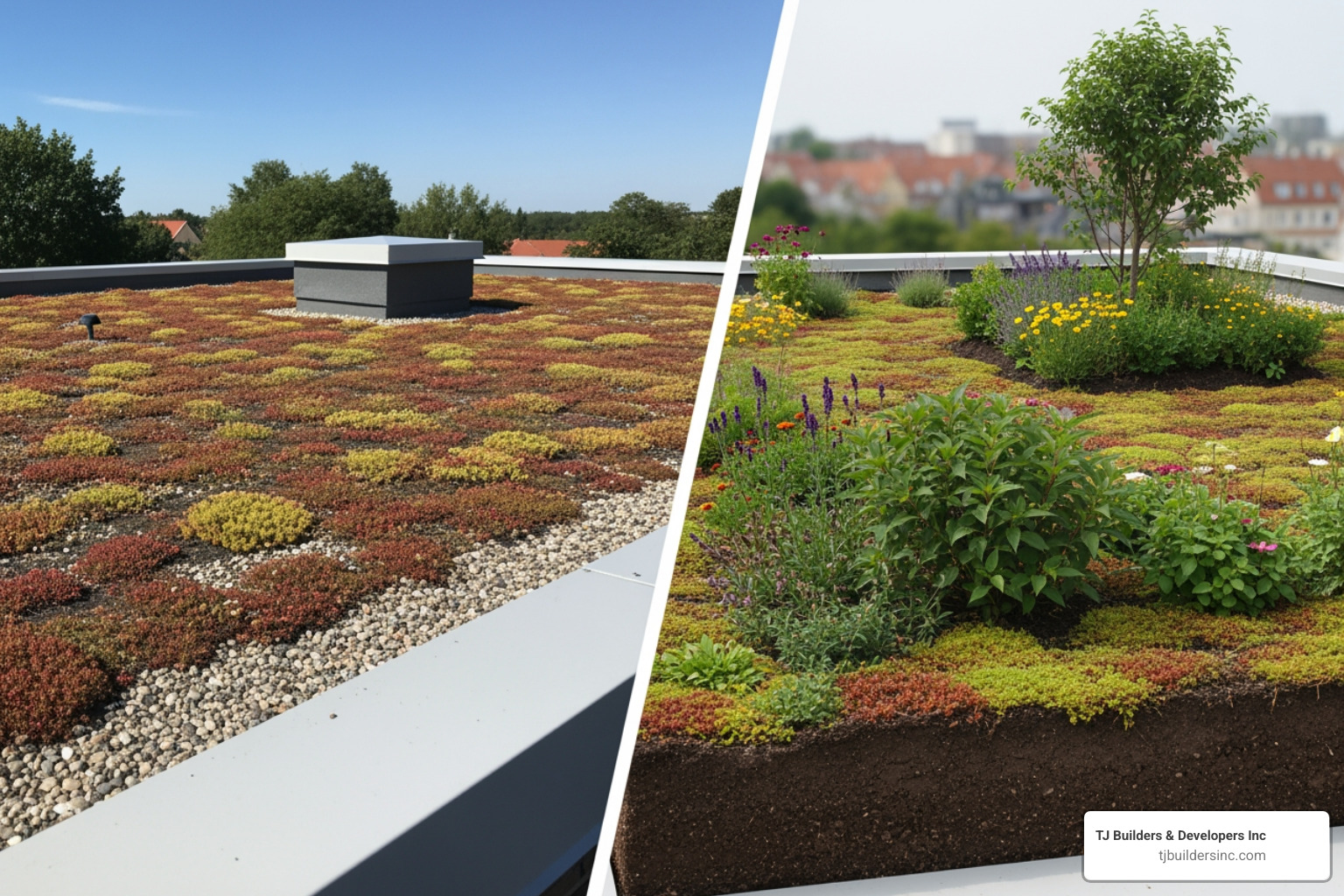
Extensive green roofs are designed to be lightweight and require minimal maintenance. They are often chosen for roofs with limited structural capacity or where access is infrequent. Their shallow soil depth supports hardy, drought-tolerant plants like sedum, which are well-suited to the sometimes harsh conditions of a rooftop in our Northern Illinois climate. They offer excellent environmental benefits with a lower upfront investment.
Intensive green roofs, on the other hand, are essentially rooftop parks or gardens. With deeper soil, they can support a wider variety of plants, including shrubs, trees, and even urban agriculture. These systems are heavier and require significant structural support, as well as more intensive maintenance, similar to a ground-level garden. They create more accessible and interactive green spaces but come with a higher cost and greater ongoing care.
Then there are semi-intensive green roofs, which fall somewhere in between, offering a compromise of deeper soil for more diverse planting than extensive systems, but less weight and maintenance than intensive ones. Our experienced green roofing contractors can help you determine which system is best suited for your property’s structure and your vision.
Essential Green Roof Components
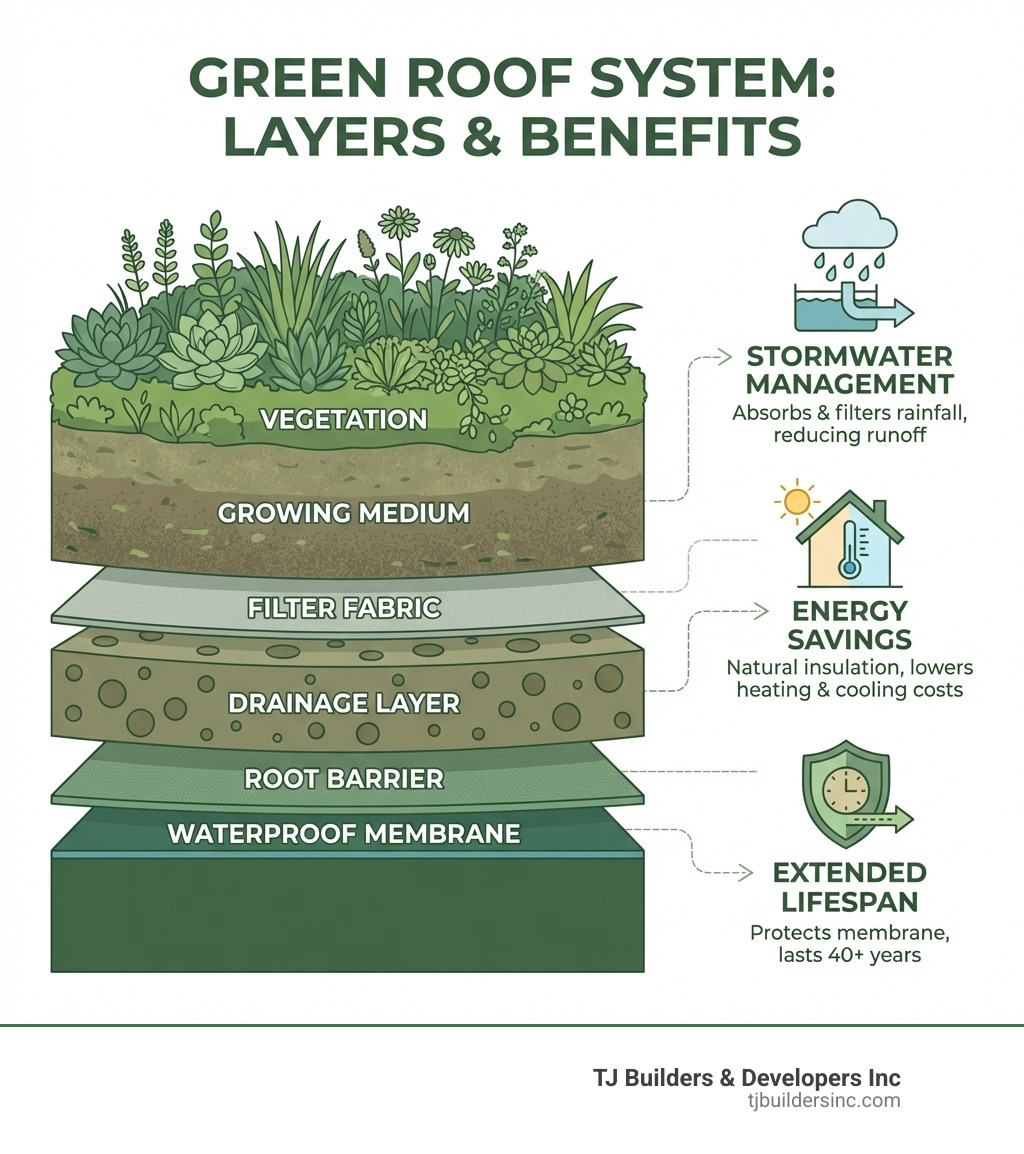
Regardless of whether you choose an extensive or intensive system, every successful green roof relies on a carefully engineered layering system. These components work together to protect your building, support plant life, and manage water effectively:
- Waterproofing Membrane: This is the most critical layer, forming the primary barrier against water infiltration. It must be robust, durable, and installed with absolute precision. High-quality membranes from manufacturers like Siplast or Tremco Roofing are often specified for their reliability.
- Root Repellent System (Root Barrier): Directly above the waterproofing, this layer prevents plant roots from penetrating and damaging the membrane. Some waterproofing membranes integrate root resistance, while others require a separate root barrier.
- Drainage and Retention Layer: This component manages water flow. It allows excess water to drain away while retaining a certain amount for plant uptake. Materials can range from granular aggregates to specialized drainage boards. Companies like DeepRoot offer solutions for efficient water management.
- Filter Cloth: Placed above the drainage layer, the filter cloth prevents fine soil particles from washing down and clogging the drainage system while still allowing water to pass through.
- Lightweight Growing Medium: This specialized soil mix is engineered to be lightweight, retain moisture, and provide nutrients for plants, all while allowing for adequate drainage. It’s not your typical garden soil. Suppliers like Rooflite are industry leaders in providing optimized growing media for rooftop environments.
- Vegetation: The living layer! Plant selection is key, especially for our Northern Illinois climate. Drought-tolerant sedum varieties are popular for extensive roofs, while intensive roofs allow for a wider palette. Nurseries like Green Roof Plants and Jelitto Perennial Seeds specialize in suitable plant species.
The Essential Guide to Hiring Green Roofing Contractors
Choosing the right green roofing contractors is paramount to the success and longevity of your green roof project. This isn’t a task for just any roofer; it requires a specialized skill set that blends construction expertise with horticultural knowledge and an understanding of sustainable design principles. We often encounter questions about Roof Installation & Replacement: Complete Guide for traditional systems, but green roofs introduce an entirely new layer of complexity.
Why You Need Specialized Green Roofing Contractors
The unique demands of a green roof mean you need professionals with specific qualifications and experience, particularly when navigating the climate and building regulations of Northern Illinois.
- Green Roof Professional (GRP) Certification: Look for contractors whose teams hold GRP or Green Roof Installation & Maintenance Professional (GRIMP) certifications. These credentials signify specialized training in green roof design, installation, and maintenance best practices.
- Experience with Local Climate (Northern Illinois): Our region experiences distinct seasons, from cold, snowy winters to hot, humid summers. A contractor with a proven track record of successful green roof installations in areas like Barrington, Crystal Lake, or Schaumburg will understand which plants thrive here and how to design systems to withstand local weather patterns.
- Structural Load Assessment Knowledge: This is non-negotiable. Green roofs, especially intensive ones, add significant weight to a structure. A qualified contractor will always insist on a structural engineer’s assessment to ensure your building can safely support the added load of soil, plants, and retained water. We prioritize safety above all else.
- Portfolio of Past Projects: A strong portfolio demonstrates their expertise and provides examples of their work. Ask to see projects similar to yours, ideally within the Chicago suburbs, to gauge their understanding of local conditions and aesthetic preferences.
- Understanding of Local Building Codes: Green roof installations must comply with local building codes and permitting requirements. An experienced contractor will be familiar with these regulations in your specific municipality, ensuring a smooth and compliant installation process.
- Proper Insurance and Bonding: As with any major construction project, ensure your chosen green roofing contractors are fully licensed, bonded, and insured. This protects you from liability in case of accidents or unforeseen issues during the installation.
Key Design and Installation Considerations
The success of a green roof is heavily reliant on meticulous planning and precise installation. Our approach to exterior construction emphasizes attention to detail, and green roofs are no exception.
- Structural Analysis: As mentioned, this is the first and most critical step. A structural engineer will determine your roof’s load-bearing capacity and whether any reinforcements are needed.
- Roof Slope and Drainage Planning: While green roofs absorb a lot of water, proper drainage for excess water is essential to prevent saturation and structural strain. The design must account for the roof’s slope to ensure efficient water flow.
- Sun Exposure and Wind Patterns: The amount of sunlight and exposure to wind on your rooftop will dictate plant selection and irrigation needs. A north-facing roof in Palatine will require different plants than a south-facing one in Lakewood.
- Plant Selection for Four-Season Climates: Choosing plants that can withstand the diverse temperatures and conditions of Northern Illinois is vital for a thriving green roof. Drought-tolerant, native, and hardy species are often preferred for their resilience.
- Irrigation System Needs: Even drought-tolerant plants may need supplemental irrigation during dry spells, especially during establishment. The design should include an efficient irrigation system, if necessary, to ensure plant health without wasting water.
- Waterproofing Integrity: The waterproofing membrane must be impeccably installed to prevent leaks. This involves careful preparation of the roof deck, proper flashing details, and thorough testing. We always emphasize the integrity of the underlying roof system. More info about our roofing services and our commitment to quality apply here.
Services Offered by Professional Green Roofing Contractors
A comprehensive green roofing contractor offers a full spectrum of services to guide you from conception to a flourishing rooftop.
- Consultation and Design Assistance: From initial ideas to detailed blueprints, they work with you to plan a green roof that meets your aesthetic, functional, and budgetary requirements, considering your building’s specifics and our local climate.
- Project Management: They oversee the entire installation process, coordinating all trades, managing timelines, and ensuring quality control from start to finish.
- Sourcing High-Quality Materials: They have established relationships with reputable suppliers for everything from specialized waterproofing membranes and root barriers (like those from Carlisle SynTec or W. R. Meadows) to lightweight growing media (such as Rooflite) and appropriate plants.
- Full System Installation: This includes the expert installation of every layer, from the waterproofing to the plants, ensuring each component is correctly placed for optimal performance and longevity.
- Ongoing Maintenance Plans: A green roof, like any garden, benefits from regular care. Professional contractors offer maintenance services such as weeding, fertilization, irrigation checks, and plant health assessments to keep your roof thriving.
- Leak Detection and Repair Services: While rare with proper installation, issues can arise. Contractors should offer specialized leak detection services, often using advanced techniques like Electronic Leak Detection (ELD), to quickly identify and repair any breaches in the waterproofing.
Need Help With Your Home?
TJ Builders & Developers handles roofing, siding, gutters, windows, home additions, and fire damage restoration for homes and businesses in Lakewood, Crystal Lake, Schaumburg, and nearby McHenry County towns.
- Free, no-obligation estimates
- Licensed & insured
- 20+ years of local experience
Cost, Incentives, and Long-Term ROI
Investing in a green roof is a significant decision, and understanding the financial aspects is key. While the upfront cost can be higher than a conventional roof, the long-term savings and benefits often make it a wise investment for properties in the Chicago suburbs.
Typical Cost and Financial Incentives
The cost of installing a green roof varies widely based on several factors:
- System Type: Extensive green roofs are generally less expensive per square foot due to shallower soil and simpler plant palettes. Intensive systems, with deeper soil, more diverse plants, and potentially structural reinforcements, will have a higher cost.
- Building Accessibility: If your roof is difficult to access, requiring specialized equipment like cranes or blower trucks (like those used by Jet Mulch for delivering soil), installation costs can increase.
- Plant Choices: Rare or specialized plant species will naturally cost more than common, hardy varieties.
- Structural Requirements: If your building requires significant structural reinforcement to support the green roof’s weight, this will add to the overall expense.
While we don’t have specific green roof incentive programs unique to every town in Northern Illinois at this moment, it’s always worth exploring. Some cities or states offer incentives for sustainable building practices. For example, the Eco-Roof Incentive Program in Toronto offers grants of $100 per square meter for green roof installations. This highlights the kind of financial support that can exist and encourages us to stay informed about potential future programs in our area. Beyond direct incentives, the increased property value and significant energy savings contribute to a healthy return on investment. Green roofs offer exceptional energy efficiency, leading to energy savings that can lower energy costs year after year.
Lifespan and Maintenance Requirements
One of the most compelling arguments for green roofs is their remarkable longevity and relatively low maintenance compared to the constant upkeep some might expect.
- Comparison to Traditional Roofing Systems: As we’ve noted, a conventional roof typically has a 20-year lifespan. Green roofs, by contrast, can last 40 years or more, sometimes even 60 years. This extended lifespan is a direct result of the protective vegetative layer shielding the waterproofing membrane from UV radiation, extreme temperatures, and physical damage, which are the primary causes of degradation in traditional roofing materials. This means fewer roof replacements over time, translating to significant long-term savings and less disruption to your property. For example, while we offer quality asphalt shingles that are durable, even the best asphalt roof cannot match the lifespan of a well-maintained green roof.
- Maintenance Needs: The level of maintenance depends heavily on the type of green roof. Extensive green roofs are known for their low maintenance requirements. They generally need occasional weeding, especially during establishment, and perhaps some fertilization once or twice a year. Intensive green roofs, being more like traditional gardens, will require more regular care, including weeding, pruning, and consistent irrigation.
- Irrigation Checks: While many green roof plants are drought-tolerant, especially in our climate, periodic checks of the irrigation system (if installed) are crucial to ensure plants receive adequate water, particularly during dry spells.
- Annual Inspections: We recommend annual inspections for any roof, and green roofs are no different. A professional inspection can identify potential issues early, ensure the drainage system is functioning correctly, and assess plant health. With proper care, green roofs offer long-term money savings, not just from energy efficiency but from reduced replacement frequency.
Frequently Asked Questions about Green Roofs
How long does a green roof last?
A properly installed and maintained green roof can last 40 to 60 years, more than double the lifespan of many conventional roofs. This impressive longevity is achieved by protecting the underlying waterproof membrane from UV radiation, extreme temperature fluctuations, and physical damage, which are the main culprits in the degradation of traditional roofing materials.
Can a green roof be installed on any building?
Not always. A structural engineer must first perform a thorough assessment to ensure the building can support the additional weight of the soil, plants, and retained water. This is a critical first step before any installation can begin, especially for existing structures in areas like Crystal Lake or South Barrington. Our green roofing contractors will always prioritize this safety assessment.
Do green roofs leak more than traditional roofs?
No, quite the opposite. When installed correctly by qualified professionals, a green roof does not increase the risk of leaks. In fact, the multiple layers of the green roof system protect the waterproofing membrane from the elements, preventing degradation and extending its life. The membrane is shielded from UV rays and extreme temperature swings, which are common causes of leaks in conventional roofs.
Conclusion
Embracing green roofing is a forward-thinking decision, offering a wealth of benefits that extend far beyond mere aesthetics. From significant energy savings and extended roof lifespan to improved stormwater management and improved urban biodiversity, a green roof is a smart investment for a sustainable future for your property in Northern Illinois.
The key to open uping these benefits lies in professional installation. As we’ve explored, the complexities of structural assessment, waterproofing integrity, and horticultural selection demand the specialized expertise of dedicated green roofing contractors. These professionals ensure that your green roof is not only beautiful but also robust, efficient, and long-lasting, thriving in our unique climate.
For homeowners and businesses in the Lakewood, Crystal Lake, Schaumburg, Elk Grove Village, Rolling Meadows, South Barrington, Barrington, Bartlett, Palatine, Mount Prospect, and wider Chicago suburbs area, TJ Builders & Developers Inc. is committed to providing expert guidance on high-performance roofing solutions. While we specialize in traditional roofing, siding, windows, gutters, and home additions, we understand the growing interest in sustainable practices and can help you connect with qualified green roofing specialists who adhere to the highest standards of quality and durability.
Learn more about our professional roofing solutions and how we can help you improve and protect your property for years to come.