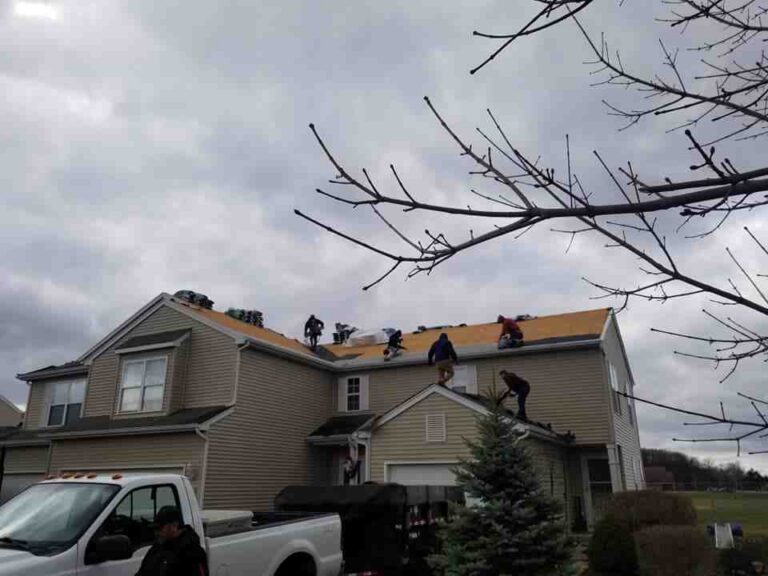
Why Residential Metal Roofing Is Gaining Attention
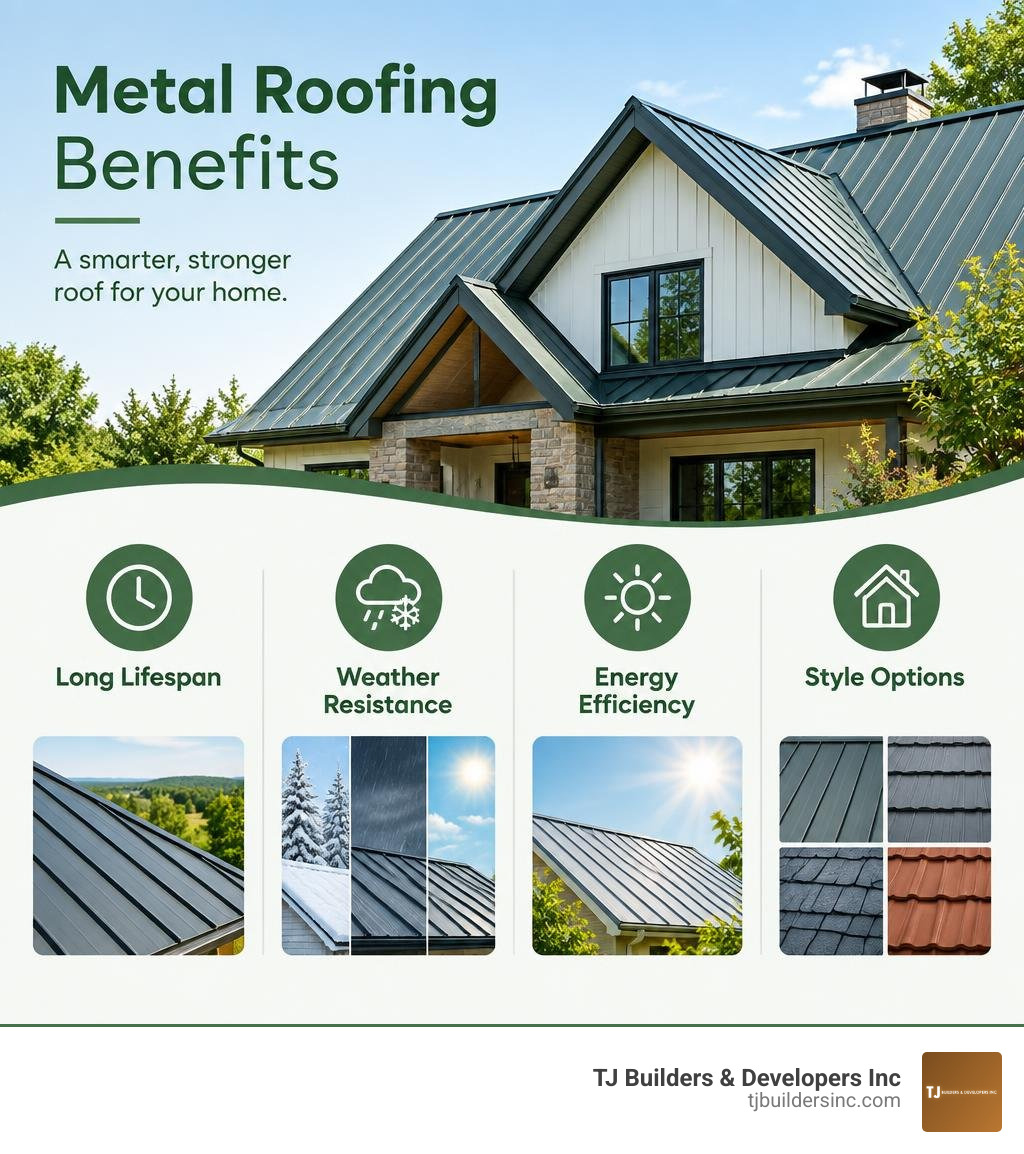
Residential metal roofing gives homeowners a long-lasting, weather-resistant roof that can improve energy efficiency and curb appeal. It is a strong fit for homes facing Northern Illinois snow, wind, hail, summer heat, and freeze-thaw cycles. Many metal systems can last 50 years or more with limited maintenance, resist fire and rot, and reflect solar heat that may lower cooling costs.
Metal roofs are no longer limited to barns or commercial buildings. Homeowners can choose clean standing-seam panels, traditional-looking metal shingles, or profiles that resemble slate, shake, or tile. The right system depends on your roof slope, local weather exposure, preferred look, and the quality of the installation.
That shift is clear in the market: metal reached a record 18% share of U.S. residential re-roofing demand in 2022. For homeowners in Lakewood, Crystal Lake, Schaumburg, and nearby suburbs, it offers a practical way to protect a home while giving it a more distinctive exterior.
I am Thomas Pruszynski, owner of TJ Builders & Developers Inc. For more than 20 years, our team has helped homeowners protect and improve their properties through quality exterior work, including guidance on durable residential metal roofing systems and other long-term roofing solutions.
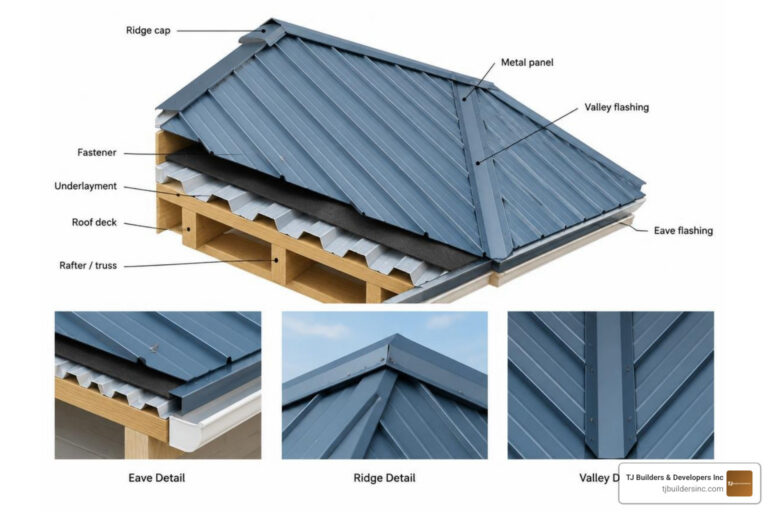
Essential residential metal roofing terms:
Key Benefits of Residential Metal Roofing for Homeowners

When we evaluate exterior building envelopes across Northern Illinois, the primary concern for homeowners is long-term weather defense. Standard asphalt shingles often need replacement every 20 to 30 years, but a well-engineered metal roofing system reliably performs for 50 years or more. This exceptional service life transforms the roof from a recurring maintenance obligation into a permanent structural asset.
Metal roofing panels and shingles carry impressive engineering ratings. Most residential profiles achieve a Class A fire rating (the highest level of fire resistance available) and a UL 2218 Class 4 impact resistance rating. During severe summer thunderstorms or severe Midwestern windstorms, metal systems resist wind gusts of up to 140 miles per hour without lifting or blowing off.

Unmatched Longevity and Weather Protection
Midwestern seasons present harsh transitions, from sub-zero winter freezes to humid summer heat waves. Traditional materials can crack under rapid temperature shifts, absorb moisture, and develop moss or rot. Metal systems are non-porous and naturally impervious to rot, insect infestations, and fungal growth.
During winter months in communities like Algonquin, Huntley, and Woodstock, snow shedding is a key performance factor. The smooth surface of metal prevents excessive snow accumulation and helps mitigate destructive ice dams along the eaves when paired with balanced attic airflow. Factory-applied zinc and aluminum-zinc coatings provide an active corrosion barrier, preventing rust even under sustained exposure to moisture.
Energy Efficiency and Environmental Sustainability
Metal roofing stands out for its thermal performance. Unlike asphalt materials that absorb solar radiation and transfer heat directly into attic spaces, metal panels feature reflective surface coatings. These cool-roof formulations bounce solar radiation away from the home, reducing attic heat build-up and lowering household cooling costs by 10% to 25% during hot summer months.
Sustainability is another major structural benefit:
- High Recycled Content: Residential metal systems typically contain between 25% and 95% recycled material.
- Complete Recyclability: At the end of its decades-long lifespan, a metal roof is 100% recyclable, keeping tons of construction waste out of local landfills.
- Reduced Structural Load: Lightweight profiles minimize stress on roof trusses and framing.
Need Help With Your Home?
TJ Builders & Developers handles roofing, siding, gutters, windows, home additions, and fire damage restoration for homes and businesses in Lakewood, Crystal Lake, Schaumburg, and nearby McHenry County towns.
- Free, no-obligation estimates
- Licensed & insured
- 20+ years of local experience
Material Profiles: Steel, Aluminum, Copper, and Zinc
| Material | Expected Lifespan | Weight per Sq. Ft. | Primary Benefit |
|---|---|---|---|
| Galvalume Steel | 40–60+ years | ~1.00–1.30 lbs | Excellent structural strength and high cost-to-performance value |
| Aluminum | 50+ years | ~0.50–0.70 lbs | Complete corrosion immunity; extremely lightweight |
| Architectural Zinc | 80–100 years | ~1.20–1.50 lbs | Self-healing surface layer; low embodied processing energy |
| Copper | 100+ years | ~1.25–1.60 lbs | Timeless natural patina; zero maintenance requirements |
Galvanized and Galvalume Steel
Steel remains the most widely installed material profile in residential metal construction. Manufacturers produce structural panels using either galvanized steel (carbon steel hot-dipped in pure zinc) or Galvalume (a specialized alloy coating of roughly 55% aluminum, 43.4% zinc, and 1.6% silicon). Galvalume offers superior long-term barrier protection by combining the galvanic sacrificial protection of zinc with the barrier barrier durability of aluminum.
For residential applications, 24-gauge and 26-gauge steel are the industry standards, delivering an ideal balance of structural rigidity, impact resistance, and panel workability. Systems such as GAF TimberSteel: premium metal shingles utilize these advanced steel formulations to offer traditional aesthetic appeal with the high-strength performance of modern structural metals.
Aluminum, Copper, and Zinc Systems
Homeowners seeking specialized performance or distinct architectural styles often evaluate premium non-ferrous metals:
- Aluminum: Extremely lightweight at roughly five pounds per square foot or less for complete assemblies, aluminum creates zero structural strain on the framing. Because it contains no iron, aluminum will never rust, making it an exceptional choice for environments with persistent moisture.
- Architectural Zinc: Processing zinc requires just one-quarter of the energy required to process steel or copper, significantly lowering its carbon footprint. Zinc develops a protective zinc carbonate patina that can naturally “heal” minor surface scratches over time.
- Copper: A historic architectural metal that easily boasts a lifespan exceeding 100 years. Copper transitions gracefully from a bright sheen to a distinctive green patina, requiring no protective paint finishes or ongoing chemical treatments.
Structural Styles and Fastening Methods
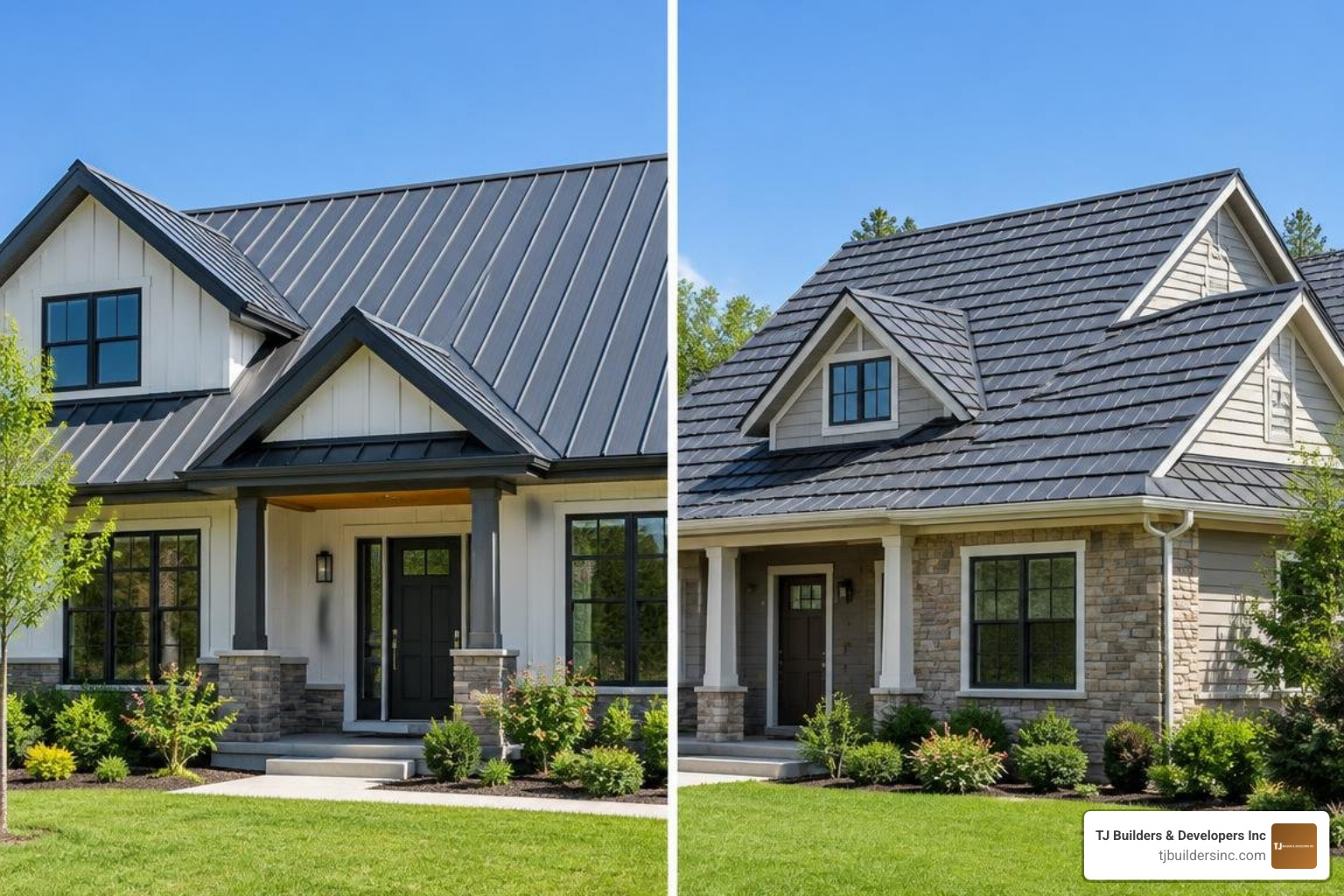
Standing Seam Residential Metal Roofing Systems
Standing seam roofs represent the gold standard in modern residential metal installations. These systems feature vertical metal panels joined by raised interlocking seams that stand 1 to 1.5 inches above the roof deck.
The defining characteristic of standing seam engineering is its concealed clip fastening method. Fasteners are driven through hidden flanges or clips, fully protecting every screw from rain, snow, and UV degradation. Because the panels are secured with sliding clips or snap-lock joints, the metal expands and contracts freely along its vertical axis during temperature shifts without creating stress on the fastening points.
Exposed Fasteners vs Concealed Panels
Exposed fastener systems utilize wider overlapping sheets secured by screws driven directly through the exterior face of the metal panel into the deck framing. Each screw features an integrated EPDM or neoprene sealing washer.
While exposed fastener options like modern-rib profiles provide an efficient installation and crisp architectural lines, they require periodic inspections. Over 15 to 20 years, outdoor temperature swings cause the metal to expand and contract against fixed screw shafts, which can slowly degrade the rubber washers and necessitate eventual fastener replacement. Concealed fastener systems eliminate this vulnerability entirely.
Metal Shingles and Tile Profiles
For homes in established neighborhoods throughout McHenry, Barrington, and Cary where sleek vertical panels might not match neighboring architecture, metal shingles provide an ideal alternative. Engineered from stamped steel or aluminum, these modular tiles replicate the authentic look of:
- Textured cedar wood shakes
- Natural slate tiles
- Traditional dimensional asphalt shingles
- Barrel clay mission tiles
Modular panels interlock securely on all four edges and fasten with hidden clips, delivering robust 140 mph wind ratings while maintaining a classic neighborhood appearance.
Need Help With Your Home?
TJ Builders & Developers handles roofing, siding, gutters, windows, home additions, and fire damage restoration for homes and businesses in Lakewood, Crystal Lake, Schaumburg, and nearby McHenry County towns.
- Free, no-obligation estimates
- Licensed & insured
- 20+ years of local experience
Technical Installation Standards and Warranty Protection
Proper installation determines whether a metal roofing system achieves its multi-decade potential. Manufacturers publish exact structural criteria, such as the Everlast II® & Everdrain® Residential Application Guide, emphasizing correct panel alignment, specialized fastener patterns, and detailed flashing integrations.
Installation Requirements for Residential Metal Roofing
A dependable installation starts with structural preparation:
- Roof Decking: Solid wood decking (typically 5/8-inch or 1/2-inch CDX plywood or OSB) provides a uniform substrate.
- Slope Verification: Most residential standing seam and modular shingle systems require a minimum roof slope of 3:12 for proper drainage, though specific mechanically seamed commercial-grade profiles can accommodate lower pitches when paired with continuous internal sealants.
- Underlayment: High-temperature, self-adhering ice-and-water shields should be installed along all eaves, valleys, rakes, and roof penetrations, covered across the field by premium synthetic underlayment.
- Thermal and Moisture Management: Continuous ridge and soffit ventilation systems balance attic temperatures, preventing warm interior air from creating condensation underneath the metal panels.
Substrate Guarantees and Finish Warranties
Top-tier residential metal panels feature factory-applied polyvinylidene fluoride (PVDF) resin finishes, commonly known as Kynar 500® coatings. Unlike basic polyester paints that can fade or chalk within a decade, PVDF finishes offer exceptional resistance to UV degradation, chemical pollutants, and color shifting.
Quality residential installations typically carry two distinct warranty coverages:
- Substrate Warranties: 40- to 50-year structural guarantees against metal perforation, rust-through, and base alloy degradation.
- Finish Warranties: 30- to 40-year guarantees covering paint adhesion, excessive color fade, and chalking.
Frequently Asked Questions About Metal Roofing
Are metal roofs noisy when it rains or hails?
No. When installed on residential homes, metal roofing is no noisier than standard asphalt shingles. In a residential assembly, the metal panels are fastened over solid wood roof decking, high-density synthetic underlayment, and deep attic insulation. These structural layers absorb acoustic vibration and dampen sound transmission, keeping interior living spaces quiet during severe rain or hail storms.
Do metal roofs attract lightning strikes?
No. Metal conducts electricity, but it does not attract lightning. Lightning strikes the highest topographical point regardless of material. In the unlikely event of a strike, a metal roof is safer than traditional wood or petroleum-based materials because it is non-combustible and disperses electrical energy safely across the structural surface without igniting.
Can a metal roof be installed over existing asphalt shingles?
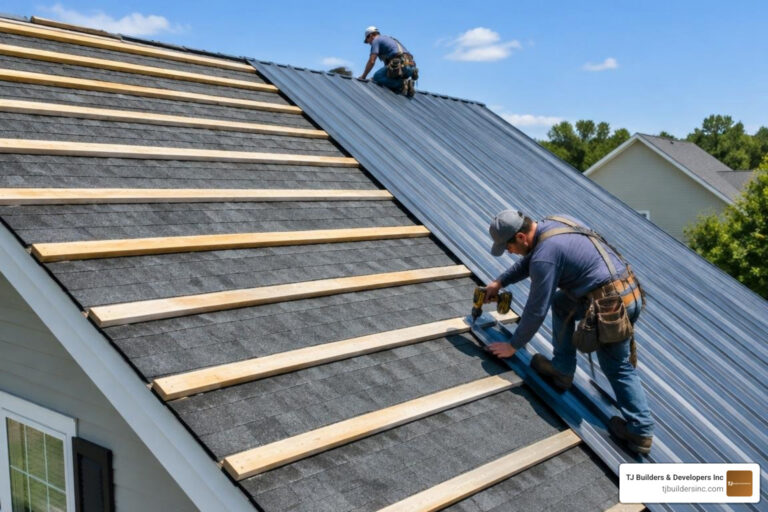
In many instances, lightweight metal roofing can be installed directly over a single layer of existing asphalt shingles using a specialized recovery underlayment or furring grid. Because steel and aluminum weigh significantly less than heavy asphalt or tile materials, they do not exceed residential framing load limits. However, local building codes and the structural integrity of the underlying wood deck must always be evaluated prior to installation.
Conclusion
A high-performance residential metal roof offers exceptional durability, energy efficiency, and long-term architectural beauty. By selecting top-tier materials and ensuring precise installation standards, you protect your home against the most demanding Midwestern weather for decades to come. When you are ready to evaluate lasting exterior upgrades for your home, explore our professional residential metal roofing services to get started with trusted local craftsmanship.