When Hail Hits Hard: What Every Homeowner Needs to Know About Hail Damage Repair
Hail damage repair is something most homeowners and drivers will face at least once — and knowing your options fast can save you thousands of dollars.
Here’s a quick breakdown of what you need to know:
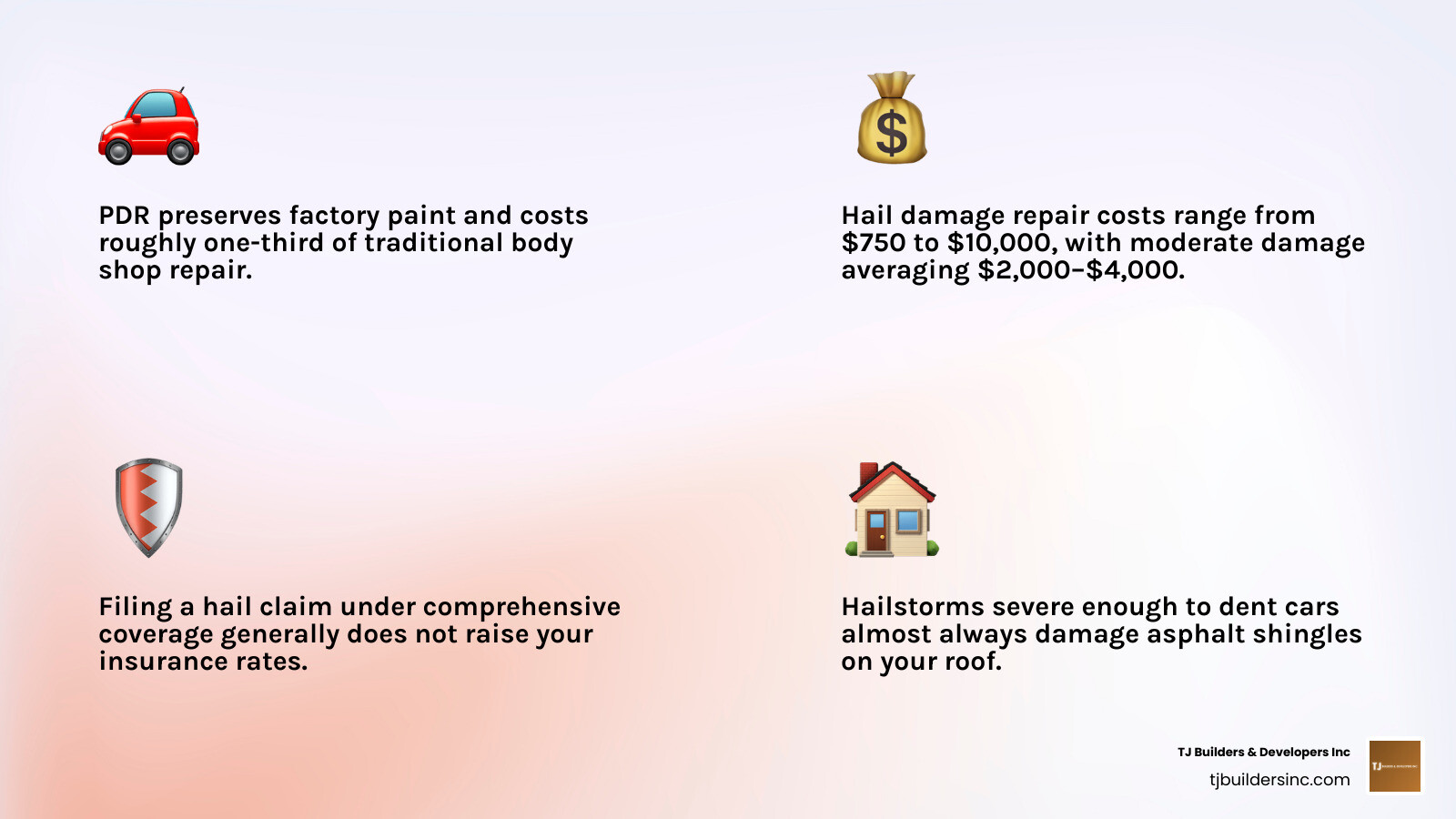
- PDR (Paintless Dent Repair) is the most common fix for vehicle hail damage — it costs roughly one-third of traditional body shop work and preserves your factory paint
- Costs range from $750 to $10,000 depending on severity, with moderate damage typically running $2,000–$4,000
- Insurance usually covers it under comprehensive coverage — and filing a hail claim generally does not raise your rates
- DIY methods (heat guns, suction cups, dry ice) carry real risks — cracked paint, stretched metal, and lost resale value
- Your roof likely took a hit too — hailstorms severe enough to dent cars almost always damage asphalt shingles at the same time
One forum user put it plainly after a storm left 50+ dents across their hood, roof, and trunk: the choice between PDR and panel replacement isn’t just about cost — it’s about whether your paint is still intact and whether a technician can access the back of the panel.
I’m Thomas Pruszynski, owner of TJ Builders & Developers, and after more than 20 years helping Northern Illinois homeowners recover from storm damage, I’ve seen how a single hailstorm can affect both your vehicle and your home’s exterior in ways that aren’t always obvious at first glance. In this guide, I’ll walk you through the full picture of hail damage repair — from DIY dent-pulling methods to protecting your roof, siding, and gutters after a major storm.
What is Paintless Dent Repair (PDR)?
Paintless Dent Repair (PDR) is a highly specialized, non-invasive method of removing dents from a vehicle’s exterior panels. Unlike traditional auto body repair, which relies on pulling dents, filling them with plastic body filler, sanding the surface flat, and repainting the entire panel, PDR addresses the damage from the inside out.
At its core, PDR relies on the concept of “metal memory.” Modern automotive sheet metal is engineered to hold a specific shape. When a hailstone strikes a hood or roof, it stretches and deforms the metal, but the underlying structure still “wants” to return to its original form.
PDR technicians use specialized tools—such as long, curved metal rods, spring-steel wires, and hand-held reflection boards—to gain access behind the damaged panel. By applying precise, micro-controlled pressure to the underside of the dent, the technician gently massages the metal back into its pre-storm position.
For areas where backside access is physically impossible (such as sealed roof pillars or double-walled structural reinforcements), technicians utilize a secondary technique called glue pulling. This involves adhering specialized plastic tabs to the exterior paint using a high-strength, temperature-sensitive adhesive. A slide hammer or mini-lifter is then attached to the tab to gently lift the dent from the outside. Once the metal is level, the glue is safely dissolved with isopropyl alcohol, leaving the factory paint completely undisturbed.
Using a specialized LED lighting system or a reflective line board is crucial to the process. When these lights are cast across the vehicle’s surface, the parallel lines will bend and distort around a dent. The technician uses these visual cues to identify micro-deviations in the metal. The repair is only complete when the reflected lines appear perfectly straight across the entire panel. For a deeper look into how these advanced techniques are applied on a professional scale, check out the resources provided by PDR Hail Repair – Dent Evo.
Need Help With Your Home?
TJ Builders & Developers handles roofing, siding, gutters, windows, home additions, and fire damage restoration for homes and businesses in Lakewood, Crystal Lake, Schaumburg, and nearby McHenry County towns.
- Free, no-obligation estimates
- Licensed & insured
- 20+ years of local experience
When to Choose PDR for Hail Damage Repair
While PDR is widely considered the gold standard for hail damage repair, it is not a universal cure-all. Determining whether your vehicle is a candidate for paintless restoration depends on several physical factors:
- Paint Integrity: The single most important prerequisite for PDR is that the vehicle’s paint must be completely intact. If a massive hailstone has cracked the clear coat, chipped the paint down to the primer, or split the finish along a sharp crease, PDR alone cannot fix the issue. Once the paint barrier is broken, the panel must be repaired and refinished using traditional methods to prevent moisture from reaching the raw metal and causing rust.
- Panel Access: To push a dent out from the underside, a technician must be able to reach it. This often requires the systematic disassembly of interior components, such as removing the hood liner, dropping the cabin headliner, or pulling out trunk trim panels. If a dent is located directly over a structural box-member or reinforcement brace where tool access is completely blocked, glue-pulling is the only non-invasive option. If glue-pulling also fails due to the severity of the dent, traditional bodywork is required.
- Metal Composition (Steel vs. Aluminum): Modern vehicles utilize a mix of metals. While steel is highly elastic and retains excellent “metal memory,” aluminum is much stiffer, lighter, and harder to manipulate. Aluminum panels (frequently used on hoods, roofs, and fenders of modern trucks and electric vehicles) do not stretch or flex as easily as steel. Repairing hail damage on aluminum requires a much more deliberate, high-pressure, and time-consuming PDR approach, often utilizing specialized heat guns to make the metal more pliable during the process.
| Repair Aspect | Paintless Dent Repair (PDR) | Traditional Body Shop Repair |
|---|---|---|
| Primary Method | Massaging metal from behind / exterior glue-pulling | Sanding, plastic body filler, priming, and repainting |
| Factory Paint Preservation | Yes (Keeps original factory finish completely intact) | No (Requires aftermarket sanding and repainting) |
| Average Turnaround Time | 1 to 3 days for moderate damage | 1 to 3 weeks (requires curing time for paint) |
| Average Cost Ratio | Approximately one-third of traditional costs | Full retail cost of materials, labor, and paint booth time |
| Risk of Color Mismatch | Zero (No paint is applied) | Moderate (Aftermarket paint matching can be difficult) |
| Impact on Vehicle History | No physical repair record (preserves resale value) | Often reported as structural/paint repair on history reports |
Evaluating the Cost of Professional Hail Damage Repair
When a severe storm rolls through Northern Illinois, the financial impact can be daunting. Understanding the true cost of hail damage repair is the first step toward making an informed decision.
On average, a hail-damaged vehicle will cost between $750 and $10,000 to repair. If your car sustained light, cosmetic damage—such as a dozen shallow dings on the hood from pea-sized ice—the repair will likely sit at the lower end of that spectrum. However, if you are dealing with moderate hail damage (pea-size to 1.5-inch diameter stones) spread across multiple panels, the repair costs typically range from $2,000 to $4,000.
For severe storms that pelt a car with golf-ball-sized hail or larger, the average cost to fully restore the vehicle climbs to $4,000 to $8,000. In extreme cases involving cracked windshields, broken sunroofs, and deeply stretched metal on luxury or heavy-duty vehicles, professional restoration bills can easily exceed $15,000. For more context on cost structures and specialty services, you can review the pricing guides provided by Express Auto Hail Repair.
Key Factors Influencing Repair Pricing
The final invoice for your vehicle’s repair is determined by a precise formula. Most professional shops use industry-standard estimating software, such as Mobile Tech Rx, to calculate costs based on several variables:
- Dent Count and Size: Technicians do not simply guess a price. They place the vehicle under specialized high-contrast lights and physically map out every single dent. Pricing is calculated per dent, with the cost scaling upward as the diameter of the dent increases (e.g., dime-sized vs. nickel-sized vs. half-dollar-sized).
- Panel Location and Material: As noted earlier, 70% to 80% of hail impacts cluster on the horizontal surfaces of a vehicle—namely the roof, hood, and trunk lid. Because the roof requires dropping the interior headliner and working above the cabin, it carries the highest labor costs. Additionally, any dents located on aluminum panels or high-strength steel pillars will command a premium due to the difficulty of manipulating the metal.
- Hidden Damage: It is incredibly common for initial insurance estimates to miss a substantial portion of the damage. When an insurance adjuster inspects a car in natural sunlight or via mobile photo uploads, they frequently miss shallow, soft-set dents. In fact, professional PDR shops routinely find an average of $6,500 in hidden damage that was completely overlooked during the initial insurance inspection. This requires the shop to submit a “supplemental claim” to the insurance company to cover the true cost of the restoration.
Step-by-Step DIY Paintless Dent Repair Methods
If you love a good weekend challenge, the idea of fixing those unsightly dimples yourself might sound tempting. Before you run to your garage, let’s look at how the most common DIY methods work—and where they frequently go wrong.
Method 1: The Heat and Cold Flex (The “Dry Ice” Trick)
- The Theory: Metal expands when heated and contracts when cooled. By heating a dent with a household hair dryer or a professional heat gun, and then immediately applying an ultra-cold substance like dry ice or a blast of upside-down compressed liquid air, the rapid thermal contraction is supposed to cause the metal to pop back into shape.
- The Reality: While this makes for great viral videos, it rarely works on actual vehicle panels. Modern automotive steel is far too rigid to be manipulated by minor temperature swings. If you turn the heat gun up too high in an attempt to force the metal to move, you run a severe risk of melting your clear coat or bubbling your factory paint.
Method 2: Suction Cup Dent Pullers
- The Theory: You attach a heavy-duty suction cup to the center of the dent, lock the lever to create a vacuum, and pull straight outward to pop the metal back into place.
- The Reality: Suction cups require a large, perfectly flat, and smooth surface to maintain a vacuum. Because hail dents are typically small, deep, and dimpled, a suction cup cannot get a seal. This method is completely useless for hail damage and is only effective for large, shallow “bathtub” dents on flat door panels.
Method 3: Retail Glue Pull Kits
- The Theory: You buy an inexpensive, over-the-counter glue-pulling kit online. You melt a glue stick onto a plastic tab, press it into the center of the hail ding, wait for it to cool, and use a mechanical bridge puller or mini-lifter to pull the dent out.
- The Reality: While this is the closest approximation to professional PDR, cheap DIY kits lack the specialized adhesive formulas and precisely engineered tabs required for controlled pulls. Without the correct lighting to guide you, it is incredibly easy to over-pull the metal, turning a shallow dent into an ugly, raised “high spot” that is twice as hard to fix.
Why DIY Hail Damage Repair Risks Your Vehicle’s Value
PDR is often described by professionals as a “true art form.” It requires thousands of hours of practice to develop the tactile feel necessary to push metal to within a fraction of a millimeter without cracking the paint.
When an untrained DIYer attempts to massage or pull metal, several costly mistakes usually happen:
- Stretched Metal: If you apply too much force or pull from the wrong spot, you will stretch the metal beyond its elastic limit. Once metal is stretched, it loses its structural memory. PDR technicians call this “oil-canning”—the metal becomes loose and floppy, making a professional repair impossible and forcing you to replace the entire panel.
- Clear Coat and Paint Cracking: Professional glue-pulling relies on precise timing and temperature control. If you use a DIY glue gun that runs too hot, or if you pull the tab too aggressively when the ambient temperature is too cold, you can rip the clear coat and paint clean off the metal. What was a simple $150 PDR repair suddenly becomes a $1,000 traditional body shop repainting job.
- Diminished Resale Value: If you attempt to fix your own hail damage and leave behind a wavy, scarred panel with chipped paint, you will severely damage your vehicle’s trade-in value. Future buyers and dealership appraisers will spot the amateur bodywork immediately, leading to a steep drop in the vehicle’s valuation.
Need Help With Your Home?
TJ Builders & Developers handles roofing, siding, gutters, windows, home additions, and fire damage restoration for homes and businesses in Lakewood, Crystal Lake, Schaumburg, and nearby McHenry County towns.
- Free, no-obligation estimates
- Licensed & insured
- 20+ years of local experience
The Hidden Connection: Vehicle Dents and Home Roof Damage
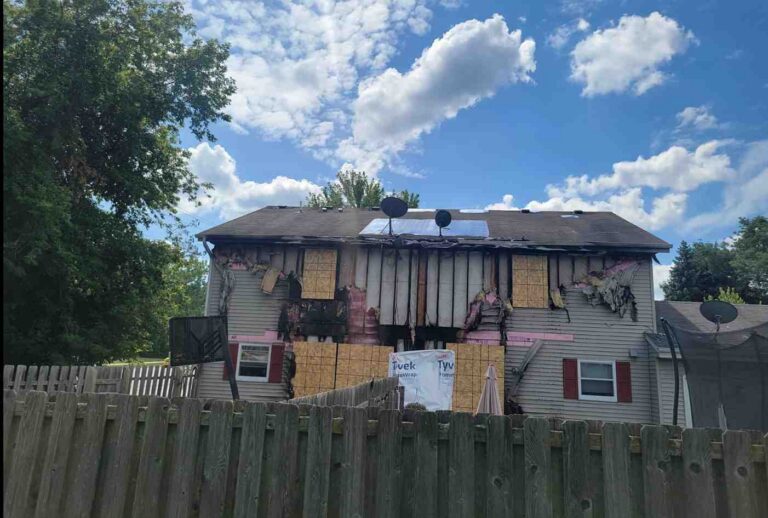
If a hailstorm was severe enough to leave dozens of unsightly dents across your car’s hood and roof, it is a virtual certainty that your home’s exterior took an equally brutal beating.
Many homeowners make the mistake of separating their automotive damage from their residential property damage, but they are deeply connected. The physical forces required to dent automotive-grade steel or aluminum are incredibly high. Typically, hailstones must reach 1 inch in diameter (quarter-sized) or larger to cause visible damage to a vehicle.
When icy projectiles of that size rain down on a residential roof at terminal velocity, they cause immediate, severe damage to your building materials.
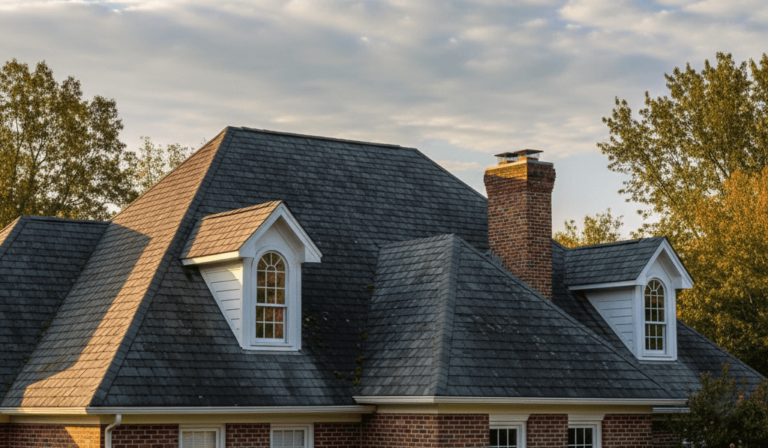
On asphalt shingles, hail impacts do not always leave a glaring hole. Instead, they cause what roofers call “bruising.” The impact of the stone pulverizes the delicate asphalt layer underneath, knocking loose the protective ceramic granules. This creates a soft spot that compromises the shingle’s water-shedding capabilities. Over the course of the following months, UV exposure from the sun will degrade the exposed asphalt, leading to cracking, water intrusion, and eventual interior mold growth.
To protect your home’s structural integrity, it is vital to understand the signs of exterior wear. For a detailed breakdown of what to look for on your property, read our comprehensive guides on hail damage roof and storm hail damage restoration. Additionally, you can learn how to spot these subtle signs yourself by exploring The Ultimate Guide To Identifying Hail Damage On Your Shingles.
Immediate Steps to Take After a Lakewood Hailstorm
When a major storm sweeps through McHenry County or the surrounding Chicago suburbs, taking fast, structured action can save you from a major financial headache. If you live in Lakewood, Crystal Lake, Algonquin, or Huntley, follow this checklist immediately after the storm passes:
- Document Everything with Photos: Before touching anything, take clear, high-resolution photos of your vehicle’s damage, your yard (especially if there are hailstones on the ground next to a ruler for scale), and any visible damage to your siding, windows, or gutters.
- Conduct a Ground-Level Home Inspection: Walk the perimeter of your house. Look for dented aluminum gutters, torn window screens, cracked siding panels, and a heavy accumulation of shingle granules at the discharge end of your downspouts.
- Check Your Interior for Water Intrusion: Head into your attic with a flashlight. Examine the underside of your roof decking, rafters, and insulation for any signs of active dripping or dampness. Check the ceilings and walls of your upper-level rooms for fresh water stains.
- Schedule a Professional Inspection: Do not climb onto a wet, slippery roof yourself. Instead, contact a licensed, local exterior contractor to perform a safe, comprehensive inspection. For guidance on navigating the insurance side of home repairs, read our expert advice on Dont Get Dented By Your Hail Damage Roof Insurance Claim.
- Secure Emergency Repairs if Needed: If a fallen tree limb or exceptionally large hail has punctured your roof or shattered a skylight, you must act quickly to prevent catastrophic water damage. Learn how to address these urgent situations by visiting our page on emergency roof repair leak detection, and make sure you are working with trusted, local professionals by checking out roofers in lakewood il.
Frequently Asked Questions About Hail Restoration
Will filing a hail claim raise my insurance rates?
No. In almost all cases, filing an insurance claim for hail damage will not directly raise your individual monthly premiums.
Insurance companies classify hail damage under the comprehensive portion of your policy, rather than your collision coverage. Comprehensive coverage is designed to protect your vehicle against “acts of God” or events that are entirely outside of your control (such as storms, animal collisions, vandalism, or theft).
Because you cannot control when a hailstorm strikes your driveway in Schaumburg or Woodstock, insurance underwriting rules prevent carriers from raising your rates based solely on a comprehensive storm claim. However, keep in mind that if an entire geographic region is hit by a massive storm, the insurance company may adjust the base rates for all policyholders in that zip code to offset their regional losses.
How long does the professional repair process take?
The timeline for hail damage repair depends entirely on the severity of the storm and the repair method used:
- Minor PDR (Few Dents, Paint Intact): If your car has a handful of shallow dings, a certified PDR technician can usually restore the vehicle to factory condition within 1 to 3 business days.
- Moderate to Severe PDR (Multiple Panels): For vehicles with hundreds of dents across the hood, roof, and trunk that require dropping the interior headliner, the process typically takes 3 to 7 business days.
- Traditional Body Shop Work (Cracked Paint / Panel Replacement): If the damage is severe enough to require traditional bodywork, sanding, and a full repaint, you should expect the car to be in the shop for 7 to 14 business days or longer.
Be prepared for potential administrative delays. Coordinating with insurance adjusters, waiting for an in-person vehicle inspection, and getting approval for supplemental claims can add several days to the front end of the repair timeline.
Does paintless dent repair show up on a Carfax report?
No. The physical process of Paintless Dent Repair itself is not reported to Carfax, AutoCheck, or other vehicle history databases.
Because PDR does not involve replacing structural body panels, applying aftermarket body filler, or repainting the vehicle, it leaves no physical “paper trail” of structural alteration.
However, it is important to understand how vehicle history reporting works. While the PDR work itself is silent, if you file a comprehensive insurance claim to pay for the repair, your insurance company or the lienholder of your vehicle may report the financial claim to database networks. Even if a claim record is generated, having your vehicle professionally restored using PDR is highly preferred by future buyers because it proves the vehicle still carries its original, corrosion-resistant factory paint.
Conclusion
Recovering from a major hailstorm can feel overwhelming, but you don’t have to navigate the process alone. Whether your vehicle is dimpled like a golf ball or your home’s roof has suffered hidden structural damage, the key to protecting your long-term investments is choosing professional, local expertise over risky DIY shortcuts.
At TJ Builders & Developers Inc, we have spent decades providing homeowners across the Northern Illinois region—including Crystal Lake, Woodstock, Cary, McHenry, and Schaumburg—with reliable workmanship, honest damage assessments, and durable storm restoration services. From repairing wind-damaged siding to identifying hidden shingle bruising before it turns into a costly ceiling leak, we are committed to keeping your home safe, dry, and beautiful.
If a recent storm has swept through your neighborhood and you want complete peace of mind, don’t wait for the next heavy rain to find out if your roof is leaking. Contact us today to schedule a professional, high-quality inspection or to learn more about our emergency roof repair leak detection services. Let our family protect yours.