Why Siding Width Matters More Than You Think
8 inch Hardie Plank siding is one of the most popular lap siding choices for homeowners replacing worn or damaged exteriors — and for good reason. Here’s a quick overview of what you need to know:
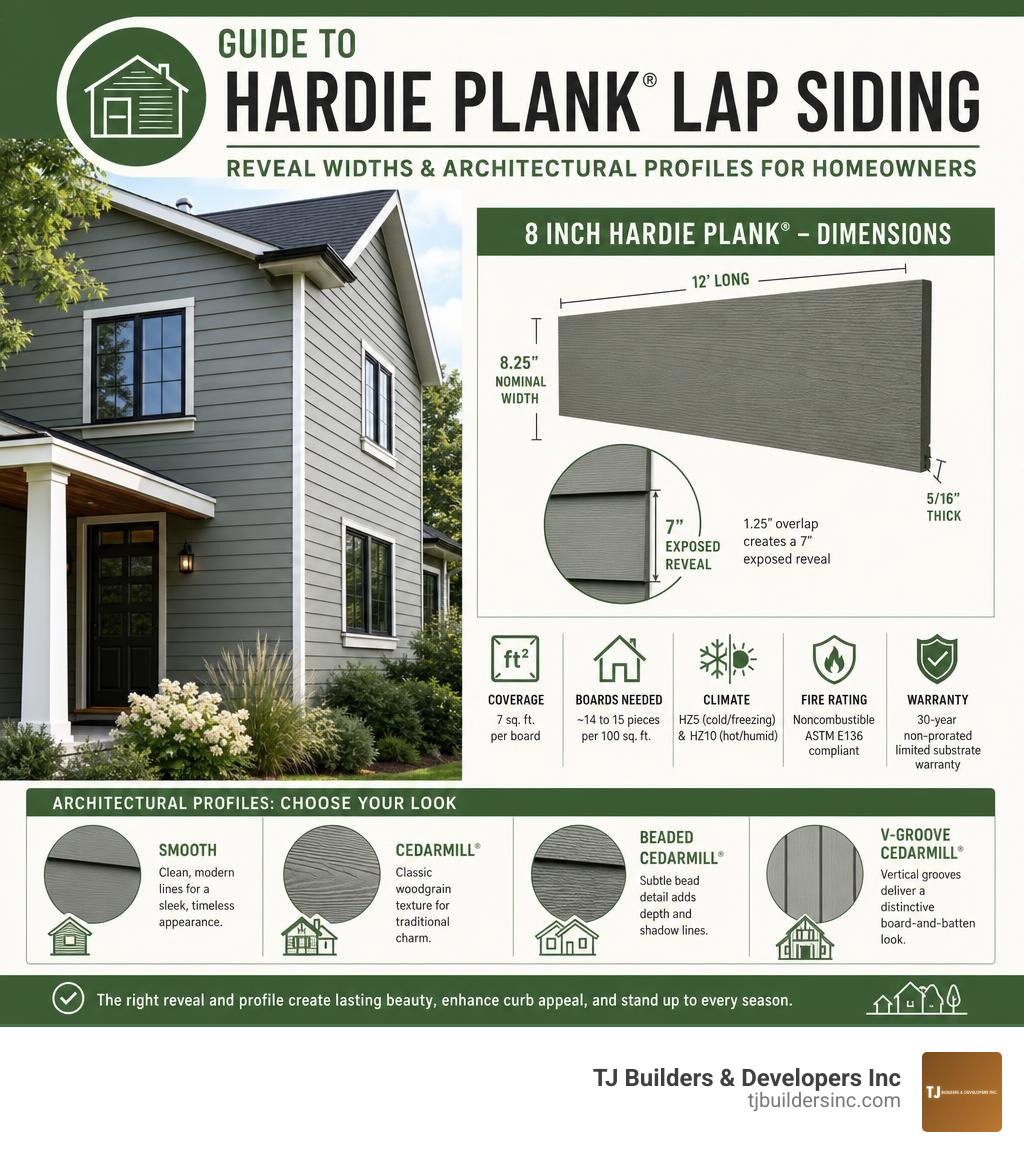
- Board size: 8.25 inches wide × 12 feet long × 5/16 inch thick
- Exposed face (reveal): 7 inches
- Coverage per board: 7 sq. ft.
- Boards needed per 100 sq. ft.: ~14 to 15 pieces
- Climate options: HZ5 (cold/freezing) and HZ10 (hot/humid)
- Fire rating: Noncombustible — ASTM E136 compliant
- Warranty: 30-year non-prorated limited substrate warranty
But choosing the right plank width isn’t just about coverage math. It affects your home’s proportions, shadow lines, and overall curb appeal. A wider board like the 8-inch profile gives homes a bold, classic look — but it needs to match your home’s style, your regional climate, and your installation plan.
This guide walks you through everything: dimensions, textures, climate engineering, installation requirements, and how to choose confidently.
I’m Thomas Pruszynski, owner of TJ Builders & Developers Inc, and over more than 20 years of siding installation across Northern Illinois — including projects involving 8 inch Hardie Plank siding — I’ve seen how the right width choice protects a home for decades. Let’s break it all down so you can make the smartest decision for your property.
Dimensions and Specifications of 8 Inch Hardie Plank Siding
When shopping for 8 inch Hardie Plank siding, the first detail to understand is the difference between nominal width and actual exposure width. In industry terminology, this product is frequently referred to as an 8-inch board, but its exact physical width is 8.25 inches (8-1/4 inches).
Each standard plank measures 8.25 inches wide by 144 inches (12 feet) long, with a standard material thickness of 5/16 inch (0.3125 inches). When installed horizontally, the overlapping board above covers 1.25 inches of the board below it. This overlap leaves an exposed face—known as the reveal—of exactly 7 inches.
Because each 12-foot board features a 7-inch reveal, a single plank provides precisely 7 square feet of net wall coverage. When calculating total material requirements for a project, builders use a standard unit of measure called a “square,” which equals 100 square feet of exterior wall surface. To cover one square, you will need approximately 14.3 to 15 full planks, accounting for minor waste and corner trimming.
| Lap Siding Width | Full Board Width | Exposed Face (Reveal) | Board Length | Net Coverage per Board | Boards per Square (100 sq ft) |
|---|---|---|---|---|---|
| 5.25 Inch | 5.25 in. | 4.0 in. | 12 ft. | 4.0 sq. ft. | 25.0 boards |
| 6.25 Inch | 6.25 in. | 5.0 in. | 12 ft. | 5.0 sq. ft. | 20.0 boards |
| 7.25 Inch | 7.25 in. | 6.0 in. | 12 ft. | 6.0 sq. ft. | 16.7 boards |
| 8.25 Inch | 8.25 in. | 7.0 in. | 12 ft. | 7.0 sq. ft. | 14.3 – 15.0 boards |
Calculating Board Reveal for 8 Inch Hardie Plank Siding
The 7-inch exposed face created by 8 inch Hardie Plank siding plays a major role in the visual balance of your home. Narrower reveals—such as 4-inch or 5-inch exposures—create frequent horizontal lines, which suit historic colonials or smaller structures. By contrast, a 7-inch reveal creates a wider, cleaner horizontal profile that makes standard two-story residences and modern ranches look grounded and spacious.
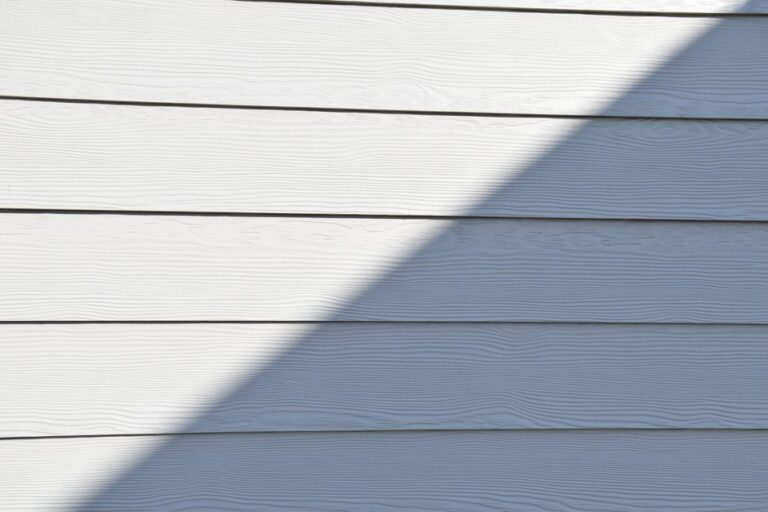
This reveal depth also controls the cast of natural shadow lines. As sunlight moves across your home throughout the day, the 5/16-inch physical thickness of the overlap casts a crisp shadow line onto the board below. Choosing an 8.25-inch board gives your facade an elegant rhythm without looking visually cluttered.
Weight and Structural Substrate Preparation
Fiber cement is a dense, high-performance composite material made from Portland cement, sand, silica, and cellulose fibers. Because of this durable formulation, a single 12-foot board of 8 inch Hardie Plank siding weighs approximately 21 pounds.
Before mounting fiber cement planks, we always evaluate the underlying wall structure to verify framing integrity. Planks can be fastened over standard 16-inch or 24-inch on-center wood stud framing, light-gauge steel framing, or masonry wall assemblies equipped with proper furring strips. Proper handling and structural substrate preparation ensure the heavy panels lay completely flat without warping or sagging over time.
Need Help With Your Home?
TJ Builders & Developers handles roofing, siding, gutters, windows, home additions, and fire damage restoration for homes and businesses in Lakewood, Crystal Lake, Schaumburg, and nearby McHenry County towns.
- Free, no-obligation estimates
- Licensed & insured
- 20+ years of local experience
Climate Engineering: HZ5 vs HZ10 HardieZone Technology
Not all siding materials are formulated the same way for every weather environment. James Hardie utilizes its proprietary Engineered for Climate® system, splitting North America into two distinct climate zones: HardieZone 5 (HZ5®) and HardieZone 10 (HZ10®).
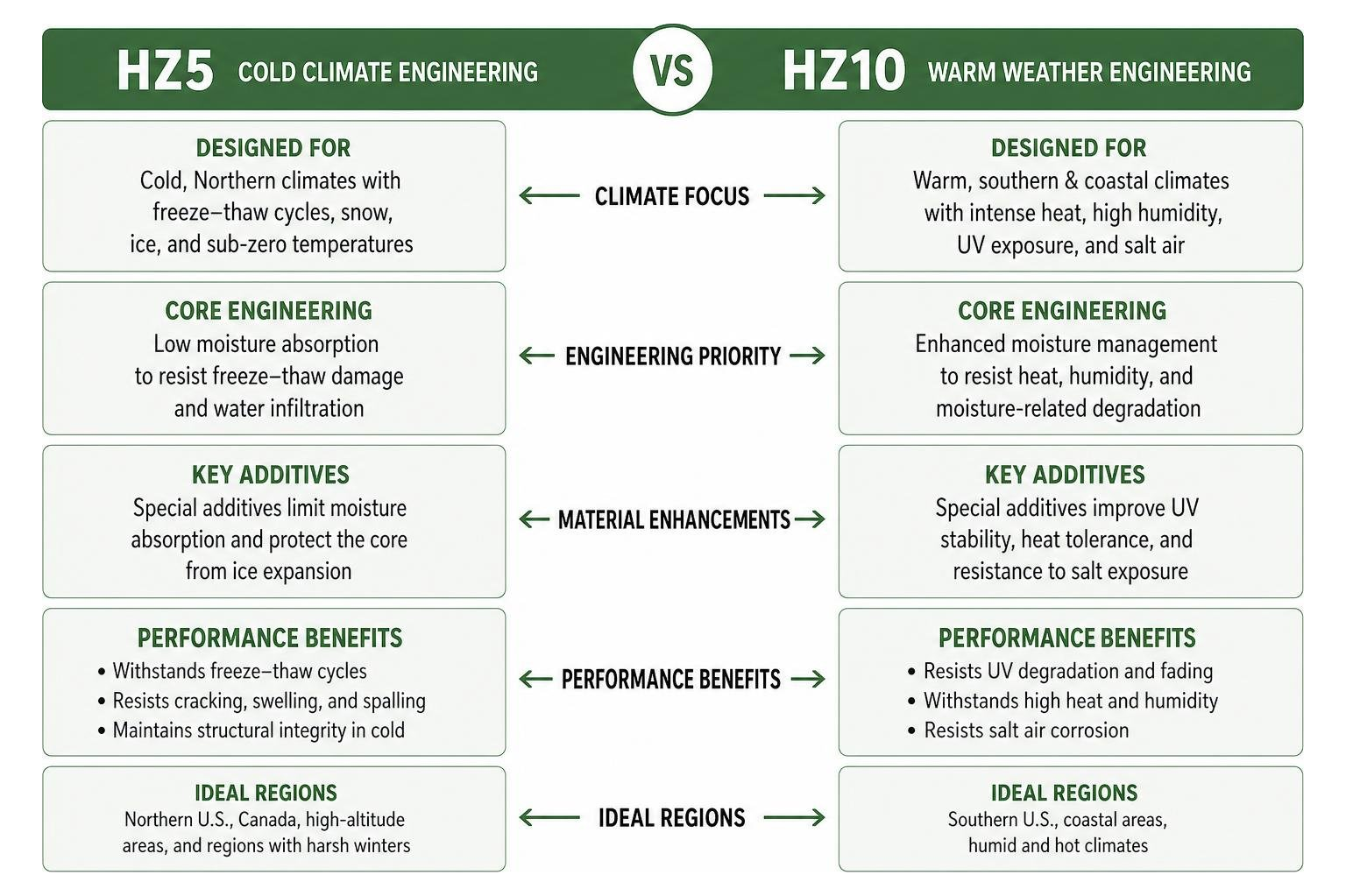
The HZ5 product formulation is engineered specifically for cold, Northern climates subject to severe freeze-thaw cycles, sub-zero winters, heavy snow pack, and seasonal ice. It incorporates custom additives that limit moisture absorption, preventing water from penetrating the core and expanding when frozen.
The HZ10 formulation, on the other hand, targets southern and coastal regions exposed to intense UV rays, high heat, tropical humidity, and salt spray. You can explore primary product specs like the Hardie Plank HZ5 8.25 in. x 144 in. Primed Beaded Smooth Fiber Cement Lap Siding to see how zone-specific designs protect homes against moisture damage. Working alongside the best exterior contractors for reliable service ensures your material order matches your exact climate zone.
Cold Climate Resiliency in Northern Illinois
Here in Northern Illinois—including areas like Lakewood, Crystal Lake, Schaumburg, and Woodstock—our homes endure dramatic temperature swings throughout the year. Winter cold snaps, spring thaws, and summer humidity test exterior materials continuously.
HZ5-engineered 8 inch Hardie Plank siding excels in these severe Midwestern conditions. Because fiber cement remains dimensionally stable despite humidity and temperature fluctuations, it does not expand or contract rapidly like vinyl cladding. This resistance keeps paint finishes intact, eliminates seam separation, and protects wall cavities from driven rain and meltwater ice dams.
High Heat and Coastal Storm Defense
In warmer regions requiring HZ10 technology, fiber cement siding resists thermal blistering and extreme heat expansion. Furthermore, properly fastened 8 inch Hardie Plank siding provides extraordinary structural defense against extreme weather events.
When installed according to strict manufacturer nailing schedules, these boards are engineered and code-tested to withstand wind speeds up to 150 mph. They offer robust defense against windborne debris, severe hail impacts, and driving torrential rain during summer storms.
Surface Textures and ColorPlus Technology Options
Choosing the right siding involves both structural dimensions and visual texture. James Hardie manufactures 8.25-inch lap siding in a variety of surface finishes:
- Select Cedarmill®: A soft, realistic woodgrain texture that replicates traditional harvested timber without natural wood maintenance vulnerabilities.
- Smooth: A clean, flat surface that delivers a sleek, modern architectural aesthetic.
- Beaded Select Cedarmill® & Beaded Smooth: Features a stylized decorative bead along the bottom edge of each plank, offering historic Southern charm.
- Custom Colonial Roughsawn & Smooth: Designed for custom architectural styles with distinct edge details.
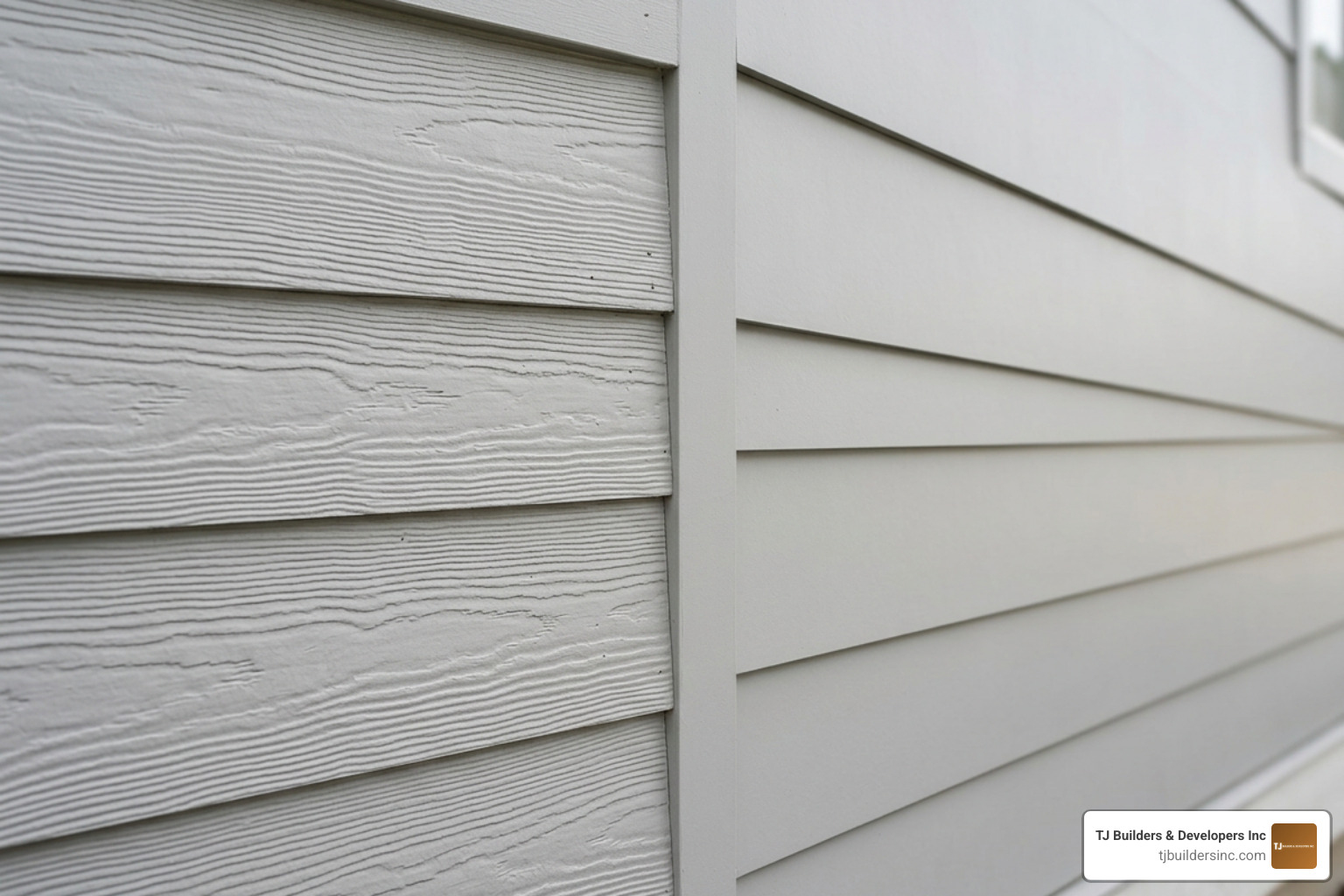
Planks arrive either factory-primed or pre-finished. Factory-primed boards feature a uniform sealed finish—often with a light green or off-white hue—ready for custom jobsite painting. When installing primed planks, an exterior 100% acrylic house paint must be applied within a strict 180-day window following installation to preserve substrate integrity.
Aesthetic Design Flexibility with 8 Inch Hardie Plank Siding
For homeowners seeking a zero-paint jobsite experience, James Hardie offers ColorPlus® Technology. This process applies factory-baked finish coats cured between applications to achieve maximum paint adhesion and color uniformity.
The popular Statement Collection features widely requested pre-finished shades like Night Gray, Arctic White, Iron Gray, and Evening Blue. Options like the Hardie Plank HZ5 8.25 in. x 144 in. Statement Collection Night Gray Cedarmill Fiber Cement Lap Siding arrive on site fully painted, eliminating multi-day exterior painting schedules and site weather delays.
Long-Term Color Adhesion and Paint Maintenance
ColorPlus Technology baked-on finishes offer multi-coat protection that resists UV fade, chipping, and cracking far better than field-applied paint. Because fiber cement does not absorb atmospheric moisture or swell like natural timber, topcoats hold their bond significantly longer.
If you opt for field-painted primed siding, using top-tier 100% exterior acrylic paints yields a vibrant finish that usually lasts 12 to 15 years before requiring a touch-up coat—roughly double the life expectancy of paint applied over natural wood cladding.
Durability, Fire Safety, and Warranty Coverage
When comparing exterior wall cladding options, fiber cement consistently ranks among the most resilient building materials available. At 5/16 inch thick, 8 inch Hardie Plank siding is roughly five times thicker than typical vinyl cladding, providing superior impact resistance against stray hail, thrown baseballs, or lawnmower debris.
Unlike wood or engineered wood products, fiber cement holds zero organic appeal for biological pests. It is entirely immune to termite infestation, carpenter ants, and destructive woodpeckers. Furthermore, fiber cement cannot rot, swell, or split when exposed to persistent ground moisture or snow accumulation.

Every standard HardiePlank board is backed by a 30-year non-prorated, transferable limited substrate warranty. This means the manufacturer guarantees the physical material integrity for three full decades without reducing product value over time.
To protect your investment and maintain full warranty coverage, it is crucial to work with a licensed professional. You can find the best siding contractor in lakewood for your home improvement project to ensure your installation meets every manufacturer guideline.
Noncombustible Material Rating and Safety
One of the most valuable security benefits of fiber cement siding is its behavior during structural or environmental fire emergencies. Hardie Plank lap siding is certified as noncombustible cladding in strict compliance with ASTM E136 standards.
Because the core substrate consists of cement and sand, it will not ignite, burn, or fuel a fire. In wildland-urban interface zones or densely populated suburban developments, noncombustible siding creates a vital thermal barrier. Firefighters and insurance companies nationwide recognize fiber cement for its ability to retard exterior flame spread, often earning homeowners lower annual hazard insurance premiums.
Routine Upkeep and Maintenance Best Practices
Maintaining 8 inch Hardie Plank siding post-installation is remarkably simple:
- Rinse Annually: Wash exterior walls once a year using a low-pressure garden hose to clear away windblown dust, dirt, and tree pollen.
- Gently Scrub Stains: For stubborn dirt or rain splatter near the foundation, scrub lightly using a soft-bristle brush and a mild dish soap solution mixed with warm water.
- Inspect Caulking: Check perimeter caulk joints around window frames, door trims, and corner boards every 2 to 3 years. Touch up any cracked sealant with an exterior-grade polyurethane or elastomeric sealant.
- Avoid High Pressure: Never blast fiber cement boards with high-pressure power washers at close range, as concentrated water pressure can damage soft paint films or force water behind flashing layers.
Need Help With Your Home?
TJ Builders & Developers handles roofing, siding, gutters, windows, home additions, and fire damage restoration for homes and businesses in Lakewood, Crystal Lake, Schaumburg, and nearby McHenry County towns.
- Free, no-obligation estimates
- Licensed & insured
- 20+ years of local experience
Professional Siding Installation Standards
Installing fiber cement siding requires specialized tools, precise layout measurements, and strict safety practices. Unlike lightweight vinyl that snaps together on hanging slots, fiber cement lap planks must be face-nailed or blind-nailed securely into structural wall framing using 2-1/2 inch stainless steel or hot-dipped galvanized siding nails.
Cutting fiber cement boards outdoors requires dedicated equipment to manage silica dust safely. Professional contractors utilize circular saws equipped with specialized polycrystalline diamond-tipped fiber cement blades integrated with vacuum dust collection systems, or heavy-duty electric shears for clean, dust-free cuts.
Before hiring a crew, homeowners should understand proper contractor qualifications. Reviewing guides like dont get framed when hiring your next siding and window contractor helps ensure your hired team follows certified trade standards.
Clearance and Joint Flashing Requirements
Correct installation requires strict adherence to vertical clearances and water management details:
- Ground Clearance: Maintain a minimum 6-inch clearance between the bottom edge of the starter plank and bare earth, or a 2-inch clearance above paved concrete surfaces like driveways and walkways.
- Roofline Spacing: Leave a 1-inch to 2-inch clearance gap where siding meets sloping rooflines or flashing steps to prevent wicking water from saturating board edges.
- Joint Butt Flashing: Install joint flashing slips (slip sheets) behind every field butt joint where two plank ends meet, ensuring rainwater drains safely onto the course below rather than penetrating wall sheathing.
The Importance of Experienced Exterior Contractors
While handy homeowners may tackle small repair jobs, full exterior replacement demands specialized structural craftsmanship. Fiber cement boards are heavy, rigid, and require level starter strip alignment to prevent compounding course errors as installation moves up the wall.
Certified contractors install high-performance weather-resistive barriers (house wrap), seal window perimeters with self-adhering flashing tape, and maintain exact fastener depth settings so nail heads sit flush without crushing the board surface. Partnering with a skilled exterior team guarantees your home stays completely watertight and retains full 30-year warranty protection.
Frequently Asked Questions About Fiber Cement Siding
What is the actual reveal of 8 inch Hardie Plank siding?
The actual exposed face (reveal) of an 8-inch plank is 7 inches. The full board width measures 8.25 inches, but 1.25 inches is overlapped by the course installed directly above it.
What paint deadline applies to factory-primed Hardie Plank boards?
Factory-primed boards must be finished with a 100% exterior acrylic house paint within 180 days (6 months) of installation to protect the factory primer coating and underlying substrate from weathering.
How does 8 inch Hardie Plank siding handle extreme weather?
When properly installed, 8 inch Hardie Plank siding withstands wind speeds up to 150 mph, resists hail impacts without denting, carries an ASTM E136 noncombustible fire rating, and will not crack or split during severe winter freeze-thaw cycles.
Protect Your Home with Professional Siding Installation
Selecting the right lap siding width is one of the most impactful upgrades you can make for your property’s long-term value, protection, and architectural charm. The bold 7-inch reveal of 8 inch Hardie Plank siding creates timeless curb appeal while offering unmatched defense against harsh Midwestern weather.
At TJ Builders & Developers Inc, we specialize in high-quality exterior home service solutions across Northern Illinois, including Lakewood, Crystal Lake, Huntley, Woodstock, Schaumburg, and surrounding communities. From complete siding replacements to windows, roofing, and structural restoration, our team brings decades of dependable workmanship and dedicated service to every project.
If you are ready to update your home’s exterior with durable fiber cement lap siding, explore our professional siding installation replacement services or contact our expert team today to schedule your personalized consultation!