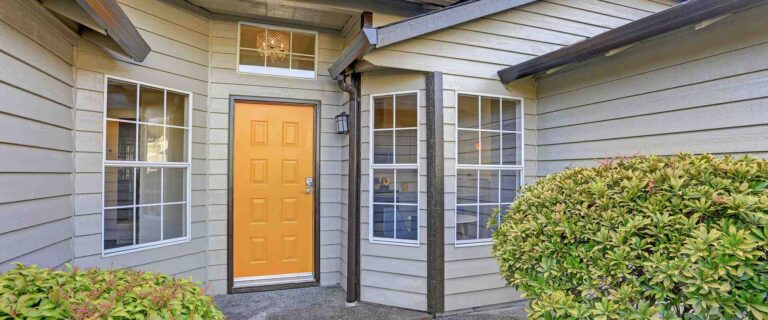
What Is Fiber Cement Siding — and How Does It Compare to Your Other Options?
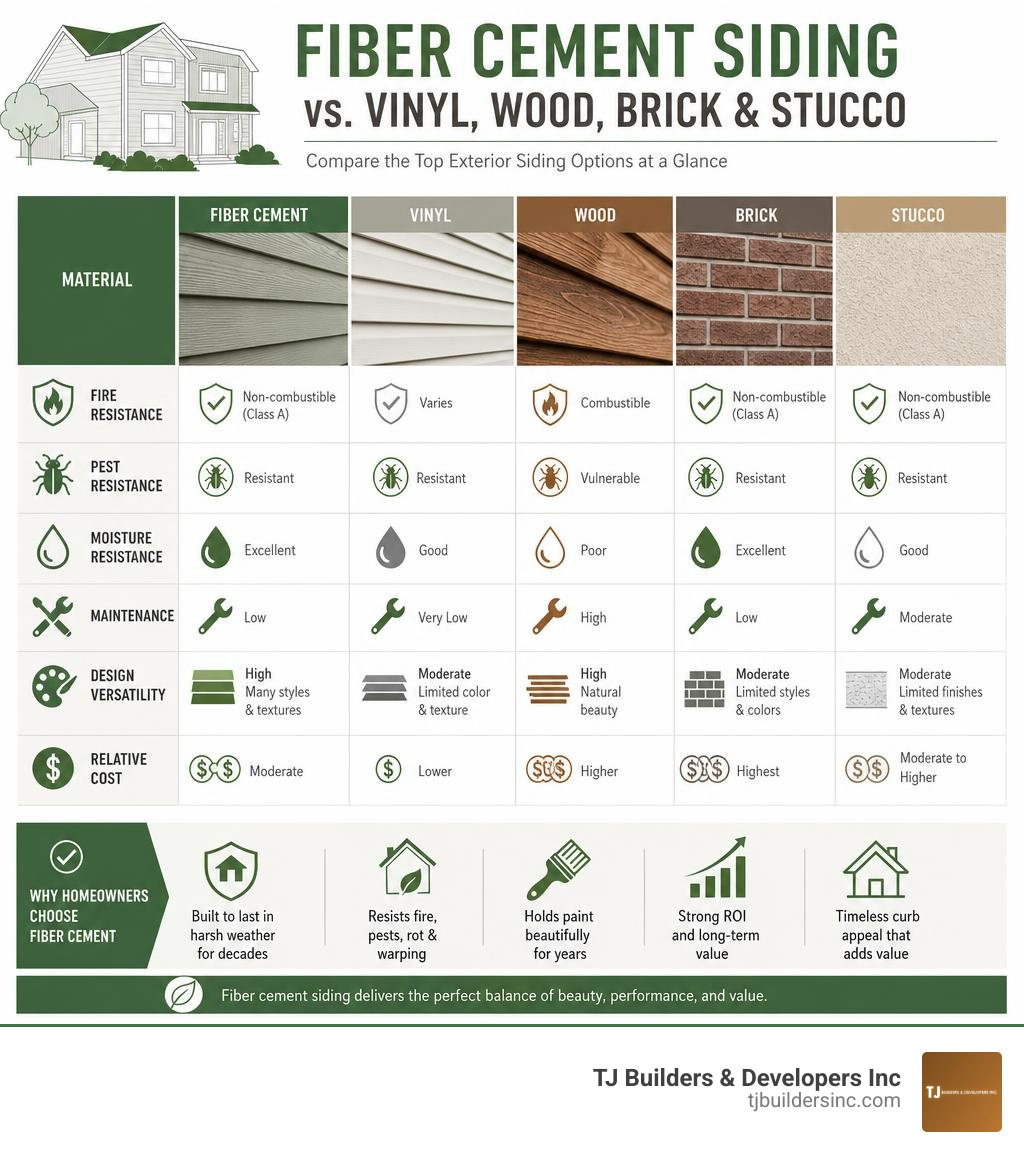
Fiber cement siding is a durable, low-maintenance exterior cladding material made from Portland cement, sand, water, and cellulose fibers. Here’s a quick snapshot of what makes it stand out:
- Fire resistant — non-combustible, rated Class A under ASTM E84
- Pest resistant — unappealing to termites and woodpeckers
- Moisture resistant — resists rot, warping, and freeze-thaw damage
- Versatile — available in lap siding, vertical panels, shingles, and board-and-batten profiles
- Strong ROI — homeowners recoup up to 76% of the cost at resale, making it the third-best exterior renovation project according to the National Association of Realtors
- Cost — generally less expensive than brick or synthetic stucco, more than vinyl
It mimics the look of wood, brick, or stone — without the high upkeep those materials demand.
When your exterior siding is worn, damaged, or simply outdated, choosing the right replacement material is one of the most important decisions you’ll make for your home’s long-term protection and curb appeal. The wrong choice can mean ongoing repairs, pest damage, or poor performance against harsh weather. This guide breaks down how fiber cement compares to every major alternative so you can make a confident, informed decision.
I’m Thomas Pruszynski, owner of TJ Builders & Developers, and over more than 20 years of exterior renovation work across Northern Illinois, fiber cement siding has become one of our most recommended solutions for homeowners dealing with damaged or aging exteriors. Our team has seen how the right material choice protects a home for decades — and how the wrong one leads to costly callbacks.
Material Science and Benefits of Fiber Cement Siding
To understand why fiber cement siding performs so exceptionally well on homes throughout Northern Illinois communities like Lakewood, Crystal Lake, and Schaumburg, it helps to examine what goes into making it. This synthetic composite material blends strength with natural flexibility, engineered specifically to endure severe exterior conditions.
For complete technical details on Fiber cement siding specifications, the historical development from asbestos-reinforced panels in the early 20th century to modern cellulose-reinforced composite boards highlights a massive leap forward in building safety and performance.
What Is Fiber Cement Composition?
At its core, fiber cement relies on a straightforward four-part recipe:
- Portland Cement: Formed from limestone, clay, and iron, cement acts as the solid binding agent that gives each panel its structural rigidity and stone-like strength.
- Silica Sand: Finely ground sand acts as a durable filler material, contributing to structural density and dimensional stability.
- Cellulose Fibers: Sourced from natural wood pulp, these delicate fibers are mixed throughout the batch to provide internal tensile strength and flexibility. They prevent boards from cracking during temperature shifts.
- Water and Additives: Water activates the cement binder, while proprietary manufacturer additives enhance moisture resistance and accelerate curing.
Once blended, the mixture is molded into planks, shingles, or large architectural sheets, pressed under intense pressure, and cured. The resulting composite board won’t warp or swell when exposed to moisture, giving it incredible dimensional stability across all four seasons.
Fire, Pest, and Climate Performance

One of the single greatest reasons we recommend fiber cement siding to homeowners in Lake in the Hills, Huntley, and Woodstock is its incredible resistance to extreme environmental hazards.
- Class A Fire Resistance: Fiber cement is non-combustible and tested under ASTM E84 and ASTM E136 standards. It will not ignite or feed a flame, giving homeowners critical peace of mind and protection against house fires.
- Complete Pest Resistance: Unlike natural wood, fiber cement offers zero food value or soft texture for destructive pests. Woodpeckers can’t peck into it, and termites or carpenter ants turn away completely.
- Freeze-Thaw Resilience: Northern Illinois winters bring intense cycles of freezing rain, snow, and rapid thaw. Because fiber cement absorbs virtually no moisture, it resists internal cracking, delamination, and freeze-thaw spalling.
- Severe Weather & Wind Resistance: Engineered to withstand tropical-storm-force winds and hail, high-density panels remain tightly fastened when severe storms sweep across the Midwest.
Need Help With Your Home?
TJ Builders & Developers handles roofing, siding, gutters, windows, home additions, and fire damage restoration for homes and businesses in Lakewood, Crystal Lake, Schaumburg, and nearby McHenry County towns.
- Free, no-obligation estimates
- Licensed & insured
- 20+ years of local experience
Comparing Exterior Cladding Options
Choosing an exterior material isn’t just about initial looks; it’s about life expectancy, structural weight, thermal performance, and total ownership costs.
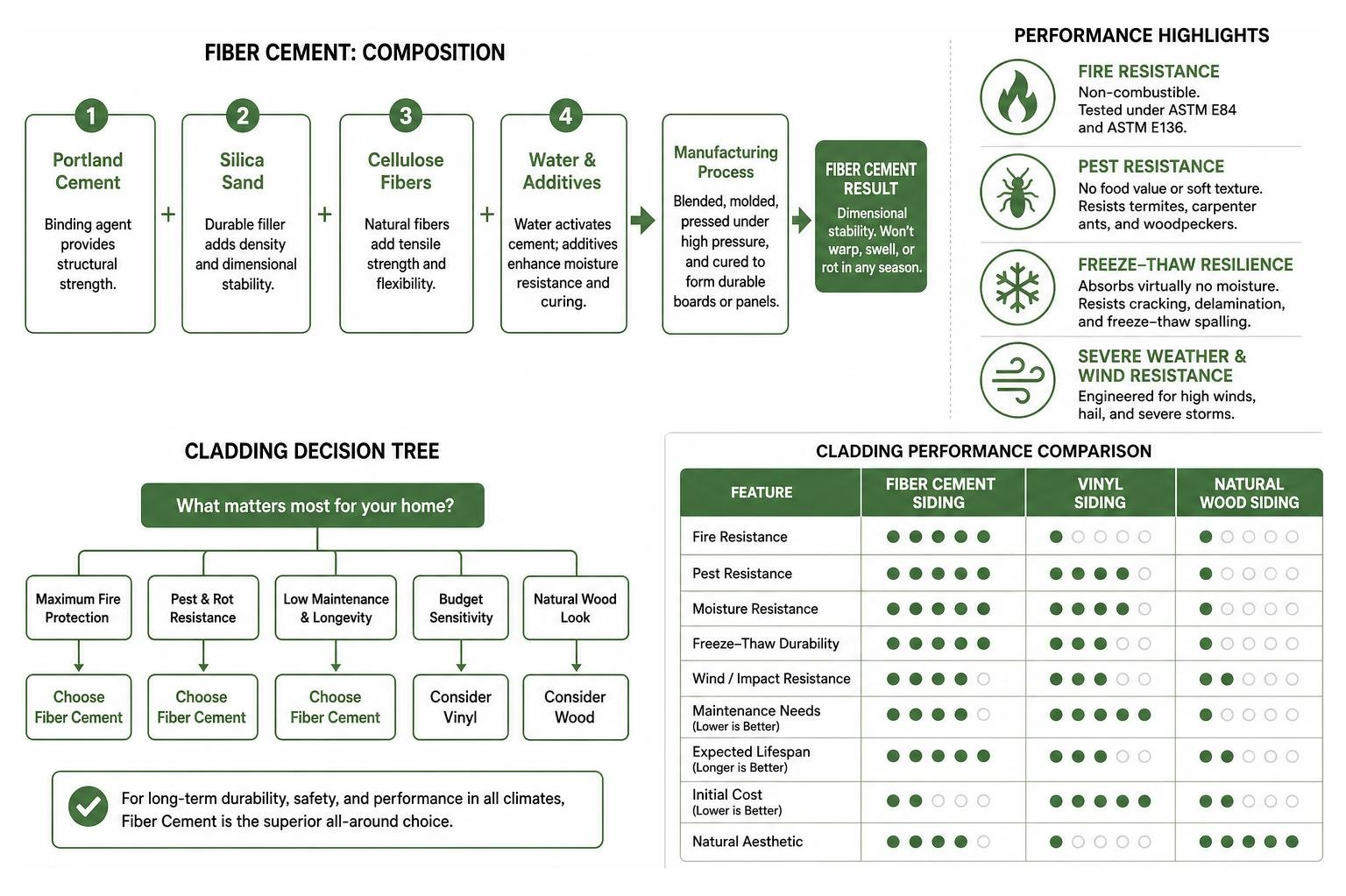
Comparing Fiber Cement Siding to Vinyl and Wood
Vinyl and real wood remain widely discussed exterior options, but they come with clear trade-offs when evaluated against fiber cement siding:
| Feature / Material | Fiber Cement Siding | Vinyl Siding | Natural Wood Siding |
|---|---|---|---|
| Primary Composition | Portland cement, sand, cellulose | PVC plastic | Cedar, pine, or redwood |
| Fire Rating | Non-combustible (Class A) | Melts/Burns (Class 3) | Combustible |
| Life Expectancy | 30 to 50+ years | 20 to 30 years | 15 to 30 years (with high care) |
| Pest Resistance | Impervious to pests | Resistant to insects | Vulnerable to termites/birds |
| Maintenance Needs | Low (occasional wash) | Low | High (stain/paint every 3–5 yrs) |
| Impact Resistance | Very high | Moderate (brittle in cold) | High |
Vinyl siding is lightweight and quick to install, but intense freezing cold in McHenry or Barrington can make PVC vinyl brittle and prone to cracking from hail or physical impact. Furthermore, vinyl can melt when exposed to intense heat or reflected sunlight from energy-efficient windows.
Natural cedar wood siding offers gorgeous organic warmth, but it demands relentless maintenance. Without frequent sealing, scraping, and repainting, natural wood quickly succumbs to rot, moisture saturation, and termite attack. Fiber cement captures the deep cedar grain aesthetic without any of the high-maintenance headaches.
When planning a total exterior makeover, pairing durable new cladding with proper insulation and soffit work ensures your envelope performs seamlessly. Explore our dedicated Siding Installation Replacement solutions to see how we build long-lasting protection for local homes.
Fiber Cement vs Brick and Masonry
Solid brick masonry and natural stone provide undeniable elegance and longevity, but they carry a massive financial and structural commitment. Real brick requires extensive foundation footings to support heavy masonry loads, highly specialized labor, and mortar repointing every few decades.
Fiber cement siding panels deliver textured brick, stacked stone, or concrete block aesthetics at a fraction of the structural weight and overall investment. Because panels mount directly to standard wall framing, you eliminate foundation reinforcement costs while achieving modern or classic masonry looks across your entire home.
Versatile Architectural Styles and Design Flexibility
No matter the architectural heritage of your residence — whether a traditional suburban home in Schaumburg, a modern farmhouse in Elgin, or a historic revival in Cary — fiber cement delivers broad aesthetic flexibility.
Customizing Design with Fiber Cement Siding

Fiber cement is manufactured in a comprehensive suite of profiles, textures, and factory finishes:
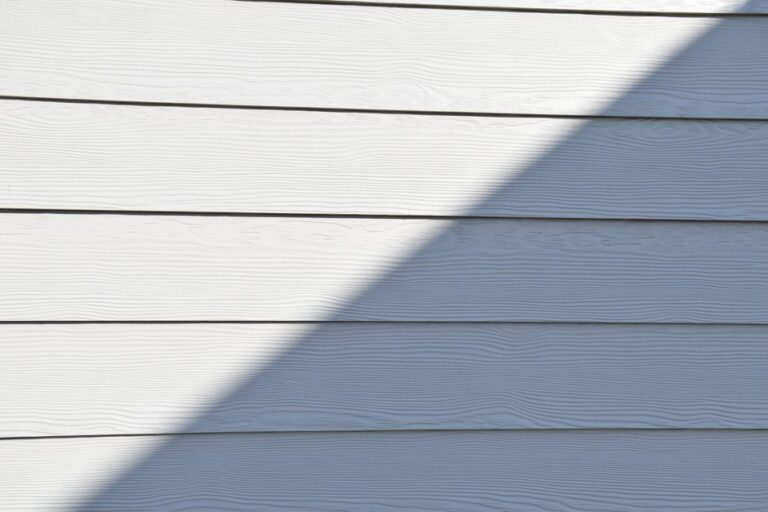
- Traditional Horizontal Lap Planks: Available in wide or narrow reveals, featuring deep Cedarmill woodgrain or smooth contemporary finishes. Planks typically measure 12 feet long (144 inches) by 8.25 inches wide.
- Vertical Architectural Panels: Large 4×8 ft or 4×10 ft smooth or textured sheet panels. When paired with trim battens, vertical panels form the iconic board-and-batten look that dominates modern farmhouse styling.
- Shingles and Shakes: Staggered or straight-edge shingle profiles emulate handcrafted cedar shakes. Specialty shingle lines, like GAF WeatherSide, even offer exact straight, wavy, or thatched edges to match discontinued historical shingle profiles without hazardous asbestos.
- Modern Black and Bold Finishes: Dark exterior trends have exploded in recent years. In fact, searches for black exterior homes grew 778% on Pinterest. Factory baked-on finishes keep deep charcoal and iron gray colors vibrant without fading under heavy UV exposure.
If you are planning to customize your home’s layout or build out extra living space, integrating fiber cement panels across new structures creates seamless architectural continuity.
Need Help With Your Home?
TJ Builders & Developers handles roofing, siding, gutters, windows, home additions, and fire damage restoration for homes and businesses in Lakewood, Crystal Lake, Schaumburg, and nearby McHenry County towns.
- Free, no-obligation estimates
- Licensed & insured
- 20+ years of local experience
Professional Installation, Maintenance, and Return on Investment
While fiber cement delivers lifetime durability, achieving those results requires rigorous installation precision and adherence to manufacturer guidelines.
Preparation and Installation Standards
Proper wall preparation is critical to long-term exterior performance:
- Substrate Sheathing & House Wrap: Exterior stud framing must be sheathed with OSB or exterior-grade plywood, then wrapped in a high-performance weather-resistant barrier (WRB). Overlapping barrier seams by several inches and taping them thoroughly prevents wind-driven rain from reaching structural framing.
- Flashing & Clearance Standards: Install step flashing around rooflines, decks, and windows. Installers must maintain required ground clearances (typically 6 inches above soil and 2 inches above paved surfaces or rooflines) to keep standing water away from board edges.
- Safety and Dust Mitigation: Cutting fiber cement releases airborne crystalline silica dust. Professional crews comply with OSHA standards by utilizing specialty fiber cement saw blades paired with dust-collecting vacuums, which capture 80% to 90% of respirable dust, or by using mechanical shears for quiet, dust-free cuts.
- Fastening & Joint Alignment: Boards must be secured with hot-dipped galvanized siding nails driven snug against the manufacturer’s target line, using blind-nailing techniques whenever possible for a clean, fastener-free appearance.
For deep technical insights on professional flashing, clearance, and installation guidelines, review the industry standards outlined in the JLC Field Guide exterior standards.
Working with experienced local professionals guarantees that manufacturer warranty conditions — which often span 25 to 30 years non-prorated — remain fully protected. Learn how to verify qualifications when hiring by reviewing our guide on how to Find the Best Siding Contractor in Lakewood.
Long-Term Maintenance and Home Value Impact
Maintaining fiber cement siding is remarkably straightforward:
- Routine Cleaning: Gently spray down walls once or twice a year using a standard garden hose and a soft-bristle brush to remove ambient dust, dirt, or pollen. Avoid high-pressure power washing at close range, which can damage painted surface finishes or force water behind lap joints.
- Caulk Inspection: Inspect perimeter caulking around windows, doors, and trim corners every few years, touching up high-grade exterior sealant if natural building settling occurs.
- Topcoat Touch-Up: Factory pre-finished boards featuring baked-on color technologies come with dedicated finish warranties (often 15 years). Pre-primed boards painted with high-grade exterior 100% acrylic latex paint typically require repainting only once every 12 to 15 years — far longer than raw wood siding.
When it comes to financial return, upgrading to fiber cement ranks among the most valuable exterior remodeling investments available. According to data from the National Association of Realtors, homeowners recoup up to 76% of their project investment at resale, placing fiber cement firmly as the third-best ROI among all major home exterior renovations.
If your renovation plans include expanding your home’s footprint alongside an exterior facade upgrade, check out our full range of solutions for Home Additions Expansions.
Frequently Asked Questions
What is fiber cement siding made of?
Fiber cement is a dense composite material composed of Portland cement, silica sand, water, and natural cellulose wood pulp fibers. The cement provides structural rigidity, sand acts as a resilient filler, and cellulose fibers add internal flexibility and tensile strength.
How does fiber cement perform in freezing weather and severe storms?
Because fiber cement is virtually moisture-impervious, water cannot penetrate the core of the board. This prevents freeze-thaw spalling, cracking, and internal rot during extreme Midwest winter storms. Additionally, its high density allows it to hold up under severe hail impacts and high wind loads.
Is professional installation required for fiber cement cladding?
Yes, professional installation is strongly recommended. Fiber cement boards are heavy, rigid, and require specialized tools, such as diamond-tipped saw blades with dust-vacuum extraction to meet OSHA silica safety standards. Professional installation also ensures precise weather barrier overlaps, proper step flashing, correct ground clearances, and valid manufacturer warranty coverage.
Conclusion
Upgrading your home’s exterior cladding is a major decision that directly affects your property’s safety, curb appeal, and long-term resale value. Fiber cement siding consistently outperforms vinyl, natural wood, and synthetic stucco by combining Class A fire resistance, complete pest protection, and exceptional freeze-thaw durability with low maintenance demands and a 76% return on investment.
At TJ Builders & Developers, we bring over two decades of local exterior expertise, reliable workmanship, and honest communication to every residential project across Lakewood, Crystal Lake, Schaumburg, Huntley, McHenry, and the surrounding suburbs. Whether you’re interested in crisp modern board-and-batten panels or classic woodgrain lap planks, our team handles every step from sheathing preparation to final trim detailing with precision.
Ready to protect and transform your home’s exterior? Contact our local experts today or explore our complete Siding Installation Replacement options to schedule your personalized consultation!