Why Conservatory Roof Repairs Matter Before Small Problems Become Big Ones
If you need conservatory roof repairs, here is a quick overview of the most common issues and what to do about them:
| Problem | Common Cause | Recommended Action |
|---|---|---|
| Active leak inside the room | Slipped panels or perished seals | Call a specialist for inspection and resealing |
| Water dripping at the house wall | Failed flashing or box gutter | Professional flashing repair or gutter replacement |
| Misting inside glass panels | Failed double-glazed unit seal | Replace the affected sealed unit |
| Too hot in summer, too cold in winter | Poor insulation or high U-value panels | Upgrade to insulated or tiled roof panels |
| Excessive rain noise | Thin polycarbonate sheets | Replace with insulated panels (reduces noise up to 80%) |
| Cracked or brittle panels | Age (polycarbonate lasts 10–20 years) | Panel replacement or full roof upgrade |
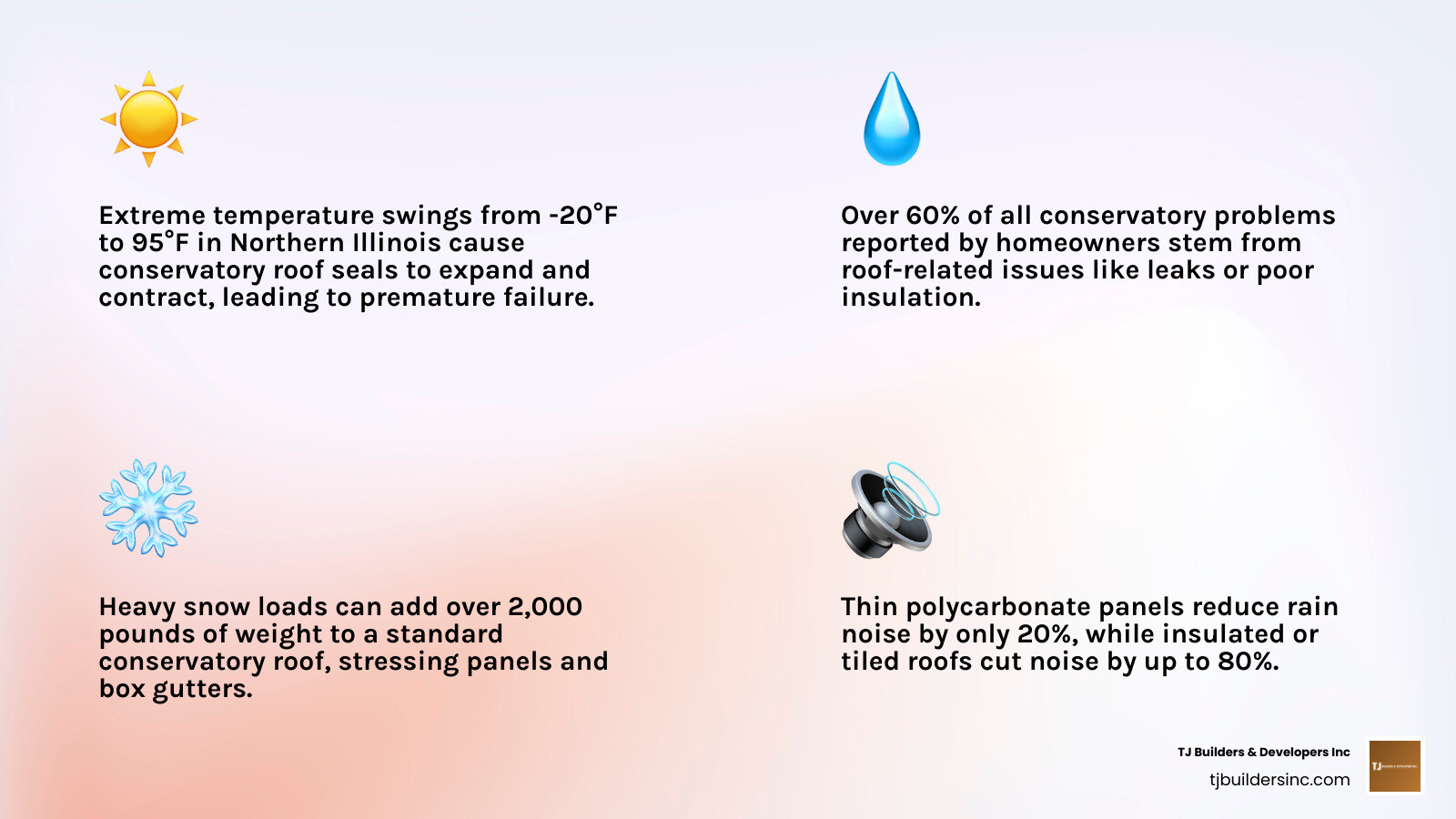
Around 60 percent of all conservatory problems homeowners report relate directly to the roof. That is not a coincidence. Conservatory roofs are exposed to the full force of the weather — UV rays, heavy rain, wind, and in Northern Illinois, serious snow and ice loads that put real stress on panels, seals, and gutters year after year.
The tricky part is that most conservatory roof damage starts small. A slightly slipped panel, a gasket that has begun to perish, a box gutter that has not been cleared in a season. Left alone, those minor issues let water track deeper into the structure — and what started as a £150–£400 fix can quickly escalate into a far more serious and costly repair.
I’m Thomas Pruszynski, owner of TJ Builders & Developers Inc, and over more than 20 years of working on exterior home repairs and additions across Northern Illinois, I’ve seen how quickly a neglected conservatory roof can compromise the rest of a home. This guide pulls together everything you need to know about conservatory roof repairs — from diagnosing the problem to choosing the right fix.
Common Causes of Conservatory Roof Leaks and Damage
A beautiful, sunlit conservatory or sunroom is one of the best places to enjoy a morning coffee—until a steady drip-drip-drip onto your favorite armchair ruins the mood. In our climate, which stretches across Lakewood, Crystal Lake, and McHenry, our homes endure intense seasonal shifts. We experience scorching, humid July afternoons and freezing, snow-heavy January nights. This extreme weather cycle is the primary driver behind most conservatory roof issues.
Over time, constant thermal expansion and contraction cause different materials to shift at different rates. The aluminum framing, the glass or polycarbonate panels, and the rubber gaskets all react uniquely to temperature swings. This physical movement eventually compromises the structural integrity of your roof.
When a leak occurs, ignoring it is never an option. Water has a sneaky habit of tracking along internal support beams, meaning the spot where you see a drip inside might be feet away from the actual entry point on the outside of the roof. To understand exactly how water finds its way in, homeowners can benefit from reading The Ultimate Guide To Professional Roof Leak Inspection And Repair, which outlines how professional diagnostic inspections trace hidden water paths.
Beyond general wear and tear, several specific culprits frequently damage conservatory roofs in Northern Illinois:
- Slipped Panels: Strong wind gusts can physically slide unsealed panels out of their original positions.
- Perished Seals: UV exposure degrades the rubber gaskets that hold your glazing watertight.
- Clogged Gutters: Leaves, pine needles, and organic debris back up in box gutters, forcing water up and under the roofline.
- Hail Damage: Spring storms can puncture aged polycarbonate sheets or crack fragile glass panels.
- Heavy Snow Loads: The weight of wet Midwest snow can bow structural support bars, causing seals to pop open.
Identifying Failed Seals and Perished Gaskets
The seals and gaskets on a glass conservatory roof typically last between 10 to 15 years. As they bake in the summer sun and freeze during our bitter winters, the rubber loses its elasticity. It becomes brittle, cracks, and eventually perishes.
One of the most obvious signs of failed seals is misting or condensation trapped inside your double-glazed glass units. When the perimeter seal of a double-glazed panel fails, moisture-laden air penetrates the gap between the two glass panes. Once inside, this moisture condenses, leaving a cloudy, unsightly mist that cannot be wiped away. This is more than an aesthetic issue; failed seals significantly raise the U-value of your roof, destroying its thermal efficiency and making your space incredibly drafty.
If you suspect your gaskets are giving out, look for these warning signs:
- Visible gaps or shrinking rubber along the glazing bars.
- Water staining on the inside of the structural aluminum struts.
- A noticeable draft whistling through the roof during windy days.
- Black mold growing along the internal seals.
When multiple seals begin to fail, it is vital to use high-quality, weather-resistant materials to restore the system. For a deeper look at the professional compounds used to resolve these issues, explore No More Leaks A Guide To The Best Roof Seal Repair Products.
Addressing Slipped or Loose Conservatory Roof Panels
Slipped panels are arguably the single most common cause of sudden conservatory leaks. This problem is particularly prevalent in older UPVC structures that rely on polycarbonate sheets. Over time, the original plastic locking clips or end caps can break or degrade. Without these physical barriers, gravity and wind movement work together to slide the panels downward.
When a panel slips even a fraction of an inch, it leaves an open gap at the ridge (the very top of the roof). Rainwater can then pour straight into the internal framing. Beyond the obvious threat of water damage, slipped panels represent a significant home security vulnerability, as loose polycarbonate sheets can easily be lifted from the outside.
To permanently fix slipped panels, our professional teams do not simply slide them back and apply standard silicone. We carefully clean the glazing bars, reposition the panels, and secure them with heavy-duty aluminum retaining brackets and caps. This ensures they can withstand high winds and heavy snow without budging. For those interested in the mechanics of how we resolve these shifts, How To Fix Roof Leaks With These 5 Easy Changes provides excellent context on structural adjustments.
Need Help With Your Home?
TJ Builders & Developers handles roofing, siding, gutters, windows, home additions, and fire damage restoration for homes and businesses in Lakewood, Crystal Lake, Schaumburg, and nearby McHenry County towns.
- Free, no-obligation estimates
- Licensed & insured
- 20+ years of local experience
Repair vs. Replacement: Making the Right Choice for Your Home
When facing ongoing issues, every homeowner asks the same question: Should I repair my conservatory roof, or is it time for a complete replacement?
The answer depends heavily on the age of the structure, the extent of the damage, and your long-term goals for the space. If your conservatory is relatively young (under 10 years old) and the leaks are isolated to a single slipped panel or a couple of perished seals, a targeted professional repair is highly sensible, cost-effective, and long-lasting.
However, if your roof is nearing the end of its natural lifespan, structural wear may be too widespread for simple repairs to make financial sense. Polycarbonate roofs typically last 10 to 20 years before the material becomes brittle, yellowed, and prone to cracking under hail or snow. If your roof falls into this age bracket, you may find yourself paying for one minor repair after another, only to have a new leak spring up next door.
In these cases, upgrading your roof is a far wiser investment. A modern, professionally installed roof can improve your space’s energy efficiency by up to 40 percent and add between 5 and 7 percent to your property’s perceived value. If you are considering a full upgrade, our team can guide you through the process, which you can learn more about in our Roof Installation Replacement Complete Guide.
Comparing Conservatory Roof Materials and Lifespans
Choosing the right material for your roof replacement or major upgrade will dictate how much maintenance you face over the next few decades. Here is how the three main options stack up:
| Material Type | Average Lifespan | Maintenance Level | Thermal Performance | Key Pros & Cons |
|---|---|---|---|---|
| Polycarbonate | 10 to 20 Years | Medium | Poor (High U-Values) | Lightweight and cost-effective, but noisy in rain and prone to extreme temperature swings. |
| Performance Glass | 20 to 30 Years | Medium-High | Good (with solar coatings) | Excellent natural light and views; seals require replacement every 10–15 years. |
| Solid Tiled Roof | 40+ Years | Very Low | Excellent (Fully Insulated) | Transforms the room into a true year-round living space; requires professional structural assessment. |
Professional Solutions for Complex Conservatory Roof Repairs
While some minor home maintenance tasks can be handled on a weekend, complex conservatory roof repairs require specialized professional skills, heavy-duty safety equipment, and structural expertise. Working on a sloped, fragile, and slippery glass or polycarbonate surface presents severe safety hazards. One wrong step can crack a panel, or worse, lead to a dangerous fall.
Furthermore, conservatories often feature complex architectural elements, such as manual or electric roof vents, custom valley gutters, and intricate structural joints. If these components are not repaired using manufacturer-approved parts and precise techniques, the leak will inevitably return. For example, if you are experiencing issues with integrated roof vents or skylights in the Lakewood area, our specialized services in Skylight Repair Lakewood can restore these units to a completely watertight state.
Fixing Leaks at the House Junction and Box Gutters
One of the most technically demanding areas of any conservatory roof is the critical junction where the roof structure meets the brickwork of your main house. This junction relies on custom-fitted lead flashing to prevent water from running down the house wall and into the conservatory.
Over time, thermal movement can pull the flashing out of its mortar joints. Additionally, rainwater can blow back up lean-to conservatory roofs, finding its way underneath loose flashing if the seals have degraded. When this happens, water tracks down into the internal timber framing, leading to wood rot, damp plasterboard, and ruined flooring.
Box gutters and valley gutters are also primary failure points, especially in bespoke or complex L-shaped conservatories. If these gutters become blocked with debris or if their joints crack, water will quickly overflow back into the room. Resolving these issues requires professional waterproofing and precise flashing installation. To see how we protect vulnerable transitions and prevent water tracking, check out our Roof Waterproofing Services Because Your Attic Isnt A Swimming Pool.
Improving Thermal Efficiency and Noise Reduction
Many older conservatories suffer from the “greenhouse effect”—they are stiflingly hot in the summer, freezing cold in the winter, and deafeningly noisy when it rains. This is almost always due to old, uninsulated polycarbonate or single-pane glass roofing.
Fortunately, you do not have to live with an unusable room. During a professional repair or refurbishment, we can upgrade your existing system to modern, high-performance materials. By replacing old polycarbonate sheets with modern insulated panels, you can reduce rain noise by as much as 80 percent.
For the ultimate transformation, converting your conservatory to a lightweight, fully insulated solid tiled roof is the gold standard. This upgrade delivers home-level insulation, keeping the space comfortable 365 days a year while drastically reducing your heating and cooling costs.
Need Help With Your Home?
TJ Builders & Developers handles roofing, siding, gutters, windows, home additions, and fire damage restoration for homes and businesses in Lakewood, Crystal Lake, Schaumburg, and nearby McHenry County towns.
- Free, no-obligation estimates
- Licensed & insured
- 20+ years of local experience
Frequently Asked Questions about Conservatory Roof Repairs
Can I repair a leaking conservatory roof myself?
We strongly advise against attempting DIY repairs on a conservatory roof. Beyond the obvious physical danger of working at heights on slippery, fragile materials, there are several structural risks:
- Accidental Damage: Stepping directly on polycarbonate sheets or glass panels can easily crack them, turning a minor leak into a major structural failure.
- Improper Materials: Standard retail silicone sealants often fail to bond correctly with UPVC or specialized self-cleaning glass, leading to recurring leaks within months.
- Warranty Voiding: If your conservatory is covered by an existing installer’s warranty, DIY work will almost certainly void it.
A professional inspection ensures the root cause of the leak is identified and fixed permanently using commercial-grade materials and proper safety harnesses.
How much do typical conservatory roof repairs cost?
The cost of conservatory roof repairs varies depending on the severity of the issue, the materials involved, and the size of your structure.
- Simple Repairs: Tasks like refitting a slipped panel, replacing a broken end cap, or resealing a minor joint typically range from $200 to $500 (equivalent to £150 to £400).
- Extensive Repairs: Resolving more complex issues, such as replacing multiple cracked polycarbonate sheets, fixing failed lead flashing at the house junction, or repairing complex box gutters, generally ranges from $500 to $1,500 (equivalent to £400 to £1,200).
- Complete Replacements: If the structure is severely degraded, a full roof replacement can range from $8,000 to $28,000 (equivalent to £6,300 to £22,500), depending on whether you choose high-performance glass or a solid tiled roof system.
For a broader understanding of how structural repair costs are calculated, you can read The Price Of A Dry Ceiling And Other Roof Repair Costs.
How do I find a specialist for conservatory roof repairs near me?
Finding a reliable contractor is the most important step in protecting your home. When searching for a specialist in the Northern Illinois suburbs—including Cary, Algonquin, Schaumburg, or Barrington—look for a company with a proven track record in both general roofing and specialized structural additions.
Always verify that the contractor is fully licensed, insured, and offers written guarantees on their workmanship. For helpful tips on vetting local professionals and asking the right questions, refer to our guide, I Need A Roofer Your Ultimate Guide To Finding A Good Roofer Near You.
Conclusion
Your conservatory should be a comfortable, light-filled sanctuary that you can enjoy throughout every season. Don’t let a minor leak or a slipped panel turn your favorite room into an unusable, damp space. Whether you are dealing with a sudden drip after a heavy storm or want to explore modern insulation upgrades to keep your room cozy all winter long, our team is here to help.
At TJ Builders & Developers Inc, we bring decades of professional roofing and exterior home service experience to homeowners throughout Lakewood, Crystal Lake, Schaumburg, and the surrounding Northern Illinois suburbs. We specialize in high-quality workmanship, durable materials, and reliable home additions. Schedule your professional roof repair today and let us restore the comfort, beauty, and structural integrity of your home.