The Timeless Appeal of Wood Roofing
A wood shingle roof is a natural roofing material made from thin, tapered pieces of wood—typically cedar—installed in overlapping layers. Here’s a quick overview:
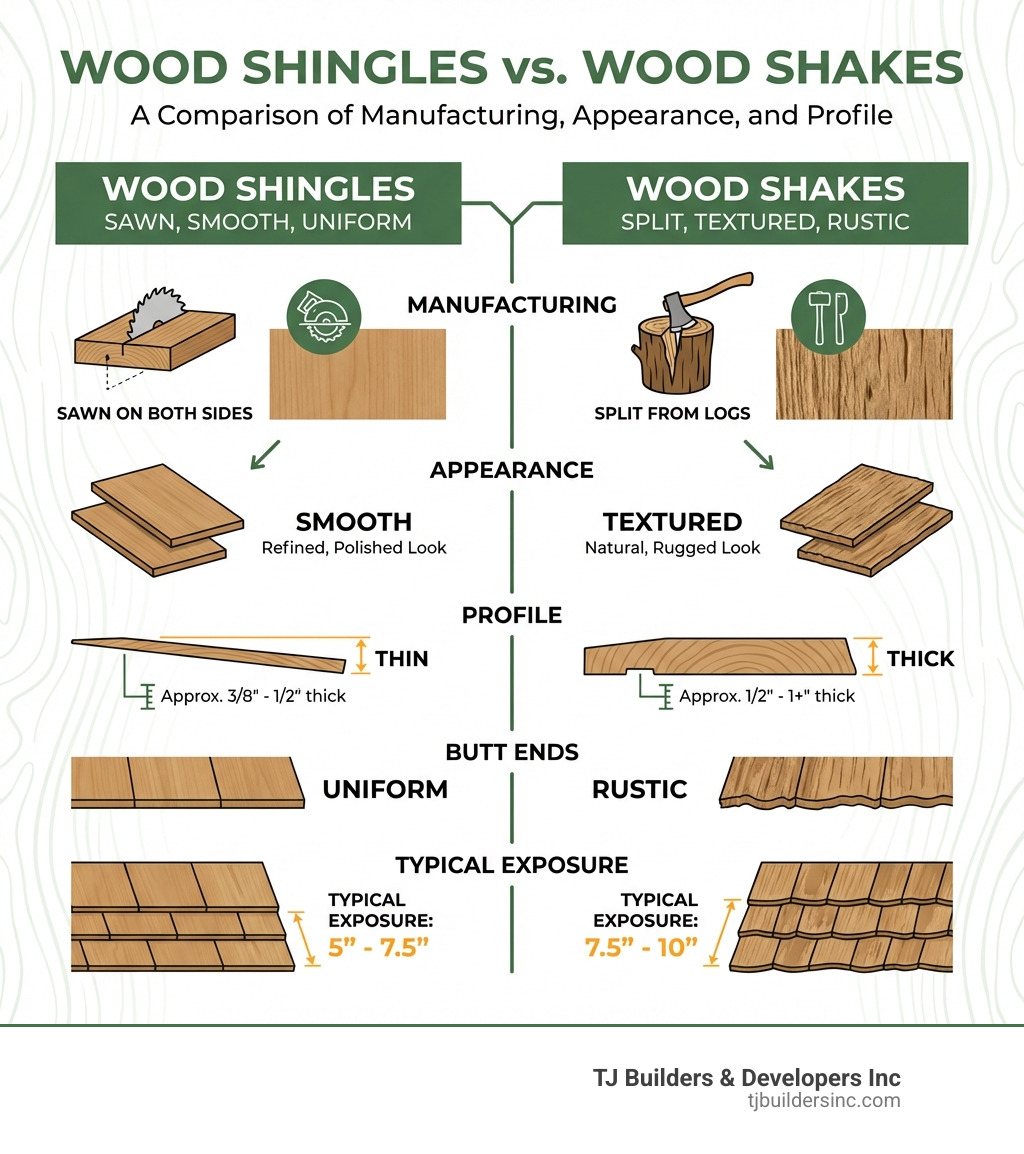
- Wood shingles are sawn on both sides for a smooth, uniform look.
- Wood shakes are split from logs, creating a thicker, more rustic texture.
- Lifespan is 30-50 years for cedar, but can reach 80 years for premium woods like teak.
- Maintenance involves regular cleaning and treatment for moss and mold.
- Fire risk is a major concern; many areas require fire-retardant treatments or ban wood roofs.
For centuries, wood was a primary roofing material, prized for its natural beauty and rustic charm. From Cape Cod cottages to Victorian mansions, wood roofing has long defined the character of American homes.
Today, choosing a wood roof is a more complex decision. While the aesthetic appeal is undeniable, modern alternatives replicate the look without the drawbacks. Wood requires ongoing maintenance, is vulnerable to fire, and can be costly compared to synthetic or metal options. Understanding the differences between shingles and shakes, wood types, and long-term costs is essential before investing.
I’m Thomas Pruszynski, and at TJ Builders & Developers, we’ve spent over 20 years helping homeowners in Northern Illinois evaluate and install roofing systems. Whether you’re drawn to the natural beauty of a wood shingle roof or exploring modern alternatives, understanding your options is the first step toward making the right choice.
Similar topics to wood shingle roof:
The Anatomy of a Wood Roof: Shingles vs. Shakes
While the terms “wood shingle” and “wood shake” are often used interchangeably, they have distinct differences in appearance, performance, and installation. Understanding these characteristics is crucial when selecting a wood roof.
Manufacturing and Appearance
The primary distinction lies in how they are made and what they look like.
Wood Shingles:
- Manufacturing: Sawn on both sides from a wood block, creating a uniform, machine-made product.
- Appearance: A wood shingle roof has a smooth, consistent finish. Each shingle is tapered, offering a clean, architectural look that complements many home styles.
Wood Shakes:
- Manufacturing: Split from a wooden log, either by hand or machine. They are thicker than shingles and often sawn on one side and split on the other.
- Appearance: A wood shake roof has a rustic, textured appearance with varying grain patterns and ridges. Their thickness and non-uniform taper create deep shadow lines and a rugged, natural look.
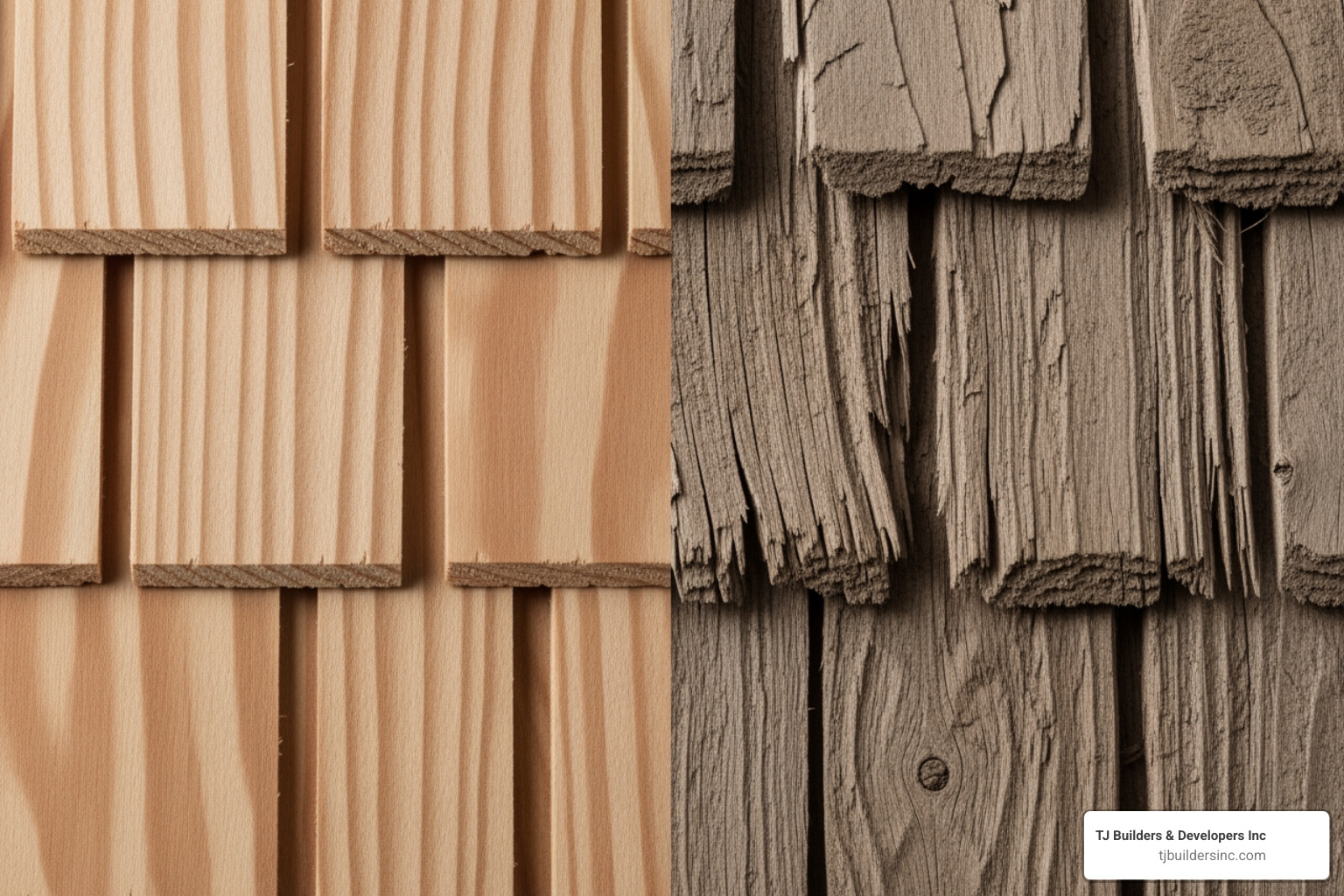
If you want a sleek, modern wood look, shingles are your preference. For a traditional, rugged aesthetic, shakes will better capture that vision.
Wood Grains and Styles
The wood’s grain and the shake’s style also influence performance and appearance.
Wood Grains: The grain’s orientation affects stability. Edge grain, cut perpendicular to growth rings, is the highest quality and resists warping. Flat grain, cut parallel to the rings, is less stable and prone to cupping. Slash grain is the least desirable and durable.
Shake Roof Styles:
- Heavy/Medium Split and Resawn Shakes: These offer a pronounced, rustic texture. They are split first, then sawn to a more consistent thickness.
- Tapersawn Shakes: Sawn on both sides like shingles but thicker, they bridge the gap between the smooth look of shingles and the ruggedness of split shakes.
Durability and Lifespan of Different Woods
The longevity of a wood shingle roof depends on the wood type, quality, and care. We help homeowners in Lakewood, Crystal Lake, and across Northern Illinois choose the right wood for their needs.
- Cedar: Western Red Cedar is the most popular choice, known for its durability. Cedar shakes and shingles can last 30-50 years with proper care, as the heartwood naturally resists moisture, fungi, and insects.
- Wallaba: This dense hardwood is even more durable than cedar, with a lifespan of up to 60 years. It’s an excellent choice for resistance to extreme weather.
- Teak: A premium, lifelong roofing product, teak offers exceptional resistance to decay and moisture, with a lifespan of up to 80 years. This longevity comes at a significantly higher cost.
The durability also depends on whether the wood is from old-growth or second-growth timber, with old-growth being superior. As noted by the National Park Service in “The Repair and Replacement of Historic Wooden Shingle Roofs,” the lifespan of historic shingles varied from 15 to over 60 years based on these factors.
Need Help With Your Home?
TJ Builders & Developers handles roofing, siding, gutters, windows, home additions, and fire damage restoration for homes and businesses in Lakewood, Crystal Lake, Schaumburg, and nearby McHenry County towns.
- Free, no-obligation estimates
- Licensed & insured
- 20+ years of local experience
The Pros and Cons of a Traditional Wood Shingle Roof
Choosing a traditional wood shingle roof means weighing its unique aesthetic against practical challenges. We provide our clients in the Chicago suburbs with a clear understanding of what to expect.
The Advantages of Wood Shingles
The appeal of a wood shingle roof is rooted in its natural characteristics.
- Aesthetic Qualities: Wood offers a timeless, organic beauty that other materials can’t replicate. Its natural colors and textures evolve gracefully, often fading to a charming silver-gray that adds character and improves curb appeal. The rustic look of shakes suits traditional homes, while the smoother finish of shingles lends a refined elegance.
- Natural Insulation: Wood is a natural insulator. A properly installed wood shingle roof can help retain heat in colder climates, contributing to your home’s energy efficiency during Illinois winters.
- Energy Efficiency: Cedar’s natural properties can help regulate indoor temperatures, potentially reducing the load on your heating and cooling systems.
- Versatility: Wood shingles and shakes are adaptable to various architectural styles and can even be used for sidewall applications, adding unique charm to your home’s exterior.
- Contributes to Home Style: A wood roof makes a powerful statement, signaling a connection to natural materials and traditional craftsmanship that can increase a property’s unique appeal.
The Disadvantages and Risks of a Wood Shingle Roof
It’s equally important to be aware of the challenges associated with a wood shingle roof.
- Maintenance Requirements: Wood demands ongoing maintenance, including regular cleaning and treatments to prevent moss and mold. This represents a significant time and financial commitment.
- Fading to Gray: While some appreciate the weathered look, wood quickly fades to a dull gray. Maintaining the original color requires regular staining or treatments.
- Cupping and Splitting: Repeated wet/dry cycles cause wood to expand and contract, which can lead to cupping (curling) and splitting, making the roof vulnerable to water penetration.
- Mold and Mildew Growth: In shady, damp locations common in Northern Illinois, wood is highly susceptible to mold and mildew, which can accelerate decay and require chemical treatments.
- Fire Risk: Wood is flammable, a major concern everywhere. Many communities require fire-retardant treatments (which need re-coating) or ban wood roofs entirely.
- Environmental Risks (related to maintenance): Runoff from chemical treatments used to combat mold and fire risk can impact surrounding landscaping and water sources if not managed properly.
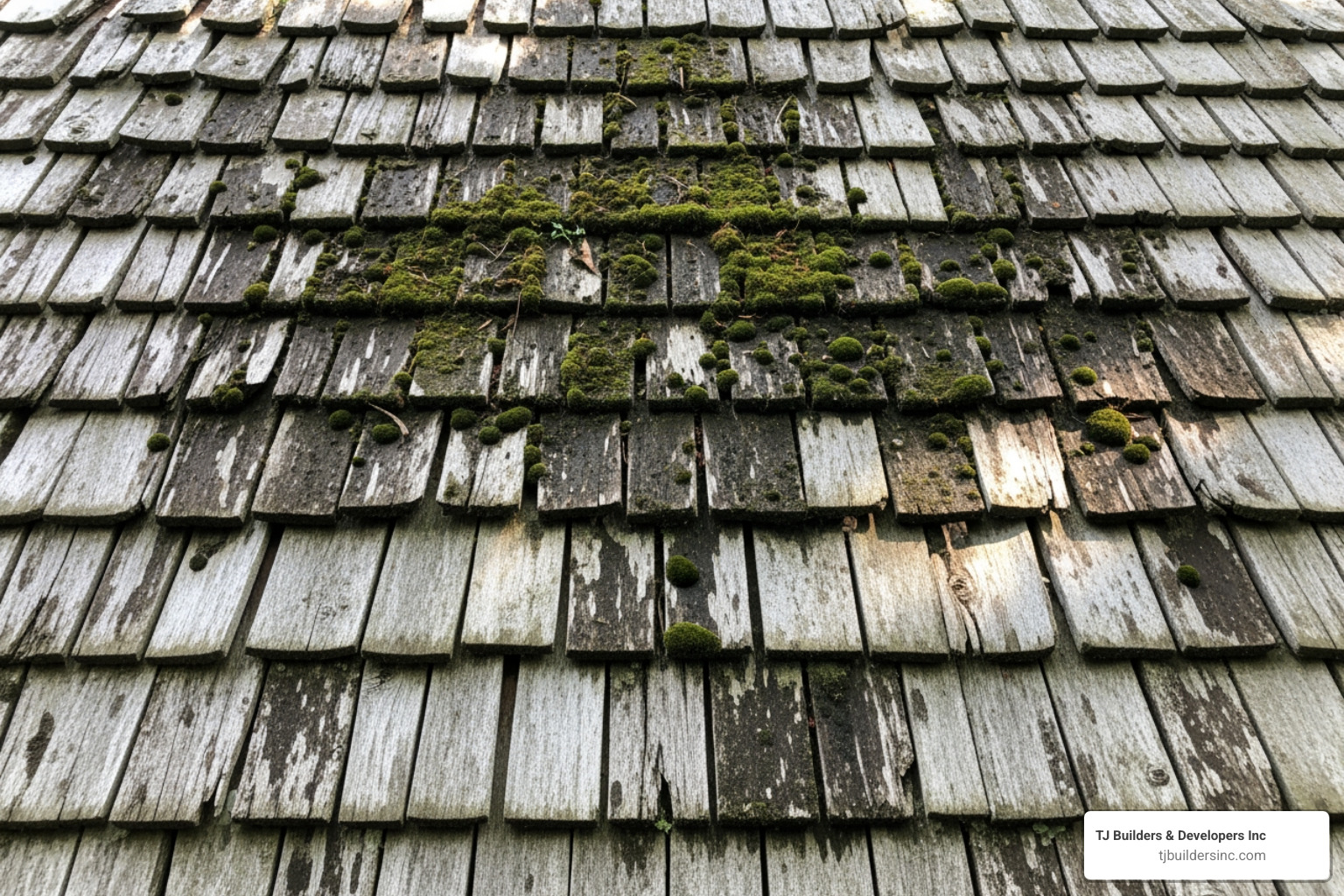
These shortcomings explain why modern alternatives, offering similar aesthetics with fewer drawbacks, have gained popularity.
Installation and Long-Term Maintenance
The performance of a wood shingle roof depends heavily on proper installation and consistent maintenance. As experienced roofers in Lakewood, IL, we emphasize these stages to ensure your roof lasts.
The Installation Process
Installing a wood shingle roof is a craft that differs from other roofing types. Key steps include:
- Layering and Spacing: Shingles and shakes are installed in an overlapping pattern from the eaves up. Proper spacing between shingles (for expansion) and staggering of courses are crucial to prevent water intrusion.
- Ventilation: Adequate airflow beneath the wood is vital for drying and preventing decay. This is often achieved with ventilation channels or specialized mesh products like ‘Cedar Breather’ installed over the roof deck.
- Underlayment and Flashing: Modern installations include an underlayment (like asphalted felt) as a secondary moisture barrier. Corrosion-resistant fasteners and heavy-weight flashing at valleys and chimneys are essential to prevent leaks.
- Starter Course: A double or triple starter course at the eaves ensures proper water shedding at the roof’s edge.
Shake installation is often more extensive and costly than shingle installation due to the material’s thickness and irregularity. For more on the general roofing process, see our guide on roof installation and replacement.
Long-Term Care for Your Wood Shingle Roof
A wood shingle roof requires a commitment to maintenance to maximize its lifespan.
- Debris and Gutter Cleaning: Regularly clear leaves, branches, and other debris from the roof and gutters. This prevents trapped moisture, which leads to rot and decay.
- Vegetation Management: Trim overhanging tree branches to improve airflow, allow the roof to dry, and reduce physical damage.
- Chemical Treatments: To manage moss and algae, chemical treatments may be necessary. Products containing zinc sulfate can be effective, and zinc strips installed at the ridge can help inhibit future growth.
- Surface Treatments: Use a semitransparent, penetrating oil-based stain containing a wood preservative and water repellent. Never use film-forming finishes like paint, which trap moisture and accelerate rot.
- Power Washing (with caution): Power washing should be done with extreme care, as excessive pressure can damage the shingles. It is best left to a professional for light cosmetic cleaning.
- Professional Inspections: Regular inspections, especially after severe weather, can identify issues like cupping, splitting, or decay before they become major problems requiring extensive roof repair.
For more detailed guidance, the OSU Extension offers an excellent resource: The Care and Maintenance of Wood Shingle and Shake Roofs. Following these steps helps homeowners in areas like South Barrington and Elk Grove Village keep their wood roofs in prime condition.
Need Help With Your Home?
TJ Builders & Developers handles roofing, siding, gutters, windows, home additions, and fire damage restoration for homes and businesses in Lakewood, Crystal Lake, Schaumburg, and nearby McHenry County towns.
- Free, no-obligation estimates
- Licensed & insured
- 20+ years of local experience
Comparing Wood to Modern Roofing Alternatives
While the classic appeal of a wood shingle roof is strong, it’s important to compare it against modern alternatives like high-performance metal and synthetic materials. We often guide our clients in Schaumburg and Barrington through this comparison.
Wood vs. High-Performance Metal Roofing
For sheer durability and long-term performance, metal roofing is a compelling alternative.
- Longevity: Metal roofs last 50-70+ years, often two to three times longer than wood.
- Durability: Metal is highly resistant to hail, fire, high winds, and heavy snow. Unlike wood, it won’t cup, split, or foster mold growth.
- Energy Savings: Reflective metal roofs can reduce cooling costs by up to 25%.
- Insurance Discounts: A metal roof’s durability and fire resistance can lower homeowner’s insurance premiums by up to 35%.
- Home Value: A modern metal roof can increase a home’s value by up to 6%.
- Aesthetics: Modern metal roofing, like stone-coated steel, can beautifully replicate the look of wood shakes, offering timeless appeal with superior performance.
Wood vs. Synthetic & Composite Shingles
For those who love the look of wood but want to avoid its drawbacks, synthetic shingles are an innovative solution.
- Aesthetic Replication: High-quality synthetics from brands like Brava or CeDUR effectively replicate the authentic look of hand-split cedar shakes, including grain patterns and color variations.
- Improved Durability: Synthetics are impervious to issues that plague wood, such as cupping, splitting, rot, and insect damage.
- Fire Resistance: A major advantage is superior fire resistance, with many products achieving a Class A fire rating. This is a crucial benefit in areas with strict fire codes.
- Reduced Maintenance: Synthetic shingles are virtually maintenance-free. They don’t require chemical treatments and won’t foster mold or mildew.
- Warranty Comparison: While a cedar roof may last 30-50 years, leading synthetics often come with a 50-year limited warranty.
- Environmental Considerations: Many synthetic products are made from recycled materials and are fully recyclable, offering a sustainable choice.
Here’s a quick comparison of these roofing options:
| Feature | Wood Shingles/Shakes | Metal Roofing | Synthetic Shingles |
|---|---|---|---|
| Lifespan | 30-80 years (wood type/care) | 50-70+ years | 50+ years (with warranty) |
| Aesthetic | Natural, rustic, classic | Modern, can mimic wood/tile | Mimics natural wood precisely |
| Durability | Vulnerable to splitting, rot | Highly resistant to all elements | Highly resistant to all elements |
| Fire Resistance | Flammable (unless treated) | Class A (non-combustible) | Class A or C |
| Maintenance | High (cleaning, treatments) | Low | Very Low (virtually zero) |
| Energy Efficiency | Moderate (insulation) | High (reflects heat) | High |
| Insurance Impact | Potentially higher premiums | Potential discounts (up to 35%) | Potential discounts |
| Environmental | Renewable, but concerns re: harvesting/treatments | Recyclable, long lifespan | Often recycled content, recyclable |
Cost, Value, and Making the Right Choice
Deciding on a roofing material is a significant financial investment. For homeowners in Palatine, Mount Prospect, and across the Chicago suburbs, understanding the costs and return on investment is key.
Initial Cost Considerations
The upfront cost of a wood shingle roof is higher than for standard materials and varies based on several factors:
- Shakes vs. Shingles Cost: Wood shakes are generally more expensive than shingles because they are thicker, use more material, and require more intensive installation labor.
- Wood Type: The choice of wood significantly impacts price. Cedar is the most common and cost-effective option, while premium woods like Wallaba and teak are considerably more expensive due to their superior longevity.
- Installation Labor: The meticulous craftsmanship required for a wood roof installation results in higher labor costs compared to materials like asphalt shingles.
- Comparison to Asphalt Shingles: Compared to asphalt shingle options, which are among the most economical roofing products, wood roofs are a premium investment.
Long-Term Value and ROI
While the initial cost is high, it’s important to consider the long-term value and return on investment (ROI).
- Lifespan vs. Cost: A wood roof’s lifespan varies greatly by wood type and maintenance. Without diligent care, a cedar roof may require earlier replacement compared to metal or synthetic alternatives that boast 50+ year lifespans.
- Impact on Home Value: A well-maintained wood shingle roof can significantly improve curb appeal and architectural authenticity, which may positively impact resale value. However, the maintenance burden could be a deterrent for some potential buyers.
- Insurance Premium Factors: The flammability of untreated wood may lead to higher insurance premiums. Conversely, installing a fire-resistant metal or synthetic roof could potentially lower your homeowner’s insurance costs.
The ROI for a wood shingle roof is a balance. It offers unparalleled aesthetic value, but this comes with a higher initial cost and significant maintenance requirements that should be weighed against the benefits of modern, high-performance alternatives.
Conclusion: Is a Wood Shingle Roof Right for Your Home?
Choosing a roofing material is a major decision that impacts your home’s protection, appearance, and value. A wood shingle roof offers a unique natural beauty and timeless character that few other materials can match. Its aesthetic qualities can profoundly improve your home’s style, blending with traditional architecture and natural surroundings.
However, this natural choice comes with trade-offs. The ongoing maintenance, susceptibility to weathering and mold, and fire risks are crucial considerations, especially for homeowners in the Chicago suburbs. The decision hinges on balancing your aesthetic preferences with practical factors like budget, maintenance commitment, and long-term performance.
If you are drawn to the classic charm of wood and are prepared for the necessary care, a wood shingle roof can be a stunning investment. If low maintenance, superior fire resistance, and extended durability are your top priorities, modern metal or synthetic alternatives that mimic the look of wood might be a more suitable choice.
At TJ Builders & Developers Inc., we understand this decision is complex. We have over 20 years of experience guiding homeowners in Lakewood, Crystal Lake, and Schaumburg through their options. For a comprehensive evaluation and to discuss the best roofing solution for your property, we encourage you to explore our professional roofing services. Our team is ready to help you make an informed decision that protects and beautifies your home for years to come.