A Small Roof Leak Can Become a Big Problem Fast
If you need to fix a small roof leak, here are the key steps to take right away to protect your property:
- Find the source — inspect your attic for water trails and trace them uphill from the stain
- Protect the inside — place buckets under drips and cover flooring with plastic sheeting to prevent interior damage
- Mitigate the damage — use professional-grade roofing cement or a secured tarp as a temporary measure until a permanent repair is made
- Ensure a permanent repair — replace the failed component (pipe boot, flashing, or damaged shingle) to professional standards
- Prioritize safety — call a professional for steep pitches, structural damage, or multiple leak sources
That drip on your ceiling after a rainstorm is more than an annoyance. It’s a warning.
Water doesn’t wait. Within 24 hours, mold can begin to form on damp surfaces. Within 48 hours, saturated drywall can start to sag. What starts as a small stain can quietly rot your roof deck, ruin insulation, and damage the structure of your home — all while the source stays hidden somewhere above.
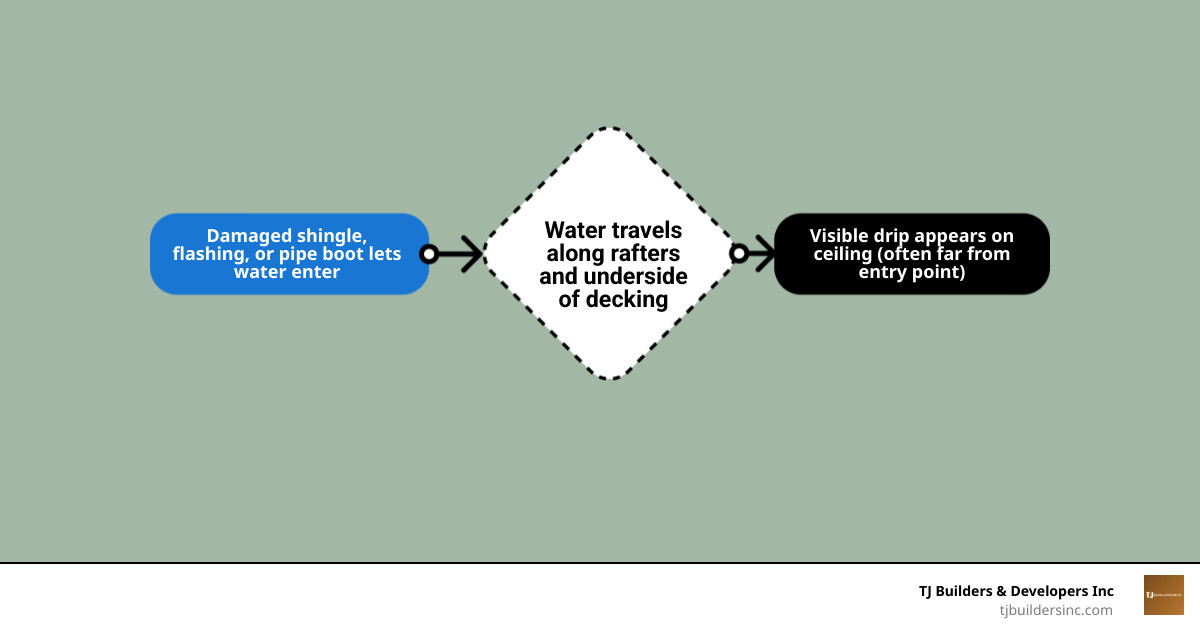
The tricky part? The visible drip is rarely where the leak actually enters. Water clings to the underside of roof decking and travels along rafters before it finally drips down — sometimes several feet away from the actual entry point. That’s why finding the leak is often harder than fixing it.
The good news: many small roof leaks can be resolved through targeted professional restoration. Flashing repairs alone resolve about 65% of roof leaks, ensuring the long-term durability of your exterior. A failed pipe boot — one of the most common single-point leak sources — requires precise replacement to maintain the watertight integrity of your roof system.
It is essential to identify the leak correctly, use high-performance materials, and understand when a professional assessment is required to protect your home’s warranty and structural health.
I’m Thomas Pruszynski of TJ Builders & Developers, and with over 20 years of hands-on experience in residential roofing, exterior restoration, and helping Northern Illinois homeowners fix small roof leak issues before they turn into costly disasters, I’ll walk you through the professional standards for addressing these problems. Let’s start with how to safely track down the source.
Fix small roof leak glossary:
How to Safely Locate the Source of a Roof Leak

Finding the entry point is the most critical part of the job. If you just patch the area directly above the ceiling stain, you might miss the real culprit entirely. Water is sneaky; it follows the path of least resistance, often traveling along the roof deck or down a rafter before dropping onto your insulation or drywall.
Attic Inspection and Uphill Tracing
The best place to start is in the attic during or immediately after a rainstorm. Bring a bright flashlight and look for “water trails”—dark streaks or damp spots on the underside of the roof sheathing.
When you find a wet spot, don’t stop there. Trace the moisture uphill. Because of gravity, the actual hole in the roof will be higher up than the interior drip. Look for “shiners”—nails that missed the rafter during original construction. In cold Northern Illinois winters, these nails collect frost from attic humidity; when it warms up, they drip, mimicking a roof leak. If you see tea-colored rings or mold on the wood, you’ve found a long-term moisture issue. For a deeper dive into this process, check out The Ultimate Guide to Professional Roof Leak Inspection and Repair.
Using the Garden Hose Test to fix small roof leak Points
If the leak isn’t obvious from the attic, it’s time for the garden hose test. This requires two people: one on the roof with the hose and one in the attic with a flashlight and a phone.
Start low. Spray the area just above where the leak appears inside. Soak isolated areas around roof penetrations (like vents or chimneys) for several minutes each. Your helper inside should alert you the second they see a drip. If you start at the top of the roof, water will run down and mask the true source. By working from the bottom up, you can pinpoint the exact penetration that has failed. This systematic approach is a proven way to isolate difficult leaks before you start tearing up shingles.
Identifying Common Failure Points
Most leaks don’t happen in the middle of a shingle field; they happen where the roof is “broken” by something sticking through it. Keep a close eye on these areas:
- Pipe Boots: The rubber gaskets around plumbing vent pipes often crack after 8–15 years of UV exposure.
- Roof Vents: Plastic vents can crack, or the nails holding them down can “pop” and create a hole.
- Chimney Flashing: The metal transition between the brick and the shingles is a notorious leak spot.
- Valleys: These “V” shaped channels collect the most water and debris, which can lead to premature wear.
- Skylights: Seals can dry out, or the flashing around the frame can fail.
If you’re dealing with a sudden surge of water during a storm, you may need Emergency Roof Repair Leak Detection to prevent structural damage.
Need Help With Your Home?
TJ Builders & Developers handles roofing, siding, gutters, windows, home additions, and fire damage restoration for homes and businesses in Lakewood, Crystal Lake, Schaumburg, and nearby McHenry County towns.
- Free, no-obligation estimates
- Licensed & insured
- 20+ years of local experience
Essential Materials and Standards to fix small roof leak Issues

Understanding the materials used in professional roofing is key to ensuring a long-lasting repair. Using substandard sealants is a common error that leads to recurring issues in Northern Illinois climates like Crystal Lake and Algonquin.
Selecting the Right Sealant to fix small roof leak Damage
Not all sealants are created equal. For most roofing tasks, professionals utilize asphalt-based roofing cement (often called “wet patch”) because it maintains adhesion even in damp conditions.
For joints between different materials—like where metal flashing meets a brick chimney—a polyurethane sealant is superior to silicone. Silicone tends to peel away from masonry and shingles after a single freeze-thaw cycle in our Illinois climate. Polyurethane stays flexible and adheres better over time, providing the durability required for exterior protection. For more on material choices, see How to Fix a Roof Leak: Temporary & Permanent Repairs 2026.
Professional Grade Standards:
- Mechanical Fasteners: Using galvanized roofing nails or rubber-washer screws ensures a watertight seal that resists wind uplift.
- Flashing Integrity: Replacing rusted or damaged metal rather than simply covering it with sealant is the standard for permanent restoration.
- Material Compatibility: Ensuring that new shingles or boots match the performance specifications of the existing roof system.
Understanding the price of materials versus professional labor can help you decide when to engage an expert to ensure the job is done right the first time.
Safety Equipment for Roof Access
Safety is non-negotiable. Falls are a leading cause of injury in home maintenance.
- The 4-to-1 Rule: For every four feet of height, the base of your ladder should be one foot away from the wall.
- Footwear: Wear rubber-soled shoes with good traction. Never walk on a roof that is wet, icy, or covered in moss.
- Weather: If it’s windy or raining, stay off the roof. Focus on interior mitigation (buckets and plastic) until the weather clears.
- Power Lines: Maintain at least a 10-foot clearance from any overhead lines.
If your roof is exceptionally steep or over two stories high, you should rely on Expert Roof Repair Services in Lakewood rather than risking a fall.
Professional Standards for Permanent Leak Repairs
Once the source is identified, it is critical to fix a small roof leak using methods that ensure long-term property protection.
Professional Replacement of a Plumbing Vent Boot
A rubber gasket that is cracked or rotted requires a full mechanical replacement to prevent recurring leaks.
- Shingle Integration: A professional technician will carefully loosen the shingles surrounding the vent boot to ensure the new flange can be tucked properly underneath for water shedding.
- Fastener Removal: All old nails are removed from the roof deck to provide a smooth surface for the new installation.
- Component Installation: The new boot is slid over the pipe and bedded in a layer of roofing cement.
- Watertight Sealing: The base is secured with appropriate fasteners, and shingles are integrated back over the top and side flanges to maintain the roof’s natural drainage path.
This type of mechanical roof repair is far more durable than relying on temporary sealants.
Restoring Step Flashing and Chimney Joints
Step flashing consists of L-shaped metal pieces that overlap each other along a wall or chimney. If one is rusted through or has slipped, water will penetrate the building envelope.
- The Standard: If the metal is sound but has pulled away, it must be re-secured and sealed with high-performance polyurethane. If oxidation is present, the individual metal steps must be replaced.
- The 4-Inch Rule: Professional standards require that any new flashing or patches overlap the surrounding materials by at least four inches on all sides to prevent water from “wicking” underneath.
For more complex structures like garages or dormers, you can follow our guide on How to Patch Your Garage Roof Without Losing Your Mind.
Need Help With Your Home?
TJ Builders & Developers handles roofing, siding, gutters, windows, home additions, and fire damage restoration for homes and businesses in Lakewood, Crystal Lake, Schaumburg, and nearby McHenry County towns.
- Free, no-obligation estimates
- Licensed & insured
- 20+ years of local experience
When to Call a Professional for Roof Repair
Exterior restoration and roofing repairs require specialized knowledge and safety equipment. While some maintenance tasks are manageable, structural and exterior repairs should be handled by licensed professionals to ensure the integrity of your home.
Signs of Structural Deck Damage
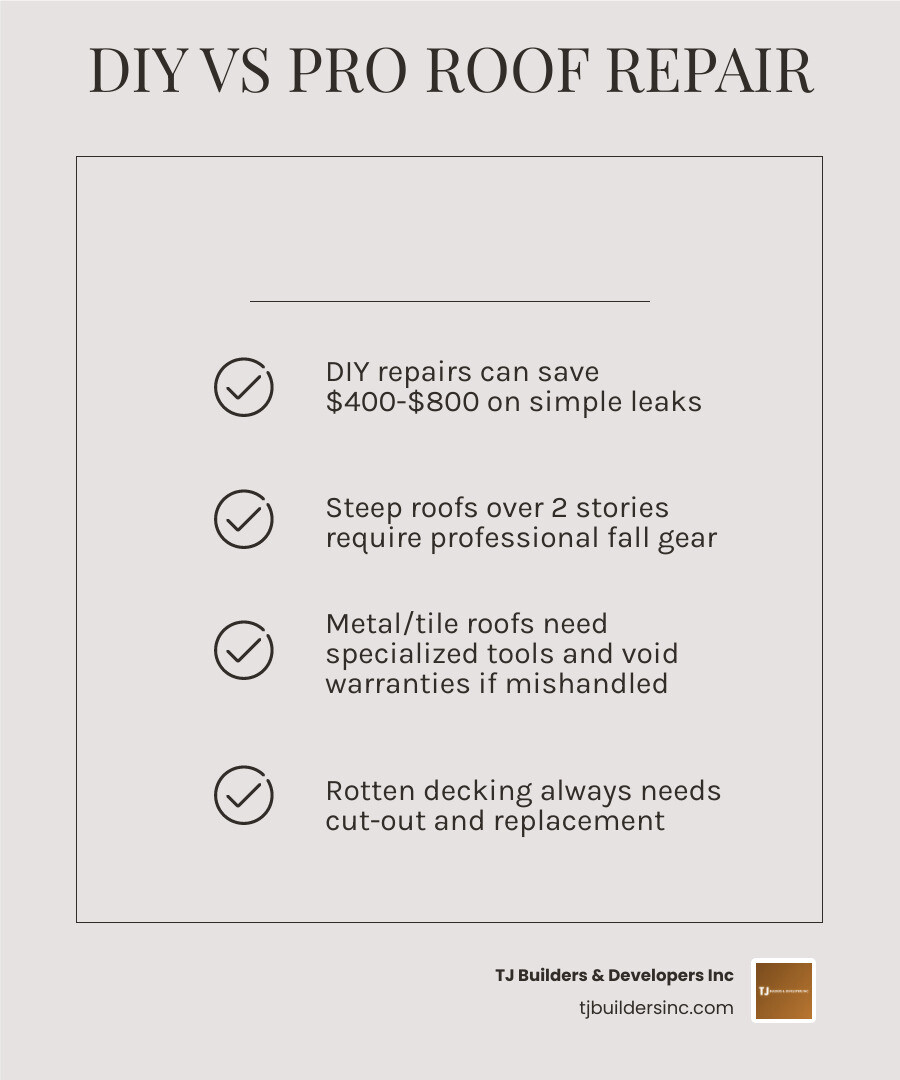
If you walk on your roof and feel “spongy” or soft spots, the wood underneath (the decking) is likely rotted. This requires more than a shingle replacement; the rotted wood must be cut out and replaced to maintain structural safety. Similarly, if you see sagging rafters or widespread mold in the attic, the integrity of your home is at risk.
The Risks of Complex Roof Systems
- Steep Pitches: If the pitch is too steep to walk comfortably, specialized fall-protection equipment is required.
- Height: Anything over two stories should be handled by professionals with the proper safety gear.
- Materials: Metal, tile, and slate roofs require specific techniques and tools that differ significantly from asphalt shingles.
- Warranties: Many manufacturer warranties require that repairs be performed by a licensed contractor to remain valid.
In these cases, getting fast emergency roof repair in Lakewood is the smartest move to protect your investment.
Frequently Asked Questions about Minor Roof Leaks
How long does a temporary roof patch last?
A temporary patch—like a plastic tarp or a quick application of roofing cement—is designed to buy you time, not to be a permanent solution. A well-installed tarp secured with 2x4s typically lasts 60–90 days before UV rays degrade the plastic. Roofing cement can provide protection for a short period, but it will eventually crack as your house settles and the temperature changes.
Can I fix a roof leak from inside the attic?
You can stop a drip from hitting your ceiling by applying a “patch” to the underside of the roof deck, but this is never a permanent fix. It actually traps water inside the wood, which accelerates rot. The only real way to fix a small roof leak is to stop the water from the outside before it ever hits the wood.
Why is my roof leaking if the shingles look fine?
As we mentioned, the shingles are rarely the problem in a small leak. It’s almost always the “jewelry” of the roof—the flashing, the vents, and the pipe boots. Also, in our area (places like Cary and Lake in the Hills), ice dams are a major cause of winter leaks. Snow melts on the warm parts of your roof, runs down to the cold eaves, and freezes, creating a dam that backs water up under the shingles.
Conclusion
At TJ Builders & Developers Inc, we’ve spent decades serving our neighbors in the Village of Lakewood, Crystal Lake, Huntley, and across McHenry County. We know that a dry home is a happy home.
While understanding these common failure points helps homeowners monitor their property, professional intervention is the most reliable way to ensure a leak is fixed correctly. Prevention is the best medicine; cleaning your gutters twice a year and performing a quick binocular inspection of your roof after major storms can save you from significant restoration costs in the long run.
If you’ve tracked down a leak and realized the job requires professional workmanship, or if you just want the peace of mind that comes with expert service, we’re here to help. From minor repairs to full restorations, our team offers the reliable, eco-friendly solutions you need.
Don’t let a small drip turn into a major renovation. For everything from gutter maintenance to expert roof repair services, reach out to us today. We’ll make sure your home stays protected, no matter what the Illinois weather throws at it.