Why Adding a Sunroom to Your House Makes Sense
Adding a sunroom to house is a home improvement project that creates a bright, glass-enclosed living space where you can enjoy natural light and outdoor views year-round while staying protected from the elements. Here’s what you need to know:
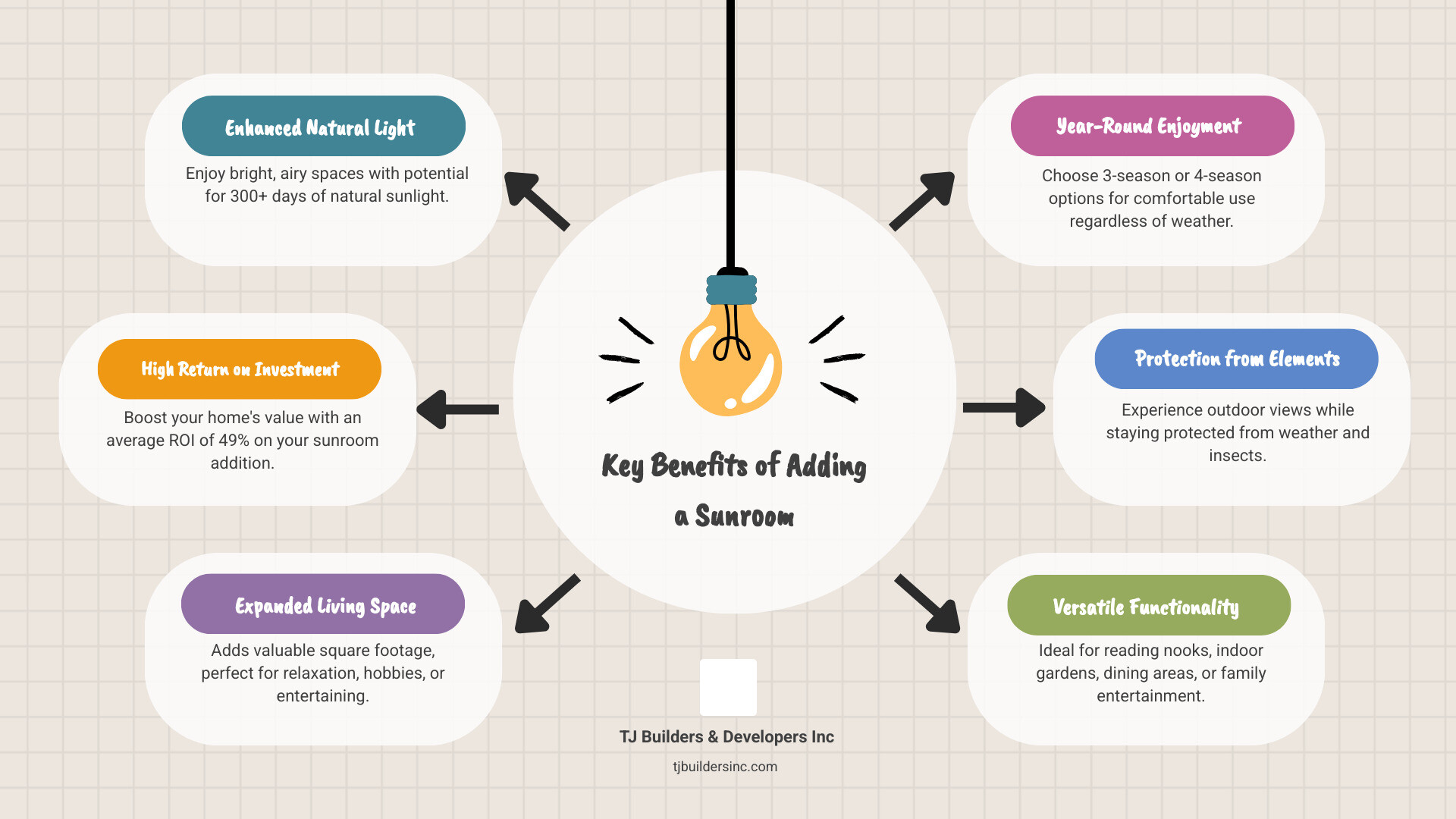
- Average Cost: $47,000 (ranging from $150-$300 per square foot)
- Main Types: Three-season rooms (unheated, $15,000-$40,000) or four-season rooms (fully insulated with HVAC, $25,000-$80,000)
- Return on Investment: Approximately 49% on average
- Timeline: Typically 2-4 weeks for construction
- Key Benefits: Adds living space, increases natural light, improves home value, and creates an indoor-outdoor connection
A sunroom sits somewhere between a traditional room addition and an outdoor patio. It’s designed to let sunshine flood in through large windows or glass walls, creating what one designer describes as “a bright, airy space to soak up sunshine without stepping outside” while remaining “blissfully bug-free.”
The appeal is clear: you get more usable square footage without the full cost of a conventional addition. Whether you want a cozy reading nook, a space for indoor plants, or a casual entertaining area, a sunroom offers flexibility that works for different lifestyles.
But the details matter. The type of sunroom you choose, where you place it, and how it’s built all significantly impact your comfort, energy costs, and long-term value. A poorly planned sunroom can become too hot in summer, too cold in winter, or fail to integrate well with your home’s existing structure.
I’m Thomas Pruszynski, and at TJ Builders & Developers, we’ve been designing and building custom home additions for over 20 years throughout Northern Illinois, including many sunroom projects that seamlessly expand our clients’ living spaces. Through adding a sunroom to house after house in areas like Lakewood and Crystal Lake, we’ve learned what works in our climate and what doesn’t.
Let’s walk through everything you need to know to plan a sunroom that actually delivers on its promise.
Important adding a sunroom to house terms:
Understanding Sunroom Types and Their Purpose

A sunroom is essentially a glass-enclosed living space, typically attached to your home, designed to maximize natural light and offer expansive views of your outdoor surroundings. It serves as a bridge between indoor comfort and outdoor beauty, allowing you to enjoy the benefits of nature without exposure to harsh weather, insects, or allergens.
The primary benefit of adding a sunroom to house is the creation of a versatile space that can serve many purposes. Imagine starting your day with a cup of coffee bathed in morning sunlight, cultivating an indoor garden filled with vibrant plants, or hosting friends for dinner with a starlit view. Sunrooms offer a bright, airy retreat that improves your quality of life.
While the core concept remains the same, sunrooms come in various types, each with distinct features and intended uses. The most common distinction is between three-season and four-season sunrooms, but other styles like solariums and conservatories also offer unique benefits.
Here’s a look at the different types and their common uses:
- Three-Season Sunroom: Designed for use during spring, summer, and fall, these rooms are not typically insulated or heated for year-round comfort in colder climates. They’re perfect for extending the outdoor season.
- Four-Season Sunroom: Fully insulated and integrated with your home’s HVAC system, these are built for year-round use, even during the chilly winters we experience in Northern Illinois.
- Solarium: Characterized by an all-glass roof and walls, a solarium maximizes light exposure, making it an ideal choice for plant enthusiasts or stargazers.
- Conservatory: Similar to a solarium with extensive glass, conservatories often have a more ornate, traditional design and are frequently used as garden rooms.
- Screened-in Room/Porch: While not a “sunroom” in the traditional sense of having glass, these are a step towards enclosed outdoor living, offering protection from insects and some elements.
- Atrium: Often found within a home’s interior, an atrium features a glass roof that floods the central space with natural light.
Common uses for a sunroom include:
- Reading Nook: A quiet, sun-drenched spot for relaxation and reading.
- Indoor Garden/Plant Room: An ideal environment for plants that thrive on abundant sunlight, even tropical varieties.
- Dining Space: A unique setting for family meals or entertaining, offering an “al fresco” experience indoors.
- Entertainment Area: A bright, welcoming space for gatherings, providing extra seating and a connection to the outdoors.
- Playroom: A cheerful and bright space for children to play, protected from the elements.
- Home Office/Studio: A serene and inspiring space for work or creative pursuits.
Three-Season vs. Four-Season Rooms
When considering adding a sunroom to house, one of the most critical decisions is whether to opt for a three-season or a four-season room. This choice directly impacts usability, cost, and comfort, especially in a climate like Northern Illinois, where we experience significant seasonal temperature changes.
| Feature | Three-Season Sunroom | Four-Season Sunroom |
|---|---|---|
| Usability | Spring, Summer, Fall (mild weather) | Year-round (all seasons) |
| Insulation | Minimal or none; small gaps between glass panes | Extensive insulation in walls, roof, and floor |
| HVAC | Not integrated with home HVAC; portable heaters/fans | Fully integrated with home HVAC (heating and cooling) |
| Windows | Single or double-pane glass, no Low-E coatings | Double-pane glass with Low-E coating and argon gas filling (energy-efficient) |
| Foundation | Simpler, less insulated | Fully insulated foundation, often like a traditional room |
| Cost | $15,000 – $40,000 | $25,000 – $80,000 (can be higher for high-end options) |
| Permits | Generally faster (1-3 months) | Longer process (up to a year) |
| Property Tax | May not add to Gross Floor Area (GFA) | Adds to GFA, increasing property taxes |
| Flexibility | Some models offer retractable panels | Fixed, permanently sealed glass panels |
Three-Season Sunrooms
These rooms are designed for comfort during the warmer months. They typically feature lighter construction, often with single or basic double-pane glass, and are not connected to your home’s main heating and cooling systems. While a simple space heater might extend their usability into cooler days, they are generally too cold for comfortable use during the peak of winter in areas like Crystal Lake or Schaumburg. They are a more cost-effective option, with prices typically ranging from $15,000 to $40,000.
Four-Season Sunrooms
A four-season sunroom is a significant investment that pays off in year-round enjoyment. These rooms are built with high-grade insulation in the walls, roof, and floor, and feature energy-efficient windows (such as double-pane glass with Low-E coating and argon gas filling) to prevent heat loss in winter and heat gain in summer. Crucially, they are fully integrated into your home’s HVAC system, ensuring they remain as comfortable as any other room in your house, regardless of the outdoor temperature. This level of construction means they are costlier, ranging from $25,000 to $80,000, and sometimes even higher for luxurious options. They also add to your home’s Gross Floor Area (GFA), which can impact property taxes. However, for those in Northern Illinois who want to enjoy natural light and outdoor views throughout all four seasons, a four-season sunroom is the clear choice.
Need Help With Your Home?
TJ Builders & Developers handles roofing, siding, gutters, windows, home additions, and fire damage restoration for homes and businesses in Lakewood, Crystal Lake, Schaumburg, and nearby McHenry County towns.
- Free, no-obligation estimates
- Licensed & insured
- 20+ years of local experience
Sunroom vs. Traditional Room Addition: Making the Right Choice
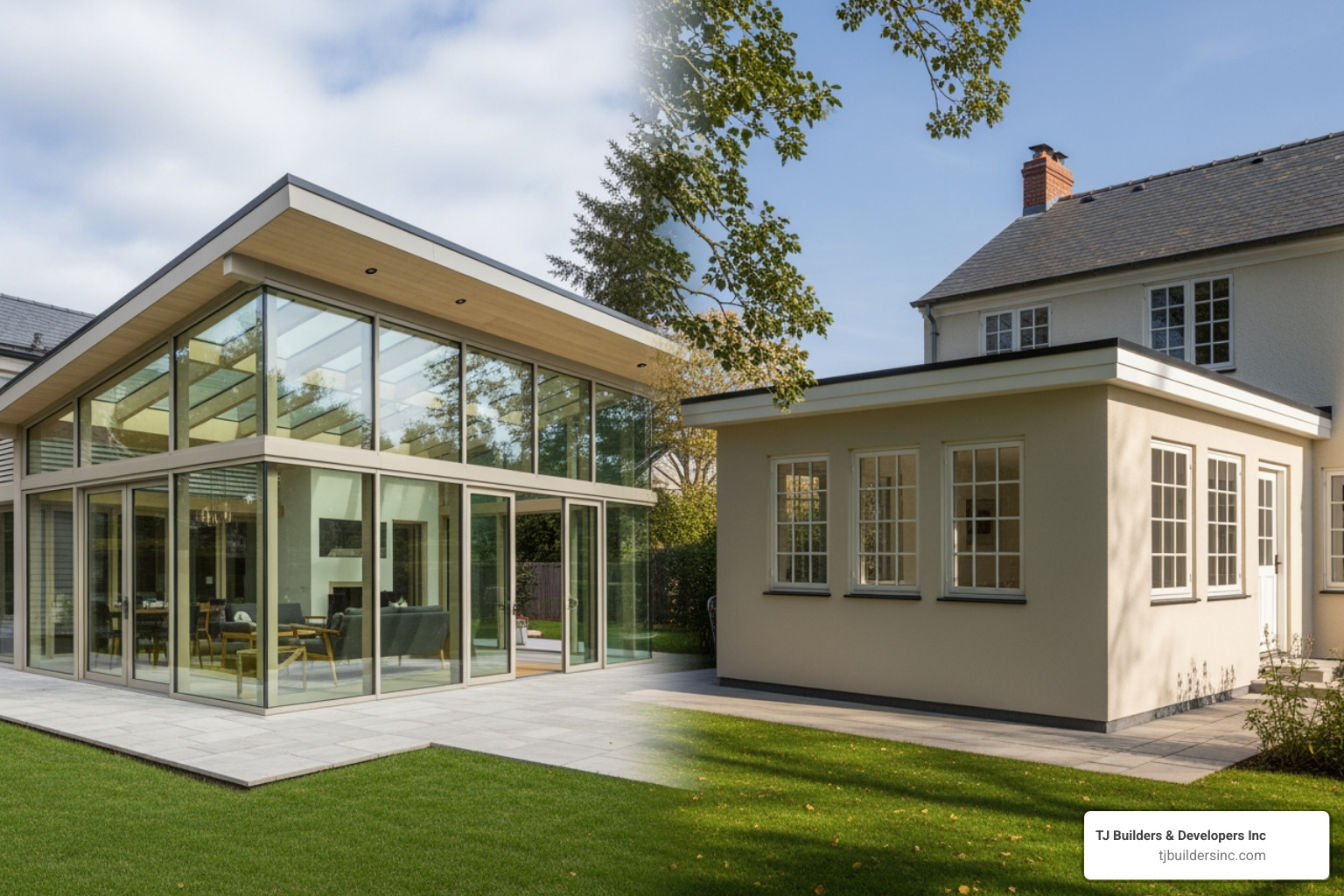
When you’re looking to expand your living space, the choice between adding a sunroom to house or opting for a traditional room addition involves distinct considerations. While both expand your home’s footprint, their primary purpose, construction methods, and overall impact differ significantly.
A sunroom’s main goal is to maximize natural light and connect you with the outdoors. It’s often heavily fenestrated, meaning it has many windows or glass walls, creating a bright, open feel. A traditional room addition, on the other hand, is built to be a fully integrated, private, and habitable living space, such as an extra bedroom, bathroom, or expanded kitchen, with standard walls, insulation, and utilities.
Comparing Cost and Return on Investment
Cost is often a major deciding factor. Generally, a sunroom can be a more affordable way to add square footage compared to a full home addition. The average cost to add a sunroom is $47,000, while room additions typically range from $20,900 to $72,600, though they can go much higher depending on complexity and finishes. Simpler sunroom types, like screened porches or basic three-season rooms, can be considerably less expensive. However, a high-end four-season sunroom with plumbing, extensive insulation, and HVAC integration can approach the cost of a basic room addition.
In terms of return on investment (ROI), both can be valuable. A sunroom addition offers an average ROI of about 49%. While a traditional room addition might sometimes offer a higher ROI because it adds fully functional, climate-controlled, private living space, a well-executed four-season sunroom can significantly boost your home’s appeal and value, especially in our Northern Illinois markets where homeowners appreciate year-round comfort. It counts as additional livable square footage, which is a key factor in property valuation. You can explore more about sunroom costs and their factors on HomeAdvisor’s guide.
Functionality and Lifestyle Fit
Your lifestyle and needs should heavily influence your decision.
If your primary desire is to:
- Enjoy abundant natural light and panoramic views.
- Create a space for relaxation, reading, or indoor gardening.
- Have a versatile area that feels like a blend of indoor and outdoor living.
- Expand your entertaining space without the full commitment of a new room.
Then adding a sunroom to house is likely the perfect fit. Sunrooms are designed for that “indoor-outdoor” feeling, offering a serene escape.
However, if you need:
- An additional bedroom or bathroom for a growing family.
- A dedicated home office with full privacy and sound insulation.
- An expanded kitchen or a formal dining room.
- A space that requires plumbing, extensive built-ins, and complete privacy.
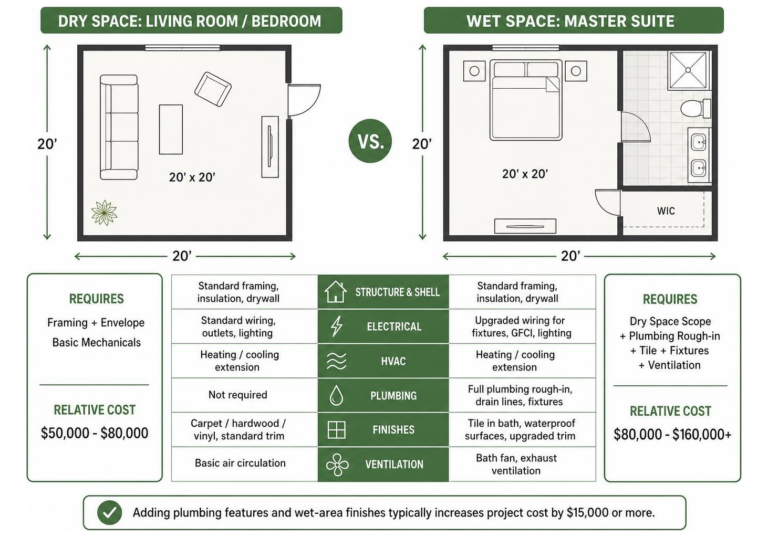
Then a traditional room addition is the more appropriate choice. These additions are built to seamlessly blend with your existing home, providing fully functional, private spaces. We specialize in all types of home additions, from expanding existing rooms to even adding a 2nd story to your house to maximize vertical space.
We help you weigh the pros and cons based on your specific goals, budget, and the architectural style of your home in areas like Palatine, Bartlett, or Mount Prospect.
Key Factors in Planning and Budgeting for Adding a Sunroom to Your House
A successful sunroom addition hinges on meticulous planning and careful budgeting. It’s not just about adding a glass box; it’s about creating a harmonious extension of your home that performs well in our Northern Illinois climate. Professional installation is paramount to ensure durability, energy efficiency, and compliance with local building codes.
Estimating the Cost of Your Sunroom Addition
The average cost to add a sunroom is around $47,000, but this is a broad average. You can expect to pay between $150 and $300 per square foot. Several factors influence this figure:
- Size: Naturally, larger sunrooms cost more. A standard 200 sq ft sunroom would typically be in the $30,000 to $60,000 range.
- Materials: The choice of framing (vinyl, aluminum, wood), window type (single, double, Low-E), and roofing (glass, polycarbonate, insulated panels) significantly impacts the cost. High-end, energy-efficient materials will increase the budget but offer better long-term performance.
- Labor Costs: Labor accounts for a substantial portion of the project, typically 40% to 60% of your total sunroom cost. This covers everything from site preparation to framing, window installation, roofing, and finishing.
- Building Permits: Obtaining the necessary permits is a non-negotiable step. Permit costs generally range from $250 to $1,500, but can vary by municipality in the Chicago suburbs. We handle all necessary permits to ensure your project complies with local regulations.
- Custom Builds vs. Prefabricated Kits: Prefabricated sunroom kits can be more economical, ranging from $6,000 to $40,000 for the product alone, with overall costs as low as $100 per square foot. However, they offer less customization and might not integrate seamlessly with your home’s existing architecture. Custom-built sunrooms, while more expensive, ensure a perfect match and superior quality.
- Additional Features: Electrical wiring (basic starting around $350, full HVAC integration over $5,000), insulation (an additional $500 to $1,500), and HVAC connections will add to the overall cost.
- Site Preparation: If your chosen location requires significant site preparation, such as extensive landscaping, tree removal, or excavation, these costs can range from $500 to $5,600.
For a detailed breakdown of these factors, consider resources like HomeAdvisor’s sunroom cost guide.
Design, Materials, and Location
The design and placement of your sunroom are critical for maximizing its benefits and ensuring comfort.
- Sunroom Orientation: In Northern Illinois, strategic placement is key to managing light and temperature:
- Southern Exposure: Maximizes natural light, which is excellent for warming the room in winter and ideal for tropical plants. However, it can lead to overheating in summer, requiring robust cooling solutions and shading.
- Eastern Exposure: Provides pleasant morning sun and offers shade during the hotter afternoon hours. This is often an ideal balance for comfort and light.
- Northern Exposure: Offers consistent, diffused light, which is great for artists or those who want less direct glare. It’s cooler, which can be a benefit in warmer climates, but might require more heating in our winters.
- Western Exposure: Receives intense afternoon and evening sun, which can make the room very hot. This orientation often presents the biggest challenges for energy efficiency and comfort.
- Framing Materials:
- Vinyl: A popular and cost-effective choice, vinyl is low-maintenance, energy-efficient, and offers good insulation.
- Aluminum: Durable and strong, aluminum is often used for roof structures. It’s more expensive than vinyl and less insulating on its own.
- Wood: Offers a beautiful, traditional aesthetic and a warm feel. However, wood requires more maintenance (painting, sealing) and careful humidity control to prevent issues in a sunroom environment.
- Window Selection: Windows are the heart of your sunroom. For our climate, energy-efficient options are crucial:
- Double-Pane Glass: Essential for insulation, featuring two panes with an air gap.
- Low-E Coating: A microscopic coating that reflects infrared light, keeping heat inside in winter and outside in summer.
- Argon Filling: Inert gas between panes improves insulation.
- Tempered Safety Glass: Required by building codes for safety.
- Roofing Options: While a glass roof maximizes light (creating a solarium or conservatory), insulated roof panels are also common. These can be interspersed with glass panels to improve the overall R-factor (insulation value) and provide shade. Polycarbonate is another option, offering durability and UV protection.
- Heating and Cooling: To truly enjoy your sunroom year-round in areas like Elk Grove Village or Rolling Meadows, effective climate control is essential:
- HVAC Integration: Connecting your sunroom to your home’s main heating and cooling system provides the most consistent comfort.
- Mini-Split Systems: Ductless mini-splits offer efficient, localized heating and cooling.
- Radiant Floor Heating: Provides luxurious, even warmth from the ground up, ideal for sunrooms.
- Ceiling Fans: Excellent for air circulation and cooling during warmer months.
- Operable Skylights/Windows: Allow for natural ventilation.
- Window Treatments/Shades: Crucial for managing sun glare and heat gain.
We offer comprehensive services that cover all these aspects, ensuring your sunroom is designed for optimal performance and enjoyment.
The Construction Process for Adding a Sunroom to Your House
The journey of adding a sunroom to house is a significant undertaking, best steerd with experienced professionals. It involves several key stages, each requiring specialized knowledge and adherence to strict standards.
- Hiring a Professional Contractor: We cannot stress this enough: sunroom installation is a major structural change and not a typical DIY project. An experienced contractor specializing in sunrooms (or a reputable general contractor with extensive sunroom experience) offers invaluable expertise in materials, local building codes, and best practices. They can foresee potential pitfalls and ensure a high-quality, durable result. Always ask for references and review their portfolio. At TJ Builders & Developers, we pride ourselves on a long history of satisfied clients across South Barrington, Barrington, and other Chicago suburbs.
- Permitting Process: Before any construction begins, obtaining the necessary building permits is crucial. This ensures your project complies with local zoning laws and safety regulations. The permit process for a three-season sunroom might take 1-3 months, while a four-season room, due to its complexity and integration, could take up to a year. Neglecting permits can lead to fines, project delays, or even the forced removal of your addition. We handle all permitting requirements, making the process seamless for you.
- Site Preparation: This stage involves preparing the chosen location, which might include clearing existing landscaping, ensuring proper drainage, and laying a new foundation or assessing if an existing patio slab or deck can support the new structure. Structural integrity is paramount.
- Potential Challenges: Even with the best planning, unexpected issues can arise. Cutting into a home’s structure might reveal existing water damage, leaks, or mold that needs to be addressed before proceeding. Poor workmanship from inexperienced contractors can lead to long-term problems like leaks, inefficient heating/cooling, and structural instability. Choosing a professional team minimizes these risks.
- Typical Project Timeline: Once permits are secured and site preparation is complete, the actual construction of most sunrooms typically takes two to four weeks. However, larger, custom designs, or those requiring extensive electrical, plumbing, or HVAC work, can extend this timeline to several months. Factors like weather delays or material lead times can also influence the schedule. We provide a detailed schedule upfront so you know what to expect.
Need Help With Your Home?
TJ Builders & Developers handles roofing, siding, gutters, windows, home additions, and fire damage restoration for homes and businesses in Lakewood, Crystal Lake, Schaumburg, and nearby McHenry County towns.
- Free, no-obligation estimates
- Licensed & insured
- 20+ years of local experience
Frequently Asked Questions About Sunroom Additions
How does a sunroom impact my home’s resale value?
Adding a sunroom to house can significantly improve its resale value and curb appeal. On average, you can expect to see a 49% return on investment (ROI) for your sunroom addition. A four-season sunroom, in particular, tends to add more value because it provides additional year-round, climate-controlled square footage, which is a highly desirable feature for potential buyers. It essentially expands your home’s livable space, making it more attractive and functional.
Can a sunroom be used year-round in a climate like Northern Illinois?
Yes, absolutely! A properly constructed four-season sunroom is specifically designed for year-round use, even through the cold winters we experience in areas like Lakewood, Crystal Lake, and Schaumburg. This requires full insulation in the walls, floor, and roof, energy-efficient windows (such as double-pane with Low-E coatings and argon gas), and integration with your home’s main HVAC system. With these features, your four-season sunroom will remain comfortable and enjoyable whether it’s a sunny summer afternoon or a snowy winter morning.
What is the difference between a custom-built sunroom and other options?
A custom-built sunroom is designed and constructed specifically for your home, taking into account its architectural style, your specific needs, and the unique characteristics of your property. This approach allows for seamless integration with your existing structure, custom material choices, and personalized features. In contrast, prefabricated sunroom kits are pre-designed, factory-made modules that are assembled on-site. While often a more economical option, kits offer less flexibility in design and may not perfectly match your home’s aesthetic or meet specific local building codes without significant modifications. With a custom build, we ensure superior quality, durability, and a perfect fit for your home.
Your Next Step to a Brighter Home
A sunroom is more than just an addition; it’s an investment in your home’s value and your quality of life, creating a seamless transition between your indoor space and the beauty of the outdoors. Proper planning and professional construction are crucial for ensuring your new space is safe, durable, and enjoyable for years to come. As experts in creating high-quality home additions throughout the Lakewood, IL area, TJ Builders & Developers Inc. has the experience to bring your vision to life. If you’re ready to expand your living space with a brilliant sunroom, explore our home additions services to learn more.