Why Homeowners Are Choosing Prefab Sunroom Additions
A prefab sunroom addition is a factory-built room addition that attaches to your home, offering a faster and more controlled construction process compared to traditional on-site building. Here’s what makes prefab sunrooms different:
- Factory-Built Components: Wall sections, roof panels, windows, and doors are manufactured in a controlled environment before arriving at your home.
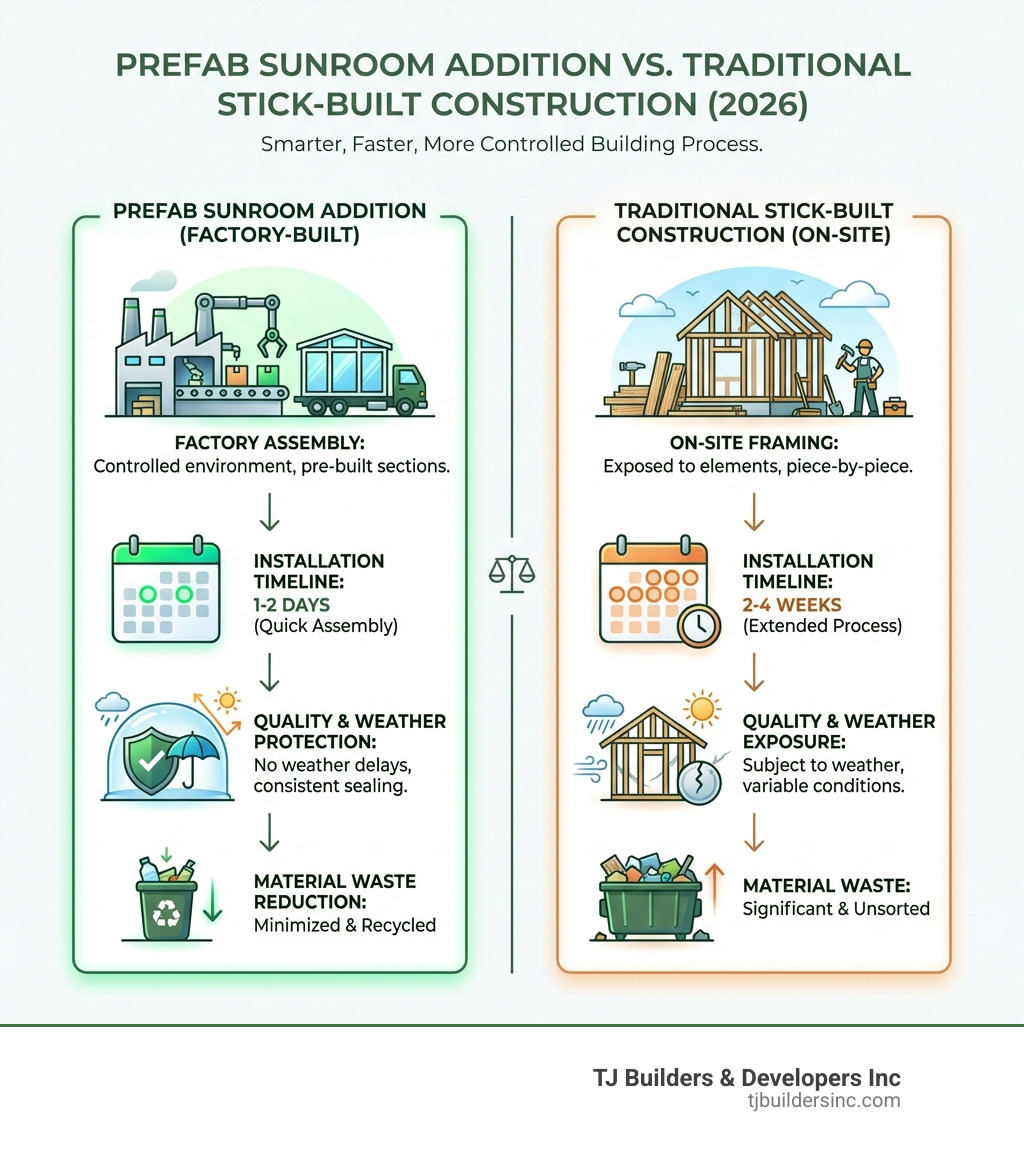
- Faster Installation: Most prefab sunrooms can be assembled in 1-2 days by professional installers, compared to weeks for traditional construction.
- Quality Control: Factory conditions eliminate weather delays and ensure consistent assembly standards.
- Cost Efficiency: Reduced material waste and shorter construction timelines often result in lower overall project costs.
- Three or Four-Season Options: Choose from lightweight three-season rooms or fully insulated four-season additions with HVAC integration.
The appeal is straightforward. Traditional room additions require weeks of on-site framing, weather-dependent construction schedules, and significant disruption to your daily routine. Prefab sunrooms arrive as pre-assembled sections, ready for quick installation on a prepared foundation. Factory construction means tighter seals, superior insulation placement, and materials that haven’t been exposed to rain or humidity during assembly.
Materials matter when comparing options. Aluminum-framed sunrooms typically cost less but offer basic insulation. Vinyl structures provide a mid-range balance of durability and thermal performance. Wood-framed additions deliver the highest insulation values and aesthetic appeal but require more maintenance in Illinois weather conditions.
The difference between three-season and four-season designs is significant. Three-season rooms use single-pane glass and minimal insulation, ideal for spring through fall use. Four-season additions incorporate insulated glass, thermal breaks, and often include electrical wiring for heating and cooling systems, enabling year-round comfort.
I’m Thomas Pruszynski, and at TJ Builders & Developers, we’ve guided homeowners through countless prefab sunroom addition projects across Northern Illinois for over 20 years. Our experience shows that factory-built quality combined with professional installation consistently delivers the durability and performance homeowners expect from a permanent home addition.
Quick prefab sunroom addition terms:
The Core Benefits of a Prefab Sunroom Addition
Imagine extending your living space without the prolonged chaos of a traditional construction site. That’s one of the most compelling advantages of a prefab sunroom addition. Unlike stick-built structures, which are assembled piece by piece on your property, prefab sunrooms are largely constructed off-site in controlled factory environments.
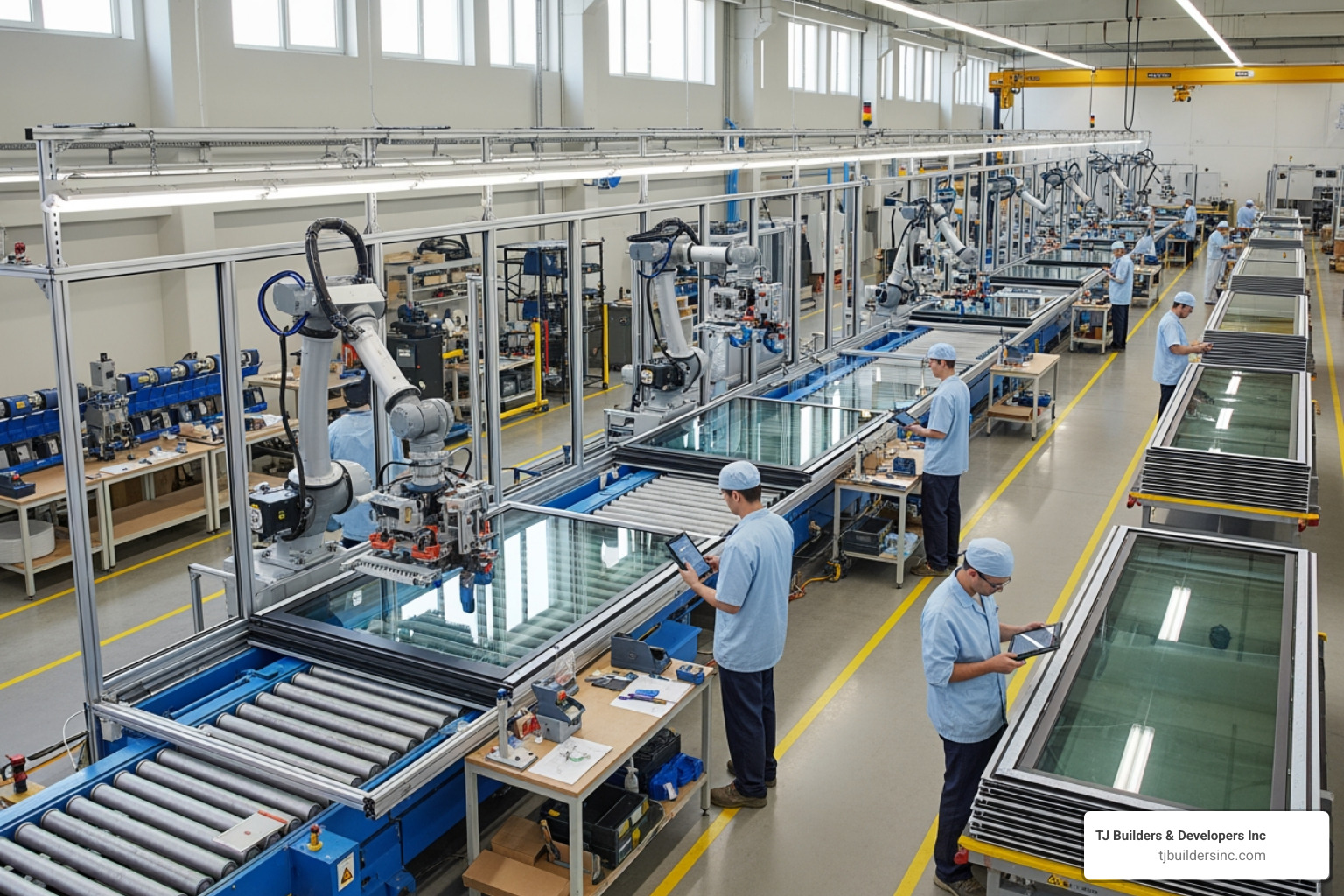
This factory-controlled approach brings several practical benefits. It greatly reduces weather delays common in Illinois, protecting materials from moisture that can cause mildew or warping. Precision manufacturing also cuts down on material waste, making it a more eco-conscious process. Most importantly, prefab construction follows strict quality control standards, helping ensure consistent insulation, tight seals, and a durable final product.
How Prefab Construction Improves Energy Efficiency
A major advantage of a prefab sunroom addition is its potential for strong energy performance. Modular construction allows for consistent insulation in walls and roofs, and factory precision helps create airtight seals that limit drafts and heat loss.
Many prefab sunrooms feature high-performance glass, like double-pane insulated glass with Low-E coatings, to keep the room cooler in summer and warmer in winter. Some components may even be ENERGY STAR certified, meeting established energy efficiency guidelines. This focus on energy-conscious design means a prefab sunroom addition can be a comfortable, bright space in a wide range of weather conditions. To learn more about how additions can relate to your home’s efficiency, explore our insights on more info about home additions.
Prefab vs. Traditional Construction: A Comparison of Timelines
Minimizing disruption to your daily life is a top priority for many homeowners. This is where a prefab sunroom addition stands out compared to traditional construction. A stick-built addition involves a longer on-site process subject to weather delays, often creating weeks of noise, dust, and limited yard access.
With prefab construction, components are manufactured in a factory while the site at your home is being prepared. This parallel process accelerates the schedule. Once components arrive, a professional crew can typically assemble most rooms in just one or two days. What might take several weeks with traditional methods can be completed much faster with a prefab sunroom addition, so you can begin using your new space sooner.
Need Help With Your Home?
TJ Builders & Developers handles roofing, siding, gutters, windows, home additions, and fire damage restoration for homes and businesses in Lakewood, Crystal Lake, Schaumburg, and nearby McHenry County towns.
- Free, no-obligation estimates
- Licensed & insured
- 20+ years of local experience
Design, Materials, and Customization
Your home is unique, and your new prefab sunroom addition should be too. While built off-site, prefab sunrooms still offer meaningful design flexibility, allowing you and your contractor to create a space that complements your existing architecture and meets your needs.

We work with a range of material options and style choices so your sunroom feels like an intentional part of your home, not an afterthought. From the framework to the glazing, each element can be selected to fit your preferred look and function, whether you envision a casual three-season retreat or a more robust four-season living area.
Common Materials and Their Impact on Durability
The materials chosen for your prefab sunroom addition influence durability, maintenance, and overall cost. Three common options work well for the Northern Illinois climate:
- Aluminum Frames: Typically the least expensive option, aluminum offers strong structural integrity and is resistant to rust and corrosion. It is lightweight yet sturdy, often used in many prefab sunroom systems. Because aluminum conducts heat, proper thermal breaks and glazing are important for comfort during colder seasons.
- Vinyl Structures: A mid-level option in terms of cost, vinyl is highly durable and low maintenance. All-vinyl sunrooms, often featuring fusion-welded windows and doors, resist moisture, fading, and pests. They provide better insulation than aluminum, making them a popular choice for homeowners seeking a balance of performance and upkeep.
- Wood-Framed Sunrooms: Usually the most expensive, wood delivers a warm aesthetic that can be stained or painted to align with your home. Wood offers excellent natural insulation but requires more maintenance, including regular painting or sealing, to protect it from humidity, snow, and UV exposure.
Glazing choices also play a key role. Many prefab sunrooms use twin-wall polycarbonate roof panels that filter sunlight and block harmful UV rays, and UV-immune acrylic wall panels that maintain clarity. Other systems use high-quality glass for maximum durability and weather resistance. The right combination of frame and glazing helps your sunroom stand up to the range of conditions common in the Chicago suburbs.
Three-Season vs. Four-Season: Which is Right for You?
One important decision for your prefab sunroom addition is whether to choose a three-season or a four-season design. The right option depends on how you plan to use the space and how often you want it to feel comfortable throughout the year.
Here’s a quick comparison:
| Feature | Three-Season Sunroom | Four-Season Sunroom |
|---|---|---|
| Insulation | Minimal insulation in walls and roof | Higher performance insulation in walls and roof |
| HVAC Integration | Typically uses portable heaters/fans | Can be integrated with home’s HVAC or a dedicated system |
| Window Type | Single-pane glass or lightweight acrylic/polycarbonate | Double-pane insulated glass (often Low-E, argon gas filled) |
| Typical Use | Spring, summer, fall; temperate weather | Year-round; designed for all seasons |
| Cost | Generally lower | Higher due to insulation, glazing, and HVAC options |
A three-season sunroom is intended for the milder months of spring, summer, and fall. It typically features single-pane glass or lightweight panels and minimal insulation. It offers protection from insects and rain but will track more closely with outdoor temperatures during winter and extreme heat.
A four-season sunroom is engineered for more consistent comfort. This type of prefab sunroom addition incorporates improved insulation in the walls and roof and uses high-performance insulated glass, such as double-pane glass with Low-E coatings and argon gas, to limit heat transfer. Framing can include thermal breaks, and the room can be tied into your home’s heating and cooling systems or use a dedicated HVAC unit, creating a space you can enjoy in a much wider range of weather conditions.
Customizing Your Prefab Sunroom Addition
Even though the components are prefabricated, there is still room for meaningful customization so your prefab sunroom addition integrates well with your home in Lakewood, Crystal Lake, Schaumburg, or other nearby suburbs.
You can explore different roof styles to match or complement your existing roofline:
- Gable Roofs: Provide a vaulted feel and add openness, often mirroring the main house’s roof style.
- Studio Roofs: A single-sloped roof that offers a clean, contemporary look, often ideal for sunrooms attached to single-story homes.
- Under Existing Roof: If you already have a covered porch or patio, prefabricated walls and windows can be installed beneath that roof to create a more enclosed space.
Window and door configurations also offer flexibility. Options can include sliding windows, casement windows, or larger openings for ventilation, along with patio doors or sliding screens to connect to outdoor areas.
Electrical outlets, lighting fixtures, and ceiling fans can be planned as part of the project so the room functions well for everyday use. Many systems include pathways for concealed electrical runs, helping maintain a clean finished appearance. Sizing and layout can be custom to your lot and the way you plan to use the room, whether as a compact reading area or a larger gathering space. To see examples of how different designs have been integrated with existing homes, take a look at Our Projects.
The Professional Installation Process
While the components of a prefab sunroom addition arrive ready-made, the installation itself is a critical phase that demands professional expertise. It is not just about connecting panels; it involves preparing your home, ensuring structural support, and integrating the new space with your existing exterior.
A professional team handles each step of the installation process, starting with a site assessment to understand your property. From there, the contractor completes the foundation work that supports the sunroom and then assembles the prefabricated components to create a secure, weather-resistant addition.
Preparing for Your Prefab Sunroom Addition
Proper preparation is essential for a successful prefab sunroom addition. Before any components arrive, the site must be made ready so the installation can proceed smoothly and safely.
This process typically includes:
- Site Preparation: Clearing and leveling the area where your sunroom will sit, and checking grading to help direct water away from the structure.
- Foundation Requirements: A solid, level foundation is crucial. For many prefab sunrooms, this means a new concrete slab or a reinforced existing deck that meets local building codes. In Illinois, support piers generally extend below the frost line to help resist movement.
- Integrating with Existing Structures: If your sunroom is built on an existing patio or deck, its structural integrity is evaluated and proper anchoring is planned. A prefab sunroom can be installed on a deck and securely attached to a house, including those with vinyl siding, using appropriate fasteners and flashings.
- Ensuring Proper Drainage: Attention to drainage around the new addition helps reduce the risk of water-related issues at the foundation or along exterior walls.
These steps support the stability and long-term performance of your prefab sunroom addition and help keep manufacturer warranties in effect. For comprehensive solutions that work well with your existing exterior, explore our Addition Solutions.
Navigating Building Permits and Local Codes
Adding a prefab sunroom addition to your home, like any significant home improvement, requires attention to building permits and local codes. This step helps ensure your project is safe, structurally sound, and compliant with regulations in your area.
In Illinois, local municipalities set building codes and permit requirements for sunroom additions. Building without a permit can lead to issues such as:
- Insurance Concerns: In the event of damage, your homeowner’s insurance may question coverage if the addition was built without required permits.
- Resale Challenges: Unpermitted additions can complicate the sale of a home and may require additional inspections or corrective work.
- Municipal Penalties: Local authorities can issue fines or require changes to non-compliant structures.
While the homeowner is typically responsible for obtaining building permits, an experienced contractor can guide you through the process. Contractors can provide standard load tables and connection details from manufacturers to support your permit application. You, or a design service you hire, will usually prepare drawings specific to your home, deck, and sunroom. Reputable installers ensure that prefab sunroom addition projects adhere to local building codes in communities such as Lakewood, Crystal Lake, Schaumburg, Elk Grove Village, Rolling Meadows, South Barrington, Barrington, Bartlett, Palatine, Mount Prospect, and other Chicago suburbs.
The Installation Timeline from Start to Finish
One of the most attractive aspects of a prefab sunroom addition is its streamlined project timeline compared to traditional construction. While the overall process includes several stages, the on-site work is relatively brief.
Here is a general overview:
- Factory Fabrication Lead Time: After your design is finalized and ordered, the manufacturer begins fabricating the sunroom components. Depending on the season and manufacturer, lead times can range from about 30–45 days to 6–8 weeks during busier periods. During this time, your contractor can work on site preparation.
- Site Preparation Phase: While your sunroom is being built in the factory, the foundation at your home is prepared. This can include clearing the area, confirming grade, and constructing or reinforcing a concrete slab or code-compliant deck. This step typically takes several days to about a week, depending on conditions.
- Delivery of Components: Once fabrication is complete, your prefab sunroom addition components are delivered to your home. Materials are inspected on arrival to confirm that everything is present and undamaged.
- On-Site Assembly by a Professional Crew: With the foundation ready, trained installers assemble the sunroom. Many projects can be erected in one day, with larger or more detailed designs sometimes requiring a second day. This stage includes setting wall sections, roof panels, windows, and doors.
- Finishing Work: Final tasks include sealing, flashing, completing any electrical work (outlets, lighting, ceiling fans), and verifying that all joints are properly weatherproofed. Cleanup follows so the new space is ready for furnishing.
Overall, from initial order to completion, a prefab sunroom addition often takes several weeks to a couple of months, which is typically shorter than a comparable stick-built addition.
Need Help With Your Home?
TJ Builders & Developers handles roofing, siding, gutters, windows, home additions, and fire damage restoration for homes and businesses in Lakewood, Crystal Lake, Schaumburg, and nearby McHenry County towns.
- Free, no-obligation estimates
- Licensed & insured
- 20+ years of local experience
Key Factors for Your Sunroom Investment
Investing in a prefab sunroom addition is a significant decision for any homeowner in Northern Illinois. To ensure your new space brings lasting enjoyment and value, it is important to consider not just the upfront cost, but also long-term maintenance, warranty coverage, and the expertise of your contractor.
This section focuses on the practical aspects of your sunroom investment so you understand the full scope of what is involved in bringing your project to completion.
Understanding the Cost of a Prefab Sunroom
When considering a prefab sunroom addition, it is helpful to understand the main factors that affect pricing. While often more streamlined to install than a comparable stick-built addition, the overall cost still depends on your specific choices.
Prefab sunrooms can range widely in price. The materials selected are a primary cost driver:
- Aluminum: Commonly the least expensive frame option.
- Vinyl: A mid-level choice that balances durability and thermal performance.
- Wood-Framed: Typically the highest material cost, chosen for its appearance and natural insulation.
The size of the sunroom and whether you choose a three-season or four-season design also influence the budget. Four-season sunrooms include improved insulation and higher performance glazing and may involve HVAC and electrical integration, which increases the investment but can extend the usable season of the space.
Professional installation labor is another component. Prefab kits simplify assembly, but correct installation is essential for structural integrity, weather protection, and compliance with local codes in areas such as Crystal Lake or Palatine. Building permits, which vary by municipality, should also be included in your planning.
By understanding these elements, you can work with a contractor to design a prefab sunroom addition that fits your goals. To discuss your specific project and receive a custom estimate, please Contact us for a consultation.
Long-Term Maintenance and Upkeep
A well-cared-for prefab sunroom addition can provide enjoyment for many years. Most modern systems are designed with low-maintenance materials, but a few basic tasks will help maintain appearance and performance.
Key maintenance considerations include:
- Routine Cleaning of Glass and Frames: Clean glass panels with a mild detergent and soft cloth to keep them clear. For vinyl and aluminum frames, a gentle soap-and-water wash is usually enough. Wood frames should also be inspected during cleaning for any finish wear.
- Inspecting Seals and Weatherstripping: Over time, seals and weatherstripping can dry out or compress. A yearly check for gaps or damage helps maintain energy performance and reduce the chance of leaks.
- Gutter and Roof Panel Care: If gutters are present, keep them free of leaves and debris for proper drainage. Roof panels, especially polycarbonate, benefit from occasional cleaning to remove dirt or algae that could limit light.
- Condensation Management: In glass-heavy rooms, condensation can occur when warm indoor air meets cooler glass. To limit moisture buildup, provide ventilation, avoid high indoor humidity, and use dehumidifiers if needed. Wiping away condensation when it appears helps protect finishes and surfaces.
- Material-Specific Tips: Vinyl and aluminum are generally low maintenance. Wood-framed sunrooms require periodic repainting or resealing to help protect the material from moisture and sun exposure.
Following these straightforward steps will help your prefab sunroom addition remain functional and attractive over time.
Warranty and Contractor Considerations
When planning a prefab sunroom addition, it is important to understand both product warranties and installation warranties so you know how your investment is protected.
Manufacturers typically provide warranties on the sunroom materials and components, which may include:
- Limited Warranty on Frames: Many manufacturers offer multi-year or limited lifetime coverage on certain framing systems against defects in materials and factory workmanship.
- Glass Coverage: Some warranties cover insulated glass seal failure (fogging between panes) and, in some cases, specific types of glass breakage for a defined period.
- Component-Specific Warranties: Roof panels and finishes may be covered against issues such as delamination, blistering, or peeling for a set term.
These warranties usually apply when the product is installed according to manufacturer instructions and local building codes. The quality of the installation is covered separately by the contractor’s workmanship warranty. This covers how the product is assembled and sealed, including details like flashing, fasteners, and integration with your existing roof or siding. For instance, a leak caused by improper flashing is generally an installation issue rather than a product defect.
Choosing an experienced installer in the Chicago suburbs helps ensure your prefab sunroom addition is built to standard and that both manufacturer and contractor warranties remain in force. For related exterior work, including roofing, siding, windows, and gutters, you can review our Services.
Begin Your Home Expansion Project
Prefab sunrooms offer an efficient, high-quality solution for adding light and space to your home. The key to a successful project lies in selecting the right materials, design, and, most importantly, a skilled installation partner. For homeowners in Lakewood, Crystal Lake, Schaumburg, and surrounding Northern Illinois suburbs, working with an experienced team like TJ Builders & Developers Inc. ensures your new addition is built to the highest standards of safety and craftsmanship. To explore the possibilities for your property, learn more about our professional Home Additions.