
Why Your Home’s Roof Matters More Than You Think
Your home’s roof is its first line of defense against the elements. It’s a complete system of components working together to shield your home from rain, sun, wind, and snow, keeping your family safe and dry. A failing roof can lead to water stains, mold growth, and serious structural damage.
Key Roofing Facts:
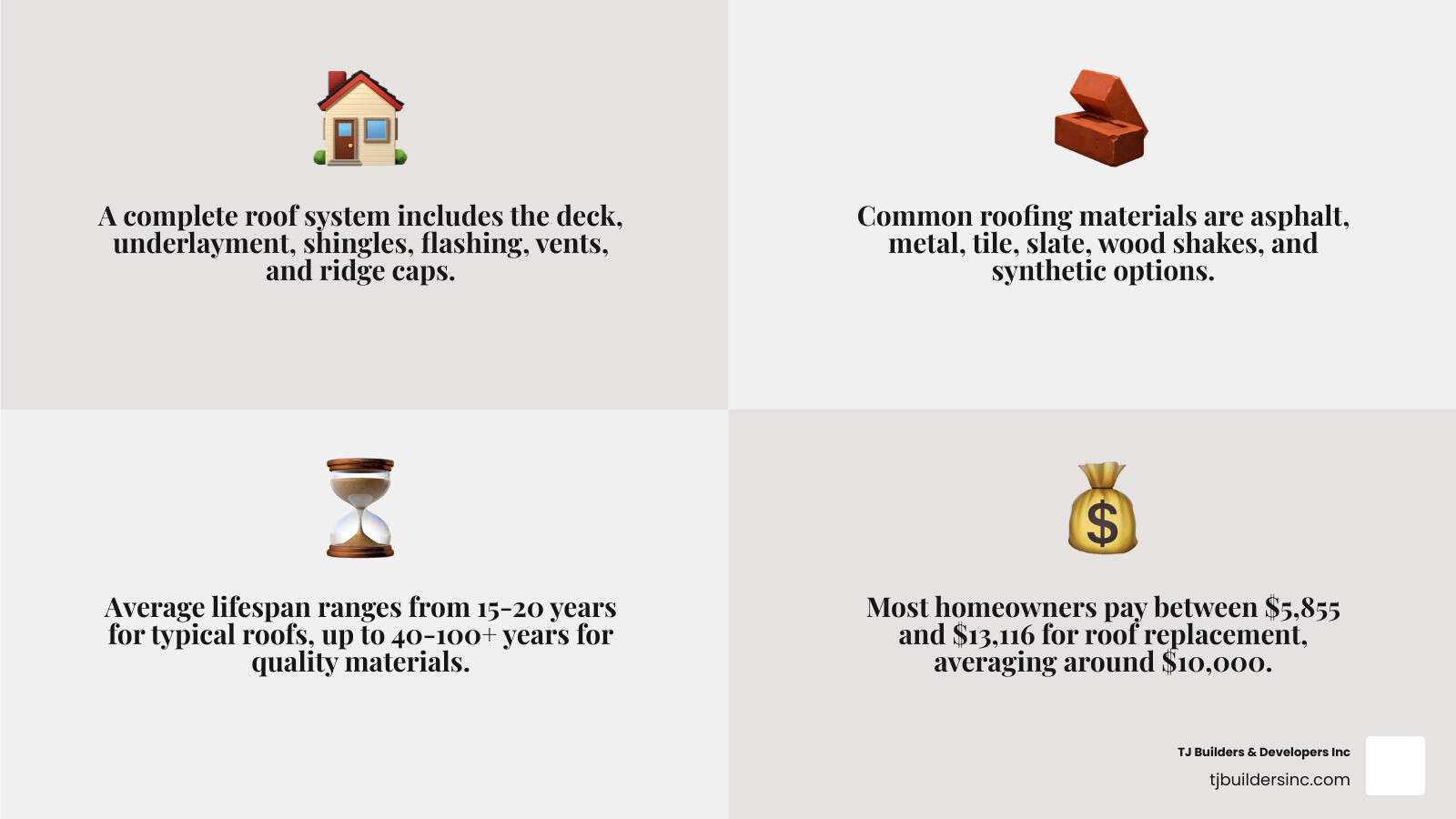
- System Components: A roof includes the deck, underlayment, ice/water shield, shingles, flashing, vents, and ridge caps.
- Common Materials: Asphalt shingles, metal, tile, slate, wood shakes, and synthetic options.
- Average Lifespan: 15-20 years for basic asphalt, but quality materials can last 40-100+ years.
- Replacement Cost: The national average is around $10,000, with most projects falling between $5,855 and $13,116.
- Warning Signs: Look for curling shingles, water stains, missing granules, or visible sagging.
According to the National Roofing Contractors Association, proper roofing must be paired with adequate insulation and ventilation to be effective. This guide will cover everything you need to know, from materials and costs to maintenance and modern innovations like solar roofing.
Similar topics to Roofing:
Understanding Your Roof: Materials and Core Components
A roof is a complex system of interconnected parts. Understanding these components and materials is the first step toward making an informed decision for your home in Lakewood, Crystal Lake, or the greater Chicago suburbs.
The Anatomy of a Roofing System
Each part of your roof plays a vital role in keeping your home dry and secure. Key components include:
- Roof Deck (or Sheathing): The plywood or OSB foundation fastened to your home’s rafters.
- Underlayment: A water-resistant barrier (felt or synthetic) applied over the deck for secondary protection.
- Ice and Water Shield: A waterproof membrane installed at eaves, valleys, and around penetrations to prevent leaks from ice dams and wind-driven rain.
- Flashing: Metal pieces that direct water away from critical areas like chimneys, vents, and skylights.
- Starter Shingles: The first row of shingles that provides a sealed edge to prevent wind uplift.
- Vents: Components like ridge and soffit vents that allow the attic to breathe, preventing heat and moisture buildup.
- Ridge Caps: Shingles that cover the peak of the roof, providing a watertight seal.
If one part fails, the entire system can be compromised. For more on how these parts protect your home, see this guide to the building envelope or learn about our roofing services.
The Critical Role of Ventilation and Insulation
Proper attic ventilation and insulation are essential for a healthy roof and an energy-efficient home. A balanced system prevents attic heat from cooking shingles in the summer, reduces cooling costs, and controls moisture that can lead to mold and wood rot. In winter, it helps prevent ice dams by keeping the roof deck cold, stopping snow from melting and refreezing at the eaves. The National Roofing Contractors Association (NRCA) provides guidelines on achieving balanced airflow. For more on how airflow impacts your home, visit the International Association of Certified Indoor Air Consultants.
A Deep Dive into Roofing Materials
Choosing the right material impacts your home’s appearance, durability, and cost. In the Chicago suburbs, materials must withstand hot summers, cold winters, and strong winds.
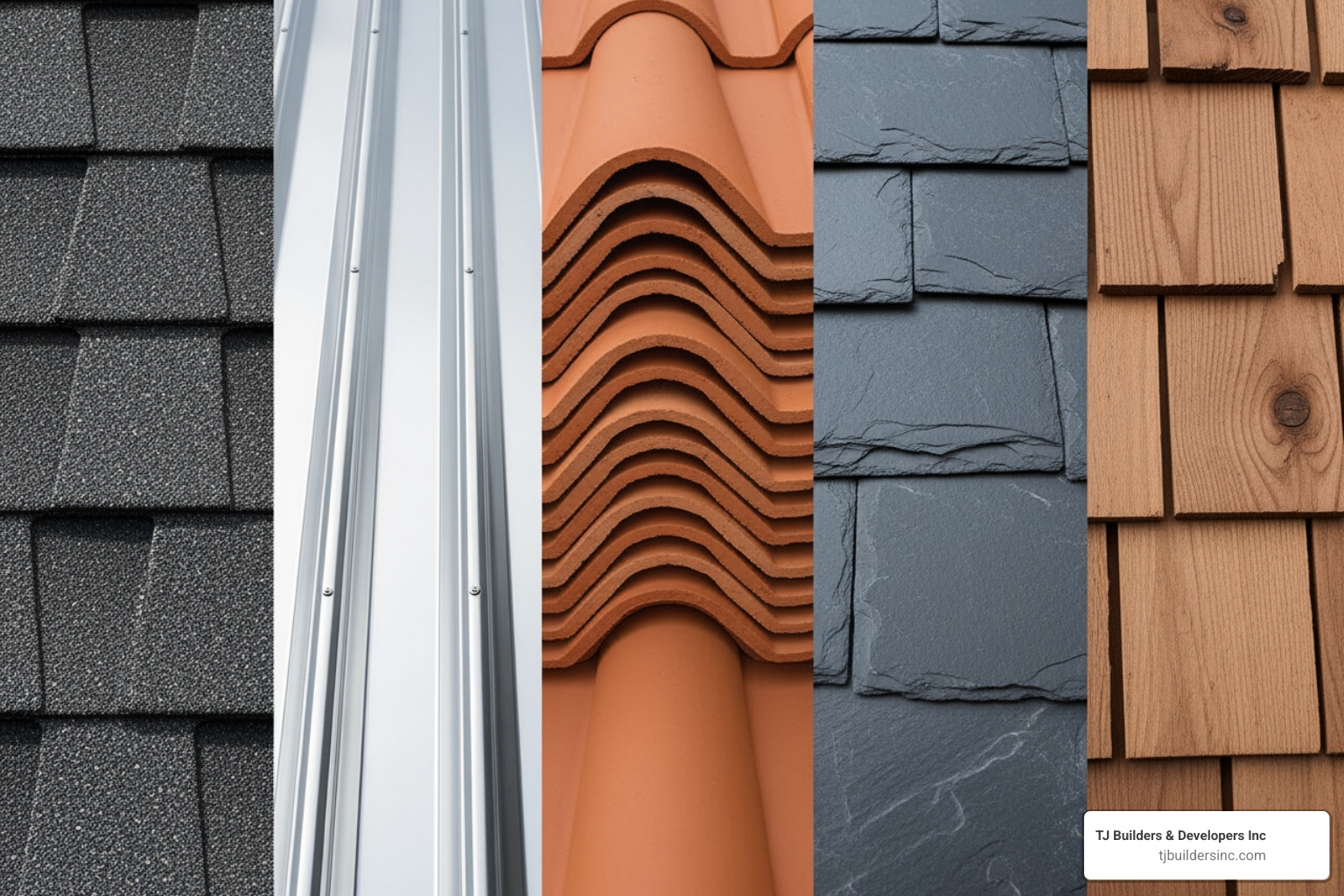
Here’s a brief look at common options:
- Asphalt Shingles: The most popular choice in the U.S. due to their affordability and versatility.
- Pros: Cost-effective, many styles, good fire resistance (Class A).
- Cons: Shorter lifespan, can be damaged by wind.
- Metal Roofing: A durable, long-lasting option available in panels or shingles.
- Pros: Extremely durable, energy-efficient, great fire/wind resistance.
- Cons: Higher upfront cost, requires specialized installation.
- Wood Shakes and Shingles: Offers a classic, natural aesthetic, typically from cedar.
- Pros: Natural beauty, good insulation.
- Cons: High maintenance, fire risk (often Class C or unrated), prone to rot.
- Clay & Concrete Tiles: Extremely durable and common in specific architectural styles.
- Pros: Very long lifespan, excellent fire resistance, low maintenance.
- Cons: Very heavy, high cost, brittle, requires structural reinforcement.
- Slate: A natural stone that offers unparalleled elegance and longevity.
- Pros: Lasts over a century, highly resistant to all elements.
- Cons: Extremely expensive and heavy, requires specialized installers.
- Synthetic Roofing Materials: Engineered products that mimic natural materials like slate or wood.
- Pros: Lightweight, durable, low maintenance, good fire ratings.
- Cons: Can be more expensive than asphalt, appearance varies.
For more details on materials, consult the NRCA.
| Material | Lifespan (Years) | Cost (Relative) | Pros | Cons | Fire Rating |
|---|---|---|---|---|---|
| Asphalt Shingles | 20-50 | Low | Affordable, easy to install, wide variety of styles, good fire resistance (Class A for fiberglass) | Shorter lifespan, susceptible to wind/hail over time, granule loss | Class A/C |
| Metal Roofing | 40-80+ | High | Extremely durable, energy-efficient, excellent fire/wind resistance, good snow shedding | High upfront cost, can be noisy, specialized installation | Class A |
| Wood Shakes/Shingles | 20-40 | Medium | Natural beauty, good insulation | High maintenance, fire risk (Class C/unrated), prone to moss/rot | Class C/Unrated |
| Clay & Concrete Tiles | 50-100+ | High | Very long-lasting, excellent fire resistance, low maintenance, unique aesthetic, energy-efficient | Very heavy (structural reinforcement needed), high upfront cost, brittle, difficult installation | Class A |
| Slate | 60-150+ | Very High | Unparalleled longevity, superior fire/wind/moisture resistance, neat | Very high upfront cost, extremely heavy, brittle, specialized installation/repair | Class A |
| Synthetic Materials | 30-50 | Medium-High | Lightweight, durable, impact-resistant, low maintenance, good fire ratings, mimics natural materials | Higher cost than asphalt, aesthetic may not be as authentic for some | Class A |
Modern Roofing: Innovations and Eco-Friendly Choices
The roofing industry is evolving with technologies focused on energy efficiency, durability, and sustainability, offering homeowners ways to improve performance and reduce their environmental footprint.
‘Cool’ Roofs for Improved Energy Efficiency
“Cool” roofs are designed to reflect more sunlight and absorb less heat than traditional dark-colored roofs. This is especially beneficial during hot Chicago-area summers.
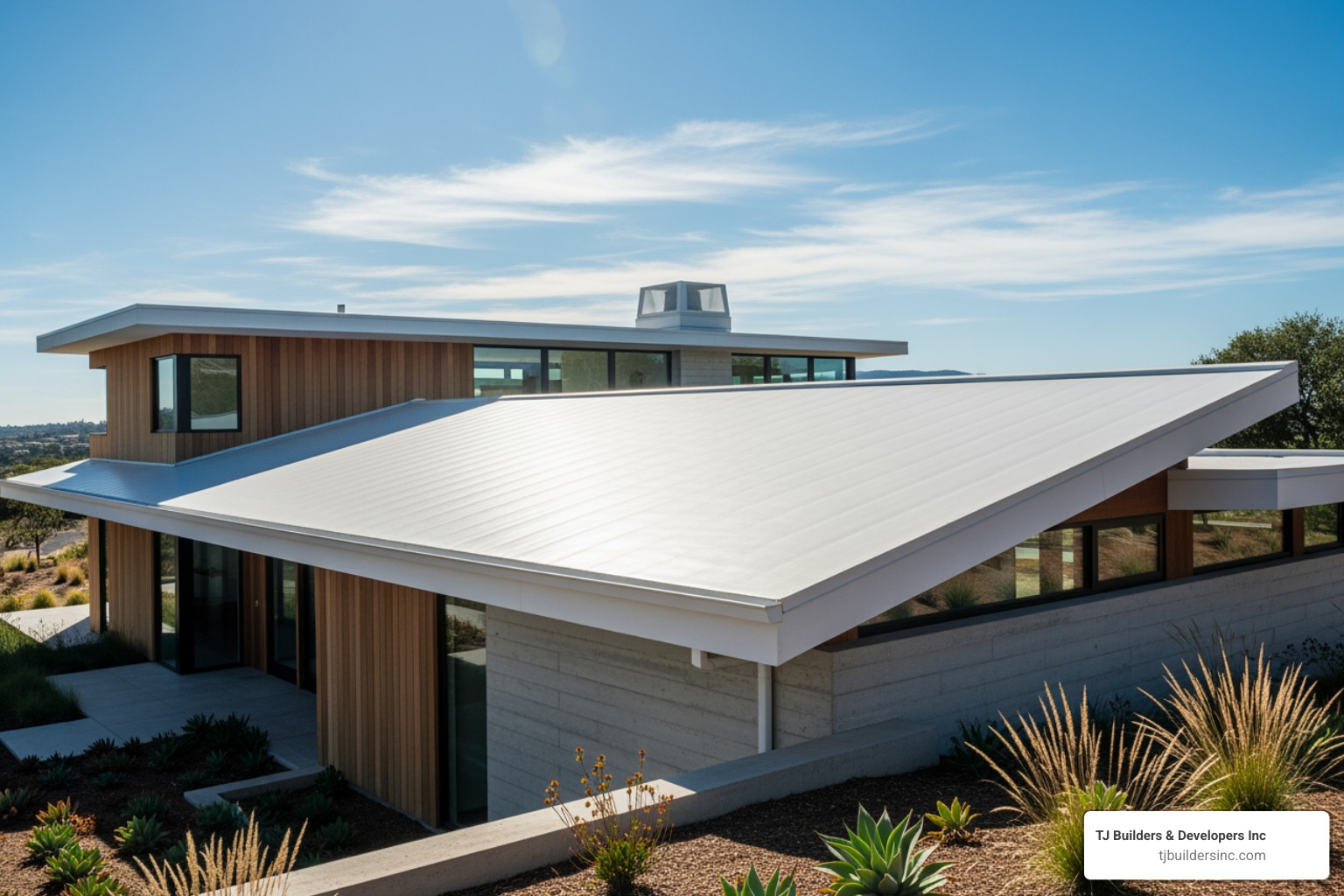
By keeping your attic cooler, these roofs can reduce your home’s cooling energy costs by up to 15%. Many cool roofing products are ENERGY STAR® certified, meeting strict efficiency guidelines. The Cool Roof Rating Council also provides a directory of rated products. While the initial cost may be higher, the long-term energy savings make them a worthwhile investment.
Using the Sun: Solar Roofing Explained
Modern solar roofing integrates clean energy generation directly into your roof’s design. Options include photovoltaic (solar) shingles that blend in with traditional shingles or low-profile solar tiles.
- Clean Energy: Solar roofing generates renewable electricity for your home, reducing your reliance on the grid and lowering energy bills.
- Federal Tax Credits: Homeowners can receive a federal tax credit for 30% of the project cost for installing solar panels or tiles, available through 2025. This significantly reduces the upfront investment.
Leading manufacturers like GAF Energy offer integrated solar solutions. Incorporating solar can be a smart, forward-thinking choice, especially when planning home additions.
Navigating Your Next Roofing Project: Repair, Replacement, and Cost
Understanding the signs of roof failure and the replacement process is key to budgeting effectively and protecting your home.
Telltale Signs Your Roof Needs Attention
Ignoring signs of wear can lead to expensive problems. Here are key indicators that your roof needs professional attention:
- Curling or Cracked Shingles: A clear sign of aging and loss of protective qualities.
- Missing Granules: Look for granules in gutters or bare spots on shingles, which indicates the UV protection is eroding.
- Water Stains on Ceilings or Walls: An urgent sign of a leak that could be causing hidden damage.
- Damaged Flashing: Bent, cracked, or separated flashing around chimneys and vents is a common source of leaks.
- Moss or Algae Growth: While often cosmetic, heavy moss can trap moisture and accelerate deterioration.
- Sagging Roof Deck: A visible droop in the roofline is a serious structural concern that requires immediate inspection.
If you see these signs, it’s time to act. Our team can help with inspections and roof repair.
The Roof Replacement Process: Tear-Off vs. Overlay
When a replacement is necessary, there are two main approaches for asphalt shingle roofs:
- Overlay (Re-Roofing): Installing new shingles over the existing layer. This is faster and cheaper upfront but can hide underlying deck damage. Most building codes limit roofs to two layers.
- Full Tear-Off: Removing all old materials down to the roof deck. This allows for a thorough inspection and repair of the deck, ensuring a solid foundation for the new roof. While more expensive, a tear-off generally results in a longer-lasting, better-performing roof and is the recommended method for a long-term solution.
For more information on this process, visit our re-roofing services page.
Budgeting for Your New Roofing Installation
A roof replacement in the Chicago suburbs averages around $10,000, but costs vary. Key factors include:
- Roof Size and Complexity: Larger or more complex roofs with many peaks and valleys require more materials and labor.
- Roofing Material: Costs vary dramatically, from affordable asphalt to high-end slate or metal.
- Labor Costs: Varies by contractor expertise and job complexity.
- Roof Pitch: Steeper roofs require more safety precautions and time, increasing labor costs.
- Old Roof Removal: A full tear-off includes costs for removing and disposing of old materials.
- Permit Fees: Required by most municipalities to ensure code compliance.
When budgeting, get multiple detailed estimates that break down all costs. Prioritize quality and experience over the lowest bid. See our full list of services to help plan your project.
Protecting Your Investment for Decades to Come
Once your new roof is installed, proper maintenance and understanding your warranty are key to maximizing its lifespan and performance.
Essential Roof Maintenance Tips
Regular care can significantly extend your roof’s life, especially with the Chicago area’s harsh weather.
- Seasonal Gutter Cleaning: Clogged gutters cause water to back up, leading to rot and ice dams. Clean them in the spring and fall. Learn more about gutter installation.
- Clear Debris from Valleys: Remove leaves and twigs from roof valleys to prevent trapped moisture and leaks.
- Trim Overhanging Trees: Cut branches back 6-10 feet from your roof to prevent scraping, debris accumulation, and damage from falling limbs.
- Biannual Professional Inspections: A professional can spot subtle issues you might miss. It’s best to stay off the roof yourself and hire an expert for inspections, especially after major storms.
Understanding Roofing Warranties
Your new roof comes with two primary types of warranties:
- Manufacturer Warranty: This covers defects in the roofing materials themselves. Coverage is often prorated, decreasing over time, and typically does not cover installation errors or weather damage.
- Workmanship Warranty: This is provided by your contractor and covers the quality of the installation. If a leak occurs due to an installation error, the contractor is responsible for the repair. A strong workmanship warranty (our company offers a 10-year warranty on re-roofs) is a sign of a confident, reputable installer.
How to Choose a Reputable Roofing Contractor
Selecting the right contractor is the most important step for a successful roofing project. Here’s what to look for:
- Get Multiple Bids: Obtain at least three detailed estimates to compare costs, materials, and scope of work.
- Check Licenses and Insurance: Ensure the contractor is licensed in Illinois and carries both general liability and workers’ compensation insurance to protect you from liability.
- Read Reviews and Get References: Check online reviews on sites like the Better Business Bureau (BBB) and ask for local references you can call.
- Demand a Detailed Written Contract: Never proceed without a contract that specifies the scope of work, materials, timeline, total cost, payment schedule, and warranty details. It should also confirm the contractor will obtain permits and include a “release of lien” clause to protect you from unpaid supplier bills.
Here are key questions to ask a potential contractor:
- Are you licensed and insured?
- How long have you been in business?
- Can you provide local references?
- What specific materials will you use?
- What is your workmanship warranty?
- What is the project timeline and cleanup process?
- Will you obtain all necessary permits?
- What is your payment schedule?
Frequently Asked Questions about Roofing
How do different weather conditions impact a roof’s durability?
Weather in the Chicago suburbs constantly challenges your roof:
- Sun: UV rays break down asphalt shingles, causing them to become brittle and lose protective granules.
- Rain: Persistent rain can find its way through any small compromise in the roof, leading to leaks and rot.
- Wind: Strong gusts can lift and tear off shingles, especially older ones.
- Snow & Ice: Heavy snow adds weight, while the freeze-thaw cycle can create ice dams that force water under shingles.
- Hail: Can dent metal, crack tiles, and bruise asphalt shingles, dislodging granules and creating weak spots.
What is the average lifespan of a residential roof?
The lifespan depends on the material, installation quality, and climate:
- Asphalt Shingles: 15-25 years for basic 3-tab; 30-50 years for architectural shingles.
- Metal Roofing: 40-80+ years.
- Wood Shakes/Shingles: 20-40 years with proper maintenance.
- Clay/Concrete Tile: 50-100+ years.
- Slate: 60-150+ years.
What are fire resistance ratings and why are they important?
Fire ratings classify a roof’s ability to withstand fire. The ratings are Class A, B, and C.
- Class A is the highest rating, offering the best protection against severe fire exposure. Materials like metal, slate, tile, and most fiberglass asphalt shingles have a Class A rating.
- Class B offers moderate protection.
- Class C offers light protection. Untreated wood shakes are often Class C or unrated.
A Class A roof is a critical safety feature for any home. Understanding these ratings is important when rebuilding after a fire. Learn more about our fire damage restoration services.
Conclusion
Your roof is a fundamental part of your home’s safety, value, and curb appeal. By understanding it as a complete system, choosing the right materials, and partnering with skilled professionals, you can ensure it provides reliable protection for decades. For homeowners in Lakewood, IL, and the surrounding areas, the team at TJ Builders & Developers Inc. is committed to providing high-quality workmanship and materials for every project.