Why Homeowners Choose to Add a Second Level
Adding a second level to a house transforms how you use your property. It doubles your living space without sacrificing your yard, increases your home’s value significantly, and solves the problem of outgrowing your current layout.
Quick Answer: What You Need to Know
- Cost: Expect $100-$400 per square foot, with full additions ranging from $150,000-$400,000+
- Timeline: Most projects take 6-12 months from design to completion
- Requirements: Your foundation must be strong enough to support the weight (slab foundations typically cannot)
- ROI: Second-story additions can increase home value by approximately 65%
- Disruption: Significant construction noise and dust, often requiring temporary relocation
- Professionals Needed: Structural engineer, architect, and experienced general contractor
This isn’t a simple weekend project. It involves removing your roof, reinforcing structural elements, and navigating complex building codes. While it requires months of construction and detailed planning, the payoff is substantial: more bedrooms, a home office, better views, and a home that fits your family’s needs without the stress of moving.
For homeowners in Northern Illinois dealing with cramped spaces or growing families, building up offers a practical alternative to relocating. The key is understanding what the process involves, what it will cost, and how to work with professionals who specialize in this type of complex renovation.
I’m Thomas Pruszynski, and at TJ Builders & Developers, we’ve guided homeowners through the complexities of adding a second level to a house for over 20 years. Our team has completed numerous second-story additions across Lakewood, Crystal Lake, and surrounding suburbs, helping families expand their homes while maintaining quality and managing the challenges that come with major structural projects.
Similar topics to adding a second level to a house:
Is Building Up the Right Move for Your Home?
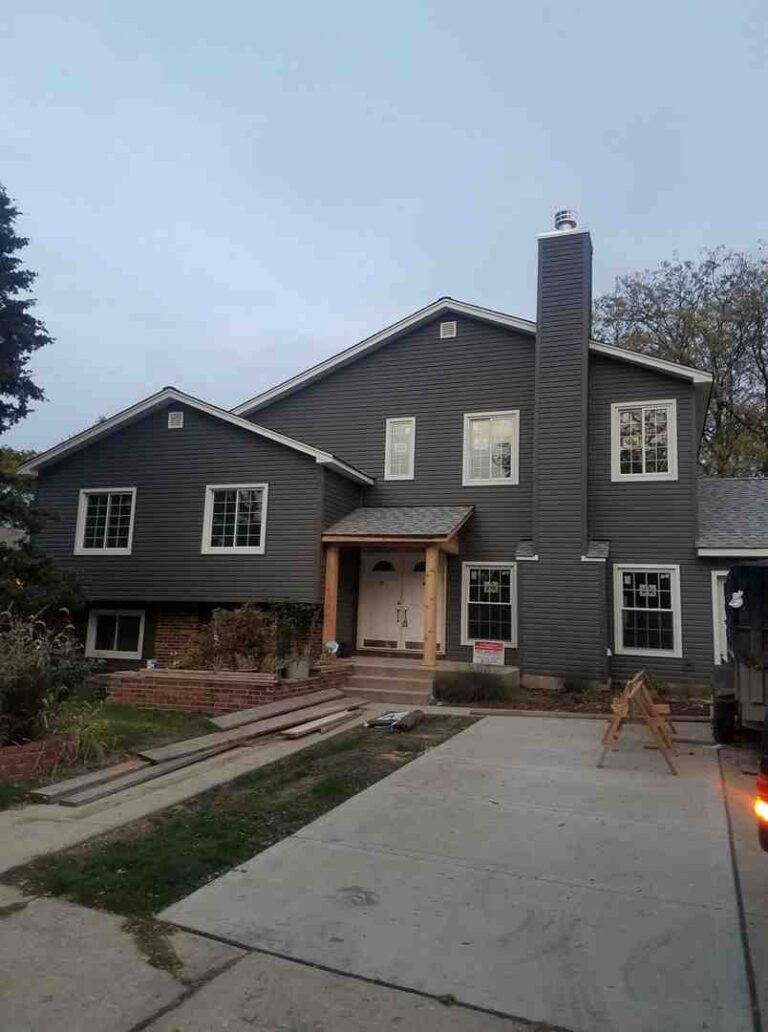
Deciding to start on a major home renovation like adding a second level to a house is a big step. It comes with exciting possibilities and significant considerations. For families in the Chicago suburbs, where lot sizes can be tight and desirable neighborhoods are cherished, building up often makes more sense than moving. Let’s explore the advantages and challenges.
The Advantages: More Space, Value, and Views
The primary advantage of adding a second level to a house is doubling your living space without sacrificing your yard. For homeowners on smaller lots in areas like Schaumburg or Barrington, this vertical expansion is a game-changer. You keep your garden and outdoor entertaining areas while gaining significant indoor square footage.
Beyond just space, a second story open ups a world of possibilities:
- Increased Property Value: Homes with second stories in popular neighborhoods often sell for 15-20% more than similar homes without them. In fact, adding a second story can increase your home’s value by approximately 65%, offering one of the most significant returns on investment among home additions.
- New Rooms for Evolving Needs: Need extra bedrooms for a growing family? A dedicated home office for remote work? A quiet media room or a guest suite? A second story provides the canvas for these new spaces.
- Better Views: Elevating your living space can provide stunning new perspectives of your neighborhood, local parks, or even distant cityscapes, changing your daily experience.
- Preserving Outdoor Space: This is crucial. Instead of building out and losing precious green space, we build up. This allows you to stay in the neighborhood you love, without compromising on your outdoor lifestyle.
Adding a second level to a house is a creative and practical solution to gain additional space without sacrificing your yard or relocating. It’s a way to improve both functionality and value, allowing you to stay in your beloved community.
More info about Home Additions services
The Challenges: Cost, Disruption, and Complexity
While the benefits are clear, it’s important to be upfront about the challenges. Adding a second level to a house is a significant undertaking.
- Significant Investment: This is a major construction project. Costs can range from $100 to $400 per square foot, and total project costs can easily climb into the hundreds of thousands, especially for full additions. This requires careful budgeting and financial planning.
- Construction Noise and Dust: Be prepared for disruption. Building a new floor generates considerable noise, dust, and debris. While we take precautions to minimize impact, your home will be a construction zone for an extended period.
- Temporary Relocation: Many homeowners find it necessary to move out during intensive construction phases, like when the roof is off. This adds to the overall cost and planning complexity.
- Structural Complexity: This isn’t a cosmetic remodel. It involves fundamental changes to your home’s structure, from the foundation up. It requires meticulous planning and execution by experienced professionals to ensure safety and longevity.
- Potential for Unexpected Issues: As with any major renovation, surprises can arise, especially in older homes. Unforeseen structural, wiring, or plumbing issues can appear once walls are opened. We recommend a contingency in your budget for these possibilities.
- Need for Professional Management: Due to the scale and complexity, this project absolutely requires professional management from start to finish. From architects and structural engineers to a reliable general contractor, a skilled team is essential for a successful outcome.
Understanding these challenges upfront helps you prepare and ensures a smoother journey toward your expanded home.
Need Help With Your Home?
TJ Builders & Developers handles roofing, siding, gutters, windows, home additions, and fire damage restoration for homes and businesses in Lakewood, Crystal Lake, Schaumburg, and nearby McHenry County towns.
- Free, no-obligation estimates
- Licensed & insured
- 20+ years of local experience
The Essential Pre-Construction Checklist
Before we even think about swinging a hammer, a thorough pre-construction checklist is vital when adding a second level to a house. This initial planning phase, often spanning several months, lays the groundwork for a successful project.
Structural Assessment: Can Your Foundation Handle the Weight?
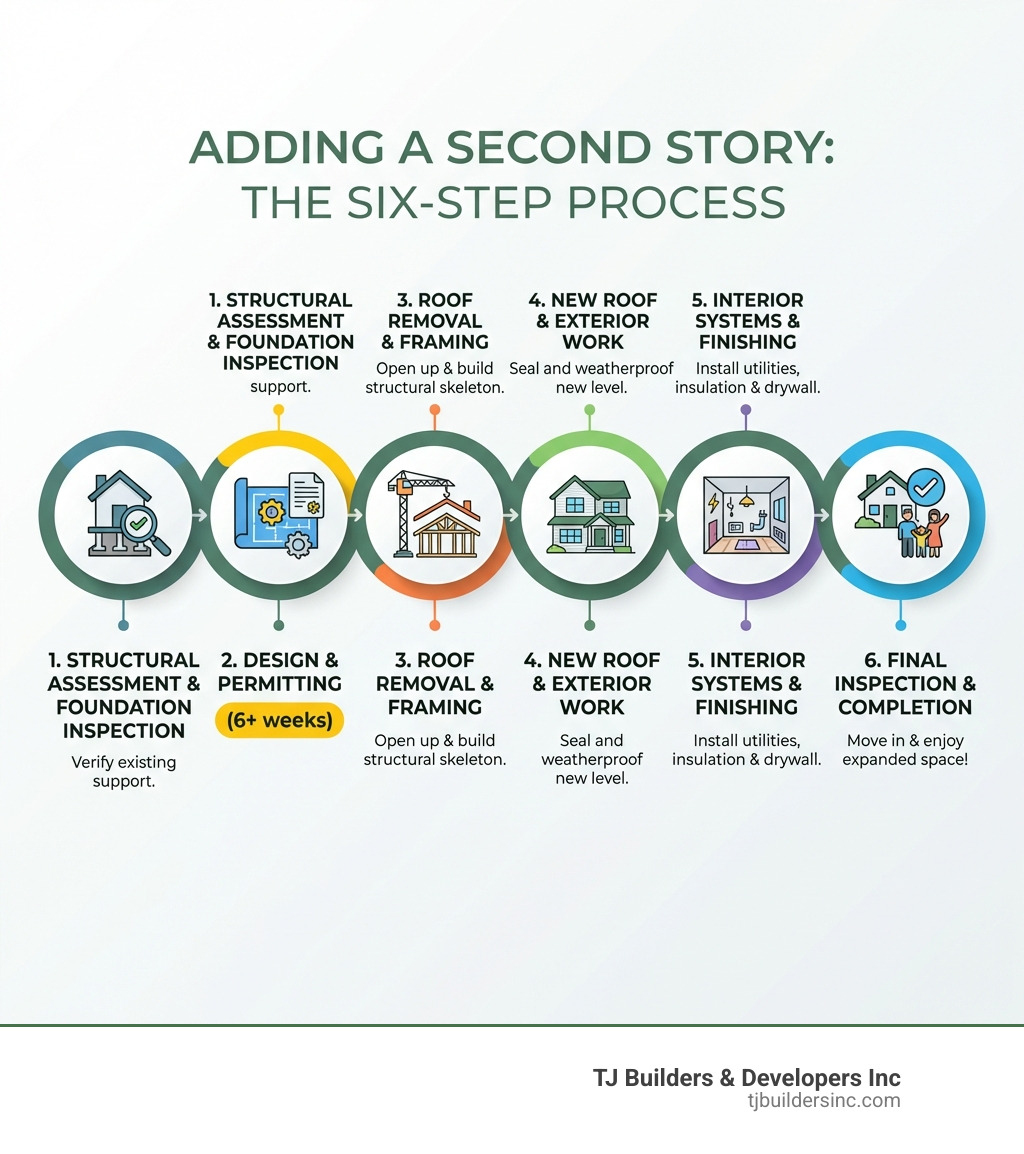
This is the most critical step. Your home was designed for a specific load, and adding a second level to a house significantly increases it. Our first priority is determining if your foundation, framing, and load-bearing walls can support the additional weight.
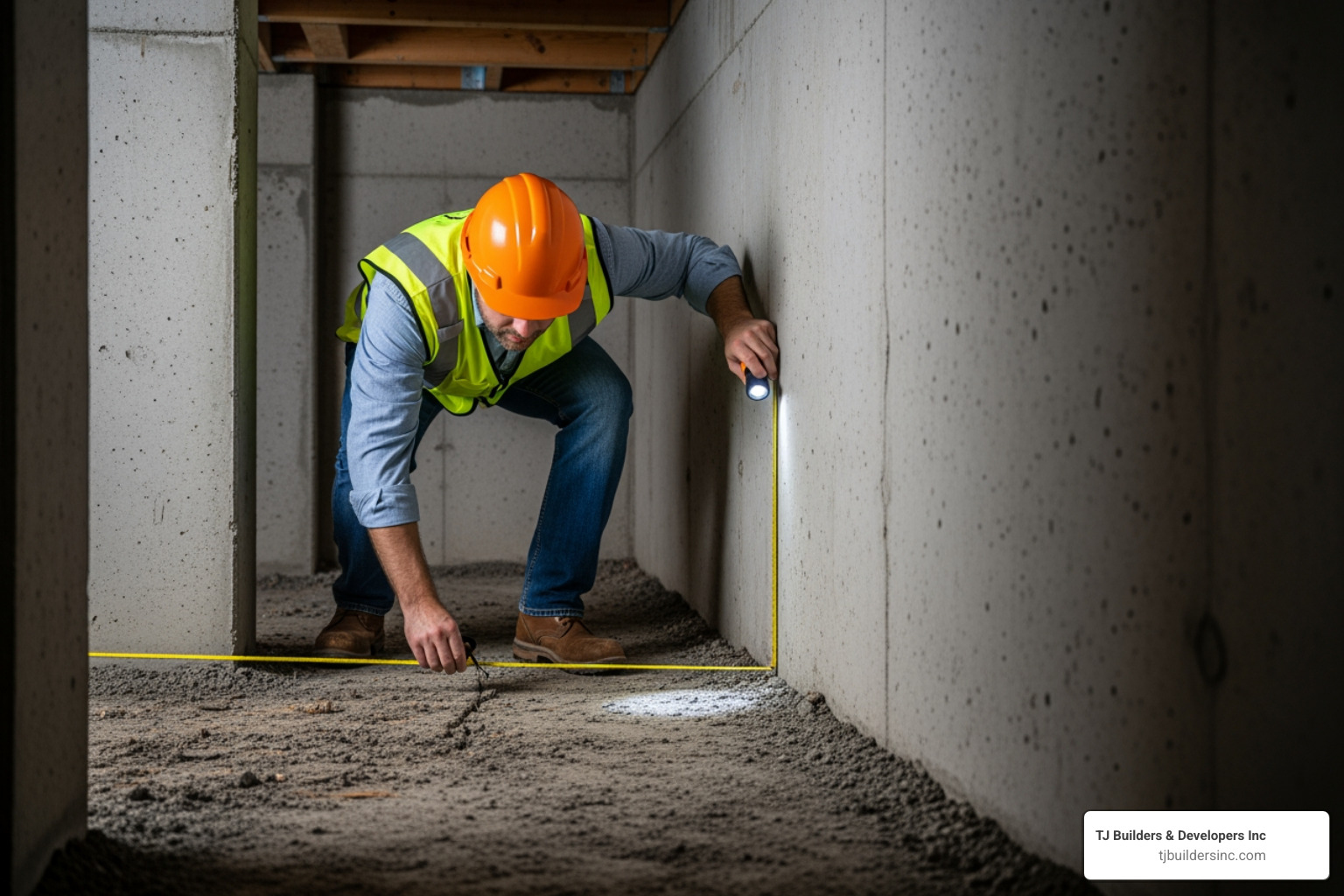
- Foundation Inspection: We work with qualified structural engineers who will carefully inspect your foundation. For homes in our service areas like Crystal Lake or Elk Grove Village, this means evaluating its thickness, condition, and overall capacity. A foundation needs to be robust, typically at least 8 inches thick, to support a second story without significant reinforcement.
- Load-Bearing Walls and Framing: The structural engineer will also assess your existing load-bearing columns, beams, and exterior walls. These elements must be capable of transferring the new load safely down to the foundation. If not, strengthening the existing build will be necessary, which will add to your overall costs.
- Slab Foundation Limitations: Homes built on a slab foundation typically cannot have a second story added without extremely extensive and costly foundation work, often making it unfeasible. Homes with a full basement or crawl space are generally better candidates.
A comprehensive structural assessment ensures the safety and longevity of your expanded home.
Understanding the Cost of Adding a Second Level to a House
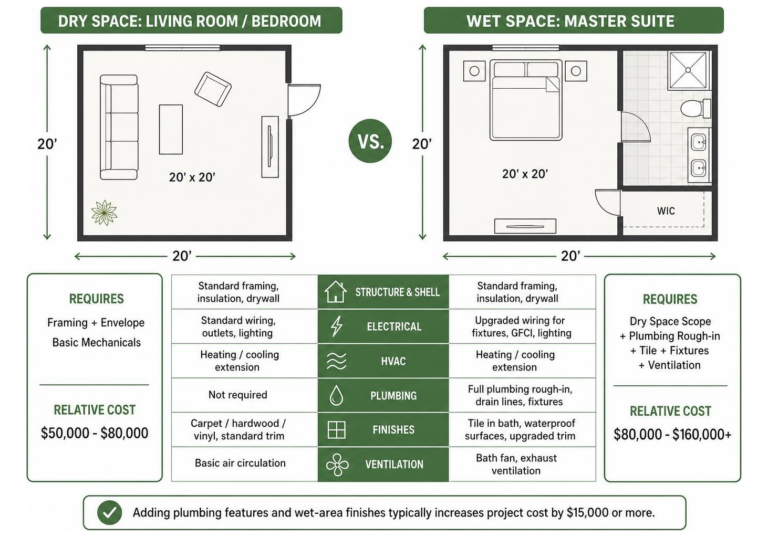
Cost is a significant factor. The average cost is $100 to $300 per square foot, but complex designs, high-end materials, and extensive structural work can push costs to $350-$400 or more per square foot.
For a full second-story addition, homeowners in our Northern Illinois service areas should anticipate a total project budget ranging from $150,000 to $400,000+, depending on the scope. A 500-square-foot addition, for example, could cost between $175,000 and $200,000.
Several factors influence the final cost:
- Design Complexity: Intricate architectural designs, custom features, and unique layouts will increase costs. Simpler designs are more budget-friendly.
- Material Choices: High-end finishes, specialized windows, and premium roofing materials will naturally be more expensive than standard options.
- Structural Work: If your existing foundation or framing requires significant reinforcement, this will add considerably to the budget.
- Utility Upgrades: Doubling your square footage often means upgrading your HVAC system, electrical panel, and water service to accommodate the increased demand.
- Permits and Fees: Local municipalities in areas like Palatine or Mount Prospect require permits, and associated fees contribute to the overall cost.
- Temporary Living Arrangements: If you need to relocate during construction, factor in rental costs.
We’ll work with you to provide a transparent and detailed estimate, ensuring you understand where every dollar goes.
Navigating Permits and Zoning Regulations
Before construction, we ensure your project complies with all local regulations. Navigating permits and zoning is a crucial, non-negotiable step when adding a second level to a house.
- Local Building Codes: Every municipality, from Crystal Lake to Schaumburg, has specific building codes that dictate everything from structural requirements to fire safety, egress, and energy efficiency standards. Your addition must meet or exceed these.
- Height Restrictions: Zoning laws often include height limitations for residential structures. We’ll consult with your local zoning department to ensure your proposed second story doesn’t exceed these limits.
- Setback Rules: These regulations specify how far your home must be from property lines. While adding a second level to a house typically doesn’t expand your footprint, it’s still essential to confirm compliance.
- Permitting Process: Obtaining the necessary construction permits can take time—often six weeks or longer, depending on the complexity of your project and the municipality. We handle the entire permitting process, ensuring all documentation is accurate and submitted correctly.
Our team has extensive experience working with local authorities across Northern Illinois, making this often-daunting process as smooth as possible for our clients.
Project Timeline: How Long Does It Take?
Adding a second level to a house requires patience. Timelines vary based on design complexity, weather, material availability, and permit approvals. Here’s a general breakdown:
- Design Phase: This can take up to three months as we work with you to finalize plans and specifications.
- Permitting Phase: As mentioned, this can take six weeks or longer.
- Construction Duration: Once permits are secured, the actual construction for a full second-story addition typically takes three to six months. A partial second story may take only half that time. For a typical 20×40 single-floor ranch, framing a new second floor, including windows and roof shingles, can take 5-7 working days.
- Finishing Work: Interior finishing, such as drywall, painting, flooring, and fixture installation, can add another one to two months.
All told, a full second-story addition can take anywhere from six to twelve months from initial design to final completion. We create a realistic timeline upfront and keep you informed of progress every step of the way.
Designing and Building Your Second-Story Addition
Once the planning is complete and permits are in hand, the exciting part begins: designing and building your new second level. This phase requires precision, skill, and a keen eye for integration.
Construction Methods: Modular vs. Traditional Build
When adding a second level to a house, we typically employ one of two main construction methods: traditional stick-built or modular.
- Traditional Stick-Built Construction: This involves tearing off the existing roof and building the new upper level from scratch, piece by piece, on-site. This method offers the most flexibility in design and customization. In some cases, if the existing roof is in good condition, we can sever it around the edges, lift it off temporarily with a crane, and put it back in place after the new level has been framed. This can be a cost-saving measure compared to building an entirely new roof.
- Modular Additions: This method involves designing and building sections of your second story off-site in a factory. Once complete, these prefabricated sections are transported to your home and craned into place. Modular construction can offer quicker installation and reduced on-site disruption, potentially leading to cost savings and quality control due to factory-built components.
We also consider partial vs. full additions. A full second-story addition covers the entire footprint of your existing first floor, while a partial addition might only extend over a portion, such as above a garage or a one-story section of your home. The choice depends on your needs, budget, and the structural capabilities of your existing home.
More info about Prefab 2nd Story Addition services
Creating a Cohesive Design That Blends Old and New
One of our primary goals at TJ Builders & Developers is to ensure your new second story looks like it was always part of your home, not an afterthought. Creating a cohesive design is essential for both aesthetics and property value.
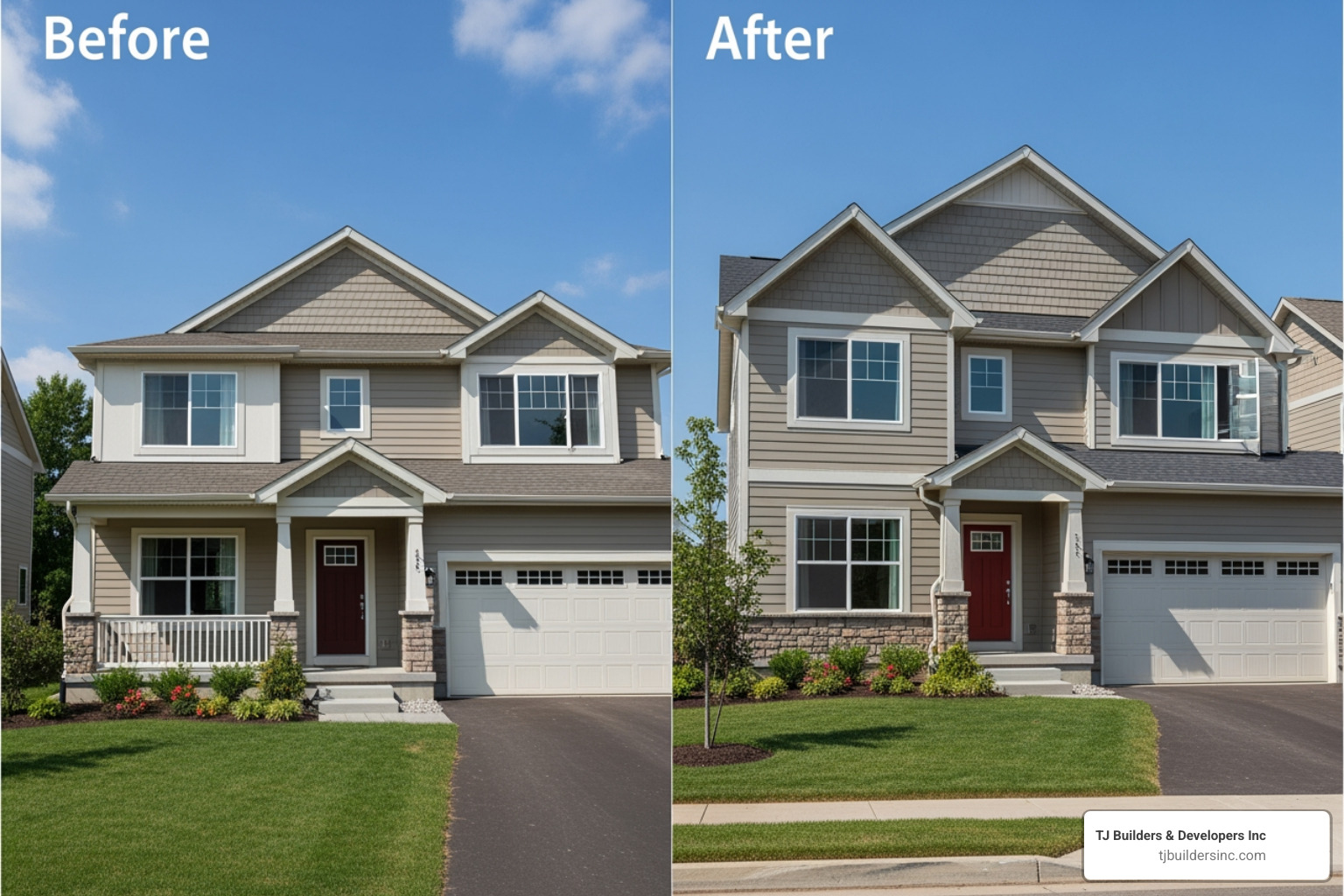
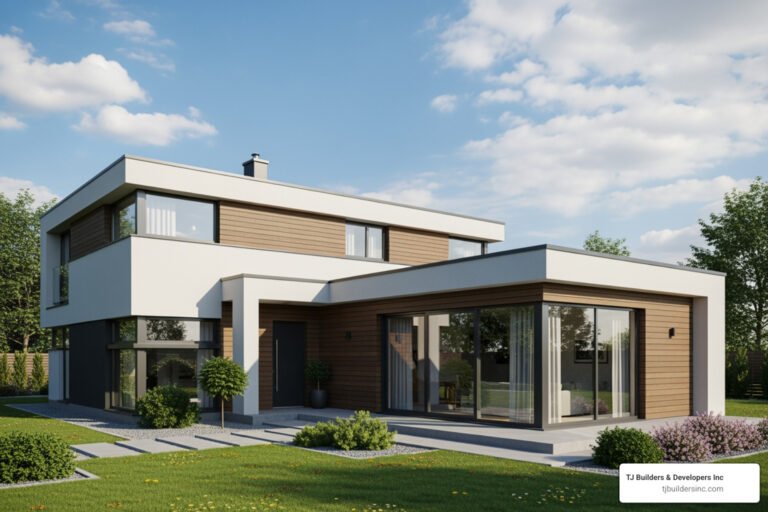
- Architectural Style Matching: We carefully study your home’s existing architectural style—be it a classic ranch in Bartlett or a charming Cape Cod in Rolling Meadows—and design the addition to complement it. This involves echoing roof pitches, window styles, and overall massing.
- Matching Siding and Trim: We pay close attention to exterior materials. Matching siding, brick, stucco, and trim elements is crucial. If an exact match isn’t possible due to fading of original materials, we select contrasting materials that still complement the home’s existing color palette and style.
- Window Alignment: Aligning new windows vertically with existing first-floor openings creates visual continuity and a sense of order. We also ensure consistent window sizes, grille patterns, and spacing across both levels.
- Roofline Integration: Blending the new roofline with the existing one is key. We use design elements like gables, dormers, or shed extensions to tie differing rooflines together seamlessly and avoid a towering, awkward appearance.
- Proportions and Scale: We ensure the new second story is in pleasing proportion with the existing structure. Individual elements like eaves and window details are carefully scaled to maintain harmony with the home’s new overall size.
Our design philosophy ensures that your adding a second level to a house project improves your home’s curb appeal and looks like a natural extension.
Impact on the First Floor and Overall Layout
Adding a second level to a house doesn’t just affect the space above; it often prompts a reevaluation and redesign of your first floor.
- Staircase Placement: A new staircase is essential, and this will require sacrificing some first-floor space. We strategically plan its location to minimize disruption to existing layouts and maintain smooth traffic flow. Poorly placed staircases can block walkways or interrupt open-concept areas, so careful consideration is vital.
- Reconfiguring Rooms: With bedrooms and private spaces potentially moving upstairs, the first floor opens up for new possibilities. Old bedrooms can be converted into expanded living areas, a larger kitchen, a dedicated home office, or even a mudroom or laundry room.
- Creating Open-Concept Layouts: Many homeowners seize this opportunity to create more open, flowing layouts on the main level, improving functionality and enhancing the sense of spaciousness.
- Traffic Flow: We consider how the new layout will impact daily life, ensuring easy and efficient movement between the first and second floors.
This holistic approach ensures that your entire home benefits from the addition, creating a more functional and cohesive living environment.
Improving Energy Efficiency with Your New Addition
When we start on adding a second level to a house, it’s an ideal opportunity to significantly improve your home’s energy efficiency, which can lead to long-term savings on utility bills.
- Modern Insulation: We install high-performance insulation in the walls and ceiling of the new second story. This goes beyond basic requirements, creating a superior thermal envelope that keeps your home warmer in the cold Illinois winters and cooler during summer.
- High-Performance Windows: We specify ENERGY STAR®-certified windows for the new level. These windows can improve a home’s energy bills by 7% to 15% and significantly reduce heat loss, which can be substantial through older windows.
- Sealing Air Leaks: During construction, we carefully seal any potential air leaks in the new structure, preventing drafts and further enhancing energy performance.
- Upgrading HVAC Systems: Doubling your home’s square footage often necessitates an upgrade to your existing HVAC system. We ensure your new system is appropriately sized and efficiently distributes heating and cooling to both levels, accommodating the increased load and potentially reducing rising heating costs.
By incorporating these energy-efficient practices, your new second story won’t just add space; it will also contribute to a more comfortable, sustainable, and cost-effective home.
Need Help With Your Home?
TJ Builders & Developers handles roofing, siding, gutters, windows, home additions, and fire damage restoration for homes and businesses in Lakewood, Crystal Lake, Schaumburg, and nearby McHenry County towns.
- Free, no-obligation estimates
- Licensed & insured
- 20+ years of local experience
Choosing the Right Professionals for Adding a Second Level to a House
Adding a second level to a house is a complex endeavor that requires a team of experienced professionals. Choosing the right partners is paramount to the project’s success.
- Hiring an Architect: An architect will translate your vision into detailed plans, ensuring the new design is functional, aesthetically pleasing, and structurally sound. They are crucial for integrating the new level seamlessly with your existing home’s style.
- Hiring a Structural Engineer: This is non-negotiable. A qualified structural engineer will assess your home’s existing foundation and framing, determine what reinforcements are needed, and provide the calculations to ensure the new structure is safe and compliant with all codes.
- Vetting General Contractors: For a project of this magnitude, you need a general contractor with specific experience in second-story additions. We recommend seeking out contractors who specialize in home additions and have a proven track record in the Chicago suburbs. Check their licenses, insurance, and references. A specialized contractor will foresee and handle common obstacles, preventing expensive surprises.
At TJ Builders & Developers, we bring over two decades of experience in complex home additions to every project. We understand the intricacies of building up in areas like Lakewood, Crystal Lake, and Schaumburg, and we manage the entire process with expertise and dedication.
Key Questions to Ask Your Contractor
When interviewing contractors for adding a second level to a house, here are some essential questions to ensure you find the right fit:
- “Do you specialize in second-story additions, and can you provide examples of similar projects you’ve completed in our area?” Look for specific experience and references that align with your project type.
- “What is your estimated timeline for the project, from start to finish, including design and permitting?” A clear, detailed timeline helps manage expectations.
- “How will communication be handled throughout the project, and who will be my main point of contact?” Clear communication is key to a smooth renovation.
- “How do you handle unexpected issues or changes that may arise during construction, and how are additional costs managed?” A transparent process for change orders is crucial.
- “What qualifications do your subcontractors have, and are they licensed and insured?” Ensure all professionals working on your home meet high standards.
- “What is your payment schedule, and is it tied to project milestones?” This ensures you’re paying for completed work.
- “What warranty do you offer on your workmanship?” Understand the guarantees for the work performed.
Asking these questions will help you gauge a contractor’s experience, professionalism, and suitability for your second-story addition project.
Frequently Asked Questions About Second-Story Additions
We hear many questions from homeowners considering adding a second level to a house. Here are some of the most common inquiries we address:
Can a second story be added to any type of house?
Unfortunately, no. The feasibility of adding a second level to a house heavily depends on the existing structural integrity of your home.
- Foundation Requirements: Homes with a full basement or a strong crawl space are generally the best candidates, as their foundations are typically designed to handle more load. As mentioned, homes built on a slab foundation usually cannot support a second story without prohibitively expensive and extensive foundation work.
- Existing Structure: The existing load-bearing walls and framing must also be strong enough or capable of being reinforced to support the additional weight.
- Professional Assessment is Necessary: The only way to truly know if your home can support a second story is to have a qualified structural engineer perform a thorough assessment. We will guide you through this critical evaluation to determine the viability of your project.
Ranch-style homes and Cape Cods in our Northern Illinois communities are often excellent candidates for second-story additions, as they typically have robust foundations and a simpler footprint to build upon.
How disruptive is the construction process?
We won’t sugarcoat it: adding a second level to a house is a significantly disruptive process.
- Noise, Dust, and Debris: Expect considerable noise from demolition, framing, and roofing, as well as dust and construction debris throughout the project. While we implement measures to contain dust and keep the site clean, a certain level of disruption is unavoidable.
- Temporary Relocation: During crucial phases, such as when the roof is removed and the new level is framed, your home will be exposed to the elements. For safety, comfort, and to protect your belongings, many homeowners choose to move out temporarily, which can last from a few weeks to several months depending on the project’s pace. We discuss this possibility with you early in the planning stages.
- Limited Access: Certain areas of your home may be inaccessible, and daily routines will be altered. We work to mitigate these impacts as much as possible, including setting up temporary stairs for access if you remain in the home.
While disruptive, the temporary inconvenience is often a small price to pay for the long-term benefits of an expanded home that perfectly suits your family’s needs.
How does adding a second story affect property taxes?
Adding a second level to a house will almost certainly lead to an increase in your property taxes.
- Increased Square Footage and Home Value: Property taxes are typically based on the assessed value of your home. A second-story addition significantly increases both your home’s square footage and its overall market value. This increased value will be reflected in your property assessment.
- Contact Your Local Assessor: We always advise homeowners to contact their local assessor’s office in their specific municipality (e.g., Lakewood, Crystal Lake, Schaumburg) to understand how a major addition will impact their property taxes. They can provide specific information based on local assessment methods and tax rates.
While higher property taxes are a consideration, the increased home value and improved living space often outweigh this additional cost, especially given the strong return on investment for second-story additions.
Conclusion: Taking the Next Step on Your Home Addition Project
Adding a second level to a house is a transformative project that offers unparalleled benefits: expanded living space, increased property value, and the opportunity to create your dream home without leaving the neighborhood you love. While it involves significant investment and a period of disruption, the long-term rewards are substantial.
The journey of building up is complex, requiring meticulous planning, structural expertise, and seamless execution. From assessing your foundation’s capacity and navigating local zoning laws in Crystal Lake, to designing a cohesive aesthetic for your home in Schaumburg, every step demands professional guidance.
For homeowners in Lakewood, IL, and surrounding areas, working with an experienced team like TJ Builders & Developers Inc. ensures quality and expertise from concept to completion. We pride ourselves on our reliable workmanship and our commitment to helping families in Northern Illinois realize their home expansion dreams. We understand the unique challenges and opportunities in our local communities, and we’re here to guide you through every phase of your second-story addition.
Ready to explore the possibilities for your home?
Contact Us today to discuss your vision and learn how we can help you go up!