Why Slate Flooring for Kitchen Renovations Demands a Careful Decision

Slate flooring for kitchen spaces can be a stunning long-term investment or a maintenance headache—and the difference often comes down to understanding what you’re getting into before you commit.
Quick Answer: Is Slate Right for Your Kitchen?
Slate is Your Best Bet If:
- You want a truly unique, natural look
- You’re committed to regular sealing
- You value extreme durability (100+ years)
- You need slip-resistant surfaces
- You have a solid subfloor and budget for professional installation
Slate is Your Worst Bet If:
- You need low-maintenance flooring
- You’re on a tight budget
- You prefer warm flooring underfoot
- You want consistent color patterns
- You’re looking for a quick DIY project
Slate is one of the strongest natural stone flooring materials available, lasting up to a century. It offers stunning color variations but also requires sealing, careful maintenance with pH-neutral cleaners, and professional installation due to its weight and subfloor requirements.
From our experience at TJ Builders & Developers in Lakewood, IL, we’ve helped countless homeowners steer the slate flooring for kitchen decision. We weigh slate’s natural authenticity against modern porcelain alternatives that mimic its beauty without the upkeep. We’ve seen both spectacular successes and frustrated homeowners who wished they’d understood the commitment upfront.
This guide breaks down both sides of the debate so you can make the right choice for your kitchen, your lifestyle, and your budget.
The “Best Bet”: Unpacking the Benefits of Slate
When considering slate flooring for kitchen spaces, it’s worth understanding why so many homeowners fall in love with it. While it requires commitment, slate delivers authenticity and longevity in ways few other materials can match.
The Best Durability of Slate
Slate’s durability comes from its geological origins. As a metamorphic rock formed under intense heat and pressure, it’s dense, resilient, and can easily last 100 years or more in your kitchen.
In daily life, this means your floor can handle the chaos of a busy kitchen—dropped pans, dragged chairs, and pet claws. Its natural scratch resistance and chip resistance far exceed what you’d get from softer materials like wood. We’ve seen stunning century-old slate floors in homes, proving its longevity as a generational investment. For high-traffic areas like kitchens, this durability is a practical necessity.
If you’re drawn to the stone aesthetic but want to explore all your options, stone-style porcelain tiles offer another route to achieving that natural look with different maintenance characteristics.
Natural Beauty and Timeless Style
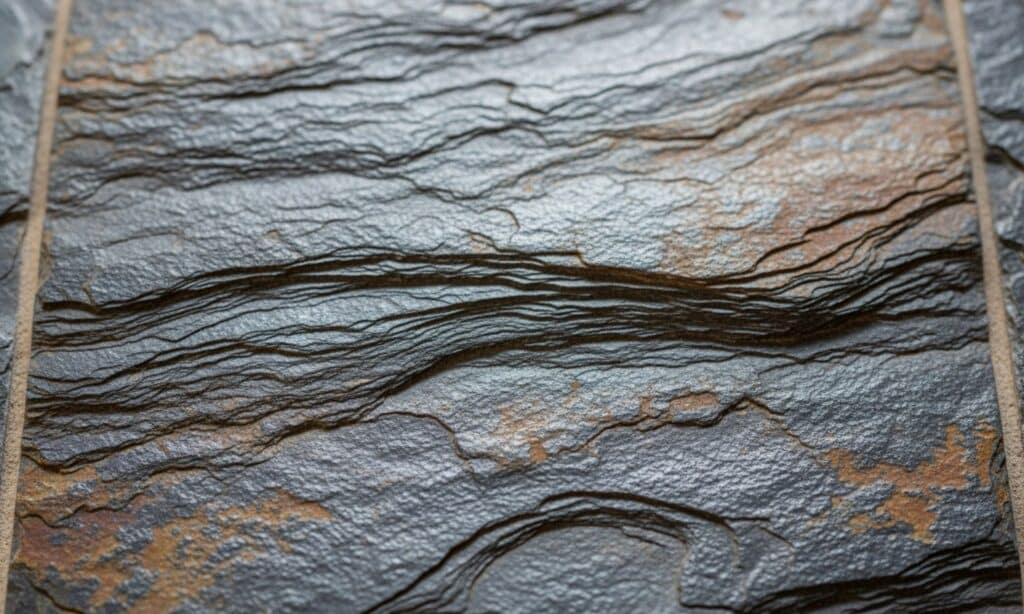
Slate’s unique appeal lies in its natural variation; no two tiles are identical. Each piece showcases one-of-a-kind patterns and rich color variations, offering genuine natural beauty over factory uniformity.
Forget the idea that slate is only gray. You’ll find options in deep blacks, warm browns, earthy greens, and stunning multi-color variations. The textural depth of its naturally cleft, riven surface catches light in unique ways, creating visual interest that flat floors can’t match. This texture is also practical, helping to hide minor scuffs and daily wear. Whether your style is a cozy farmhouse or a sleek modern space, slate’s earthy appearance and timeless appeal adapt beautifully.
Safety and Practicality in the Kitchen
Kitchens are prone to spills, making slip-resistant flooring essential. This is where slate flooring for kitchen installations really shine.
Its textured cleft surface provides excellent natural slip resistance, offering better traction than glossy tiles, especially when wet. This is a key safety advantage for households with children or elderly family members. When properly sealed, slate also becomes water resistant, making it ideal for wet areas around your sink and dishwasher. Sealing fills the stone’s pores, creating a protective barrier against moisture while maintaining its natural look. This combination of slip resistance and moisture protection lets you cook with confidence.
Need Help With Your Home?
TJ Builders & Developers handles roofing, siding, gutters, windows, home additions, and fire damage restoration for homes and businesses in Lakewood, Crystal Lake, Schaumburg, and nearby McHenry County towns.
- Free, no-obligation estimates
- Licensed & insured
- 20+ years of local experience
The “Worst Bet”: Understanding the Challenges and Costs
Before you commit to slate, let’s discuss the less glamorous side of slate flooring for kitchen installations. This is the “what they don’t tell you in the showroom” conversation to ensure you know what you’re signing up for.
The Reality of Maintenance and Upkeep
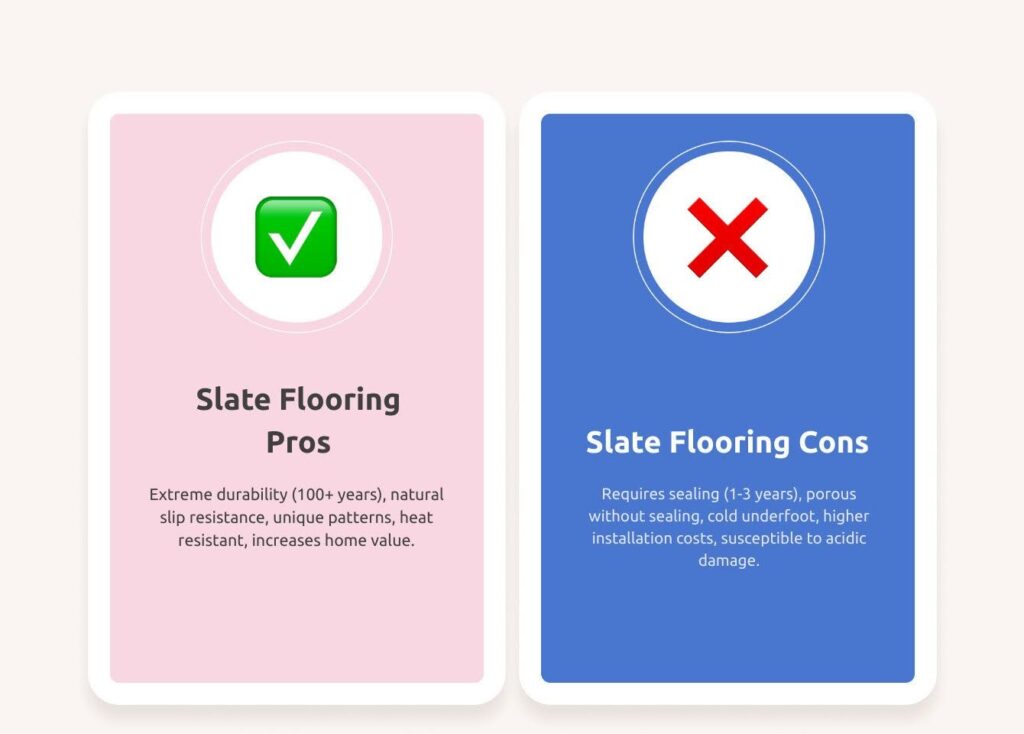
Natural stone like slate requires attention. It’s naturally porous, so without a sealer, it will absorb spills like red wine, coffee, or oil.
Sealing is non-negotiable. A penetrating sealer must be applied at installation and then again every 1 to 3 years, depending on kitchen traffic. Skipping this crucial step will lead to permanent stains. The cleaning routine also requires care. Slate is susceptible to acidic spills like lemon juice or vinegar, which can etch the surface if not cleaned up quickly. You must use pH-neutral cleaners designed for natural stone and avoid abrasive scrubbers. Grout lines also need regular cleaning to prevent a dingy look. For busy kitchens, this ongoing maintenance is a significant commitment.
Understanding the Cost of Slate Flooring for a Kitchen
Slate flooring can be a significant investment. The tile itself costs $2 to $15+ per square foot, but that’s only part of the total expense.
Installation costs for slate are higher than for manufactured tiles, typically ranging from $8 to $20+ per square foot. This is because slate is heavy, requires precise cutting, and needs skilled installers. Subfloor preparation is also critical. Slate needs a stable, level foundation to prevent cracking, which can add several hundred to over a thousand dollars to the cost if your subfloor preparation needs work. Finally, high-quality sealer and specialized materials will add another $100 to $300 to your project.
Estimated total for a 150 sq ft kitchen:
- Slate flooring: $1,900 – $6,550
- Stone-style porcelain: $1,400 – $4,700
Comfort and Common Issues
Slate is incredibly hard underfoot. If you spend a lot of time standing in the kitchen, you may want anti-fatigue mats for comfort. Its hardness also means dropped dishes will almost certainly shatter.
Another reality is that natural stone is cold underfoot, especially during colder months. While slate is compatible with underfloor heating systems and retains heat well, it takes longer to warm up than other materials. Finally, slate tiles are very heavy. Your subfloor must be strong enough to handle the weight without flexing to prevent cracked tiles. An installer must verify this before the project begins.
Slate vs. The Alternatives: A Head-to-Head Comparison
Is slate flooring for kitchen spaces truly the best choice, or would an alternative suit your lifestyle better? At TJ Builders & Developers, we help homeowners make this decision daily. While slate is stunning, modern alternatives can offer a similar sophisticated, natural stone look. Understanding how slate stacks up against its closest competitors is key to making a choice you’ll be happy with for decades.
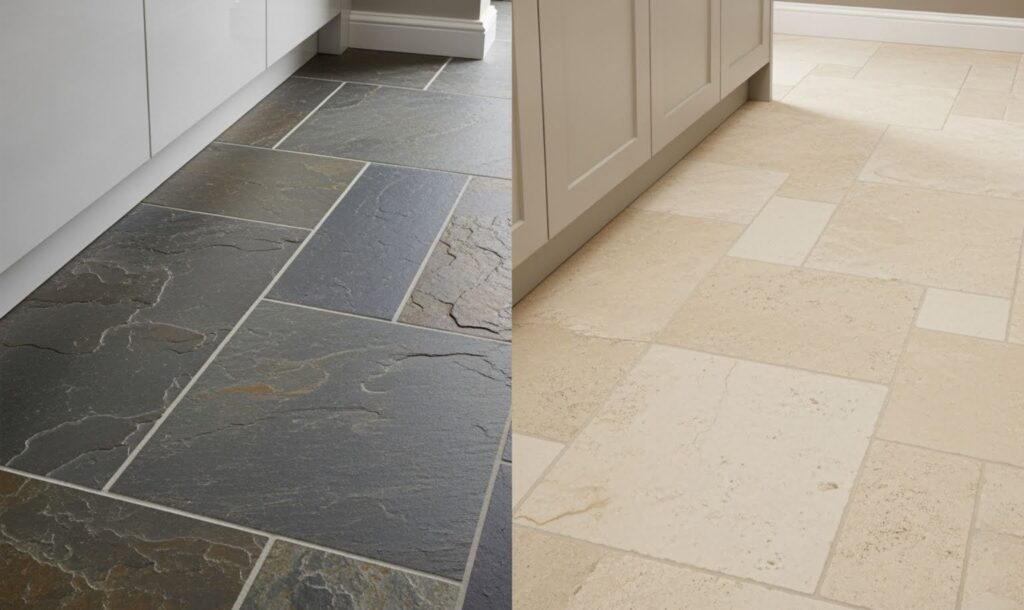
Slate vs. Stone-Style Porcelain Tile
The slate vs. porcelain debate is common. Homeowners love slate’s earthy beauty but worry about maintenance, which is when stone-style porcelain becomes a strong alternative.
Natural slate is unique; each tile has its own pattern and texture, a result of its geological formation. Stone-style porcelain is manufactured but can replicate slate’s look and texture with stunning accuracy. The main difference is more pattern repetition, resulting in a more uniform appearance.
Key differences:
- Maintenance: Slate needs sealing every 1–3 years and special cleaners. Porcelain is non-porous and low maintenance.
- Design consistency: Slate offers organic variation; porcelain offers uniformity.
- Durability: Both are highly durable.
- Cost: Porcelain is often more economical long-term.
If you value authenticity and are committed to upkeep, slate offers unmatched character. If you want the look without the maintenance, porcelain is a practical alternative.
Need Help With Your Home?
TJ Builders & Developers handles roofing, siding, gutters, windows, home additions, and fire damage restoration for homes and businesses in Lakewood, Crystal Lake, Schaumburg, and nearby McHenry County towns.
- Free, no-obligation estimates
- Licensed & insured
- 20+ years of local experience
A Practical Guide to Slate Flooring for Kitchen Installation and Care
If you’ve decided slate is the right choice, proper installation and care are what separate a stunning, century-lasting floor from a disappointing investment.
Choosing the Right Type and Finish
Popular options include Brazilian Black Slate, Montauk Black, Peacock Slate, and warm multi-color variations. Finishes range from natural cleft to honed or tumbled, each offering a different aesthetic and performance profile. Matching the slate to your kitchen’s design is crucial. Our team at TJ Builders & Developers can help you visualize the options for your space.
Key Installation and Sealing Considerations
Installing slate flooring is not a DIY project. Professional installation is crucial and includes:
- Subfloor preparation and reinforcement
- Back-buttering tiles for full adhesion
- Proper sealing before and after grouting
- Compatibility with underfloor heating systems
Long-Term Maintenance for Slate Flooring for Kitchen
- Sweep or vacuum regularly
- Mop with pH-neutral stone cleaners
- Reseal every 1–3 years
- Address chips or scratches promptly
With proper care, your slate floor will maintain its beauty for generations.
Frequently Asked Questions about Slate Kitchen Floors
How often do you need to seal a slate kitchen floor?
Most slate floors need resealing every 1 to 3 years, depending on traffic and sealer type.
Is slate flooring too dark for a small kitchen?
Not necessarily. Proper lighting and light-colored cabinetry can balance darker slate tones.
Can you install slate tiles over an existing floor?
Generally not recommended due to slate’s weight and need for a rigid, level subfloor.
Conclusion: Is Slate the Right Choice for Your Kitchen?
Slate flooring for kitchen spaces offers unmatched natural beauty and durability, but it requires commitment. Regular sealing, higher upfront costs, and comfort considerations must be weighed carefully.
For homeowners in Lakewood, IL, TJ Builders & Developers can help you explore both natural slate and modern alternatives to find the best fit for your lifestyle, budget, and vision.
What matters most is choosing quality materials that align with how you live.