What Does House Fascia Replacement Cost in 2026?
House fascia replacement cost typically falls between $1,050 and $3,300 for most homes, with a national average around $2,500. Here’s a quick snapshot to help you budget:
| Project Size | Estimated Cost Range |
|---|---|
| 50 linear feet | $350 – $1,100 |
| 100 linear feet | $1,050 – $2,200 |
| 150 linear feet | $1,050 – $3,300 |
| 200 linear feet | $1,400 – $4,400 |
| 300 linear feet | $2,100 – $6,600 |
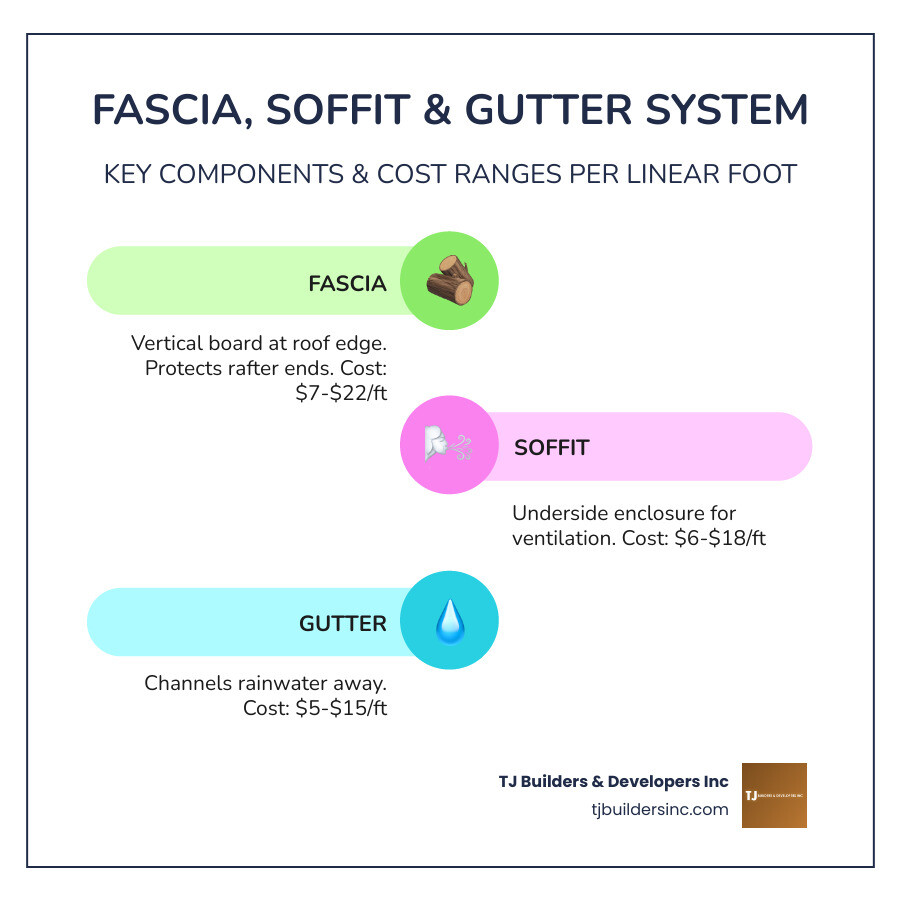
Per linear foot, expect to pay $7 to $22 on average, including materials and labor. Complex rooflines or multi-story homes can push that number up to $40 per linear foot.
Most homes have between 100 and 250 linear feet of fascia. Your final cost depends on the material you choose, your home’s height and layout, and local labor rates.
Damaged fascia isn’t just an eyesore. It can let water, pests, and mold into your home — and quietly drive up your energy bills by disrupting attic ventilation. Catching it early almost always saves money.
I’m Thomas Pruszynski, and over more than 20 years leading TJ Builders & Developers Inc, I’ve managed countless exterior restoration projects — including fascia work — where understanding the true house fascia replacement cost upfront made all the difference for homeowners. In this guide, I’ll walk you through everything you need to budget confidently and make the right call for your home.
Average House Fascia Replacement Cost in 2026
When we look at the data for April 2026, the house fascia replacement cost remains a significant but necessary investment for maintaining a home’s structural integrity. For a standard single-story home in the Chicago suburbs, such as Lakewood or Crystal Lake, you are likely looking at a project size of 100 to 200 linear feet.
The Fascia board replacement cost data suggests that while the national average sits around $2,500, regional specifics in Illinois often see a tighter range of $1,500 to $3,500 due to local labor standards and material availability.
Breaking Down the Project Scope
A professional quote for fascia replacement isn’t just about the boards themselves. At TJ Builders & Developers Inc, our roofing services cover a comprehensive scope of work:
- Material Delivery: Transporting long spans of lumber, aluminum, or PVC without damage.
- Site Preparation: Protecting your landscaping and setting up safe ladder or scaffolding systems.
- Removal of Old Structures: Carefully prying away rotted wood and disposing of it properly.
- Labor Intensity: Fascia work is physically demanding, often requiring two technicians to hold, level, and nail boards simultaneously.
Need Help With Your Home?
TJ Builders & Developers handles roofing, siding, gutters, windows, home additions, and fire damage restoration for homes and businesses in Lakewood, Crystal Lake, Schaumburg, and nearby McHenry County towns.
- Free, no-obligation estimates
- Licensed & insured
- 20+ years of local experience
Factors Influencing Your Total Investment

Not every roofline is created equal. Several variables can shift your house fascia replacement cost from the lower end of the spectrum to a premium investment.
Accessibility and Height
If you live in a two-story or three-story home in Schaumburg or Barrington, accessibility becomes a major cost driver. Taller homes require specialized equipment and more time for setup and safety. We typically see an “accessibility premium” of 7% to 15% added to the labor cost for homes that require extensive scaffolding or have difficult-to-reach eaves blocked by trees or steep terrain.
Labor Rates and Regional Trends
While states like California often see inflated “gold-plated” rates, the Chicago suburbs maintain a competitive but professional labor market. You can expect labor costs to range from $6 to $20 per linear foot, or hourly rates between $75 and $120 per worker. These rates ensure that the technicians working on your home are insured and skilled in precise carpentry.
Additional Project Requirements
- Local Permits: Depending on the municipality—whether it’s Palatine or Mount Prospect—you may need a permit for exterior structural work. These typically cost between $50 and $300.
- Painting and Sealing: If you choose wood fascia, it must be painted or sealed to prevent rot. Professional painting labor usually adds $25 to $55 per hour to the total.
- Disposal Fees: Removing old, heavy, and sometimes moldy boards involves disposal costs that are usually bundled into your initial quote.
When considering the health of your roofline, it is also wise to review our roof repair considerations to see if other components like shingles or flashing need attention while the crew is already on-site.
Material Selection and Its Impact on Pricing
The material you choose is the biggest variable in your long-term house fascia replacement cost. While wood is the traditional choice, modern synthetics offer durability that can save you thousands in future repairs.
Our siding installation and replacement experts often recommend looking at the detailed material cost report to compare upfront costs against maintenance cycles.
- Wood Fascia ($1 – $3 per LF): The most affordable upfront. It is easy to work with but highly susceptible to rot and pests. It requires painting every 3-5 years.
- Vinyl Fascia ($5 – $9 per LF): Lightweight and waterproof. It doesn’t rot, though it can become brittle in our harsh Illinois winters.
- Aluminum Fascia ($8 – $20 per LF): Often used as a “wrap” over wood. It is incredibly durable, rust-proof, and can last 20+ years.
- PVC/UPVC ($3 – $7 per LF): These boards look like wood but are entirely rot-proof and plastic-based.
- Fiber Cement ($1 – $5 per LF): Materials like James Hardie trim offer excellent fire resistance and durability but are heavier and more labor-intensive to install.
How Material Choice Affects House Fascia Replacement Cost
Choosing aluminum or PVC might feel like a “premium” move, but consider the lifespan. Wood fascia typically lasts 5 to 15 years in the Midwest climate before moisture begins to take its toll. In contrast, aluminum or high-quality composites can easily exceed 20 years with almost zero maintenance. The “long-term value” of synthetic materials often outweighs the “upfront investment” of wood when you factor in the cost of repainting and eventual re-replacement.
Need Help With Your Home?
TJ Builders & Developers handles roofing, siding, gutters, windows, home additions, and fire damage restoration for homes and businesses in Lakewood, Crystal Lake, Schaumburg, and nearby McHenry County towns.
- Free, no-obligation estimates
- Licensed & insured
- 20+ years of local experience
Signs You Need Professional Fascia Replacement
How do you know it’s time to call in the pros? Fascia damage is often “sneaky” because it happens behind your gutters.
- Peeling Paint and Discoloration: This is usually the first sign that moisture has penetrated the wood.
- Cracks and Splits: Visible gaps in the boards allow insects and rodents to enter your attic.
- Sagging Gutters: If your gutters are pulling away from the house, it’s often because the fascia boards they are anchored to have become soft and rotted.
- Mold and Moss: Any green or black growth on the underside of your eaves indicates a moisture barrier failure.
- Soft Wood: If you can poke a screwdriver into the board and it sinks in like butter, you have dry rot.
Leaving these issues unaddressed can lead to more expensive gutters installation and replacement needs or even structural damage to your roof rafters.
Estimating the House Fascia Replacement Cost for Your Home
To get a ballpark figure, grab a tape measure and walk the perimeter of your home. Total up the linear footage of your roof edges. If you have a 2,000-square-foot ranch home, you likely have about 250 linear feet of fascia.
When we perform reroofing projects, we always inspect the fascia. Bundling these services is the most cost-effective way to handle the work. A professional quote from us will always include:
- Drip edge integration (crucial for directing water away from the fascia).
- Workmanship warranties.
- Itemized material and labor breakdowns.
Frequently Asked Questions about Fascia Replacement
Is $4,500 a fair price for 250 linear feet of wood fascia?
In the current 2026 market, $4,500 for 250 feet of simple wood fascia is on the higher end of the national average. This breaks down to $18 per linear foot. Nationally, wood fascia replacement usually costs between $6 and $12 per foot. However, if that price includes high-end painting, complex two-story access, or the replacement of the aluminum drip edge, it may be justified. If it is just for “wood-for-wood” replacement on a simple one-story home, we recommend getting a second opinion.
Should I replace my gutters and soffits at the same time?
Absolutely. This is the “Gold Standard” for cost-saving. Because gutters are attached directly to the fascia, they must be removed to replace the boards. If your gutters are older than 10-15 years, it makes no sense to reinstall old gutters over brand-new fascia. Bundling fascia, soffits, and gutters into one project reduces labor costs significantly because the crew only has to set up ladders and staging once.
How long does the replacement process typically take?
For a standard home in the Chicago suburbs, the process typically takes 1 to 2 days. A professional crew of two or three people can usually strip and replace 100-150 feet of fascia per day. If there is significant rot in the rafter tails or if the roofline is particularly complex, it may extend to a 3-day project.
Conclusion
Your home’s fascia boards are more than just a decorative trim; they are a vital line of defense against the Illinois elements. Whether you are in Lakewood, Rolling Meadows, or South Barrington, maintaining these boards protects your attic, your roof structure, and your home’s value.
At TJ Builders & Developers Inc, we pride ourselves on providing the homeowners of the Chicago suburbs with reliable, professional workmanship. If you’ve noticed signs of wear or are planning a larger exterior renovation, we invite you to read our roof installation and replacement complete guide to see how fascia fits into the bigger picture.
Ready to secure your home’s exterior? Contact our roofing specialists today for a detailed assessment of your home’s needs. We look forward to helping you protect your investment with quality solutions that last.