Why Regular Roof Inspections Are Your Home’s Best Defense
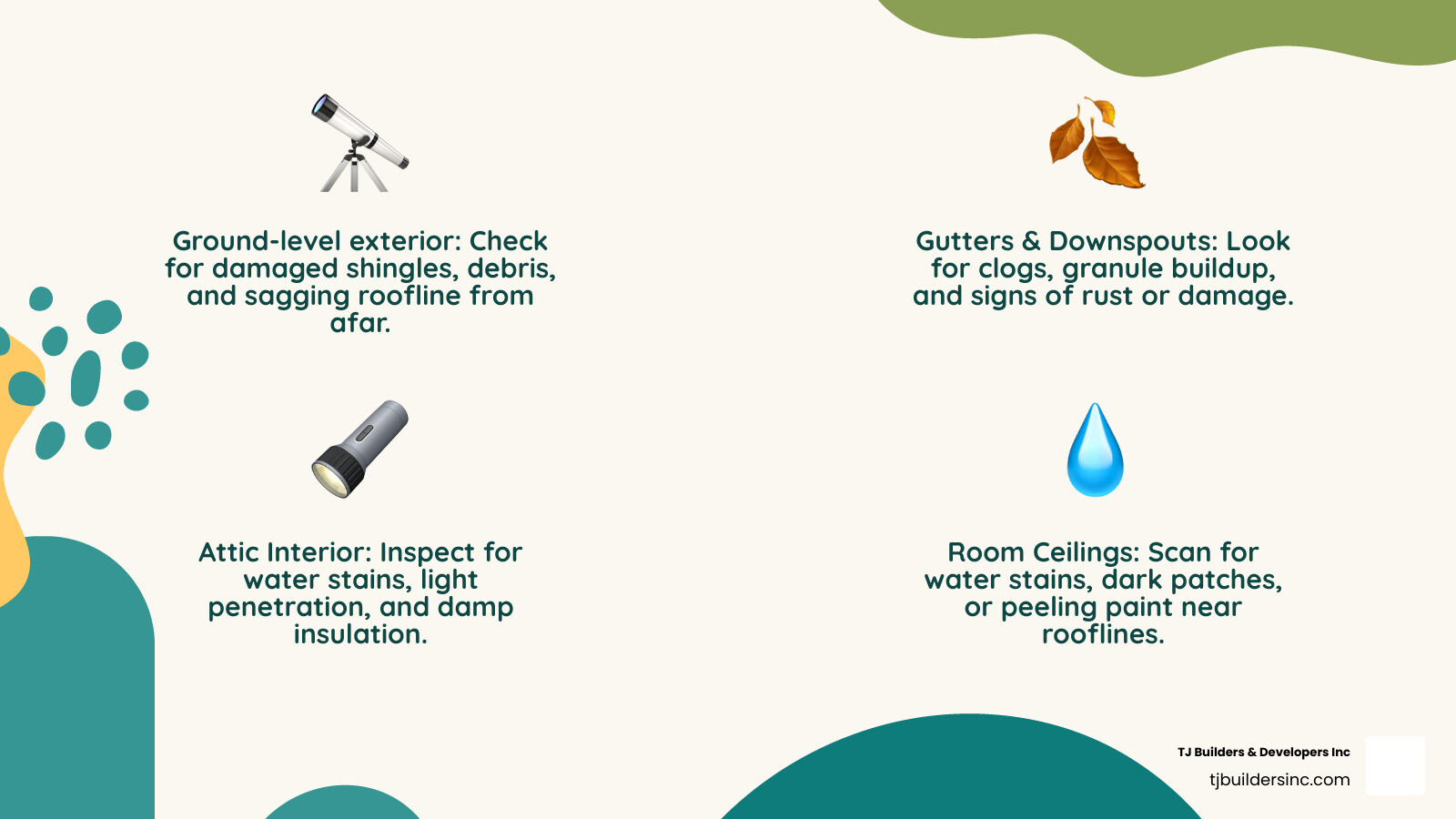
How to inspect your roof doesn’t require climbing ladders or risking your safety. Here’s what you need to do:
- Walk around your property – Use binoculars to check for missing, curled, or damaged shingles
- Check your gutters – Look for granule buildup, clogs, and signs of rust or damage
- Inspect your attic – Use a flashlight to spot water stains, light penetration, or wet insulation
- Scan interior ceilings – Look for water stains, dark patches, or peeling paint near the roofline
Your roof is one of your home’s most critical defenses against the elements, yet most homeowners don’t think about it until something goes wrong. That’s a costly mistake. According to the National Roof Certification and Inspection Association, deferred maintenance is the number one cause of roof issues, and more than 85% of homes are sold with existing roof damage or leaks.
Here’s the good news: catching problems early through regular inspections can save you thousands of dollars in repairs. A small leak that costs a few hundred dollars to fix today can turn into a multi-thousand-dollar disaster if left unchecked—damaging insulation, drywall, ceilings, and even your home’s structure.
The better news? You don’t need to climb onto your roof to perform a thorough inspection. Most warning signs are visible from the ground, your attic, or inside your home. With the right knowledge and a pair of binoculars, you can spot the early warning signs that separate a simple repair from a full roof replacement.
In this guide, we’ll walk you through exactly what to look for, when to inspect, and when it’s time to call in the professionals.
Why, When, and How Often to Inspect Your Roof
We often take our roofs for granted, assuming they’ll always be there, silently protecting our homes from rain, snow, and wind. But just like any other part of your house, your roof needs regular attention. Proactive maintenance and timely inspections are vital for extending its lifespan and preventing costly problems down the road. Catching minor issues early, like a loose shingle or a clogged gutter, can save you from major headaches and expenses later on. Think of a roof inspection as a routine health check-up for your home – it keeps everything running smoothly!
Regular inspections offer immense peace of mind. Knowing your roof is in good shape means you’re better prepared for whatever Mother Nature throws our way in Lakewood, Crystal Lake, Schaumburg, and across the Chicago suburbs. This proactive approach is particularly important for insurance claims. While your homeowner’s insurance might cover sudden damage from storms, it rarely covers issues stemming from neglect or deferred maintenance. The NRCIA reports that approximately 30% of insurance claims are due to leaking roofs and water intrusion, making it clear that a well-maintained roof is your best defense, even when it comes to your policy.
The National Roofing Contractors Association (NRCA) recommends homeowners hire a professional for an annual roof check-up. However, there are also times when we, as homeowners, should take a closer look ourselves.
Signs of Potential Water Damage
Water is the arch-nemesis of any roof. If it finds a way in, it can wreak havoc on your home’s interior, often far from the original point of entry. Recognizing the early signs of water damage is crucial. Here’s what to look for:
- Water stains on ceilings: These are perhaps the most obvious indicators. Look for yellow, brown, or dark rings, especially in upper-level rooms or near chimneys and vents.
- Peeling paint near the roofline: Water seeping into walls can cause paint to bubble, crack, or peel, particularly on the top floors.
- Dark spots on rafters or sheathing in the attic: Grab a flashlight and venture into your attic. Any discoloration on the wooden structural components could signify a leak.
- Damp or compressed insulation: Wet insulation loses its effectiveness and can be a breeding ground for mold. If your insulation feels soggy or looks flattened, investigate further.
- Mold or mildew smell in the attic: A musty odor is a strong signal of moisture problems, even if you can’t see the water itself.
- Musty odors inside the home: If you notice an unexplained damp smell in your living spaces, especially after rain, it could be a subtle sign of a hidden leak.
If you spot any of these signs, it’s time to act quickly. Undetected leaks can lead to significant structural damage and health hazards. For more information on how we can help with severe water damage, please visit our page on fire and water damage restoration.
Inspection Frequency Guidelines
So, how often should we be checking our roofs? It’s a combination of regular DIY checks and periodic professional assessments:
- DIY Visual Inspection: We recommend a visual inspection of your roof from the ground level at least twice a year, ideally in the spring and fall. These seasonal checks allow us to assess any damage from winter weather or prepare for the upcoming cold season.
- After Major Weather Events: Living in the Chicago suburbs, we’re no strangers to harsh weather. After any significant event – be it a hailstorm, strong winds, or heavy snowfall – it’s crucial to perform an immediate visual inspection. Even seemingly minor storms can dislodge shingles or damage flashing.
- Professional Inspection: While DIY checks are great for early detection, nothing beats a professional eye. We advise scheduling a professional roof inspection annually for older roofs (those nearing or past their typical lifespan) and at least every three years for newer roofs. A professional can identify subtle issues, assess overall structural integrity, and provide expert recommendations.
Following these guidelines can significantly extend the life of your roof and protect your most valuable asset.
Need Help With Your Home?
TJ Builders & Developers handles roofing, siding, gutters, windows, home additions, and fire damage restoration for homes and businesses in Lakewood, Crystal Lake, Schaumburg, and nearby McHenry County towns.
- Free, no-obligation estimates
- Licensed & insured
- 20+ years of local experience
How to Inspect Your Roof Safely from the Ground
Safety is our absolute top priority when it comes to roof inspections. The good news, as the title suggests, is that you can perform a surprisingly thorough inspection without ever setting foot on your roof! This approach minimizes risk and is perfectly suitable for most homeowners. As the Occupational Safety and Health Administration (OSHA) has strict guidelines for the protection of roofing workers from falls, we strongly advise against homeowners attempting to walk on their roofs, especially if they lack the proper equipment or training. Even a slight slope or damp surface can be incredibly dangerous.
Inspecting from the ground offers several benefits: it’s safe, requires minimal equipment, and can be done quickly. A good pair of binoculars is your best friend here, allowing you to zoom in on details you’d otherwise miss. Don’t forget your smartphone or a camera to document anything suspicious – photos are invaluable when discussing potential issues with a professional. For a comprehensive overview of ground-level inspection techniques, you can refer to a guide to checking your roof.
Step 1: Exterior Walk-Around
This is where your trusty binoculars come into play. Take a leisurely stroll around the perimeter of your home, looking up at your roof from all angles.

Here’s what to keep an eye out for:
- Debris on the roof: Are there branches, leaves, or other foreign objects accumulating in valleys or flat sections? This debris can trap moisture, leading to rot and deterioration.
- Moss or algae growth: While some moss might look charming, it’s a villain in disguise. Moss absorbs rainwater like a sponge, holding moisture against your shingles and potentially causing mold and decay in the underlying wooden structure. Algae often appears as dark streaks and, while less damaging than moss, can indicate moisture retention.
- Sagging roofline or uneven planes: A healthy roof should have a relatively straight and even appearance. If you notice any dips, sags, or unevenness, especially along the ridge or between rafters, it could signal structural damage, water damage, or a compromised roof deck. This is a serious concern that warrants immediate professional attention.
- Check siding above the roof: Look for any staining, discoloration, or damage on the siding that sits directly above your roofline. This can indicate water splashing up from the roof or issues with flashing.
- Overhanging tree limbs: Trees are beautiful, but their branches can be a menace to your roof. Limbs touching or hanging over the roof can scrape shingles, drop debris, and provide easy access for pests. Trim back any branches that pose a threat.
Step 2: Checking Shingles, Gutters, and Flashing
Now, let’s zoom in on the details. This step requires a keen eye and a good understanding of what healthy roofing components should look like.
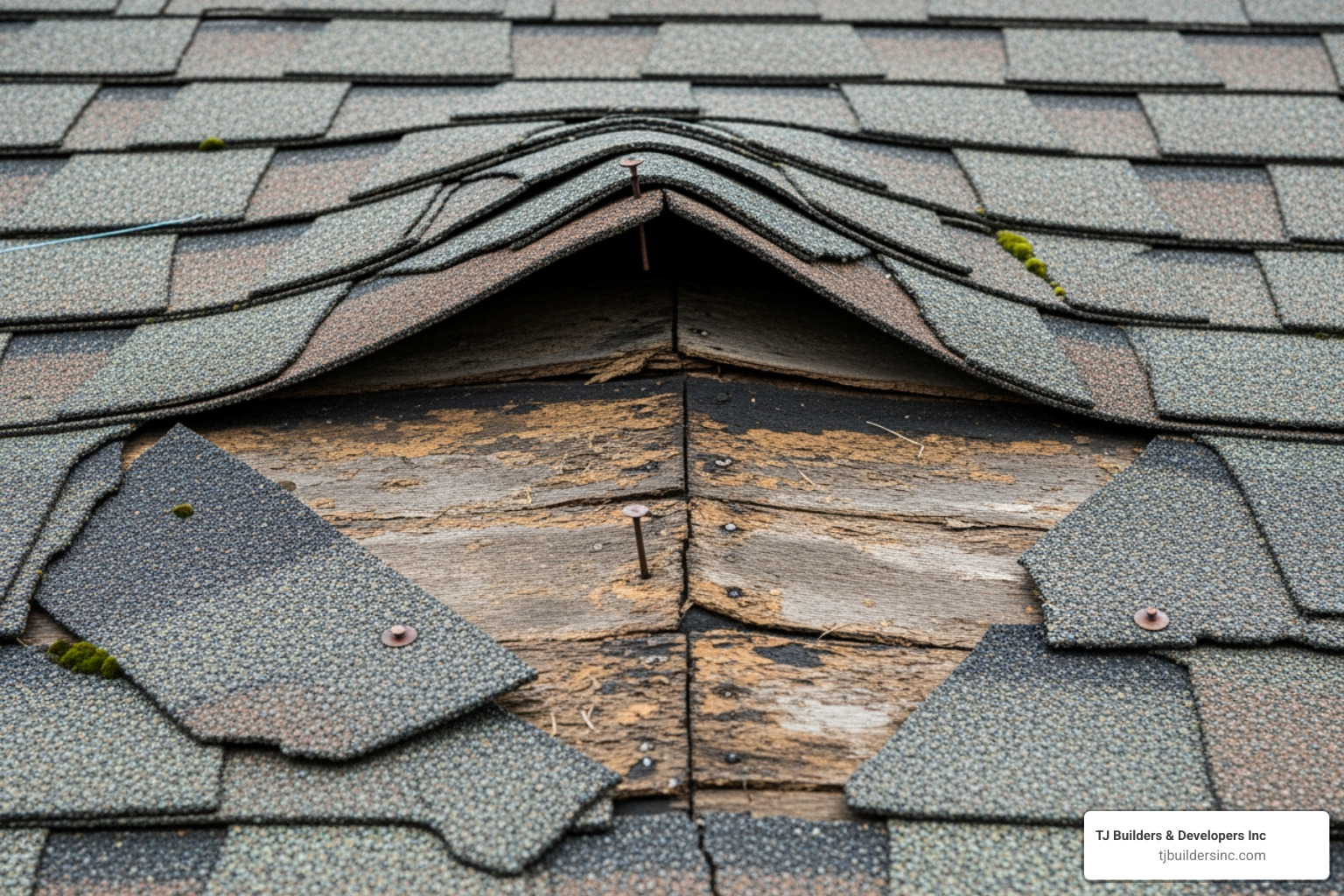
- Missing or cracked shingles: This is one of the most obvious signs of trouble. Strong winds, hail, or even just old age can cause shingles to detach or crack, leaving your roof vulnerable.
- Curling or buckling shingles: If your asphalt shingles are curling at the edges or buckling in the middle, it’s often a sign of aging, excessive heat in the attic (poor ventilation), or moisture damage. This compromises their ability to shed water effectively.
- Granule loss in gutters: Asphalt shingles have a protective layer of granules that shield them from UV rays and weather. If you see a significant amount of these sand-like granules in your gutters or downspouts, it indicates your shingles are nearing the end of their lifespan and losing their protective coating.
- Clogged gutters: Gutters are designed to channel rainwater away from your home’s foundation. If they’re clogged with leaves, twigs, or other debris, water can overflow, leading to fascia damage, foundation issues, and even water backing up under your shingles.
- Damaged fascia or soffit: The fascia board runs along the edge of your roof, and the soffit is the underside of your roof’s overhang. Look for signs of rot, holes, peeling paint, or pest infestation in these areas. This often indicates water overflow from gutters or poor ventilation.
- Rusted or cracked flashing around chimneys and vents: Flashing consists of metal strips (or other waterproof materials) installed around roof penetrations like chimneys, skylights, and vent pipes to prevent water intrusion. These are often the most vulnerable areas for leaks. Look for rust, corrosion, cracks, or gaps in the sealant. If the flashing is compromised, water will find its way in. For all your gutter needs, including installation and replacement, check out our services at gutter installation and replacement.
Step 3: The Attic Inspection
After surveying the exterior, it’s time to go inside and inspect the underside of your roof – the attic. This is a crucial step because it can reveal problems that aren’t visible from the outside. Remember to bring a powerful flashlight!
- Water stains on wood: Look for any dark stains or discoloration on the wooden rafters, joists, or the underside of the roof deck. These are clear indicators of past or present leaks.
- Sagging decking: The roof decking is the plywood or OSB that forms the base of your roof. If you notice any areas that are sagging or soft, it could be a sign of water damage or structural weakness.
- Outside light penetration: Turn off any lights in your attic. If you can see daylight peeking through holes or cracks in the roof deck, you’ve found a direct entry point for water (and pests!).
- Wet or compressed insulation: As mentioned earlier, insulation that is damp, moldy, or compressed indicates moisture issues. Not only does it suggest a leak, but wet insulation loses its R-value, making your home less energy-efficient.
- Proper ventilation check: Good attic ventilation is essential for roof health. Look for blocked intake vents (usually in the soffit) or exhaust vents (near the ridge). Poor ventilation traps heat and moisture, which can lead to premature shingle aging and mold growth.
- Bathroom fans venting into the attic: Ensure that all bathroom and kitchen exhaust fans are properly vented outside the house, not just into the attic. Venting moist air into the attic contributes significantly to condensation, mold, and rot.
By carefully performing these steps, you’ll gain a comprehensive understanding of your roof’s condition and be well-equipped to decide if professional help is needed.
Understanding Different Roofing Materials
Just like homes come in various styles, roofs come in a variety of materials, each with its own lifespan, characteristics, and specific inspection needs. What you look for on an asphalt shingle roof might be different from what you’d check on a metal or tile roof. Knowing your roof material is the first step to a targeted inspection.
Common Roofing Materials and Their Lifespans
Here’s a quick look at some common roofing materials we see in the Chicago suburbs, their typical lifespans, and what issues they’re prone to:
| Material | Average Lifespan | Common Issues | Key Inspection Focus |
|---|---|---|---|
| Asphalt Shingles | 20-50 years | Granule loss, curling, buckling, cracking, blistering | Shingle integrity, granule presence, nail pops, flashing seals |
| Metal Roofing | 50-100 years (or more) | Rust, loose fasteners, dents, scratches, panel separation | Fastener security, panel seams, rust spots, coating integrity |
| Tile/Slate | 40-100+ years | Cracking, breakage, efflorescence (mineral deposits) | Individual tile integrity, mortar/fastener condition, underlayment exposure |
Specific Inspection Needs by Roof Type
-
Asphalt shingles: These are the most common roofing material due to their affordability and versatility. When inspecting, pay close attention to:
- Curling: Shingles may curl at the edges (cupping) or in the middle (clawing).
- Blistering: Small bubbles on the shingle surface, often from manufacturing defects or poor ventilation.
- Missing granules: Look for bare spots where the protective granules have worn off, exposing the asphalt. This is a major sign of aging. If you’re seeing widespread granule loss, it might be time to ask, Do I need a new roof?.
- Nail pops: Nails that have pushed up through the shingle surface, creating small bumps. These can allow water to penetrate.
-
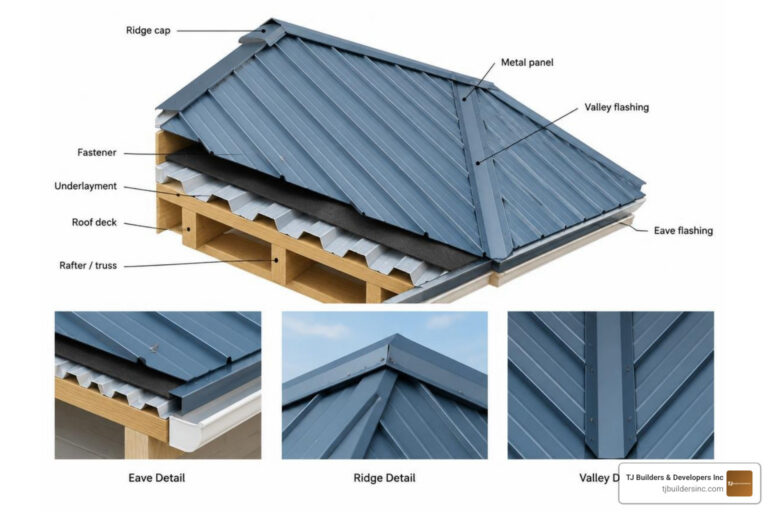
Metal roofing: Known for its durability and longevity, metal roofs require different inspection points:
- Rust: While modern metal roofs are treated to resist rust, prolonged exposure to moisture or damaged coatings can lead to corrosion.
- Loose panels or fasteners: Check for any panels that appear to be lifting or fasteners that have come loose.
- Scratches or dents: While usually cosmetic, deep scratches can compromise the protective coating, and large dents can affect drainage.
-
Tile or Slate: These roofs are incredibly long-lasting and aesthetically pleasing but can be delicate:
- Cracked or broken tiles: High winds or impact (like falling branches) can crack or break individual tiles. These need to be replaced promptly to prevent leaks.
- Missing tiles: If a tile is missing, the underlayment beneath is exposed to the elements.
- Efflorescence: White, powdery mineral deposits that can appear on clay or concrete tiles. While often harmless, excessive efflorescence can indicate moisture issues within the tile itself.
No matter your roof type, understanding its specific vulnerabilities will help you conduct a more effective inspection.
Need Help With Your Home?
TJ Builders & Developers handles roofing, siding, gutters, windows, home additions, and fire damage restoration for homes and businesses in Lakewood, Crystal Lake, Schaumburg, and nearby McHenry County towns.
- Free, no-obligation estimates
- Licensed & insured
- 20+ years of local experience
When to Call a Professional for a Roof Inspection or Repair
While we’ve armed you with plenty of tips for your DIY roof inspection from the ground and attic, there are definite times when it’s smart, and frankly, essential, to call in a professional. We homeowners can only do so much, and attempting to tackle certain roof issues yourself can be dangerous or lead to more extensive damage.
- DIY Limitations & Safety Risks: As we mentioned, we never recommend walking on your roof. Even inspecting from a ladder carries risks. The OSHA has strict guidelines for fall protection for roofing workers, highlighting the inherent dangers. If you’re uncomfortable with heights, don’t have a sturdy ladder, or your roof has a steep pitch, it’s always best to stay safe on the ground.
- Complex Roof Designs: If your home in Lakewood, IL, or the surrounding Chicago suburbs has a complex roof with multiple valleys, dormers, skylights, or unusual angles, a professional will have the expertise and equipment to inspect these intricate areas thoroughly.
- Severe Damage Signs: If your ground-level inspection reveals widespread missing shingles, a noticeable sag in the roofline, extensive granule loss, or significant flashing damage, these are clear indicators that you need professional help immediately.
- Active Leaks: If you have an active leak inside your home, don’t delay. A professional can pinpoint the source of the leak, which is often far from where the water is appearing, and provide an immediate solution.
- Structural Sagging: Any signs of a sagging roof deck or ridge line are serious and require urgent attention from a structural expert or a qualified roofing contractor.
- When in doubt, call a pro: This is our golden rule. If you’ve done your inspection and still feel uncertain about your roof’s condition, or if you suspect a problem but can’t quite identify it, a professional inspection is a worthwhile investment. The average roof inspection costs $331, with most homeowners spending between $125 and $571 – a small price to pay for peace of mind and preventing major repairs.
Preparing for a Professional Inspection
When you decide to call in the experts, a little preparation on our part can make the inspection process smoother and more efficient:
- Clear debris from around the house: Ensure easy access for the inspector around your home’s perimeter. Move patio furniture, clear pathways, and ensure landscaping isn’t obstructing the roofline.
- Ensure attic access is clear: If your attic has a pull-down ladder or a scuttle hole, make sure it’s easily accessible and not blocked by stored items.
- Prepare a list of concerns or observed issues: Jot down anything you noticed during your DIY inspection, including dates if applicable. Pointing out specific areas of concern can help the inspector focus their efforts.
- Ask for proof of insurance: Before hiring any contractor, always ask for proof of insurance (liability and workers’ compensation). Then, call the broker/agent to verify coverage will be in place when your job is performed. This protects you from potential liability if an accident occurs on your property.
- Get multiple quotes: We always recommend getting quotes from at least three different reputable contractors. This allows you to compare services, proposed solutions, and pricing.
- What to expect during the process: A standard inspection can take as little as 45 minutes, but large, complex roofs or those with severe damage could take as long as four hours. The inspector will likely examine the roof from the ground, use a ladder for closer inspection, and check the attic if accessible.
What a Professional Inspection Includes
A professional roof inspection goes far beyond what we can safely observe from the ground. Here’s what it typically covers:
- Structural assessment: The inspector will look for signs of sagging, unevenness, or damage to the roof deck, rafters, and trusses.
- Material inspection: A detailed examination of shingles, tiles, metal panels, and other roofing materials for wear, damage, and proper installation.
- Interior check: This includes a thorough attic inspection for leaks, ventilation issues, and insulation problems.
- Workmanship evaluation: The inspector will assess the quality of previous repairs or installations, looking for common issues like improper flashing or inadequate nailing.
- Detailed report with photos: You should receive a comprehensive report outlining their findings, often accompanied by photos of any identified issues.
- Repair or replacement recommendations: Based on their assessment, the inspector will advise you on whether repairs are needed, if a replacement is imminent, or if your roof is in good shape.
If repairs are necessary, addressing them quickly can prevent minor issues from escalating. You can learn more about our comprehensive roof repair services custom for homes in the Chicago suburbs.
Frequently Asked Questions about Roof Inspections
We understand you might have more questions about keeping your roof in top shape. Here are some common inquiries we receive:
How long does a roof inspection take?
A standard DIY visual check from the ground and attic can take us anywhere from 30 to 60 minutes, depending on the size of our home. For a professional inspection, the duration can vary more significantly. A typical professional inspection often takes around 45 minutes. However, for large, complex roofs or those that have suffered severe damage, an inspection could take as long as four hours to thoroughly assess all components and document findings.
What’s the difference between a roof inspection and a home inspection?
This is a great question! While a home inspection is a comprehensive overview of the entire house – including foundation, electrical, plumbing, and a general look at the roof – a dedicated roof inspection is a much more specialized and thorough assessment. A home inspector might flag obvious roof issues, but a professional roofing contractor performing a roof inspection will dig into the finer details of the roofing system, its materials, flashing, ventilation, and underlying structure, often identifying problems that a general home inspector might miss. It’s like the difference between a general practitioner and a specialist.
Will my insurance cover roof damage?
Homeowners insurance policies typically cover roof damage caused by sudden and accidental events, such as severe storms, hail, falling trees, or fire. However, policies usually do not cover damage resulting from normal wear and tear, age-related deterioration, or a lack of maintenance. This is why regular inspections are so critical. If you file a claim due to storm damage, your insurance company will likely send their own roofing professional to assess the damage. The NRCIA reports that 30% of insurance claims are due to leaking roofs and water intrusion, highlighting the importance of having documentation from your own inspections to support your claim. Always review your specific policy with your insurance provider to understand your coverage fully.
Your Roof’s Health is in Your Hands
Taking care of your home’s roof doesn’t have to be a daunting task. By embracing a proactive approach to maintenance and leveraging the power of regular inspections, you’re not just protecting your roof; you’re safeguarding your entire home and investment. We’ve learned that biannual self-inspections from the ground and attic are invaluable for catching early warning signs, while professional assessments provide the in-depth expertise needed for a truly comprehensive understanding of your roof’s condition.
The number one cause of roof issues is inadequate or deferred maintenance. Don’t delay repairs, no matter how small they seem. A healthy roof protects your family, your belongings, and your peace of mind. For homeowners in Lakewood, IL, Crystal Lake, Schaumburg, and across the Chicago suburbs, we at TJ Builders & Developers Inc. are here to help. We offer expert inspections, reliable repairs, and comprehensive roofing services to ensure your roof stands strong for years to come.
To learn more about how we can assist you with your roofing needs, please visit our page on professional roofing services. We’re always ready to help you keep your home safe and sound, from the ground up!